Top

BRC-20 token standard architect objects to proposed fork

Web3 & Enterprise·January 04, 2024, 1:07 AM

Disagreement has emerged within the Bitcoin blockchain community, revolving around the BRC-20 token standard.


Domo, the pseudonymous developer behind the creation of the token standard, has publicly expressed his opposition to an upcoming upgrade proposed by the Hong Kong headquartered project, UniSat Wallet.
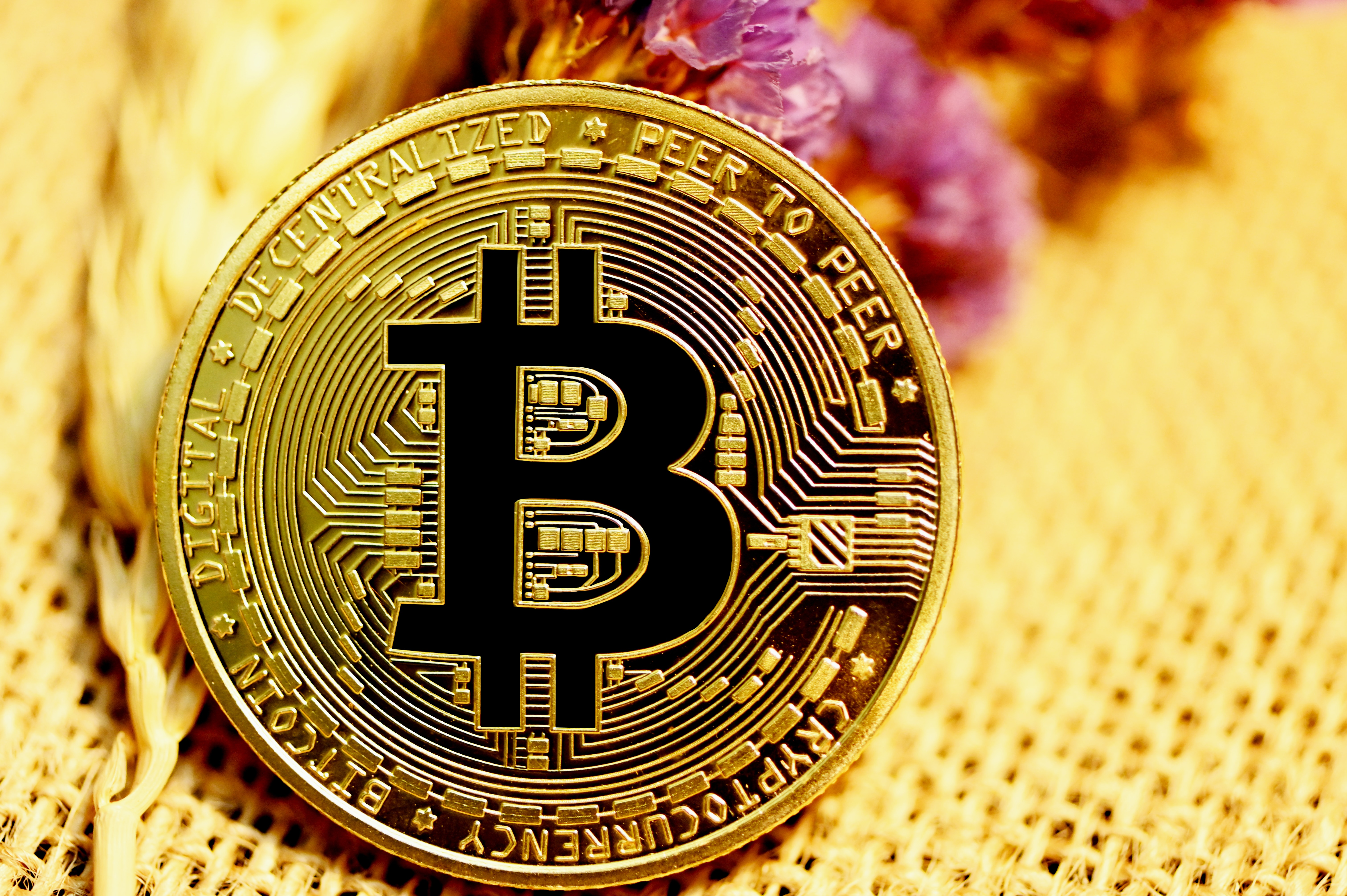
https://asset.coinness.com/en/news/885344b26338306a909580daea0ae347.jpg
Photo by Kanchanara on Unsplash

Due diligence concerns

On Tuesday Domo took to the X social media platform (previously Twitter) to articulate his concerns. He voiced apprehensions about hastily implementing updates in BRC-20, asserting that such a rush could potentially harm the broader BRC-20 user community. Domo's resistance is rooted in his belief that UniSat Wallet's proposed updates lack due diligence and are being introduced precipitously without considering potential repercussions. He wrote:

”Recognizing the serious implications and valuations involved, I believe rushing these updates in BRC20 is reckless, disregards their peer indexers, and could potentially harm the broader community of BRC20 users.”


‘Split’ rather than ‘fork’

Conversely, UniSat Wallet has declared its intention to “follow the Ordinals Jubilee upgrade, to confirm that BRC-20 is still on Ordinals without splitting into an isolated protocol."


Described as a "split" rather than a "fork," UniSat Wallet's approach adapts to the Ordinals Jubilee upgrade, a transformative change in how the Bitcoin blockchain manages tokenized assets. In mapping the way forward its proposing to take, UniSat outlined that it would publish a whitepaper on Jan. 31, describing it as “the most significant present we are able to deliver” for BRC-20, Ordinals and Bitcoin.


The crux of the matter lies in the method and pace of implementing these changes. Domo's concerns reflect a broader sentiment within the crypto community, where the rapid pace of advancements often collides with the need for stability and thorough vetting. UniSat Wallet's proposed changes, though innovative, may be viewed as potentially destabilizing by certain community members, especially those deeply entrenched in the current BRC-20 standard.


Striking a balance

This development is pivotal, highlighting the dynamic and occasionally contentious nature of blockchain technology and cryptocurrency standards. Web3 project incubator and investor TrustlessLabs summed up the matter in a social media post on Wednesday, drawing the following conclusions:

”This situation encapsulates a critical challenge in blockchain protocol development: finding the right balance between preserving stability and embracing technological advancements.”


As technology evolves, divergent opinions on the trajectory of these advancements are inevitable. The ongoing debate between Domo and UniSat Wallet serves as a microcosm of the larger conversations transpiring in the crypto space about how to strike the right balance between progress and stability.


The BRC-20 token standard, an experimental fungible token standard on Bitcoin, draws inspiration from Ethereum's ERC-20 standard. It allows the creation of fungible tokens using Bitcoin’s Ordinals protocol, constituting a significant breakthrough in cryptocurrency by enabling novel forms of tokenization on the Bitcoin blockchain.


This disagreement not only spotlights a critical debate in the crypto realm but also emphasizes the delicate equilibrium between innovation and stability.



More to Read
View All
Policy & Regulation·

Jun 11, 2024

Singaporean authorities alert businesses to Bitcoin ransomware risk

Akira ransomware, responsible for stealing $42 million from over 250 organizations across North America, Europe and Australia in just a year, is now targeting businesses in Singapore. In response, Singaporean authorities have issued a joint advisory warning local businesses about the increasing threat posed by a variant of this ransomware.Photo by Mike Enerio on UnsplashAlert follows complaintsThe alert follows multiple complaints from victims, prompting agencies like the Cyber Security Agency of Singapore (CSA), the Singapore Police Force (SPF) and the Personal Data Protection Commission (PDPC) to take action. These agencies emphasize the urgency of recognizing and combating this threat. How Akira operatesAkira affiliates employ various techniques to infiltrate a victim's network. These include exploiting known vulernabilities. For example, that could mean the targeting of services like Cisco virtual private networks (VPNs) that have been configured without multi-factor authentication (MFA). Another approach that the ransomware incorporates is attacking external-facing services such as the Remote Desktop Protocol (RDP) via brute force. Social engineering is another tool within its repertoire. This involves tricking victims into downloading malicious software or entering credentials on phishing websites. There is a marketplace for compromised credentials in the dark web. Akira also relies on such data, acquiring it from access brokers who sell network access.  Once inside a network, Akira affiliates often create new domain accounts to maintain persistent access, even after reboots. They use numerous tools to steal user credentials, escalate privileges and spread throughout the network. Detection and prevention measuresThe Singaporean advisory outlines several strategies for detecting, deterring and neutralizing Akira attacks. Authorities strongly advise against paying ransoms, on the basis that doing so does not guarantee data recovery or prevent future attacks. Authorities also warn that paying ransoms can encourage further attacks. The FBI has noted that Akira operators do not contact victims. Instead, they expect victims to initiate contact. Payment in BitcoinThe advisory outlines how Bitcoin is implicated in the ransomware scam. It states:”Ransom payments are requested in Bitcoin, which are directed to cryptocurrency wallet addresses specified by the affiliates. The TOR site (.onion) where victims contact the affiliates, contains stolen information and a list of the affected organisations.” It’s not the first time that Singaporean authorities have issued warnings that have implicated Bitcoin and crypto. In January, the CSA and SPF, in a joint advisory, suggested that people should use hardware wallets in an effort to guard against crypto-related malware and phishing attacks. A number of weeks prior to that, Singapore’s former Prime Minister, Lee Hsien Loong, took to Facebook to issue a warning with regard to a crypto scam that involved the use of deceptive content generated using artificial intelligence (AI). Mitigation techniquesBusinesses are being urged by the authorities to adopt best practices to mitigate the Akira ransomware threat. They suggest the implementation of a recovery plan alongside the use of multi-factor authentication (MFA) in order to secure data and the access to that data.  They also suggest filtering network traffic as it helps in identifying and blocking malicious activities. Meanwhile, disabling unused ports and hyperlinks curbs the risk further as it reduces the attack surface. Lastly, the authorities suggested the use of system-wide encryption to protect data even if it is accessed by unauthorized entities.

news
Policy & Regulation·

Oct 20, 2023

US Treasury Sanctions Gaza-Based Crypto Operator

US Treasury Sanctions Gaza-Based Crypto OperatorThe Office of Foreign Assets Control (OFAC) of the United States Department of the Treasury has imposed sanctions on a crypto operator allegedly linked to the Palestinian militant group Hamas.The move by OFAC comes as a result of greater scrutiny of terrorist financing following an attack by Hamas on Israel in early October, in which a number of Israelis lost their lives.Photo by Karolina Grabowska on Pexels“Buy Cash Money and Money Transfer Company”The entity targeted by these sanctions is a Gaza-based virtual currency exchange known as the “Buy Cash Money and Money Transfer Company.” It is operated by Khan Yunis, a resident of Gaza. According to the Treasury Department, both the exchange and Khan Yunis are alleged to have ties to Hamas. Ahmed M.M. Alaqad, the owner of the business, has also been named in the sanctions.The primary objective of these sanctions, as stated by the Treasury Department, is to disrupt the sources of revenue for Hamas. The attack on Israel served as a trigger for these actions. Treasury Secretary Janet Yellen emphasized the determination to prevent Hamas from raising funds for further acts of terror and violence against the people of Israel.This includes imposing sanctions and cooperating with international allies and partners to identify, freeze, and seize any assets related to Hamas in their respective jurisdictions. Yellen stated:“The United States is taking swift and decisive action to target Hamas’s financiers and facilitators following its brutal and unconscionable massacre of Israeli civilians, including children.”Crypto sector riskIt’s not the first time that crypto platforms have been implicated where terrorist financing is concerned. Earlier this year it emerged that Bitfinex Turkiye, the Turkish local exchange business of global crypto platform Bitfinex, was alleged to have been used for the purposes of money laundering by Hamas. Additionally, leading crypto platform Binance has found itself facing similar allegations.In the immediate aftermath of the recent attack, Israeli authorities moved to close down accounts they claimed were linked with Hamas on crypto platforms like Binance and elsewhere. The Israelis have continued where they left off in this respect, with a report emerging earlier this week that over one hundred accounts on Binance have been ordered to be shut down, with a further two hundred accounts facing scrutiny.While crypto may not account for a sizable proportion of terrorist financing means, these events open up a point of attack for those who oppose the further roll-out of decentralized money and systems.Fighting illicit finance through sanctionsNotably, the US Treasury has been employing sanctions as a tool to cut off financial support to entities suspected of being involved in terrorism or other illicit activities. In a similar vein, earlier in October, the Treasury announced sanctions against crypto wallets associated with Chinese chemical manufacturers, concurrently with an indictment from the Department of Justice related to the production of the drug fentanyl.Earlier this year, blockchain analytics firm Elliptic indicated that most Chinese suppliers of fentanyl precursors were accepting payments for the illicit material in cryptocurrency.It’s worth mentioning that this move by OFAC not only targets Hamas but also includes other entities allegedly connected to the Buy Cash Money and Money Transfer Company, including an al-Qaeda affiliate and the Islamic State of Iraq and Syria (ISIS).

news
Web3 & Enterprise·

May 13, 2025

Binance partners with Bhutan on tourism payment system

The government of Bhutan, the Buddhist kingdom nestled in the Himalayas, has partnered with cryptocurrency payment service Binance Pay to launch the world’s first national-level crypto tourism payment system. In a recent blog post, Binance outlined details of the collaboration. Alongside the government and Binance, Bhutanese digital bank DK Bank will also play a role. The payment system enables international visitors to Bhutan who also happen to be Binance account holders to pay for a range of services within the kingdom.Photo by Mariia Shalabaieva on UnsplashFacilitating spending of over 100 cryptosUsing the Binance app, tourists visiting Bhutan can use dynamic or static QR codes in order to complete secure transactions via participating merchants in real time. The system supports users in spending over 100 cryptocurrencies to pay for goods or services, including hotel stays, tour guides and entrance fees to touristic sites. Payment using these digital assets will be settled instantly in Bhutan’s sovereign currency, the Ngultrum (BTN), with that settlement facilitated by DK Bank. Binance also asserted that the initiative facilitates inclusion and innovation by enabling small businesses in remote areas to accept crypto and in that way, to go digital. Bridging ‘cultures and economies’Binance CEO Richard Teng said that the initiative not only advances the use of crypto in the tourism sector, it also sets a precedent for “how technology can bridge cultures and economies.” Teng added:“This initiative exemplifies our commitment to innovation and our belief in a future where digital finance empowers global connectivity and enriches travel experiences.” Damcho Rinzin is also of the opinion that the initiative adds value beyond just being a tourism-related payment system. He stated:“This is more than a payment solution – it’s a commitment to innovation, inclusion, and convenience.” Binance described the new payment system as the first of its kind to offer end-to-end crypto-based payments at a national level, in a fully integrated manner. It added that previous systems established elsewhere had limitations and that by offering real-time confirmations, near-zero fees and a regulatory-compliant bank handling settlements, this system overcomes past limitations. Early adopterWhile Bhutan appears to have established a world-first with this system, it is no stranger to being innovative related to crypto. The kingdom has amassed a Bitcoin holding with a value in excess of $1 billion. It has collaborated with Bitcoin miner and Bitcoin mining equipment manufacturer Bitdeer on crypto-related ventures. In January it was announced that the Gelephu Mindfulness City (GMC), a special administrative region within Bhutan, is moving forward with plans to hold Bitcoin, Ethereum and BNB, a digital asset that was created by Binance back in 2017, within its strategic reserve. Bhutan’s early interest in crypto hadn’t gone unnoticed by Binance founder Changpeng Zhao (CZ). Last November, CZ commented on the X social media platform, in response to the news that Bhutan had accumulated in excess of $1 billion in Bitcoin, that many countries will use Bitcoin as a strategic asset going forward. The following month he visited the kingdom, meeting with the King of Bhutan.  During a panel discussion at Token2049 in Dubai in April, CZ commented that Bhutan is already advanced in its efforts to implement a national Bitcoin strategic reserve.

news
Loading