Top

AsiaPay and BLOX explore crypto payments within Malaysian market

Web3 & Enterprise·January 11, 2024, 7:05 AM

BLOX, the Malaysian Web3 firm, has forged a strategic partnership with AsiaPay, a payment processor and gateway solution provider in Asia, focused on crypto payments.


Memorandum of understanding (MOU)

According to a recently published press release, the collaboration has been formalized through a memorandum of understanding (MOU) and aims to collectively explore and develop cryptocurrency digital payment solutions tailored for the Malaysian market.


As global consumers increasingly gravitate towards the most frictionless payment methods, cryptocurrencies are gaining significant traction. However, the seamless integration of cryptocurrencies into day-to-day transactions requires the support of adept payment service providers.
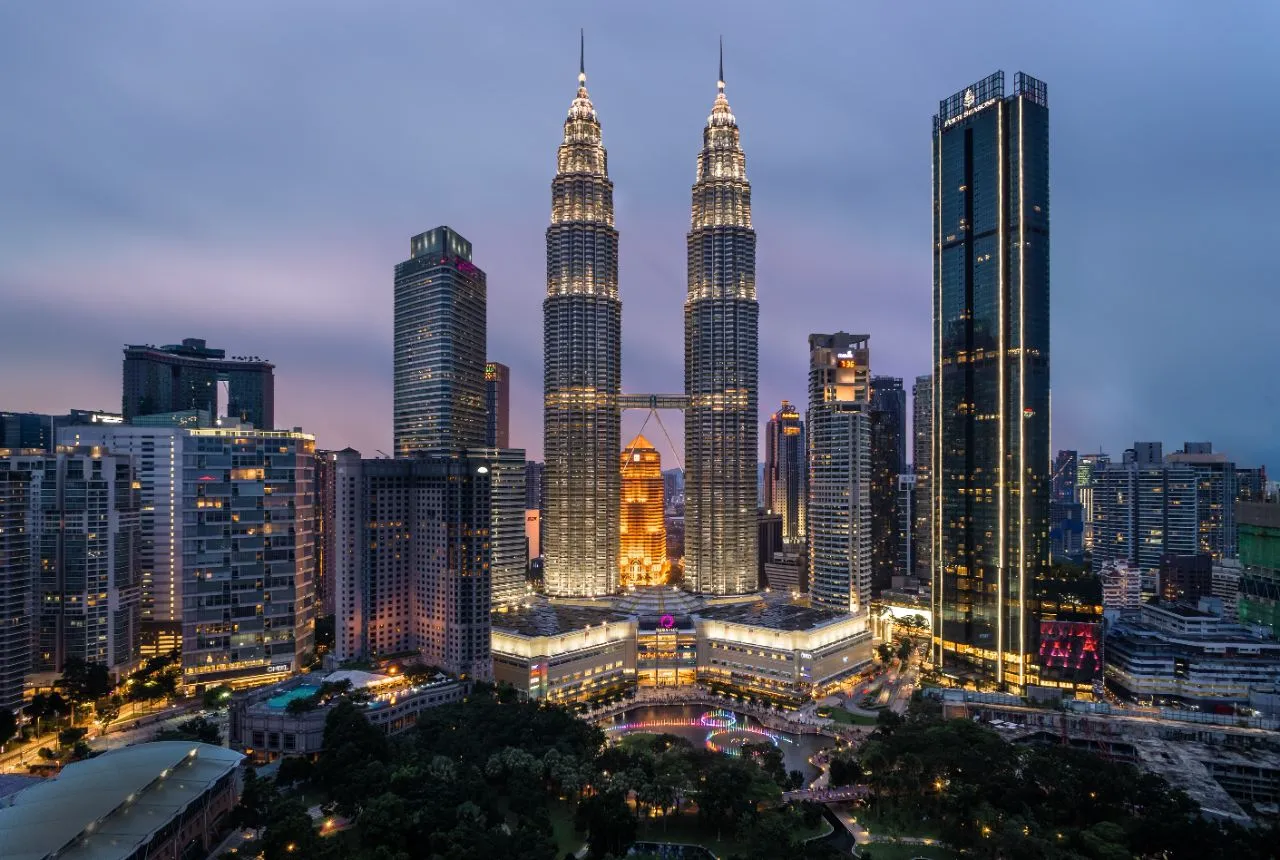
https://asset.coinness.com/en/news/ee36dfcca9140a88d21a03350a092138.webp
Photo by Esmonde Yong on Unsplash

Stablecoin potential

Despite the burgeoning popularity of cryptocurrencies, the inherent volatility in their prices poses a considerable challenge. To address this challenge, stablecoins have emerged as a viable solution. The adoption of stablecoins has gained momentum, particularly in the business-to-business (B2B) segment, where the efficiency of blockchain-based payments and instant settlement can be harnessed without being hampered by the uncertainties of price fluctuations.


It is within the area of stablecoins that BLOX can lend support, given that the entity is responsible for the first Malaysian ringgit-denominated stablecoin (MYRC). Ethan Chung, CEO and Co-Founder of BLOX, expressed enthusiasm about the partnership, stating:

“I’m excited to announce our partnership with AsiaPay, enabling Malaysian merchants to effortlessly accept crypto payments without the need for technical expertise. Empowering businesses, simplifying transactions.”


Regulatory sandbox

The crypto payment exploration, which will be undertaken by the two companies, is being enabled under the auspices of a regulatory sandbox environment provided by Malaysian central bank Bank Negara Malaysia.


Loo Tak Kheong, Country Head and Director at AsiaPay Malaysia, emphasized the added value this collaboration brings to their payment solutions. He said:

“At AsiaPay, we provide payment acceptance solutions with multi-currency, multi-lingual, multi-card, and multi-channeled payment capabilities, which we believe by adding an additional payment method via crypto, will further enhance the value-add service to our Merchants and Partners in the payments ecosystem.”


AsiaPay operates throughout the Asian region, headquartered in Hong Kong but with a local corporate entity also established to serve the Malaysian market.


Malaysia has shown interest in harnessing blockchain for the purposes of international trade and payments. Last year the Southeast Asian country’s Prime Minister had expressed interest in decreasing its dependency on use of the U.S. dollar. Under the guidance of the country’s central bank, Malaysian banks have explored the use of blockchain for the purpose of trade finance.


The country had expressed interest in a central bank digital currency (CBDC) in a financial sector blueprint it had previously published, mapping a way forward from 2022 to 2026. The same document deems decentralized cryptocurrencies like bitcoin to be “non-backed digital assets.” Previously the country’s deputy finance minister had said, “cryptocurrencies like Bitcoin are not suitable for use as a payment instrument due to various limitations.”


This strategic alliance between BLOX and AsiaPay reflects the ongoing evolution of payment systems, positioning both companies at the forefront of the exploration of crypto-as-a-payment means in Malaysia.


More to Read
View All
Web3 & Enterprise·

Jul 11, 2023

Crypto Exchange Loss Deters Temasek from Investing in Crypto Firms

Crypto Exchange Loss Deters Temasek from Investing in Crypto FirmsSingapore’s state-owned investor Temasek has ruled out investing in crypto companies for now, following a $275 million loss in the bankrupt US crypto exchange FTX.Photo by Plato Terentev on PexelsRegulatory uncertainty concernsTemasek’s Chief Investment Officer Rohit Sipahimalani said in a CNBC interview on Tuesday that the regulatory uncertainty in the crypto sector made it very difficult for the fund to make another investment in an exchange.“There’s a lot of regulatory uncertainty in this environment. And I do think that it will be very difficult for us to make another investment and exchange in the middle of all this regulatory uncertainty,” Sipahimalani said.He added that Temasek was not interested in investing in cryptocurrencies, but rather in exchanges that could generate fee-based revenue without taking balance sheet or trading risks. In May, it was reported that Temasek had invested in algorithmic currency system, Array. However, the global investment company was quick to deny those reports.“We’ve never been looking to invest in cryptocurrencies. Even the investment in FTX, we’ll be talking about investing in an exchange, which allowed us to get fee-based revenue without thinking [of] balance sheet risk or any trading risks,” he said. However, he said that Temasek would not be comfortable investing in exchanges given the way things are right now, and that it would depend on the right regulatory framework and investment opportunity.“If you have the right regulatory framework, and we are comfortable with it, and you have the right investment opportunity, there’s no reason for us to not to look at it,” he said. Temasek’s FTX investment was part of its early-stage investment strategy, where it invests in new disruptive technologies and tries to find the next winners, Sipahimalani said.But the strategy backfired when FTX filed for bankruptcy in November, with more than 1.4 million creditors and billions of dollars in liabilities, according to bankruptcy filings.Reputational damageTemasek wrote down its $275 million investment in FTX to zero soon after the collapse of the exchange. However, the bigger concern for the company is the posting of its worst returns since 2016 amid macroeconomic and geopolitical challenges. In the financial year ending in March 2023, the investing behemoth posted a $7.3 billion loss.The FTX loss sparked criticism from Singapore’s Deputy Prime Minister and Finance Minister Lawrence Wong, who called it “disappointing” and damaging for Singapore’s reputation. And that is the greater issue for Temasek relative to FTX.The amount of that particular loss is not that significant, given the size of the company and the scale of losses incurred elsewhere. The issue has been the reputational damage that the company has experienced as a direct consequence. Temasek maintains that it carried out competent due diligence, as have all of the venture capital investors who have all had their FTX investments wiped out.Further details on that due diligence are likely to emerge as Temasek, alongside many other leading investors in FTX, is being sued by creditors on the basis that they gave credence to what transpired to be a fraud. Temasek announced in May that it would cut the salaries of the staff responsible for the FTX investment, after conducting an internal review of the deal.

news
Policy & Regulation·

Jun 21, 2023

Korean Financial Watchdog: Investor Protection Boosts Crypto Market

Korean Financial Watchdog: Investor Protection Boosts Crypto MarketLee Bok-hyun, Governor of the South Korean Financial Supervisory Service (FSS), addressed the issue of investor protection measures in the cryptocurrency market during his speech at the fourth Blockchain Leaders’ Club in Seoul. According to a report by local news agency News1, Governor Lee emphasized that these measures would not hinder the market but instead establish a positive cycle by increasing market confidence and driving industry growth.Photo by Joshua Miranda on PexelsCrypto user protectionTo underscore the importance of safeguarding users in the crypto industry, Governor Lee referred to recent incidents such as the collapse of stablecoin Terra and the failures of Silvergate and Silicon Valley Bank. He highlighted how these examples demonstrate the need for protective measures as the influence of the crypto market extends beyond the financial sector and impacts the real economy.Governor Lee further emphasized the FSS’s commitment to maintaining ongoing communication with the crypto industry and adapting the regulatory system to accommodate the changing landscape. He stated that the FSS would assist the industry in establishing its own self-regulatory system, which includes monitoring suspicious transactions and transparent procedures for virtual asset listing. Additionally, the FSS plans to collaborate with industry insiders to prevent misunderstandings when formulating relevant rules and regulations.Governor Lee also touched on the Virtual Asset User Protection Bill, stating that he expects to see the final draft this summer as it is currently undergoing a legislative process in the National Assembly. He highlighted the government’s commitment to improving market order and minimizing investor losses before the law’s implementation. The government is taking a “same risks, same regulation” approach to prevent regulatory arbitrage and establish effective monitoring systems for virtual asset transactions and on-chain data.Unfamiliar but importantMeanwhile, Lee Yong-woo, a member of the opposition Democratic Party of Korea (DPK), echoed the importance of establishing and improving a regulatory framework for the cryptocurrency industry. He drew parallels between the current situation and the dot-com bubble era, emphasizing the significance of not disregarding the potential of the crypto market due to unfamiliarity.Communication channelLawmaker Lee expressed hope that the Blockchain Leaders’ Club would contribute to shaping a stable crypto market by providing opportunities to listen to the opinions of market participants, which can then be reflected in managing and revising laws and regulations.Today’s event, hosted by News1, saw the gathering of lawmakers, government officials, crypto industry leaders, and academics. Among the participants were People Power Party Lawmaker Yun Chang-hyun, the top executives of the five major Korean crypto exchanges (Upbit, Bithumb, Coinone, Korbit, and Gopax), and the CEO of blockchain gaming company Wemade.

news
Policy & Regulation·

Dec 13, 2023

Dubai approves crypto license for climate-friendly Web3 startup

Dubai approves crypto license for climate-friendly Web3 startupIn a move that shows some potential towards fostering sustainable innovation within the crypto space, Dubai’s Virtual Assets Regulatory Authority (VARA) has granted a conditional license to Web3 Innovations FZE, which trades as “AYA.”Licensed subject to fulfilling conditionsAYA is the Dubai-based subsidiary of Singapore-headquartered Web3 launchpad, incubator and advisory service, Enjinstarter. The license will enable AYA to offer management and investment services related to crypto assets. However, the license remains non-operational at the moment, as it has been awarded subject to the fulfillment of specific conditions outlined by VARA. The conditional license, awarded on Tuesday, has significance as it is indicative of a commitment from the Dubai authorities to supporting environmentally conscious initiatives in the Web3 ecosystem.The license awaits full compliance with VARA’s stipulated conditions and select localization requirements. Enjinstarter’s AYA platform will undergo further regulatory verification and approval once these prerequisites are met, as stated in the official announcement:“The license remains non-operational until the company fully satisfies all remaining conditions and select localization requirements defined by VARA.”Dubai ‘obvious choice’Back in October, Enjinstarter confirmed Dubai as the chosen location for its AYA platform. At the time, Enjinstarter MENA’s Managing Director, Vasseh Ahmed, described it as the “obvious choice.” Vasseh stated:”No other jurisdiction provides the regulatory clarity and sustainability focus we are looking for. Beyond that, there is a palpable sense of action here, specifically in terms of real-world asset regulation and climate action.”Prakash Somosundram, the co-founder and CEO of Enjinstarter and the AYA Foundation, expressed the company’s dedication to adhering to the regulatory process outlined by VARA.Photo by Qingbao Meng on UnsplashClimate-focused launchpadAYA stands out as a climate-focused launchpad, championing sustainability through initiatives such as reforestation, nature credits, mangrove conservation and sustainable agriculture. Beyond its role as a finance platform for green initiatives, AYA actively supports climate action projects, leveraging blockchain and Web3 infrastructure.As AYA works towards fulfilling VARA’s operational license requirements, the company has also unveiled a collaboration with The Storey Group based in the United Arab Emirates (UAE). This joint effort aims to plant mangroves in Dubai, reinforcing AYA’s commitment to combating climate change. Vasseh Ahmed, Managing Director of Enjinstarter MENA, emphasized the company’s mission:“We are looking to work with founders and projects that have a unique proposition within our key focus areas by helping them build their product narrative, raise capital, and launch their projects.”In a recent interview, Deepa Raja Carbon, Managing Director and Vice Chair at VARA, highlighted the regulator’s agile and collaborative approach. VARA remains committed to responding swiftly and effectively to market needs by engaging in conversations with industry leaders, innovators, peer regulators and legislators. Carbon emphasized the comprehensive and market-aligned guidelines crafted in collaboration with Dubai’s established entities, ensuring a unified framework for the evolving crypto landscape.Dubai’s move to grant a conditional crypto license to AYA appears to reflect a forward-thinking approach, aligning with global efforts to integrate sustainability into the rapidly evolving Web3 and crypto ecosystem.

news
Loading