Top

Spot bitcoin ETF approval triggers surge and shift in Korean crypto exchange performances

Markets·January 15, 2024, 5:46 AM

The U.S. Securities and Exchange Commission (SEC) approved the spot bitcoin exchange-traded fund (ETF) last Tuesday, prompting South Korean investors to flock to cryptocurrency exchanges to make transactions. However, the revenues recorded by these exchanges showed a mixed performance in response to this development due to their differing transaction fee policies, according to local news outlet DealSite on Monday.
https://asset.coinness.com/en/news/cf013a7eead4f3becf960b0a353a47e9.webp
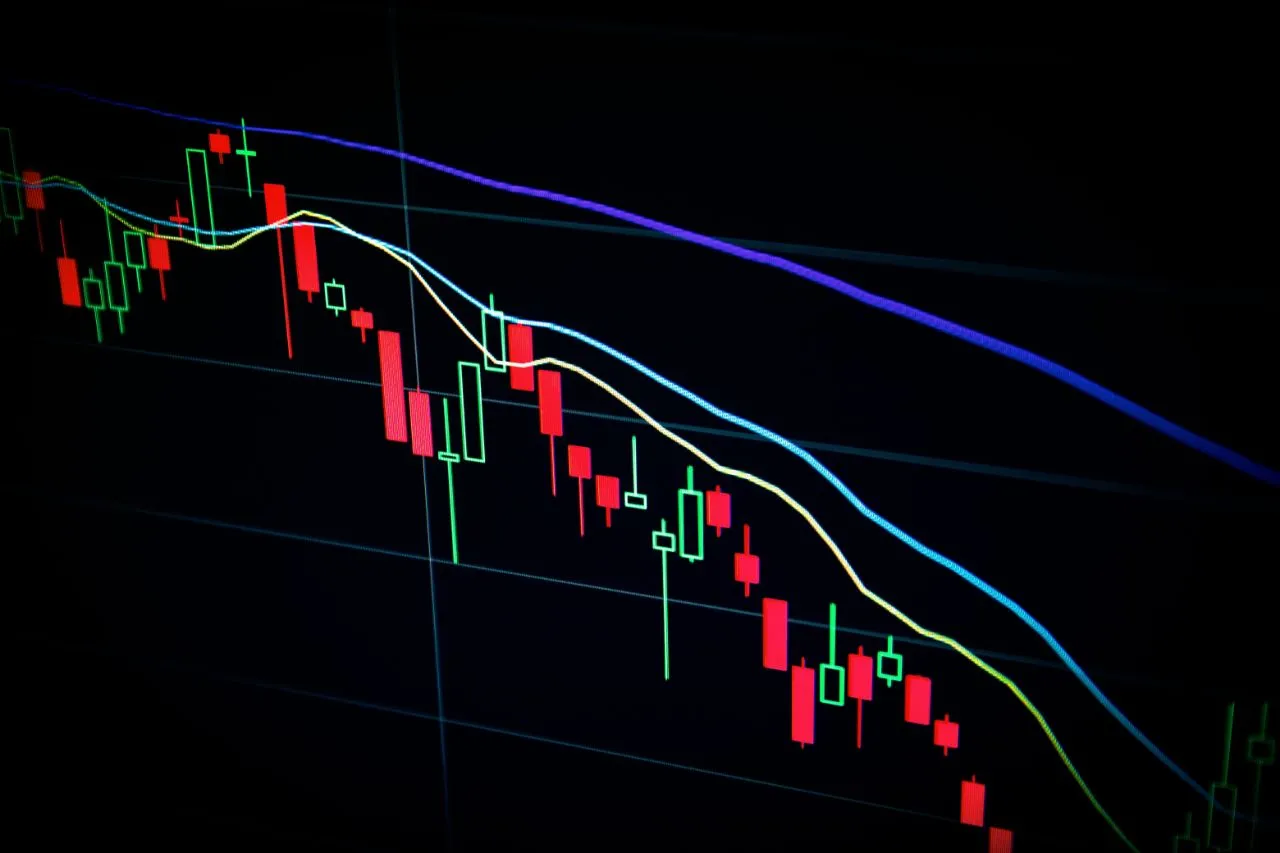
Photo by Maxim Hopman on Unsplash

Trading volumes surge and retreat

According to crypto analytics platform CoinGecko, as of 9 a.m. on Jan. 12 (KST), Upbit's trading volume on Dec. 11 and 12 was approximately $5.1 billion and $6.1 billion, respectively, for a total of about $11 billion. During the same period, Bithumb recorded $2.6 billion and $2.4 billion, respectively, totaling nearly $5 billion. However, as of this writing at 11 a.m. on Jan. 15, Upbit’s 24-hour trading volume has dropped back down to $2.1 billion and Bithumb to $874 million.


"After the SEC's approval, crypto exchanges were simultaneously flooded with transactions," an anonymous industry employee commented. "Bitcoin and Ethereum were mainly traded."


Fee divergence

Although the ETF approval caused a general uptick in trading volumes, the amount of revenue that the exchanges earned from transaction fees varied. Upbit charges a fee of 0.05% for both buying and selling crypto, meaning the exchange made an estimated KRW 14.8 billion in revenue from the fees from Dec. 11 to 12.


Bithumb, on the other hand, hasn't earned any revenue from trading fees since its zero-fee policy was implemented in October last year. 


Bithumb had previously charged 0.25% for transactions and 0.04% with coupons. By implementing the former, the exchange lost about KRW 15.8 billion ($12 million) in revenue, and with the latter, it lost about KRW 2.5 billion. For crypto investors, Bithumb's zero-fee policy has made investing more accessible, but the exchange is unlikely to reap its own rewards.


Significant investor interest

Moreover, with trading for the spot bitcoin ETF beginning on the 11th, the influx of funds is expected to boost trading. "All told there were 700,000 individual trades today in and out of the 11 spot ETFs," Bloomberg ETF analyst Eric Balchunas told X (formerly Twitter). "For context, that is double the number of trades for $QQQ." $QQQ refers to the Invesco QQQ ETF.


According to an image that accompanied Balchunas’ post, the total trading volume across all 11 spot ETFs was reportedly $4.3 billion. Grayscale's GBTC had the highest volume at $2.1 billion, followed by BlackRock’s IBIT at $1 billion and Fidelity’s FBTC at $673 million.


More to Read
View All
Policy & Regulation·

Dec 23, 2023

Hong Kong regulators signal embrace of spot crypto ETFs

Hong Kong regulators signal embrace of spot crypto ETFsHong Kong has signaled its readiness to usher in spot crypto exchange-traded funds (ETFs), as the Securities and Futures Commission (SFC) and the Hong Kong Monetary Authority (HKMA) jointly announced on Friday that they are prepared to accept applications for such funds.Photo by Oskar Kadaksoo on UnsplashUpdated virtual asset-related policyIn a set of circulars released, a joint circular representing both regulators and a separate circular published by the SFC, they outlined the updated policy for intermediaries engaging in virtual asset-related activities.The SFC, responsible for overseeing financial markets in Hong Kong, expressed its openness to applications for the authorization of funds with exposure to virtual assets, specifically mentioning virtual asset spot exchange-traded funds (VA spot ETFs).This move expands beyond the existing crypto futures ETFs, demonstrating Hong Kong’s commitment to adapting its regulatory landscape to the evolving crypto market. It also builds on positive commentary made by SFC CEO Julia Leung on the subject last month. Leung stated that the regulator was open to the notion of retail participation in spot crypto ETFs in Hong Kong.Leung stated:“We welcome proposals using innovative technology that boosts efficiency and customer experience. We’re happy to give it a try as long as new risks are addressed. Our approach is consistent regardless of the asset.”Use of license platformsFriday’s SFC circular emphasized that transactions conducted by these ETFs must occur through SFC-licensed crypto platforms or authorized financial institutions. The SFC outlined that both in-kind and in-cash subscription and redemption methods are permissible for SFC-authorized spot VA ETFs, providing flexibility in fund management.Custody requirements were also addressed, with the SFC specifying that the trustee or custodian must delegate its crypto custody function exclusively to an SFC-licensed Virtual Asset Trading Platform (VATP) or entities meeting the crypto custody standards set by the HKMA.Industry responseThese latest circulars from the regulators have prompted a response from the industry. The Hong Kong Stock Exchange has reacted, welcoming the announcement. It believes that such a move would serve to strengthen Hong Kong’s position as a digital asset hub in the region. The exchange already lists a number of crypto futures ETFs, with multinational investment bank UBS having recently extended access to these products to its Hong Kong-based high-net-worth clients.While the regulatory landscape in the United States in 2023 has proven to be hostile, one very positive development appears to be ongoing work towards spot bitcoin ETF approval. Although still a matter of speculation, many industry commentators believe that approval will come through on Jan. 10. The advent of spot bitcoin and crypto ETFs in both eastern and western markets would likely make for an extremely bullish 2024 for the industry.Hong Kong’s move towards spot crypto ETFs aligns with its proactive stance in adapting to the rapidly evolving crypto landscape. The regulatory framework, as outlined in the circulars, reflects a balance between fostering innovation and ensuring investor protection. The city’s financial authorities have taken a comprehensive approach to review and update policies, once again signaling their ongoing commitment to embracing the growing role of virtual assets in the financial world.

news
Web3 & Enterprise·

Dec 27, 2023

Dunamu releases content from Upbit D Conference for free on YouTube

Blockchain and fintech company Dunamu has decided to release videos and presentations from the Upbit D Conference (UDC) 2023 — one of the biggest blockchain events in the country this year — for free on the official UDC YouTube channel, as stated in an official press release on Tuesday (KST). According to the company, it aims to support and revitalize the blockchain industry by making the content publicly available, although the offline event had an admission fee.Photo by Andrei Stratu on UnsplashExpert insightsNow in its sixth year, UDC has evolved into a comprehensive conference covering not only technology, but policies, finance and culture as well. Touting the slogan “All That Blockchain,” this year’s event brought together 39 local and international experts to present an in-depth vision of the trajectory of the blockchain industry. The conference featured a series of sessions led by key industry figures such as Matt Sorg, Head of Technology at the Solana Foundation; Roger Ver, founder of Bitcoin.com; and Oh Se-hyeon, Executive Vice President of SK Telecom, who spoke on various topics like AI, blockchain and Web3. Active online participationThis year’s UDC was also the first to be held both on and offline in a hybrid format to expand access for a bigger audience. The offline event was held at the Grand Walkerhill Seoul hotel on Nov. 13 and was streamed via YouTube. It attracted a record number of online visitors, with more than 100,000 total views on the livestream and up to 10,000 viewers watching at once. The online sessions featured guests like Laura Shi, Head of International Expansion at Consensys, who explained the convenience of using digital asset wallets for managing digital asset transactions. In addition, Pacman Blur, Core Contributor at Blur, touched on the future of NFTs and their role in Web3 ecosystems. A summary of the conference’s events and discussions can be found in the UDC 2023 Report, which is available in both Korean, English and Chinese on the UDC website. “We hope that content from UDC 2023 will bring knowledge and vision of blockchain to more people,” the company said.UDC has become increasingly popular since its inception, with more than 23,100 attendees participating over the last six years. All of the videos from this year’s conference have racked up a cumulative view count of 1.28 million as of November.

news
Web3 & Enterprise·

Jan 17, 2024

Klaytn Foundation and Finschia Foundation to jointly launch largest blockchain network in Asia

The Klaytn Foundation and Finschia Foundation have jointly submitted a governance proposal to launch a new mainnet created by merging their respective blockchain ecosystems. The proposals have been submitted for open discussion, with voting scheduled for Jan. 26 to Feb. 2, according to an official announcement on Wednesday (KST).Photo by Shubham's Web3 on UnsplashThe main objective of this initiative is to create Asia’s largest Web3 ecosystem by combining key features of both blockchains. To do so, the two foundations plan to share their technologies, services and business networks and fortify connections between their partners like their mother companies Kakao and LINE, who have contributed to their development and expansion. “We are excited to be taking the first step toward unlocking the enormous synergy of merging the public blockchains started by Kakao and LINE, which are both leading IT companies in Asia,” the two foundations said. “We will give our best to make this merge an opportunity to innovate and lead the Asian blockchain industry in both technology and adoption.” An unprecedented mainnet ecosystemThe merger will bring together Klaytn and Finschia’s networks in different Asian countries, like Klaytn’s leverage in South Korea, Singapore and Vietnam, and Finschia’s service network in Japan, Taiwan, Thailand and Abu Dhabi. Once the combined ecosystem is launched, it will offer over 420 decentralized apps (dApps) and services, 45 governance partners and some 450 Web3 resources, becoming a mammoth Web3 network capable of swaying the trajectory of the Asian market. In addition, the blockchain will be connected with both Kakao and LINE messengers – two well-known messenger apps in Asia – opening up access to a vast continental user base of over 250 million people. The integration is also expected to catalyze the creation of new Web3 infrastructure in Asia, boosting scalability and liquidity. Future business plansThe joint foundation is specifically set to undertake projects in areas like RWA tokenization, GameFi, DeFi verticals, messenger-based Web3 services and digital commerce through partnerships with Japanese, South Korean and Southeast Asian firms. By leveraging its access to Kakaotalk and LINE users, the new public blockchain has the potential to be a springboard for IT and entertainment enterprises in Asia. Improved tokenomicsWhat may especially interest shareholders and users alike is a new native token that will be issued on the merged network, replacing the foundations’ respective tokens KLAY and FNSA. Holders of KLAY and FNSA will be able to swap their tokens for the new one. The proposed tokenomics system for the new token emphasizes sustainable value creation. This includes a lower base inflation rate and a 3-layer burning model created to encourage deflation as activity on the network increases. 24% of newly issued tokens will also be burned immediately as a trustworthy Zero Reserve Tokenomics measure. This will all be supported via an ecosystem fund and infrastructure fund that are constantly replenished via block rewards, rather than relying on reserves.Enhanced governance and interoperabilityKlaytn and Finschia also plan to bring together their experiences in practicing good governance to build a  permissionless node validation system to put the spotlight on users and the community, promoting transparency, trust and openness. To support the seamless migration and interoperability of existing dApps and services on Klaytn and Finschia, the merged chain will support the smart contract platforms EVM and CosmWasm. Ethereum and Cosmos builders will thus be able to gain access to the network. The foundations are set to host an upcoming event called Klaytn Community Town Hall on Friday to introduce the proposal and facilitate open dialogue and feedback.

news
Loading