Top

3AC Co-founder offers unusual perspective on Singapore prison time

Policy & Regulation·January 24, 2024, 2:17 AM

Su Zhu, the co-founder of the now-defunct Singaporean crypto hedge fund Three Arrows Capital (3AC), raised some eyebrows within the crypto community recently, having shared unconventional thoughts on his time spent in a Singaporean prison.


Zhu's arrest took place in October of last year in Singapore, where he was apprehended while attempting to flee. Liquidators of 3AC had tipped off police in the city-state that Zhu was going to Changi airport, a number of days after they had secured a court order against him for failing to cooperate with their efforts to wind up the company. Alongside his business partner, Kyle Davies, Zhu was sentenced to four months in prison for contempt of court following a committal order.

https://asset.coinness.com/en/news/f6be5396a8536b3d223218f91cf39cc2.webp
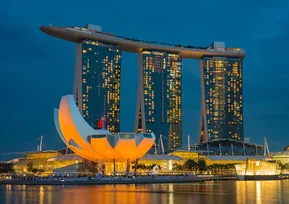
Photo by Christian Lue on Unsplash

‘Enjoyable experience’

Clips from an unreleased podcast were published on social media on Monday, in which Zhu referred to his time in prison as an "enjoyable experience overall." In the video podcast, Zhu expressed gratitude for his incarceration, even going so far as to claim that he had the "best sleep" of his life while behind bars.


Zhu suggested that everyone should have the opportunity to experience prison at least once, believing it to be a beneficial and enlightening experience. He provided insights into his daily life during incarceration, emphasizing the simplicity of entertainment and drawing parallels with activities from "ancient days."


The disgraced crypto boss discussed the routines and privileges within the prison facility, including access to ample reading material, opportunities for exercise and a structured diet. He highlighted the ability to read books and engage in physical activities like push-ups during his time in prison.


What particularly impressed Zhu was the quality of sleep in the prison environment. He also found a sense of connection with his ancestors through the use of mats instead of beds.


Crypto community response

Crypto users on various platforms responded with mixed feelings toward Zhu's philosophical insights. Some viewed his perspective with skepticism, while others found humor in the apparent contrast between his experiences and traditional notions of imprisonment.


Taking to the X social media platform, pseudonymous crypto restructuring lawyer "Wassielawyer" wrote:

”Singapore prison is widely regarded as one of the shittiest prisons you can find in a first world country. And the man made it sound like a 5-star mindfulness retreat everyone needs to go on in order to revitalize mind, body and soul. Man is blessed with a superpower…”


The hedge fund collapsed in June 2022, resulting in over $3.5 billion in losses for investors, making it one of the largest hedge-fund trading losses ever. Zhu and fellow 3AC founder Kyle Davies have been active online over the course of the past year, despite their whereabouts largely remaining unknown during that time.


The duo have launched a new crypto exchange and bankruptcy claims platform called Open Exchange (OPNX). However, their troubles continue, as liquidator Teneo seeks to recover $1.3 billion directly from the founders, alleging misuse of investor funds after 3AC became insolvent. In September, the Monetary Authority of Singapore (MAS) prohibited both from floating regulated investments for nine years. Teneo has estimated a 46% recovery rate in respect of creditor claims.


More to Read
View All
Policy & Regulation·

Apr 26, 2023

Ripple Exec: Clear Regs Helped Japanese Market Withstand Crypto Winter

Ripple Exec: Clear Regs Helped Japanese Market Withstand Crypto WinterEmi Yoshikawa, the Vice President of Strategy & Operations at business-focused crypto solutions provider Ripple, has attributed the Japanese cryptocurrency market’s ability to withstand the recent crypto winter to well-defined regulations.©Pexels/WorldspectrumSecurity breach at Mt.GoxIn a recent interview with Korean blockchain media outlet Digital Asset, Yoshikawa noted that Japan implemented regulations on cryptocurrencies earlier than other countries, in part due to the 2014 security breach at the Tokyo-based Bitcoin exchange Mt.Gox that resulted in investor losses.The Mt.Gox exploit prompted revisions to the Payment Services Act, which now recognizes cryptocurrencies as a means of payment. Furthermore, the Financial Instruments and Exchange Act was revised in 2020 to give security tokens the same status as stocks. The Japanese government is also exploring the possibility of allowing the domestic circulation of foreign stablecoins.Although it took several years for companies to enter the market after the regulatory framework was established, the security token market has since expanded, with more businesses now participating.Yoshikawa credited the Japanese crypto market’s resilience during the recent global crypto winter to clear regulatory guidelines. The recognition of cryptocurrencies as financial instruments enabled the regulation of not only spot trading but also derivatives trading. Japanese exchanges are also required to hold customer funds separately in trust firms, ensuring investor protection. This regulatory environment allowed companies and investors to confidently enter the crypto industry last year.FTX JapanFTX Japan’s return of customer assets and resumption of withdrawals in February showcased the effectiveness of these clear regulatory guidelines. Among subsidiaries of the now-defunct crypto exchange FTX, FTX Japan is the only one to have returned customer assets thus far, Yoshikawa emphasized.While crypto regulations in some areas, such as taxation, remain insufficient, both the Japanese government and entrepreneurs agree that the Web3 industry should develop in a way that benefits the nation’s economy.Ripple’s projects in JapanYoshikawa said that Ripple views the Japanese market as one of its key markets. In 2016, the company formed a joint venture, SBI Ripple Asia, with Japanese financial group SBI Holdings. Through this partnership, Ripple collaborated with several Japanese financial institutions to launch RippleNet and provide liquidity to the payment service.Japan’s largest remittance technology firm, SBI Remit, has adopted RippleNet and Ripple’s own remittance system On-Demand Liquidity (ODL) to facilitate real-time payments between Japan and Southeast Asian nations. Yoshikawa underlined that Ripple is committed to supporting Southeast Asian workers in Japan who need swift and cost-effective international payments.

news
Policy & Regulation·

Jun 08, 2023

South Korea, Chainalysis Collaborate to Thwart North Korea’s Crypto Crimes

South Korea, Chainalysis Collaborate to Thwart North Korea’s Crypto CrimesSpecial Representative for Korean Peninsula Peace and Security Affairs Kim Gunn from the Ministry of Foreign Affairs held a meeting with Investigations VP Erin Plante and Korea Country Manager Paek Yong-khi of Chainalysis, a New York-based blockchain analysis company, according to the Ministry’s press release.Photo by Pixabay on PexelsGrowing North Korean crypto theftsSpecial Representative Kim and the Chainalysis representatives discussed response measures against North Korea’s increasing virtual asset theft and money laundering activities. Both sides recognized the severity of North Korea’s illegal cyber activities, which not only jeopardize national security by funding nuclear and missile development, but also threaten the establishment of a healthy cryptocurrency ecosystem.Chainalysis has been tracking North Korea’s illicit virtual asset operations and providing analytical information to a range of organizations, including law enforcement agencies and financial authorities.Special Representative Kim expressed gratitude for the private sector’s role in analyzing and monitoring North Korea’s crypto theft and money laundering activities. Both parties concurred on the importance of public-private cooperation to strengthen countermeasures against illegal cryptocurrency activities as North Korea’s techniques have become increasingly sophisticated.Plante also appreciated the South Korean government’s initiative in thwarting North Korea’s illicit cyber activities. These measures include imposing independent sanctions on North Korean hacker organizations and tech personnel and establishing a working group with the United States to counter North Korean cyber threats.Korean police and ChainalysisIn addition to its collaboration with the Ministry of Foreign Affairs, Chainalysis has been working with another Korean government agency. It was recently reported that the Korea National Police Agency (KNPA) is intensifying its efforts to enhance its expertise in investigating digital asset-related crimes. To achieve this goal, the KNPA is encouraging its officers to obtain certifications provided by Chainalysis.

news
Web3 & Enterprise·

Feb 02, 2024

DeFiance Capital notches up another legal victory in 3AC dispute

In the ongoing legal tussle over cryptocurrency assets, the High Court of Singapore has rejected a plea by the bankrupt crypto hedge fund Three Arrows Capital (3AC) to dismiss a lawsuit filed by Arthur Cheong, the founder of Web3 investment firm DeFiance Capital. This ruling represents a pivotal moment in the $140 million dispute, shedding light on the ownership and control of assets, while building upon DeFiance Capital’s previous success back in August of last year in having its preference for jurisdiction in Singapore endorsed.Photo by Tingey Injury Law Firm on UnsplashRecognizing assets held in trustOn Jan. 26, a Singapore judge ruled against 3AC's request to have Cheong’s claim thrown out, stating that DeFiance Capital has adequately demonstrated the existence of a Singapore-based trust safeguarding its assets. This revelation could potentially shield DeFiance Capital from 3AC's liquidators, marking a crucial juncture in the legal battle. The dispute traces back to an agreement where Cheong was set to launch an independent fund on the 3AC Group platform, with ownership and control vested in DeFiance Capital. This fund, leveraging 3AC's infrastructure, faced disagreements over the transfer of certain assets, whose undisclosed value became a point of contention in court documents. The downfall of the $10 billion 3AC hedge fund, responsible for the "Super Cycle" thesis predicting perpetual crypto price increases, had widespread repercussions in the crypto industry. DeFiance Capital bore the brunt of this collapse and the recent court ruling brings the firm closer to resolving the aftermath favorably. The ongoing argument holds strategic importance for DeFiance Capital, as the investment firm challenges any legal obligation for its shareholders to compensate 3AC creditors. "Wassielawyer," a pseudonymous restructuring attorney advising DeFiance Capital's founder Arthur Cheong, highlighted the significance of this stance on social media. Positive signThe judge's acknowledgment of the trust, while not conclusive, is viewed as a positive sign for DeFiance Capital. In a series of posts on the X social media platform, Wassielawyer outlined on Thursday that he sees this as "much-needed vindication" for Cheong, signaling a potential turn in favor of the investment firm. Wassielawyer emphasized that DeFiance Capital merely utilized 3AC's legal structure, without commingling operations. This distinction becomes crucial as carefully drafted legal documents form the basis for 3AC creditors attempting to seize DeFiance Capital funds. The restructuring professional added:”[DeFiance Capital] have on the basis of the substantive facts, ran an argument that the assets of DCs should not be used to pay back 3AC creditors. This eventuality would be manifestly unjust, enriching the creditors of 3AC at the expense of innocent DC investors.” Once a major player in the crypto hedge fund arena, 3AC's demise resulted from exposure to Terra, staked Ethereum and Grayscale's Bitcoin Trust. The bankruptcy filing on June 30, 2022, marked the end of an era for the once-mighty fund. Established in 2020, DeFiance Capital specializes in crypto investments, focusing on decentralized finance and GameFi. It has supported projects such as dYdX, Aave and Lido. This decision establishes a precedent for similar cases, particularly in jurisdictions like Singapore, emerging as pivotal hubs for cryptocurrency and blockchain-related activities. The outcome holds implications for how such legal disputes will be handled in the future, shaping the landscape of crypto-related legal proceedings. 

news
Loading