Top

BSN Foundation launches in Singapore with five global members

Web3 & Enterprise·November 17, 2023, 1:58 AM

The BSN Foundation, a Singapore-based organization dedicated to building global blockchain infrastructure, on Thursday officially announced its five founding members from different regions and sectors.
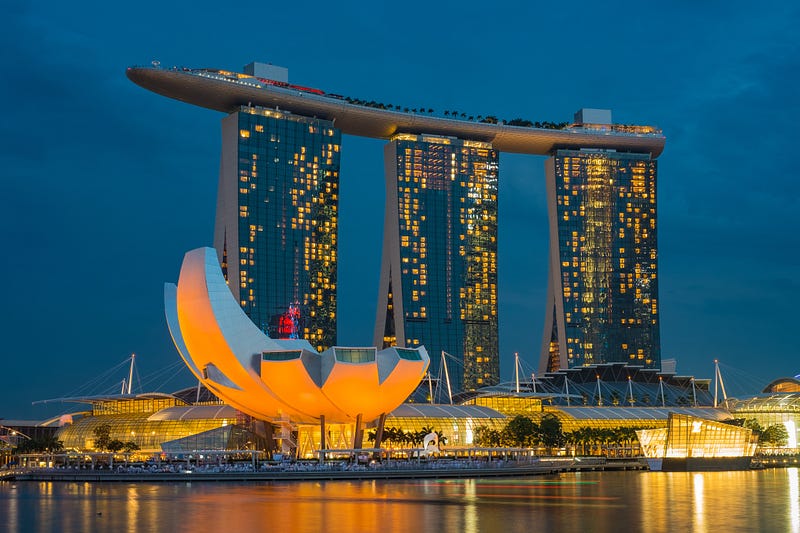
Photo by Julien de Salaberry on Unsplash


Broad representation

The founding members of the BSN Foundation include Blockdaemon, a leading institutional digital asset wallet provider; Zeeve, a Los Angeles-based blockchain infrastructure automation platform; TOKO, a Hong Kong-headquartered digital asset creation platform; GFT Technologies, a German tech firm specializing in financial services and Red Date Technology, a tech firm behind the BSN Spartan Network located in Hong Kong.

Representatives from these entities gathered at the Pan Pacific Singapore on Thursday for a launch event. The BSN Foundation will act as the governing body of the BSN Spartan Network, a public infrastructure network based on open-source virtual data centers. The launch of the foundation marks a major milestone in the BSN’s global expansion and its vision to establish a decentralized public layer of the internet.

In discussion with Cointelegraph, Tim Bailey, the Vice President of Global Business at Red Date Technology, stated:

“The BSN Foundation launch is a vital step in our global expansion, demonstrating the international recognition and support for the BSN Spartan Network’s concept and goals.” He added:

“These organizations bring expertise in areas like blockchain-as-a-service, asset tokenization, financial services, and consulting, highlighting the wide applicability and potential of the BSN Spartan Network.”

Bailey emphasized that the BSN Spartan Network is designed to change the application and governance of public chain technology. “By focusing on non-cryptocurrency public chains and a decentralized governance model, we’re not just innovating in technology but also in how global collaborations can shape the future of IT infrastructure,” Bailey stated. BSN’s strategy is focused on creating a “more stable and accessible network” for businesses around the world, distancing itself from the volatility related to traditional cryptocurrencies like Bitcoin.


Chinese origins

The BSN Spartan Network, launched in September 2022, features a non-tradable token (NTT) issued on its default chain. Each of the network’s data centers is equipped with a single registered NTT wallet for managing and holding these tokens. NTTs can be acquired using fiat currency, selected stablecoins or through various incentive programs.

The BSN Spartan Network, which originated in China as the “Blockchain-based Service Network” in early 2020, was developed with the backing of the Chinese government.

“BSN was indeed originally initiated in China. However, the BSN Spartan Network, governed by the Singapore-based BSN Foundation, is distinct from the BSN Networks in mainland China,” Bailey stated. He highlighted that the BSN Spartan Network is constructed following global standards, is entirely open source and maintains independent operations from the BSN Networks present in mainland China.


UDPN proof of concept

BSN, driven by Red Date Technology as its lead developer, had outlined plans to develop a universal digital payments network (UDPN) as early as 2021. That project continues to progress. Last month, it emerged that SC Ventures, the Singapore-based fintech investment subsidiary of British banking conglomerate Standard Chartered, had partnered with Deutsche Bank in a first proof of concept (POC) of the UDPN. That POC resulted in real-time transfers and swaps of synthetic USDC and EURS stablecoins between the two banks.

More to Read
View All
Policy & Regulation·

May 02, 2023

Binance APAC Head Urges the Korean FIU to Approve Gopax’s Exec Changes

Binance APAC Head Urges the Korean FIU to Approve Gopax’s Exec ChangesIn a recent interview with Yonhap News, Leon Sing Foong, Binance’s head of Asia-Pacific operations, emphasized the importance of the Korean financial regulator approving the change of executives at Gopax, a Korean crypto exchange.©Pexels/freestocks.orgDelayed staked asset returnFoong’s comments came in the face of mounting worries regarding the delayed repayment of assets stored in Gopax’s staking service GOFi. He explained that 25% of the assets staked in GOFi have been repaid, and the remaining assets will be refunded after approval of the Financial Intelligence Unit (FIU) of the Korean Financial Services Commission (FSC) is secured.Foong was appointed as the new CEO of Gopax last February, with Binance becoming the largest shareholder of Gopax’s operator Streami. In March, Gopax submitted an application to the FIU to inform them of the executive changes, as required by Korean law.However, the application review has been delayed amid concerns about the unclear location of Binance’s headquarters and its regulatory challenges in the US.Controlling staking servicesThe Binance executive believes Gopax’s staking service should be controlled by the exchange itself, rather than a third party. The current GOFi issue emerged due to Gopax’s management of its custody assets through crypto lender Genesis, which ceased trading following the FTX bankruptcy. Foong stated that Binance will require Gopax to maintain reserves of over 100% and eventually phase out the third-party-based service.According to Foong, Gopax’s business model will remain unchanged, and the exchange will work alongside Binance to bolster liquidity within the local market while enhancing both infrastructure and security measures. He considers internal risk management as Gopax’s top priority.Risk assessmentFoong also expressed confidence in the upcoming risk assessment of Gopax by Jeonbuk Bank, recently requested by the Korean Financial Supervisory Service (FSS). He said that the exchange is healthy, and that Binance has high-level anti-money-laundering (AML) capabilities.Korean law mandates crypto exchanges supporting Korean won trading have real-name bank accounts, and Gopax receives such accounts from its partner Jeonbuk Bank.Binance’s Asian expansionBinance’s endeavor to enter the Korean market is part of its strategy to expand its presence in Asia. It was previously reported that Binance Japan will start its operations around June this year.

news
Policy & Regulation·

Feb 21, 2024

Regulatory clarity spurs traditional brokerages’ interest in Hong Kong

In less than a year since Hong Kong regulators gave the green light to crypto exchanges, there's been a noticeable surge of interest among traditional financial institutions and brokerages eager to secure their digital asset licenses for trading.Photo by Florian Wehde on UnsplashTiger BrokersTiger Brokers, a Beijing-headquartered one-stop trading brokerage with nine million international customers, offers one such example. The firm upgraded its Type 1 Hong Kong Securities & Futures Commission (SFC) license in January to include crypto trading for professional investors and financial institutions based in Hong Kong. The move followed an uptick in interest from mainland China-based firms in Q4, 2023.In a recent interview with Cointelegraph, John Fei Zeng, the CFO and director of Tiger Brokers, revealed that the firm currently boasts 865,500 funded accounts in Hong Kong, managing $18.9 billion in assets. Zeng stated: "Residents of Hong Kong will be able to trade virtual assets such as Bitcoin and Ethereum alongside stocks, options, futures, funds, and ETFs [Through Tiger Trade]." He explained that as part of the firm's expansion plans, additional digital assets will be evaluated. HKMA guidance on crypto custodyAs a testament to the regulatory clarity that has attracted firms like Tiger Brokers, on Tuesday Hong Kong's central bank issued guidance for authorized institutions interested in offering custody services for digital assets. The Hong Kong Monetary Authority (HKMA) outlined comprehensive risk assessment procedures and emphasized the importance of robust policies, oversight, and resource allocation to manage custodial activities effectively. Notably, the HKMA's guidance seeks to address concerns stemming from recent industry mishaps, including the collapse of FTX, Terra and Three Arrows Capital (3AC), by mandating stringent safeguards to protect clients' digital assets from theft, fraud or misappropriation. Key requirements include independent systems audits, secure storage practices and transparent record-keeping, underscoring the regulator's commitment to fostering trust and stability in the digital asset ecosystem. Victory SecuritiesIn a similar move to that of Tiger Brokers, Victory Securities, another Hong Kong brokerage, secured a license from the SFC last November to offer crypto trading services for retail investors. The company reported a significant surge in virtual asset transactions and new customer acquisitions, prompting plans to introduce trading discounts to incentivize compliant and safe virtual asset trading services. Moreover, OSL, a licensed Hong Kong crypto exchange, joined forces with Interactive Brokers in November 2023, enabling the latter to offer bitcoin and ether trading to retail investors through its platform. Further underscoring the evolving regulatory landscape, crypto exchange Bybit submitted a retail trading license application in Hong Kong, indicative of the sector's continued growth and maturity. Nevertheless, navigating the regulatory framework isn't without its challenges. Web3 firms eyeing Hong Kong may need to invest up to $25 million in corporate infrastructure and compliance to secure licensing approval, reflecting the stringent requirements imposed by regulators. As Hong Kong continues to refine its regulatory framework and enhance investor protections, the stage is set for further collaboration between traditional financial institutions and emerging crypto players within the Chinese autonomous territory.

news
Markets·

Jan 09, 2024

The coming crypto bull run ‘an Asian story’

Australian venture capitalist and founder of MHC Digital Group, Mark Carnegie, is optimistic about bitcoin's potential for a bullish trend, while believing that Asia will be the real force driving the market beyond the exchange-traded fund (ETF) approval hype in the United States.Photo by Hans Eiskonen on Unsplash$50,000 bitcoin retestIn a recent interview with CNBC, Carnegie expressed his belief that bitcoin is "clearly primed for a bit of a run and a retest to $50,000." The bitcoin unit price stood at around $43,600 at the time of the interview. At the time of writing, it’s weighing in at $46,773. While there’s likely to be considerable resistance in the leading cryptocurrency getting past the psychologically important $50,000 level, the digital asset is certainly heading in the direction that Carnegie had predicted. Looking ahead, Carnegie shared his short-to-medium-term outlook, stating:"So my feeling is short term, long, medium term, which is, you know, 30 to 90 days, probably a retrace." This suggests that Carnegie anticipates a positive trajectory for bitcoin in the coming months, likely as an initial response to a spot bitcoin ETF approval in the U.S. Last week a report from Singapore-based digital asset financial services firm Matrixport speculated that spot bitcoin ETF applications would be rejected as they have been over the past few years. Market risk factorsHowever, he also voiced concerns about the current state of the U.S. equity markets and potential recession indicators. Reflecting on the recent miss on payrolls, Carnegie commented:"I feel like that miss on payrolls last week makes me feel like there's a big flip. And everyone's going to start panicking about a recession." Despite the uncertainty in traditional markets, Carnegie remains optimistic about bitcoin's performance. When asked about the specific impact on cryptocurrencies, he admitted, "How's that going to affect crypto? I don't really know." In a blog post published last Friday, Arthur Hayes, the CIO of Hong Kong-based family office Maelstrom, similarly points to market turbulence in the short to medium term while remaining bullish on bitcoin over the longer term. An Asia-powered bull runCarnegie highlighted the influence of spot bitcoin ETFs and suggested inflows, noting that there are more net flows from Asia than the U.S. He stated:“You could easily see $50 - $100 billion in net new flow out of Asia this year, and if that happens..!” He mentioned the anticipation of approximately $5 billion waiting to come into the U.S., characterizing it as substantial but perhaps not as impactful as expected in the short term. "It's an Asian story this time round,” Carnegie claimed. Carnegie also expressed a preference for bitcoin over Ethereum in the current financial landscape. He stated:"Bitcoin feels more solid to me at the moment. So on a relative basis, I can talk like I can talk to you. I feel like for the next little while, Bitcoin feels better to me than Ethereum." Mark Carnegie's positive outlook on bitcoin's potential rally to $50,000 aligns with his preference for bitcoin over Ethereum in the current market conditions, despite concerns about the broader economic landscape.  

news
Loading