Top

Mt. Gox moves $9B in Bitcoin for first time in years

Markets·May 29, 2024, 8:24 AM

Wallets belonging to the defunct Japanese Bitcoin exchange Mt. Gox have transferred over 140,000 Bitcoin (BTC), valued at approximately $9 billion, to an unknown address. 


Sell-off fears

This significant movement began in the early hours of Tuesday morning in Asia, marking the first such transfer from Mt. Gox’s cold wallets in over five years. Julio Moreno, head of research at CryptoQuant, initially confirmed that 12,239 Bitcoin had been transferred from Mt. Gox over the course of an hour. A short time later, he provided an update on X, stating:

"All coins have been transferred to a new address."


Despite market disquiet, the prevailing view which subsequently emerged is that the transfer is believed to be part of a plan to distribute assets back to creditors before the October 31, 2024 deadline. Alex Thorn, head of research at Galaxy Digital, shared his perspective on X, suggesting that most of the transferred Bitcoin would likely be held by creditors rather than being sold on the open market.


Despite these reassurances, the market reacted negatively for a time. Bitcoin's price dropped by 1.4% since the start of Asian trading hours, falling to a low of $67,680 from a Monday high of over $70,000.
https://asset.coinness.com/en/news/1035212b80c4b1ac157dcf12797a0a1e.webp
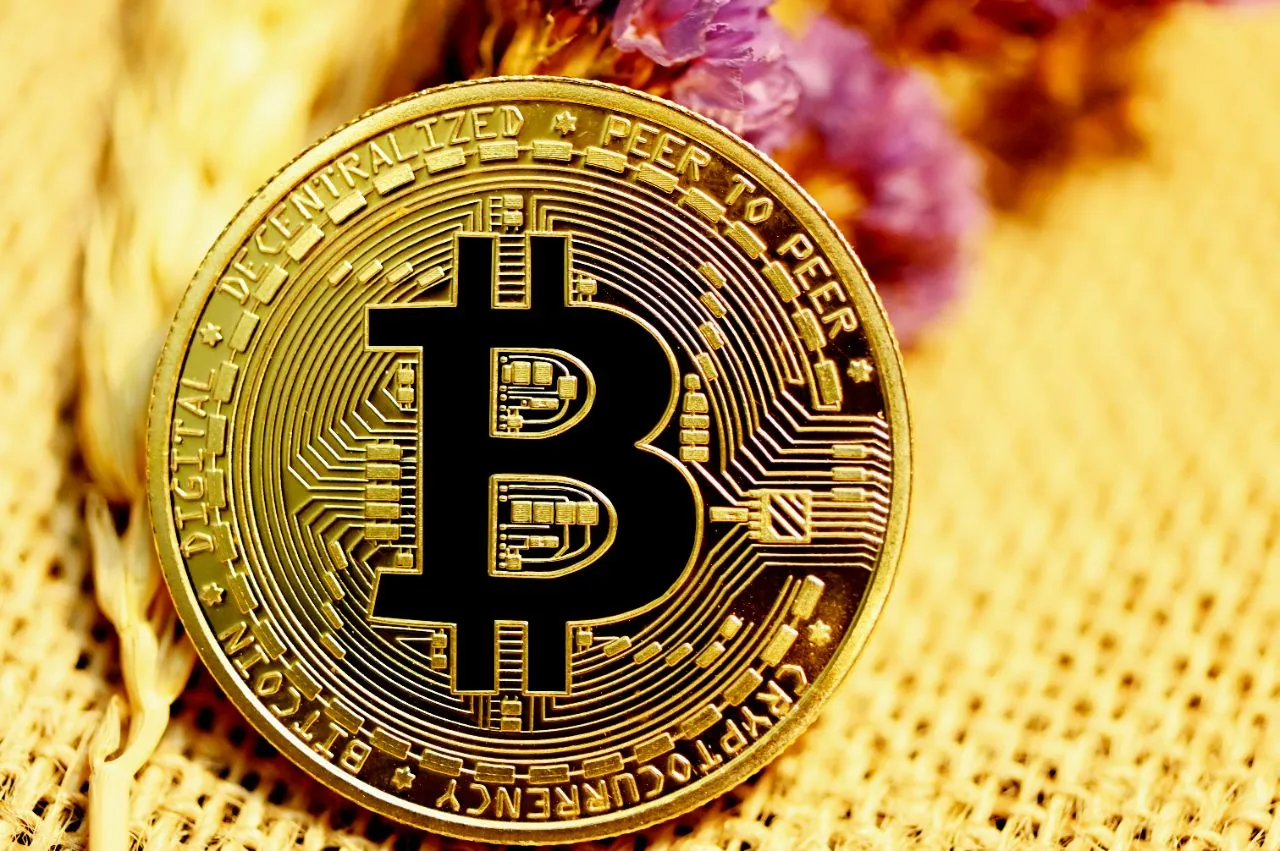
Photo by Kanchanara on Unsplash

No Bitcoin Firesale

To quell fears of a massive Bitcoin sell-off, Mark Karpeles, the former CEO of Mt. Gox, addressed the situation on X. He stated:


“As far as I know, everything is fine with MtGox. The trustee is moving coins to a different wallet in preparation for the distribution that will likely happen this year. There is no imminent sale of bitcoins happening."


Rehabilitation trustee Nobuaki Kobayashi also issued a press release, clarifying that no sale of Bitcoin or Bitcoin Cash (BCH) had taken place. He assured that the group was "managing bitcoin and bitcoin cash in a secure manner."


Wallet activity reveals that these movements were executed through thirteen transactions. A test transaction worth $3 was made on May 20, followed by another smaller transaction of $160 early Tuesday. The remaining transactions varied from $1.2 million to $2.2 billion worth of Bitcoin. Bitinfocharts data shows that all of Mt. Gox's Bitcoin has now been consolidated into a single wallet.


A long road to repayment

In September 2023, Mt. Gox’s trustee announced that the repayment deadline had been extended by 12 months to October 31, 2024. It looked like repayments were imminent in November. However, those communications referenced cash repayments rather than the distribution of Bitcoin and Bitcoin Cash. Some cash repayments had started in December 2023. Speculation in January that the bankruptcy estate would begin the distribution of Bitcoin led to market fears of the impact that would have on the Bitcoin unit price. The extension provided a longer timeframe for preparing the distribution of assets to creditors.


Mt. Gox, launched in 2010, quickly rose to prominence, becoming the largest Bitcoin exchange by 2013, handling 70% of all Bitcoin trades worldwide. However, the exchange faced a dramatic downfall in early 2014. 


It suspended trading and stopped all withdrawals after losing hundreds of thousands of Bitcoin in a hack. Subsequently, the site went offline, and the company filed for bankruptcy protection after losing over 800,000 Bitcoins. Creditors have been waiting for repayment ever since.

More to Read
View All
Web3 & Enterprise·

Jul 21, 2023

Shinhan Bank and SCB TechX Succeed in Stablecoin Remittance Pilot

Shinhan Bank and SCB TechX Succeed in Stablecoin Remittance PilotSouth Korean banking institution Shinhan Bank, Thai Siam Commercial Bank’s tech arm SCB TechX, and a Taiwanese financial institution recently announced the successful completion of a proof-of-concept (PoC) pilot of stablecoin remittances. The PoC was built on the hashgraph consensus-based public ledger, Hedera. Hashgraph consensus is a technology that provides an alternative to the more commonly used blockchain consensus mechanisms.Photo by Lea L on UnsplashThree currenciesThe pilot test was conducted to assess the feasibility and functionality of a system involving real-time settlement and real-time foreign exchange (FX) rate integration. The test was successful in implementing these capabilities for three currencies: the Thai Baht (THB), the New Taiwan dollar (NTD), and the South Korean won (KRW). Since the PoC is compatible with the Ethereum Virtual Machine (EVM), EVM-based stablecoins should be able to join the PoC framework without significant modifications.More efficient and affordableIn November 2021, Shinhan Bank developed this PoC on the Hedera network in collaboration with an international bank outside Korea, employing stablecoins for cross-border remittances. The success of the subsequent pilot test this year represents a major achievement in the pursuit of more efficient and affordable cross-border payments, especially given that the financial industry has been increasingly recognizing the transformative possibilities of blockchain and distributed ledger technology.These banks expect that this stablecoin solution will allow individuals and organizations to conduct transactions in locally denominated stablecoins, benefiting from remarkably low fees.Kim Byung-hee, Chief of the Blockchain Division at Shinhan Bank, said, “The successful completion of this second PoC marks an important step forward in our efforts to make cross-border payments faster, cheaper, and more accessible to people around the world.”SCB TechX’s CEO Trirat Suwanprateeb echoed this sentiment, stating that this endeavor can help “increase financial inclusion and improve access to financial services for individuals and businesses in underserved communities.”

news
Web3 & Enterprise·

Oct 10, 2023

Kbank’s Upbit Customer Deposits Total $2.2B

Kbank’s Upbit Customer Deposits Total $2.2BKbank, an internet-only bank in South Korea, is facing criticism due to its relatively high proportion of cryptocurrency customer deposits compared to other banks. Kbank reportedly manages approximately KRW 3 trillion (equivalent to $2.2 billion) in deposits from customers of cryptocurrency exchange Upbit, which accounts for about 18% of its total customer deposits.This percentage stands out, being notably higher than other banks that provide accounts to the other four crypto-to-fiat exchanges in Korea. That is according to a report by Maeil Business Newspaper, which obtained documents submitted to lawmaker Kim Hee-gon by the Financial Services Commission (FSC).According to Korean law, crypto exchanges must secure real-name bank accounts from banks to offer crypto trading services against the Korean won. Kbank offers its accounts to Upbit, the dominant player in the Korean crypto market.Photo by David McBee on PexelsNotable exposure to crypto exchangeThe FSC documents showed that Kbank’s Upbit customer deposits totaled KRW 3.09 trillion, making up 18% of its total deposits, which amount to KRW 17.2 trillion.In a striking contrast, Nonghyup Bank had 0.2% of its deposits, equivalent to KRW 557.8 billion, in Bithumb, which is the nation’s second-largest cryptocurrency exchange. Kakaobank, another internet-only bank, had 0.3% (KRW 112.2 billion) of its deposits in Coinone. Shinhan Bank held 0.01% (KRW 43 billion) in Korbit, and Jeonbuk Bank had a similarly small 0.02% (KRW 4.2 billion) in Gopax.Lawmaker Kim pointed out that Kbank has become a bank dedicated to crypto trading. Kim proposed that financial authorities take proactive measures to assess the potential risks that may emerge when Kbank utilizes Upbit customer deposits as a basis for offering credit loans. Such risky financial practices could potentially result in higher loan defaults and the emergence of a greater number of individuals with poor credit histories, which could ultimately jeopardize the stability of the financial market.Regulatory gapThe current Financial Transaction Reporting Act mandates that virtual asset service providers (VASPs) segregate customer deposits from their own assets as a measure to combat money laundering. However, it has been noted that there are regulatory gaps stemming from the absence of specific guidelines for the custody of these deposits.According to the Financial Supervisory Service (FSS), Nonghyup and Kakaobank store deposits in separate accounts within the bank. On the other hand, Kbank and Jeonbuk Bank keep deposits in corporate accounts under their respective exchange partners’ names.When deposits are stored in separate accounts within the bank, only the bank has access to those funds, and they are essentially operated in a manner similar to a trust, preventing the bank from using the funds arbitrarily. In contrast, funds held in corporate accounts can be used by the bank as a source for lending. Lawmaker Kim warned that in scenarios such as exchange bankruptcies or similar situations, banks holding customer funds in corporate accounts could face difficulties in ensuring customer protection.Each of these banks receives reserve funds from crypto exchanges in anticipation of potential compensation requirements in the event of unforeseen losses. The FSS states that as of the end of last month, the reserve amounts held by each bank were as follows: Kbank had KRW 200 billion, Nonghyup Bank had KRW 100 billion, Kakao Bank had KRW 73 billion, and both Shinhan Bank and Jeonbuk Bank had KRW 30 billion.Kbank’s Upbit customer deposits are approximately 72 times larger than Shinhan Bank’s Korbit customer deposits. However, the reserve amounts held by Kbank are only 6.7 times greater than those held by Shinhan. Lawmaker Kim emphasized the importance of banks maintaining reserve funds that are proportional to the customer deposits held in their partner crypto exchanges.Signs of recoveryMeanwhile, the Korean cryptocurrency industry, which faced a downturn in the latter half of last year due to events like the Terra collapse and FTX’s bankruptcy, has exhibited signs of recovery in the first half of this year.The Financial Intelligence Unit (FIU) of the FSC recently reported that the cryptocurrency market cap in South Korea has reached KRW 28.4 trillion as of the end of June this year. This reflects a 46% increase compared to the end of last year when it stood at KRW 19.4 trillion. Additionally, the total operating profit of domestic exchanges surged by 82% to KRW 227.3 billion over the past six months, compared to the previous figure of KRW 124.9 billion.The total market’s max drawdown (MDD) was 62%. MDD assesses the extent to which an asset has declined in value from its highest point to its lowest point within a specific time frame, before experiencing a recovery. The FIU considers this MDD to be high, urging investor caution.

news
Policy & Regulation·

Nov 18, 2023

Kazakhstan achieves first retail payment with digital tenge

Kazakhstan achieves first retail payment with digital tengeBinur Zhalenov, Chairman of Kazakhstan’s National Payment Corporation (NPC), marked a historic moment at the XI Congress of Finance in Almaty on Wednesday by conducting the inaugural transaction with the country’s newly introduced Central Bank Digital Currency (CBDC), the digital tenge.Photo by J B on UnsplashDigital tenge debit cardThat’s according to a report published by local media outlet, Kapital.kz. Utilizing a debit card linked to the CBDC account, Zhalenov demonstrated the practicality of the digital tenge during his speech, showcasing its potential impact on the nation’s financial landscape.The official launch of the digital tenge on the retail market is expected to usher in a wave of development, with Zhalenov outlining that it will result in massive platform development in 2024. Collaborating with global giants Visa and Mastercard, as well as local banks, Kazakhstan aims to integrate the CBDC into plastic cards, enabling users to make digital tenge payments globally through platforms like Apple Pay and Samsung Pay.Eurasian Bank is one of the local banking participants in the project. Its CEO, Lyazzat Satiyeva, commented on the development:“Participation in the ‘Digital Tenge’ project opens up opportunities for launching innovative products for consumers and businesses using blockchain and cryptocurrency technology, developing a regulatory framework for digital assets and, in general, this is a big step in the development of a new digital economy in the country.”Meanwhile, Zhalenov emphasized the programmable capabilities of the digital tenge, envisioning its utilization in smart contracts, innovative financial services and digital asset transactions. Looking ahead, the CBDC’s development roadmap includes a focus on offline payments in 2024, with ambitions to incorporate the digital tenge into cross-border trade by 2025.The journey towards the digital tenge commenced in February 2023, with the NPC, established in September, spearheading the development and implementation of the CBDC. The launch of the NPC was likened to a restructuring of the Kazakhstan Center for Interbank Settlements. Its mandate includes overseeing interbank clearing services, managing digital identification and enabling money transfers.As Kazakhstan strides into the digital era, parallel measures have been taken to tighten oversight of the cryptocurrency market.‘Great Kazakh investment firewall’While the central Asian country may be progressing its CBDC, authorities in Kazakhstan appear to be taking a different approach to international crypto businesses operating within its borders. In September, reports surfaced of difficulties accessing major international crypto exchanges such as Coinbase and Kraken without a local license. Following this, local crypto mining operators addressed President Kassym-Jomart Tokayev in an open letter in October, urging a reconsideration of newly introduced tax rates on mining activities.Kazakhstan’s advancement of the digital tenge signals a transformative phase in the nation’s financial landscape, aligning with global trends in digital currency adoption. As the NPC continues its strategic development, the intersection of traditional finance and emerging digital assets in Kazakhstan is poised for further evolution.

news
Loading