Top

Tether eyes South Korean market as stablecoins gain momentum

Policy & Regulation·May 14, 2025, 2:43 AM

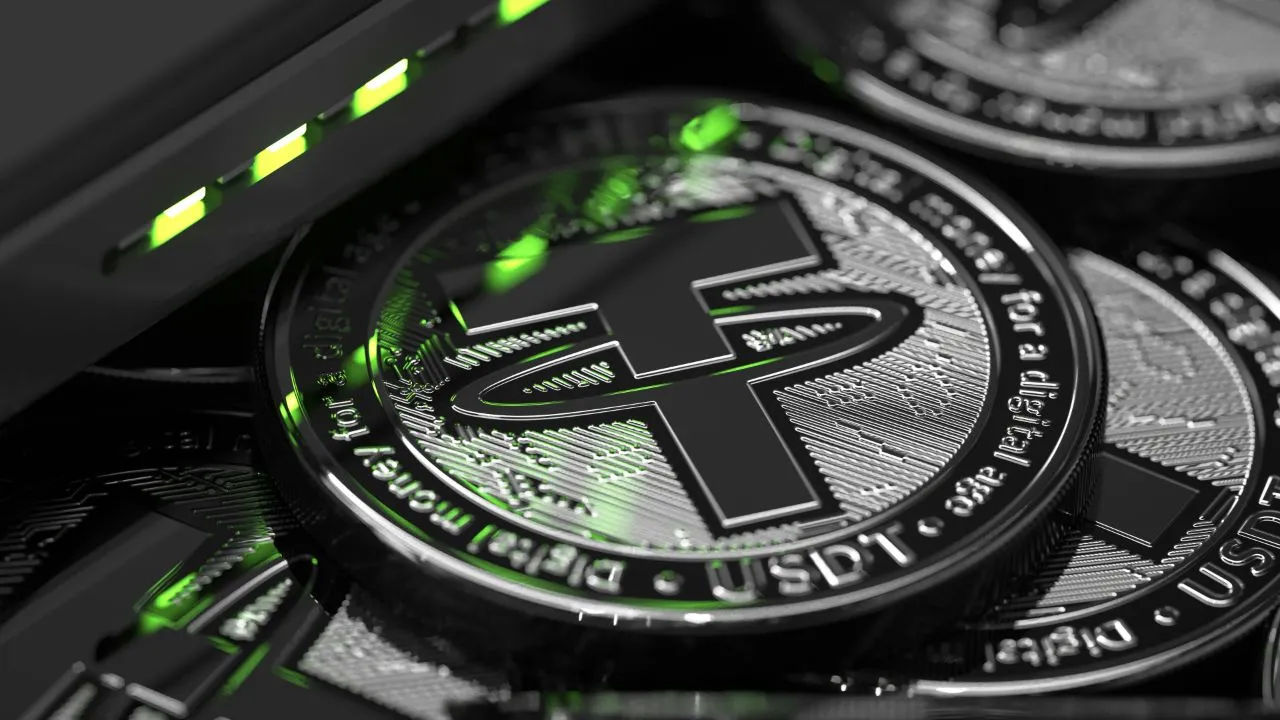
Tether, the company behind USDT, the popular dollar-backed stablecoin, is seeking to establish a presence in South Korea through remote hiring, according to a report from Maeil Business Newspaper citing industry sources.
https://asset.coinness.com/en/news/f9eb29e5cce05a746fb3edbb93f61e5d.webp
Photo by DrawKit Illustrations on Unsplash

Rather than opening a physical office, Tether is looking for a remote employee who will focus on increasing USDT adoption in Korea, exploring business opportunities, building partnerships and navigating the local regulatory landscape.


The expansion comes as stablecoins gain significant traction in South Korea. Data provided to lawmaker Min Byeong-dug from the country's five largest cryptocurrency exchanges via the Financial Supervisory Service (FSS) shows that dollar-pegged stablecoins accounted for 47% of crypto assets withdrawn from these platforms between January and March.


Central bank pushes for regulation

Meanwhile, South Korean officials are increasingly focused on regulating the stablecoin sector. Bank of Korea (BOK) Governor Rhee Chang-yong recently called for the swift implementation of stablecoin oversight, warning that they could bypass the country’s financial rules. During a press conference in Italy, Rhee argued that stablecoins pegged to either the Korean won or the U.S. dollar effectively function as alternative currencies and should be examined under existing money transfer laws.


Rhee has emphasized that authorities must first determine whether won-backed digital tokens should be permitted at all. Last October, during a national audit, he expressed concerns about stablecoins' dependence on fiat currencies and advocated for implementing a central bank digital currency (CBDC) instead.


These concerns were echoed by Ko Kyeong-cheol, head of BOK's electronic finance team, who recently highlighted at a financial law conference that stablecoins could profoundly impact the central bank's ability to carry out monetary policy, maintain financial stability and oversee payment settlements. Ko emphasized that if South Korea were to permit won-pegged stablecoins, the BOK should be involved early in the approval process to minimize potential risks to its policy objectives.


On the regulatory front, Financial Services Commission (FSC) Chairman Kim Byoung-hwan has indicated that discussions on developing a stablecoin regulatory framework are likely to begin in June as part of a broader initiative.


Presidential candidates weigh in on stablecoin future

The issue has also entered the political arena ahead of South Korea's June 3 presidential election. Lee Jae-myung, the Democratic Party of Korea's presidential candidate, has advocated for a market featuring won-based stablecoins. Lee argues that quickly adopting stablecoins would help South Korea keep pace with global trends and prevent capital outflows. His platform includes introducing spot crypto ETFs and reducing digital asset trading fees. 


Another candidate, Hong Joon-pyo of the People Power Party, also previously announced plans to explore the issuance of a won-pegged stablecoin before being eliminated in the party's primary election.


More to Read
View All
Web3 & Enterprise·

Nov 13, 2023

Over 3,700 participants flock to Upbit D Conference to explore insights in blockchain

Over 3,700 participants flock to Upbit D Conference to explore insights in blockchainThe sixth annual Upbit D Conference (UDC), a major blockchain event in South Korea hosted by the country’s biggest cryptocurrency exchange Upbit, commenced on Monday (local time) at the Grand Walkerhill Seoul Hotel. Touting the theme “All That Blockchain,” the conference gathered some 3,700 participants — including 39 blockchain experts from 29 countries — both online and offline.Aimed at contributing to the blockchain ecosystem, UDC has gained acclaim as a non-profit event featuring in-depth lectures by experts from around the globe. While it initially focused on industry and technology alone, the conference has since expanded its scope to cover areas such as policy, finance, business, culture and trends.Photo by Gerd Altmann on PixabayLively guest discussionsHighlights of the event included a session led by Roger Ver, the founder of Bitcoin.com, who discussed the trajectory of the blockchain industry and the current status of Bitcoin. Korean telecommunications giant SK Telecom’s Executive Vice President, Oh Se-hyeon, also shared insights into the prospects of Web3 and blockchain services in Korea.Other speakers included Emily Parker, Executive Director of CoinDesk; Howard Fischer, former Senior Trial Counsel at the US Securities and Exchange Commission (SEC); Nizam Ismail, former Founding Chairman of the Regulatory and Compliance Sub-Commitee at Blockchain Association Singapore; and Kim Kab-lae, Senior Research Fellow at the Korea Capital Market Institute. Together, the four experts discussed country-specific perspectives and current issues regarding the rapidly changing regulatory landscape of the global virtual asset industry.“As blockchain’s influence expands across the economy, culture and society, UDC has evolved into a comprehensive conference capable of encompassing all aspects of blockchain. We hope it serves as a place that sparks positive inspiration and valuable connections,” said Song Chi-hyung, Chairman of Dunamu, the operator of Upbit.Growing recognitionOver the past five years, UDC has seen participation from over 1,190 companies and nearly 19,100 individual attendees. As of this month, the cumulative number of views on the conference’s official YouTube videos has reached 1.12 million. Videos of all of this year’s sessions can be viewed on the UDC YouTube channel and website.

news
Policy & Regulation·

Jan 27, 2024

China advances digital yuan adoption in Beijing, Shanghai and Hong Kong

Chinese authorities are unveiling new strategies to expedite the integration of the digital yuan in selected districts in Beijing and Shanghai, with a separate initiative furthering cross-border use of the e-CNY with Hong Kong.Photo by Yigang Zhou on UnsplashPudong New AreaAccording to the Xinhua news agency, the Chinese authorities have introduced an extensive reform initiative for Shanghai's Pudong New Area, which is scheduled to span from 2023 to 2027. This five-year plan, issued by the Chinese Communist Party Central Committee and the General Office of the State Council, aims to position the Pudong District as a leader in modernization. The reform plan places a strong emphasis on the pilot implementation of the digital yuan across various sectors in Pudong. As part of the plan, Pudong will be granted new authorities to evolve into an international hub. Key aspects of the reform include the integration of digital yuan into trade settlement, e-commerce payments, carbon trading and green power trading. This move is expected to standardize and broaden the application scenarios of the digital currency. Beijing's ‘Digital Yuan Adoption Demonstration Zone’Simultaneously, a member of the Beijing Municipal Committee and Hong Kong Professionals Association president, Fung Kwok-yau, has advocated for the swift progress of Beijing's "Digital Yuan Adoption Demonstration Zone." In a recent interview, Fung suggested expanding the digital yuan's application by installing e-CNY terminals in local stores at popular tourist destinations, malls and shopping districts. Fung acknowledges challenges in promoting the digital yuan, including late entry into the contactless payment market, high user acceptance barriers and difficulties in sustaining subsidies. To overcome these challenges, Fung recommends that culture and tourism departments take the lead in popularizing the concept of central bank digital currency (CBDC) and educating the public on digital yuan usage. To encourage small and medium-sized merchants already using digital yuan terminals, Fung proposes providing incentives to help consumers understand and use the currency. He emphasizes the need for a regular promotion mechanism and measures such as electronic consumption coupons to boost citywide adoption. PBoC cross-border e-CNY pilotIn a related development, the People's Bank of China (PBoC) plans to expand its cross-border digital yuan pilot in Hong Kong. Deputy Governor Xuan Changneng expressed the intention to deepen the cross-border e-CNY pilot to enhance convenience for businesses in both Hong Kong and mainland China. According to a social media post from Chinese news outlet Caixin, the PBoC will collaborate closely with the Hong Kong Monetary Authority (HKMA) to introduce new policy measures, including financial services and cooperation initiatives to drive CBDC adoption. Areas of cooperation between PBoC and HKMA include providing support for institutions participating in the pilot, increasing convenience for digital yuan users, expanding the number of Hong Kong-based banks handling e-CNY and exploring new digital yuan-powered cross-border remittance services for micro-payments. The goal is to develop digital yuan services that align more closely with the habits of Hong Kong residents and promote interoperability with Hong Kong payment systems. The PBoC aims to make further progress in key scenarios such as cross-border e-commerce and education. 

news
Web3 & Enterprise·

Feb 07, 2024

Tether leads the way in Oobit’s $25M funding round

Oobit, the mobile crypto payment app based in Singapore, has raised $25 million in a series A funding round with the assistance of leading stablecoin issuer Tether. Funding global expansionThe company aims to broaden its reach across Asia, the Middle East and Latin America, with a strategic focus on bringing its platform to more mainstream users. While the company’s primary markets currently lie within the European Union and the UK, Oobit will be targeting the Asia Pacific (APAC) region and specific jurisdictions such as the United Arab Emirates (UAE), Canada and Australia. This expansion aligns with the company's goal of accelerating the development of a Web3 gateway. The funding round was led by Tether alongside Anatoly Yakovenko, co-founder of Solana Labs. Additionally, Germany’s 468 Capital, a technology investment firm, and Hong Kong-headquartered CMCC Global joined as contributors. CMCC invested through its $100 million Titan Fund, which it established last year to support blockchain startups in the Asian region.Photo by micheile henderson on UnsplashEnabling users to spend cryptoOobit's mobile payment app allows consumers to make purchases using cryptocurrencies, while merchants receive payments in fiat currency. The tap-and-pay feature enhances accessibility, enabling users to pay at any point of sale accepting Visa or MasterCard funds from their Oobit wallet. Furthermore, Oobit facilitates the direct purchase of bitcoin, ether and more than 35 other popular cryptocurrencies within its app. Tether CEO Paolo Ardoino expressed support for Oobit's development, emphasizing a shared vision for driving widespread cryptocurrency adoption globally. Oobit's co-founder and CEO, Amram Adar, highlighted the funding round as a pivotal moment, propelling the company forward in its mission to offer a straightforward way to pay with digital assets worldwide. Introducing non-custodial paymentsThe company plans to extend its capabilities to third-party wallets, transitioning into a non-custodial crypto payments app. This move will allow payments to and from external e-wallets, bridging the gap between Web3 and real-world spending. A company spokeswoman stated via email:"We have several partnerships in the pipeline that will be announced in the coming months," hinting at Oobit's commitment to ongoing collaboration and expansion. Oobit's vision is to empower crypto holders to Tap & Pay at over 100 million retailers globally, accepting Visa and MasterCard. Merchants can seamlessly embrace digital assets as a form of payment, and customers can conveniently use their digital assets for transactions. Future updates to Oobit will enable customers to make crypto payments, ensuring merchants receive fiat currency in return, mirroring the simplicity of credit card transactions. The native cryptocurrency of Oobit is the OBT token through which the platform rewards its growing community and ecosystem. The token is used for transaction fees and payments. The OBT token is currently trading at $0.0992, according to CoinMarketCap data. With the backing of industry leaders and a user-centric focus, Oobit is attempting to position itself to make significant strides in its mission to facilitate frictionless transactions and promote the adoption of cryptocurrencies on a global scale.

news
Loading