Top

Bit Origin makes first purchase following DOGE treasury announcement

Markets·July 22, 2025, 11:46 PM

Bit Origin, the Nasdaq-listed (BTOG) pork processor turned crypto mining infrastructure firm, has acquired 40.5 million Dogecoin (DOGE), the company’s first purchase of the world’s largest memecoin by market cap since it announced that it was establishing a Dogecoin treasury.


In a press release published on July 17, the Singapore-headquartered company with operations in the United States, Canada and China, set out that it would become the “first publicly listed company on a major US exchange to accumulate Dogecoin as a core asset.”
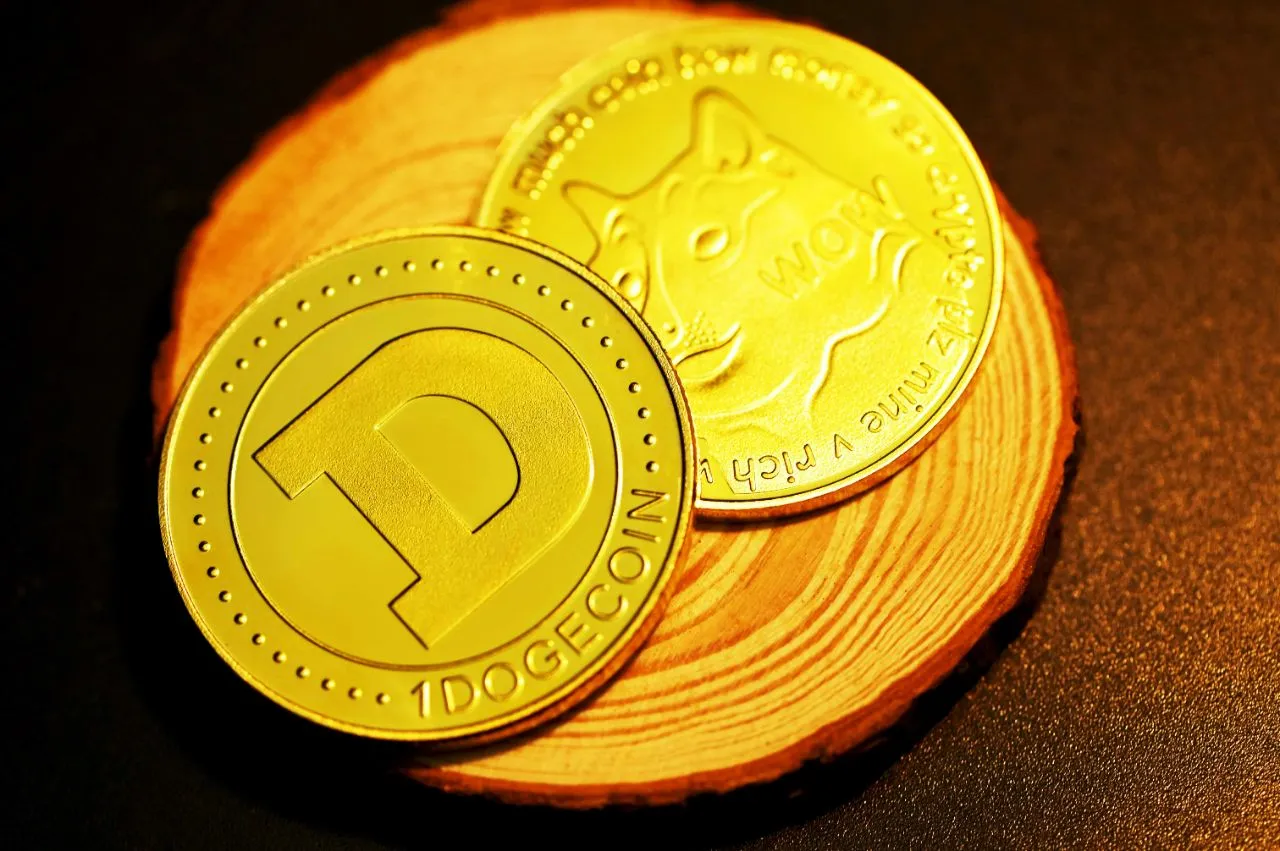
https://asset.coinness.com/en/news/b52ff0c12870ae865a754515c4927a2b.webp
Photo by Kanchanara on Unsplash

$500 million treasury funding

The firm outlined that it had entered into agreements with accredited investors, implicating the sale of $400 million in Class A ordinary shares in the company. An additional $100 million unlocked via convertible debt brought funding for its Dogecoin treasury to $500 million.


Jinghai Jiang, Bit Origin’s CEO and Chairman, asserted that “what started as a joke has evolved into a globally liquid asset with a payments utility.” Jiang asserted that very few digital assets match the settlement speed and scale of community that Dogecoin offers.


X Money potential

In particular, he singled out the potential use of DOGE for X Money, a new payment system that is in the process of being established by Elon Musk’s X social media platform. Alongside many proponents of the cryptocurrency, Bit Origin is hoping that Musk will implement the use of DOGE to power X money. Jiang added:

“In an age of broken institutions, Doge embodies a shared culture of optimism and resilience that transcends existing political and financial systems.”


On social media, the company outlined that it believes in “Dogecoin not just as a meme, but as a future payments backbone.”


Having utilized the services of Chardan Capital Markets as a placement agent, the company has already completed an initial closing of $15 million under the convertible debt facility that has been established. 


On July 21, Bit Origin published another press release, detailing the acquisition of 40,543,745 DOGE with the memecoin holding having been purchased at an average acquisition cost of $0.2466 per DOGE. 


Nearing inflection point for payments

Commenting on the development, Jiang stated:

“From our experience in mining, we understand the tradeoffs that define proof-of-work systems. We see Dogecoin’s utility potential for micropayments nearing an inflection point, driven by renewed developer activity and broader institutional interest in tokenization.”


Dogecoin emerged in December 2013 having been developed by Jackson Palmer and Billy Markus as a joke. The project borrowed much of its code from Bitcoin. Despite having originated as a joke, the project has developed a sizeable community. The digital asset currently holds a market capitalization of $40.5 billion, according to CoinMarketCap data. 


Bit Origin rebranded from China Xiangtai Food Co., Ltd. in April 2022. Up until that point, it had been involved in the pork processing business. The company pivoted to crypto mining, partnering with MineOne on a Wyoming mining facility in the United States. The facility was ordered to be shut down by the former Biden administration on the basis of it being a national security risk to have a Chinese project located within a mile of a U.S. Air Force base that houses nuclear intercontinental ballistic missiles.


More to Read
View All
Web3 & Enterprise·

Sep 27, 2023

Binance Explores Stablecoin Issuance on MUFG Progmat Coin Platform

Binance Explores Stablecoin Issuance on MUFG Progmat Coin PlatformMitsubishi UFJ Trust and Banking Corporation (MUTB), the trust arm of Japan’s largest bank, Mitsubishi UFJ Financial Group (MUFG), has announced a collaborative effort with Binance Japan to investigate the issuance of public blockchain stablecoins denominated in Japanese yen and other currencies.Photo by Aditya Anjagi on UnsplashProgmat blockchain platformAccording to a press release published on Tuesday, the development is centered around MUFG’s Progmat blockchain tokenization platform, which encompasses the Progmat Coin stablecoin platform. Notably, Progmat now counts among its stakeholders some of Japan’s major financial institutions, including the second and third largest banks, SMBC and Mizuho.The scope of this venture extends beyond the confines of Japanese users, potentially transforming Japan into Binance’s stablecoin issuance hub. The initiative has emerged against the backdrop of recent regulatory events in the United States, notably the New York State Department of Financial Services (NYDFS) instructing Paxos Trust to halt the issuance of the Binance USD (BUSD) stablecoin earlier this year. The timeline for the launch of Japanese Binance stablecoins is set for 2024, contingent upon Binance Japan obtaining an Electronic Settlement Methods Transaction Business Provider license.Japan has been making strides in its regulatory landscape to accommodate various types of stablecoins, including those issued by banks and trusts. Under this framework, stablecoins issued by trusts like Mitsubishi UFJ Trust enjoy some unique advantages, such as exemption from licensing requirements and the absence of Know Your Customer (KYC) protocols for stablecoin transfers. Furthermore, these stablecoins are backed by ring-fenced reserve assets, mirroring the approach taken by Paxos Trust.The underlying Progmat blockchain technology is rooted in the Corda enterprise blockchain. However, MUFG has been actively collaborating with DataChain and TOKI technology to facilitate stablecoin issuance on multiple public blockchains, allowing for cross-chain transfers. The initial plan encompasses blockchain platforms like Ethereum, followed by Cosmos, Polygon, Avalanche, and others. This development raises questions about the potential elevation of Binance’s BNB Chain in the broader blockchain ecosystem.Tatsuya Saito, Founder and CEO of Progmat, remarked on the collaboration, stating:“We believe that the new stablecoin from this collaboration will be a step forward in advancing the Web 3.0. Progmat is a neutral infrastructure that enables the issuance of various brands of stablecoins with the greatest flexibility of use and the least risk of de-pegging, it does not compete with players issuing their own stablecoins.”Saito also hinted at other stablecoin projects in the pipeline with Japanese financial institutions and partners, underscoring Binance’s dominant position in the cryptocurrency trading world.Expanding presence in JapanBinance Japan, which recently acquired an existing crypto exchange and rebranded it as Binance Japan, currently lists 34 tokens. In addressing the WebX conference in July, Binance Founder and CEO Changpeng Zhao (CZ) recognized the positive regulatory environment that exists in Japan relative to Web3.From Binance’s perspective, this latest collaboration represents a substantial win, especially after the loss of its own stablecoin. Binance has been promoting lesser-known stablecoins on its exchange by reducing transaction costs, a strategy with inherent risks. In contrast, the alliance with MUFG, a globally significant bank, adds credibility and a different level of assurance to stablecoins.

news
Web3 & Enterprise·

Jan 10, 2024

Partnerships enable AsiaNext to launch crypto derivative trading

AsiaNext, a Singapore-based institutional digital asset trading venue, has officially rolled out its cryptocurrency derivatives trading platform.Photo by Kirill Petropavlov on UnsplashWintermute and B2C2 collaborationsThe launch involves notable trading members such as Wintermute and London-headquartered liquidity provider B2C2. B2C2 is a subsidiary company of Japanese financial services conglomerate SBI Holdings. SBI acquired the company in August of last year with B2C2 expressing the view that the acquisition would represent an opportunity for the company to broaden its client base. SBI partnered with Swiss financial infrastructure firm Six Group in a joint venture to establish AsiaNext back in 2020 with a view towards driving institutional digital asset liquidity. Meanwhile, Wintermute’s involvement with AsiaNext in this instance follows its move in 2023 to expand its Singapore base, where it conducts its derivatives business. In November, Wintermute Asia conducted its first-ever options block trade through the CME Group, one of the world’s leading derivatives marketplaces. Wintermute's Founder & CEO, Evgeny Gaevoy, highlighted the significance of the partnership with AsiaNext in the context of traditional financial institutions seeking alternative exposure to digital assets. Gaevoy stated: "Partnering with AsiaNext enables us to elevate our derivatives offering, positioning Wintermute in the foreground of the expanding digital asset ecosystem." The AsiaNext platform asserts that it provides enhanced risk management with reduced counterparty and settlement risk. Additionally, AsiaNext offers capital efficiencies through intraday margining and settlement processes, supporting high-frequency trading and ensuring availability 24/7 for crypto derivatives trading. Chong Kok Kee, CEO of AsiaNext, emphasized the platform's commitment to providing a secure environment for institutional investors to explore digital assets in the region. By prioritizing regulation and rigorous governance, AsiaNext aims to establish itself as a trusted venue for exposure to digital assets. B2C2 CEO Thomas Restout commented on the positive nature of the collaboration. He stated:”We’ve witnessed [AsiaNext’s] unwavering commitment to governance and risk management, alongside their focus on aligning closely with our needs. This instills a high level of confidence in our partnership. Being at the forefront of digital asset adoption, we are pleased to provide liquidity on the venue through our collaboration.” Licensing approvalsIt's worth noting that AsiaNext obtained a Recognized Market Operator (RMO) license from the Monetary Authority of Singapore (MAS) in September. However, this license specifically pertains to tokenized securities, and as such, the crypto derivatives trading operates through a separate subsidiary. In June the company had acquired in-principle approval for a Capital Markets Services (CMS) license. On the digital securities front, SIX Digital Exchange (SDX) and Osaka Digital Exchange (ODX), operated by SIX and SBI respectively, play key roles in secondary markets, showcasing the partners' commitment to advancing regulated digital securities markets. Launched in late 2021, SDX was the world's first regulated digital securities market. SBI followed suit with the recent launch of ODX on Christmas Day. The anticipated approval of the first U.S. spot bitcoin ETFs adds a timely dimension to the launch, potentially driving increased demand for hedging strategies in the market. 

news
Web3 & Enterprise·

Dec 27, 2023

Blade Entertainment partners with Cardo to venture into tokenized securities industry

South Korean entertainment production company Blade Entertainment has signed a memorandum of understanding (MOU) with Cardo, a firm specializing in custodial services for digital assets, to start a tokenized securities business, according to local news outlet Newspim on Wednesday. Blade Entertainment revealed plans to leverage its IP and content distribution rights to issue fractional investment-based tokenized securities based on underlying assets like waste landfills, electroceuticals and digital therapeutics.Photo by Verne Ho on UnsplashForging the future to tokenized securities"We will do our best to become a leader in tokenized securities by securing various underlying assets and building technology to facilitate valuation modeling for those assets," said Choi Young-in, head of the STO (security token offering) department at Blade Entertainment. "Through this agreement, we will cooperate in multiple ways with Cardo, who has expertise in blockchain and an understanding of financial products, to list our tokenized securities on the Korea Exchange’s (KRX) new securities market."  This market refers to an on-exchange market for new securities based on fractional investments that was recently designated by the South Korean Financial Services Commission (FSC) as a service under the financial regulatory sandbox system, according to a press release on Dec. 13.  The regulatory sandbox is a system run by the Korean government that exempts or suspends existing regulations for a designated amount of time for companies releasing new products and services and regulates them post-mortem if there is a problem.  Strategic collaborationBlade Entertainment said that it sought out Cardo – whose investors include one of South Korea’s major banks Nonghyup Bank – as a business partner to carry out this endeavor due to its accumulated knowledge and expertise in the blockchain sector. Cardo has also previously demonstrated its capabilities in the security token business by providing fintech solutions to financial service firm Galaxia Moneytree. "Currently, due to issues with the valuation of token securities, it is not easy for businesses in this area to operate smoothly, but we plan to issue and distribute tokenized securities of various assets soon," said Sohn Kyung-hwan, CEO of Cardo. "Based on the know-how we’ve accumulated from the two contracts we signed this year agreeing to supply security tokens platforms, we will actively help Blade Entertainment with the planning, design and platform construction of their security token venture to help establish a successful service."

news
Loading