Top

Galaxia Moneytree partners with Charzin to integrate security tokens into EV charging systems

Web3 & Enterprise·November 07, 2023, 7:58 AM

Korean financial platform services provider Galaxia Moneytree announced on Tuesday (local time) that it has signed a memorandum of understanding (MOU) with Charzin, a company that specializes in developing infrastructure for charging electric vehicles (EVs), to design a security token offering (STO) platform that issues security tokens for optimizing the process of EV charging. This includes securing installation sites and facilities for EV charging stations.
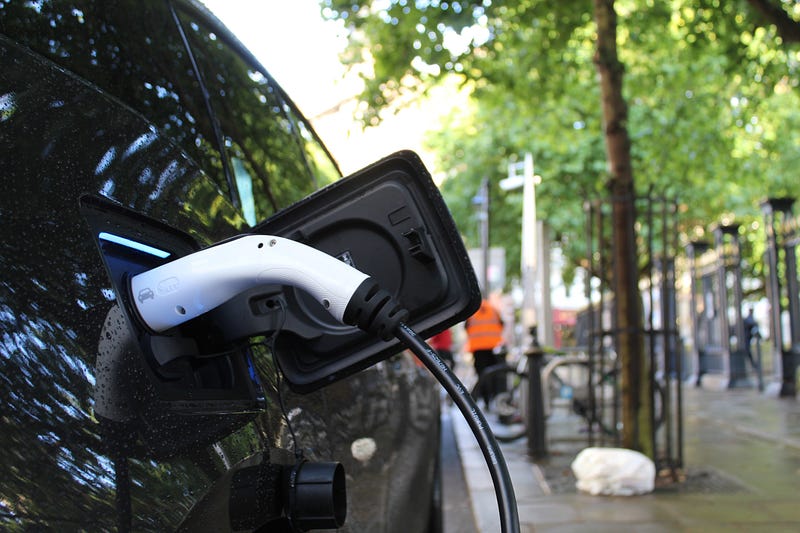
Photo by Andrew Roberts on Unsplash


Merging blockchain and transportation

Headquartered in Daegu, Charzin is notable for its app EVZ, which uses a blockchain-based sharing module to connect EV drivers and EV charger owners for faster charging and optimized revenue acquisition.

Galaxia Moneytree will be responsible for establishing and operating the STO platform, while Charzin will handle business development, support for the launch of security token products and construction of EV charging facilities.

The signing ceremony for the MOU took place at Galaxia Moneytree’s headquarters in Seoul on Monday with Galaxia Moneytree CEO Shin Dong-hoon and Charzin CEO Choi Young-seok in attendance. The two companies also discussed plans to launch other products that combine finance and EV charging infrastructure.

“In addition to our ongoing efforts, we plan to design STO products for various underlying assets, such as renewable energy and aviation assets,” Galaxia Moneytree said. The company recently formed an aviation asset tokenization consortium in September.


Ongoing partnerships

Meanwhile, Charzin recently announced its partnership with Hi Investment and Securities to venture into the security token business. The firms plan to raise funds for developing EV charging infrastructure by issuing security tokens and subsequently share the profits from running such projects.

More to Read
View All
Web3 & Enterprise·

Nov 14, 2025

U.S. crypto ATM firm Bitcoin Depot enters Hong Kong market

Nasdaq-listed Bitcoin Depot, an American cryptocurrency ATM specialist, is expanding into Hong Kong, citing the city’s burgeoning status as a crypto hub and rapid digital asset adoption across Asia. The Atlanta-based company, which provides kiosks for converting cash into cryptocurrency, went public in July 2023. Its move into Asia follows a recent acquisition of assets from National Bitcoin ATM that boosted its domestic market share to a reported 30% as well as the strengthening of its compliance program. "Hong Kong is quickly becoming a global center for crypto, with the right mix of regulation, demand, and momentum," company president Scott Buchanan said in a Nov. 12 statement.Photo by Keller Chewning on UnsplashHong Kong's digital asset pushBitcoin Depot’s expansion aligns with a concerted push by the special administrative region to position itself as a global hub for digital assets. Eddie Yue, Chief Executive of the Hong Kong Monetary Authority (HKMA), recently highlighted this ambition, which was underscored by a Nov. 11 announcement of an additional HK$10 billion ($1.3 billion) issuance of digital green bonds. The tokenized bond issuance, the third under the government's program, was denominated in Hong Kong dollars, Chinese yuan, U.S. dollars, and euros, and involved major banks like HSBC, BNP Paribas, and J.P. Morgan. The move also reflects a broader regional trend. In September, Tokyo-based Coinhub launched Japan's first officially registered crypto ATM network, installing 25 machines with plans to expand to 3,000 nationwide. Industry faces regulatory headwindsDespite the growth, the industry faces scrutiny from law enforcement over the use of crypto ATMs in criminal activity. In 2024, the FBI logged nearly 11,000 fraud complaints tied to the kiosks, with reported losses topping $246 million. According to Cointelegraph, increased regulatory attention has prompted several U.S. cities to ban crypto ATMs outright, while some states are introducing new restrictions. Concerns are growing over scams targeting vulnerable groups, especially seniors. Regulatory pressure is also mounting elsewhere. Australia's financial crimes watchdog, AUSTRAC, issued a $56,340 infringement notice last month to local operator Cryptolink, which the company paid. Cryptolink must now appoint third-party reviewers to ensure its anti-money laundering and counter-terrorism financing (AML/CTF) controls are adequate. The action followed findings from AUSTRAC’s Crypto Taskforce that 85% of transactions by the 90 most frequent crypto ATM users were linked to scam proceeds or money mule operations. AUSTRAC CEO Brendan Thomas urged the public "to be cautious of making transactions to any wallet they don’t control and thinking twice in circumstances where someone asks you to deposit money into a crypto ATM.” 

news
Web3 & Enterprise·

May 22, 2023

Funding Round Sees HashKey Target Unicorn Valuation

Funding Round Sees HashKey Target Unicorn ValuationLeading financial technology company, Hong Kong-based HashKey Group, is looking to raise between $100 million and $200 million based on a $1 billion dollar company valuation that sees it take on unicorn status.According to an initial report by Bloomberg, early stage talks on the fund raise are progressing positively. It cites sources familiar with the matter in suggesting that as the fund raise negotiations progress, the terms of the offering, extent of the capital raise, and the valuation upon which its all based could change.Photo by Annie Spratt on UnsplashLeveraging a crypto-friendly environmentThe Web3 infrastructure developer and digital asset management firm has decided to take advantage of favorable conditions in Hong Kong in order to raise capital. The current business backdrop in the Chinese autonomous territory is particularly positive, and something that’s likely to make the capital raise a much easier task.Hong Kong has sought to create a crypto-friendly environment by way of both word and deed over the course of the past six months. With that being the case, it’s logical that there is tremendous opportunity for businesses like HashKey to achieve rapid growth in the nascent digital assets sector.Under the supervision of the Hong Kong regulator, Hashkey has already started to offer its services, one of only two companies (alongside OSL) to be permitted to trade in advance of the full implementation of licensing next month.While there have been some difficulties relative to banking the digital assets sector in Hong Kong, ZA Bank, Hong Kong’s largest virtual bank, has stepped up with the aspiration of banking the sector. ZA Bank is expected to facilitate crypto-fiat conversions with both of the currently licensed exchanges, HashKey and OSL, where customers can swap crypto into fiat currencies. The bank will also offer basic banking services to local web3 startups, a category that is currently underserved by traditional financial institutions.HashKey itself is cognizant of the conditions being right on the ground in Hong Kong and the opportunity that presents. Its chairman, Xiao Feng stated that Hong Kong is “very serious about building an international virtual asset center,” when speaking at the city’s Web3 Festival recently, an event that drew 13,000 attendees on its first day.Diversified service offeringThe firm’s activities in Hong Kong extend to HashKey Pro, a Hong Kong-compliant virtual asset exchange, and HashKey Capital, an investment firm. In April, the company established HashKey Wealth.This wealth management service offers investors access to a wide range of digital assets, including Bitcoin, Ethereum, and other cryptocurrencies, together with alternative investments such as decentralized finance (DeFi) projects and non-fungible tokens (NFTs).The program is designed to meet the needs of both institutional and high net worth individual investors. The investment strategies offered vary, ranging from passive to actively managed portfolios. Different risk profiles are employed to suit investors’ preferences. The program also provides a range of other services, including custody, trading, and portfolio rebalancing, to ensure that investors can manage their investments with ease.

news
Policy & Regulation·

Dec 27, 2023

Worldcoin withdraws verification service from Indian market

Worldcoin, the startup co-founded by OpenAI CEO Sam Altman, has encountered setbacks in its eye-scanning initiatives just six months after its international expansion. A recent report by TechCrunch indicates that the company’s signature orb eye-scanner is no longer available to users in the Indian market. According to that report, the Worldcoin Foundation clarified that its activities have also been suspended in France and Brazil. The company clarified that its offerings in those markets were only intended to be limited-time product previews as opposed to long-term roll-outs.Photo by Big G Media on UnsplashTemporary service haltIn India, the World App is experiencing widespread adoption, but the orb-verified proof of personhood services has been temporarily halted. The pause aims to allow the protocol to develop and implement a bespoke, safe and orderly process to meet the growing demand. The setback comes after Tools for Humanity, the organization behind Worldcoin, announced the expansion of World ID, its digital identity program linked to iris scans, in July. The startup had ambitious plans, intending to make 1,500 orbs available in over 35 cities globally. Recently, the company unveiled a program offering $5 million in grants to developers utilizing its eye-scanning technology. Regulatory investigationsSam Altman and his co-founders established Worldcoin in 2020 to help individuals prove their digital identity amidst the rise of AI. Over the years, Worldcoin has secured $250 million in funding from notable venture capitalists, including Andreessen Horowitz. However, the startup has faced regulatory challenges, including investigations by French and German regulators and an Argentinian government agency. Altman, himself, has navigated recent challenges. In November, the OpenAI board temporarily removed him as CEO, reinstating him two weeks later. More recently, Fortune reported that Altman quietly received $75 million from the University of Michigan for a new venture capital fund, raising questions about transparency, particularly following the launch of OpenAI’s signature product, ChatGPT. Asian tourIn recent weeks, the project development team behind Worldcoin had engaged in a tour of Asia. The objective of that mission was to gather market feedback prior to engaging in greater efforts to expand the reach of its World ID verification system within the region. To gauge market receptiveness to its product offering, the tour included meetups in major Asian cities such as Hong Kong, Seoul, Singapore and Tokyo. Up until mid-November, the Asian region accounted for 1.4 million World App sign-ups.The introduction of World ID 2.0 by the company on Dec. 13 led to a surge in the price of WLD. Over the course of the 48 hours that followed, it jumped from $2.47 to $4.23, a 71% increase. At the time of writing, the token unit price stood at $3.66. As Worldcoin navigates these challenges, the cryptocurrency industry will closely monitor developments, recognizing the broader implications for the startup’s innovative approach to digital identity verification.

news
Loading