Top

X-TICKET teams up with Catalyze Research for XRPL expansion

Web3 & Enterprise·November 06, 2023, 3:48 AM

South Korean Web3 performing arts platform X-TICKET has signed a memorandum of understanding (MOU) with Catalyze Research, a Web3 research firm and an official partner of Ripple, to jointly expand the XRP Ledger (XRPL) ecosystem and support the integration of Web3 into Korea’s performing arts landscape.
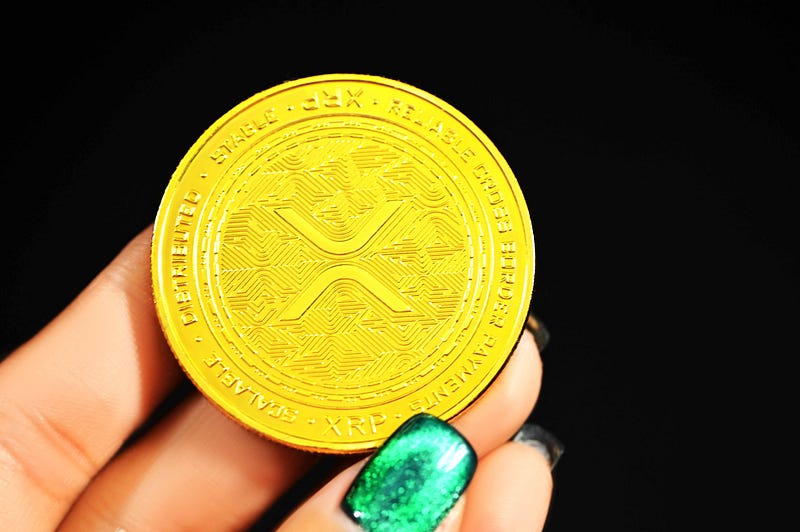
Photo by Kanchanara on Unsplash

“We are delighted to work alongside Catalyze Research. The XRPL ecosystem, together with XRP, is poised to play a significant role in bringing the Korean performing arts industry onto the global stage. We hope to create synergies through collaborations with Korean cultural performances,” said X-TICKET CEO Shin Yong-un.


Leading a new era of event ticketing

X-TICKET harnesses blockchain technology to provide digital collectible tickets for performing arts shows, including live musicals like “Cats” and “The Phantom of the Opera.” This service is expected to revolutionize the industry by preventing various problems that tend to occur with ticketing, such as duplication, loss and scalping, thus fostering a secure, transparent and efficient performing arts ecosystem. The platform recently launched its beta version and held a sales event for NFT tickets to “The Phantom of the Opera” shows.


Pioneering Web3 solutions

Catalyze Research, on the other hand, specializes in Web3 and blockchain research and consultations. The firm teamed up with Ripple in July to expand the presence of XRPL in the Korean market — a decentralized, public blockchain for businesses and developers — and encourage participation in the XRPL developer community.

“Catalyze Research is actively engaged in numerous collaborations to expand the XRPL ecosystem. We plan to implement blockchain technology into X-TICKET and the Korean performing arts sector to extend the ecosystem’s reach,” the firm stated.

The partnership between the two enterprises represents a significant step forward in the intersection of technology and the arts in Korea.


More to Read
View All
Policy & Regulation·

Oct 24, 2023

Seoul and Baobab Partners Face Controversy Over Unpaid Prize Winnings for SWF2023 Hackathon

Seoul and Baobab Partners Face Controversy Over Unpaid Prize Winnings for SWF2023 HackathonThe city of Seoul has come under public scrutiny for failing to pay the winners of the Seoul Web3 Festival (SWF2023) Hackathon a cash prize worth KRW 150 million (approximately $112,000). The Seoul Metropolitan Government has argued that since it was simply a naming rights sponsor, the responsibility for paying the prizes lies with Baobab Partners, who co-hosted the event. However, critics argue that the city did not properly vet Baobab Partners more rigorously before hosting the event.Photo by okaybuild on PixabayUnpaid prizes lingerThe SWF2023 Hackathon took place from July 31 to August 2 at Dongdaemun Design Plaza (DDP) and was co-hosted by the city of Seoul, the Seoul Design Foundation, and Baobab Partners. It offered a total prize pool of KRW 150 million attracting 417 participants who made up 115 teams.However, although over two months have passed since then, the winners are yet to be paid their prize money. “Baobab Partners initially proposed the SWF2023 event, and they were responsible for gathering the necessary sponsorship funds to run the event,” said a city representative.According to industry sources on Monday, the company’s CEO, Choi Jin-beom, issued a handwritten apology last Friday regarding the incident. “We promised to pay the winners by today, but we were unable to deliver on that promise. We explored multiple avenues, including investors, new contractors, and other assets, but were ultimately unable to secure the funds to do so,” he said. “The narrative that the funds were diverted elsewhere or invested in cryptocurrencies or stocks is untrue,” he added, clarifying that related information was transparently disclosed to the city of Seoul.Baobab Partners’ swift rise raises industry eyebrowsBaobab Partners had previously participated as an event planner at last year’s Blockchain Week in Busan, which turned out to be a success. “We also spoke with the Busan city government, who gave a positive opinion of the company,” the representative added. It was under this context that Seoul entered into a naming rights agreement with Baobab Partners. The agreement stipulated that the company would be in charge of attracting and managing sponsorships, and the prize money and operational costs would be covered by corporate sponsorship funds.Nevertheless, questions have arisen within the industry about Baobab Partners’ short track record and its successive collaborations with public organizations. Baobab Partners is a startup that was founded in May 2021. In November of the same year, the firm signed memoranda of understanding with three blockchain companies during NFT Busan 2021, a large-scale NFT fair held in the southern port city to share the latest blockchain trends. As a result of its efforts, it was listed alongside prominent companies such as Coinone and Onther despite only six months passing since its establishment. Subsequently, Baobab Partners relocated from Seoul to Busan, and the following year, it participated as an event planner at Blockchain Week in Busan.Accumulating allegationsSpeculation suggests that this success was not solely due to Baobab Partners’s capabilities. The company’s CEO is believed to have political connections, according to an anonymous industry insider. Choi denied such claims and stressed that its technical expertise should not be downplayed, citing the fact that Baobab Partners was the first entity in Korea to develop virtual reality (VR) banking technology and had received a KRW 15 billion investment from Finger, a KOSDAQ-listed company.Baobab Partners has also been mired in controversy over supposedly unpaid wages. In response to a claim made by an industry source that many former employees of Baobab Partners have still not received their due wages, a Seoul representative stated that there is no such dispute according to conversations with company representatives, seeking to dispel the dispute. Choi further explained, “We didn’t have wage disputes until last year. The difficulty in paying wages began in January this year due to the failure to execute promised investment funds.”The city said that it is currently conducting legal examinations and looking into necessary measures for two matters involving Baobab Partners, including the handling of hackathon winnings.

news
Policy & Regulation·

Sep 22, 2023

Korea to Tighten Scrutiny of Crypto Exchange Shareholders Amid Rising Concerns

Korea to Tighten Scrutiny of Crypto Exchange Shareholders Amid Rising ConcernsSouth Korea’s financial regulator is stepping up efforts to evaluate the qualifications of majority shareholders of cryptocurrency exchanges, according to a report by local news outlet Newsis. This initiative follows instances where majority shareholders of local exchanges, including Bithumb, found themselves embroiled in criminal proceedings. Drawing parallels with the banking sector, the regulator is scrutinizing the credentials of majority shareholders to ensure compliance and integrity within the cryptocurrency exchange landscape.Photo by Terrence Low on UnsplashRevamping reporting requirementsThe Financial Intelligence Unit (FIU) under the Financial Services Commission recently set up a task force to revamp the reporting requirements for crypto exchanges.The upcoming requirements are anticipated to be integrated into the reporting forms that cryptocurrency exchanges must complete, starting in October of next year. Essentially, these stipulations will determine whether existing exchanges, such as Upbit, Bithumb, and Coinone, can sustain their operations in the future.Periodic evaluationAccording to the Enforcement Decree of the Financial Transaction Reports Act, all virtual asset service providers (VASPs), including exchanges, are mandated to submit a renewal report every three years. Upbit, having been the first to submit its initial report in October 2021, will join other crypto exchanges in updating their reports in October 2024.A majority shareholder qualification assessment is a process in which the government periodically checks whether majority shareholders have the necessary qualifications to operate a financial company. Through this process, the FIU aims to curb potential illicit activities by majority shareholders, who hold significant sway over cryptocurrency exchange operations, thereby mitigating any potential harm to the users.Regulatory grey areaThis measure emerged from concerns that majority shareholders of exchanges have existed in a regulatory grey area. In fact, under the Financial Transaction Reports Act, only exchange representatives and registered officers are required to report and undergo examination when declaring VASPs. This leaves the actual owners and controllers — the majority shareholders — unidentified and unexamined.The current circumstances involving VASPs are markedly different and more concerning compared to other financial sectors. In the banking sector, restrictions are placed on share ownership and voting rights if majority shareholders have breached financial laws or if they are capital entities forbidden from owning a bank. Similarly, online peer-to-peer lenders and large lenders are also under obligation to have their majority shareholders scrutinized, as they fall under analogous regulations.Fraud and manipulation allegationsThe heightened scrutiny is also thought to have been sparked by recent allegations of fraud and market manipulation involving some majority shareholders of Korean exchanges. For instance, Mr. Kang Jong-hyun, a majority shareholder of Bithumb, is currently facing a criminal trial for allegations of fraudulent and unfair trade activities under the Capital Markets Act. Additionally, Song Chi-hyung, the majority shareholder of Upbit and chairman of Dunamu, is facing a Supreme Court trial over alleged price manipulation through wash trading.Moves to amend legislationMeanwhile, efforts are underway in the National Assembly to amend the existing legislation. Yun Chang-hyun, a lawmaker from the ruling People Power Party and a member of the National Policy Committee, has recently proposed a bill to revise the Financial Transaction Reports Act. The amendment seeks to implement a majority shareholder screening system for VASPs.The proposed amendments would obligate VASPs, including crypto exchanges, to disclose information about their majority shareholders in their reports, thereby enabling the FIU to scrutinize any past financial crimes or economic offenses committed by these majority shareholders.

news
Web3 & Enterprise·

Nov 29, 2023

Seoul Auction Blue seeks to register security tokens with the FSS for Andy Warhol’s artwork

Seoul Auction Blue seeks to register security tokens with the FSS for Andy Warhol’s artworkSeoul Auction Blue, the operator of fractional artwork investment platform Sotwo, recently submitted an application to the South Korean Financial Supervisory Service (FSS), local news outlet Seoul Economic Daily reported on Wednesday (local time). Its aim is to register security tokens linked to artworks with the financial authority, marking it the third entity in the country to pursue this innovative financial venture.Photo by Guido Coppa on UnsplashAndy Warhol’s ‘Dollar Sign’The artwork investment app plans to issue security tokens based on Andy Warhol’s “Dollar Sign,” a piece measuring 51.0 cm in height and 40.5 cm in length. This artwork was purchased by Seoul Auction Blue at an auction for KRW 626.2 million (approximately $485,000). The total value of the security tokens, inclusive of issuance costs, is approximately KRW 700 million. The firm will issue a total of 7,000 tokens, each valued at KRW 100,000. Upon receiving regulatory approval, Seoul Auction Blue is set to open for subscription requests from Dec. 20 to 26.In its endeavor to issue digital investment contract securities, Seoul Auction Blue has meticulously prepared its documentation in line with the FSS’s guidelines. The selection of the artwork of Andy Warhol, the renowned and iconic 20th-century artist, aligns with the FSS’s recommendation to choose a significant piece by an internationally acclaimed artist. This strategic choice reflects the company’s commitment to compliance and the recognition of Warhol’s global stature in the art world.Preventing conflicts of interestThe registration application submitted by Seoul Auction Blue includes specific restrictions aimed at preventing conflicts of interest with its affiliates related to security tokens. As per these rules, the company is barred from buying idle assets of affiliates to back its security tokens. Instead, Seoul Auction Blue is permitted to acquire them only through public methods like participating in an open bid or a post-sale bid process. Notably, the token issuer is in principle prohibited from purchasing these assets via intermediaries in private sales or any other non-transparent settings.The acquisition of underlying assets requires approval from the compliance monitoring committee. Furthermore, this regulation strips Seoul Auction Blue of the capacity to determine the final trading prices or conditions for these transactions.In addition, the company is collaborating with a couple of securities firms to safeguard investors’ funds, creating a buffer against any potential bankruptcy of the issuer. The funds raised from subscriptions for the security tokens will be managed in accounts overseen by KB Securities. Additionally, an investor protection fund is being set up, which will be handled as a trust fund by Shinhan Securities. This fund acts as an extra layer of security, offering investors enhanced protection for their investments.

news
Loading