Top

Saudi Arabia’s NEOM Forms $50M Animoca Brands Partnership

Web3 & Enterprise·October 31, 2023, 1:26 AM

Hong Kong’s Animoca brands, a gaming and metaverse venture capital firm, is embarking on a partnership with Saudi Arabia’s NEOM Investment Fund, focusing on pioneering Web3 initiatives.

Animoca announced the initiative via a statement published to its website on Monday. NEOM is an ambitious project aiming to create a futuristic urban oasis in northwest Saudi Arabia, serving as a nexus for technology, commerce, entertainment, and tourism. It is planning to invest $50 million in Animoca.

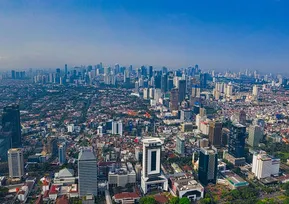
Photo by Hala AlGhanim on Unsplash


Developing Web3 service capabilities

This collaboration will see Animoca harness its expertise to develop Web3 service capabilities with broad global applications in tandem with NEOM, aligning with NEOM’s vision of becoming a cutting-edge tech hub of the future.

Animoca Brands has been a prominent player in the Web3 investment arena for several years. In July 2022, the company’s valuation soared to $6 billion, with backing from notable entities such as Singapore’s state investment fund, Temasek. Despite its ambitious goal to secure $2 billion for its metaverse fund in November of the same year, those expectations were significantly tempered following the FTX collapse. Consequently, in March, Animoca revised its target to a more modest $800 million.


In-house market making

A report by The Block on Friday revealed that Animoca has been making efforts to pitch an in-house market making service to fledgling Web3 businesses within its portfolio. That service has been presented by the company to more than 400 startup projects in which it has been an investor over recent months.

The key market makers in the crypto space include Wintermute, Keyrock, and GSR. This move by Animoca potentially puts Animoca in direct competition with these primary crypto-sector market makers. An in-house digital asset team has been tasked with offering the service. An Animoca spokesperson stated:

“Its primary role, much like the treasury teams in many large corporations, is to optimize the utilization of the company’s balance sheet. The team does conduct market-making to ensure there is enough buy/sell liquidity for certain tokens, which is similar to the function that third-party market makers conduct, except that we choose to perform this in-house for scale and efficiency.”


Saudi diversification

As part of its Vision 2030 initiative, Saudi Arabia has been looking to diversify away from its predominantly oil-based economy. In an interview last month, Animoca Brands Founder Yat Siu outlined that the Middle Eastern country is embracing new technologies such as artificial intelligence (AI) and blockchain, encompassing blockchain-based gaming and Web3.

In July it emerged that the Saudi Central Bank (SAMA) and the Hong Kong Monetary Authority (HKMA) were looking to extend the level of collaboration between the two territories relative to international payments and tokenization.

This renewed interest from state-backed funds in Animoca suggests a potential shift in the Web3 venture capital landscape, coinciding with broader indications of a thaw in the crypto winter. The collaboration with NEOM and the injection of $50 million underscore the growing recognition of Web3’s potential, cementing Animoca Brands’ position as a key player in the ever-developing Web3 space.


More to Read
View All
Policy & Regulation·

Oct 02, 2025

Iran caps stablecoin transactions amid currency devaluation and sanctions

Iranian authorities last week introduced new restrictions on stablecoin transactions, limiting individuals to an annual purchase cap of $5,000 and a total holding limit of $10,000. According to a report from Iran International, licensed digital platforms have one month from the effective date to enforce these new regulations on all users.Photo by Hadis Malekie on UnsplashRial decline fuels stablecoin uptakeThe move coincides with the continued devaluation of the national currency, with the Iranian rial reaching an all-time low of 1,136,500 per U.S. dollar on Sept. 27. This currency plunge occurred just before the reimposition of United Nations sanctions, which took effect at 00:00 UTC on Sept. 28. Since then, the rial has weakened further, reaching a new low of 1,170,000 per U.S. dollar as of publication, as per data from Bonbast.  For many Iranians, stablecoins like USDT have become an essential financial tool, providing a hedge against inflation and a means to transfer funds internationally, bypassing the traditional banking system. The adoption of these U.S. dollar-pegged digital assets has reportedly grown since the escalation of conflicts with Israel and the U.S. earlier in the year. These new financial controls follow recent actions by the U.S. to counter what it describes as Iranian "shadow banking" networks. On Sept. 16, the U.S. Department of the Treasury’s Office of Foreign Assets Control (OFAC) sanctioned two Iranian financial operatives and their network of companies in Hong Kong and the United Arab Emirates (UAE). A press release stated these entities used cryptocurrency and front companies to transfer funds from oil sales, benefiting Iran’s IRGC-Qods Force (QF) and its Ministry of Defense and Armed Forces Logistics (MODAFL). The U.S. Treasury asserts these funds are funneled into regional proxy groups and the development of advanced weapons programs.U.S. dollar to rial chart Source: BonbastHack on Iran’s top crypto platformIran’s private digital currency sector has also faced mounting security pressures. In June, Nobitex, the country’s largest crypto exchange, was hit by a major exploit that drained about $90 million in assets, including Bitcoin (BTC), Ethereum (ETH), Dogecoin (DOGE), Ripple (XRP), Solana (SOL), Tron (TRX), and TON. A pro-Israel hacker group known as Predatory Sparrow, or Gonjeshke Darande, later claimed responsibility in a post on X. The attack took place during heightened military tensions that began with Israeli strikes on Iranian military and nuclear facilities on June 18, 2025. According to analysis by TRM Labs, digital assets are increasingly integral to Iran's efforts to navigate international sanctions and advance its geopolitical interests. Iranian exchanges, including Nobitex, process billions in cryptocurrency transactions. These platforms have been noted for permitting large withdrawals without stringent Know Your Customer (KYC) protocols and for employing sophisticated methods to obscure the origins and destinations of funds. At the same time, these exchanges are not used solely for state-level purposes. For many ordinary Iranians, grappling with inflation and economic isolation, digital assets represent a practical tool for safeguarding savings and maintaining limited access to the global economy, underscoring the dual role that cryptocurrency plays in the country. 

news
Policy & Regulation·

May 18, 2023

Ripple Collaborates with Hong Kong Regulator in RWA Tokenization

Ripple Collaborates with Hong Kong Regulator in RWA TokenizationIn a demonstration of an extended use case, Ripple, the real-time gross settlement system, currency exchange, and remittance network, has announced that it has been selected by the Hong Kong Monetary Authority (HKMA) to showcase a real world asset (RWA) tokenization solution.Photo by Redd F on UnsplashReal world asset (RWA) tokenizationIn a press release published on Thursday, the San Francisco-based firm outlined that the objective of its participation in the HKMAs inaugural e-HKD Pilot Program is to showcase a particular approach to real estate tokenization. In principle the e-HKD project is a central bank digital currency (CBDC) scheme.Ripple is one of sixteen firms that will participate in the program. Among the other participants are HSBC, one of the largest banking and financial services institutions in the world, British multinational bank Standard Chartered, and Bank of China (Hong Kong).For its part, Ripple will partner with Fubon Bank, a subsidiary of one of the largest financial holding companies in Taiwan. The e-HKD Pilot Program will feature a series of pilots conducted through several industry players with a view towards carrying out in-depth research into application, implementation, and design issues relative to the e-HKD.Real estate tokenization is a leading example of RWA tokenization, which overall is anticipated to become a multi-trillion dollar industry by the end of this decade. Its plan is to build the solution on a private and secure ledger, guided in principle by the same technology that the company has utilized for XRP, the native token of the Ripple ecosystem.Illiquid assetsThe company points out that people’s homes are usually one of their primary assets. Notwithstanding that, unlocking value in real estate can be problematic, having considerable friction. The idea is that this illiquid wealth can be unlocked through tokenization. It’s a concept that is seeing a lot of interest from competing projects. Start-ups like Securitize and Provenance Blockchain would be among a long list of start-up firms that see the potential in the tokenization of RWAs.In Asia, Japanese trading and investment firm Mitsui has gotten involved in the tokenization of real estate through its Alterna investment platform. Tokeny and CoFund offer other examples of innovators that are pioneering real estate tokenization.In its press release, Ripple outlined that it aims to use its technology in this particular instance to enable Hong Kong citizens to experience the faster and more efficient release of equity relative to real estate.James Wallis, Ripple’s VP of Central Bank Engagements & CBDCs, expanded on this idea further:“The Asia Pacific region has many forward-looking regulators such as the HKMA, who are looking to leverage the capabilities of blockchain and crypto technology. It’s a huge honor for Ripple to be one of the select few organizations participating in the HKMA’s e-HKD Pilot Programme. We now have the opportunity to demonstrate how real estate asset tokenization could be brought to the citizens of Hong Kong, and are confident that our fully integrated solution will be an industry-first use case demonstrating the power of leveraging a CBDC for real estate equity asset release.”

news
Policy & Regulation·

Jul 15, 2023

Indonesia’s Financial Regulator Appoints Hasan Fawzi to Oversee Crypto

Indonesia’s Financial Regulator Appoints Hasan Fawzi to Oversee CryptoThe Financial Services Authority (OJK) of Indonesia has chosen Hasan Fawzi, a former executive of the Indonesia Stock Exchange (IDX), as the head of fintech and digital assets oversight and innovation.That’s according to a number of reports published in local and regional news outlets on Thursday. Fawzi, who has served as the Director of the Indonesia Bond Pricing Agency (IBPA) since 2008, brings a wealth of experience in the securities pricing sector. Alongside Fawzi, Lodewik Paulus Agusman, previously responsible for the internal audit department at Bank Indonesia, has also been elected as a member of the OJK Board of Commissioners. These appointments were approved by the House of Representatives Commission overseeing banking and finance.Photo by Tom Fisk on PexelsDigital asset oversightFawzi’s role as the Executive Director for the Supervision of Technological Innovation in the Financial Sector, Digital Financial Assets, and Crypto-assets places him in charge of overseeing peer-to-peer lending platforms, cryptocurrencies, and other components of the evolving industry.Indonesia’s stance on cryptocurrencies remains complex and multi-faceted. While the country is striving to launch a state-backed crypto exchange by mid-2023, as announced by Didid Noordiatmoko, head of the Commodity Futures Trading Regulatory Agency (Bappebti), recent statements by Bali Governor Wayan Koster suggest a tightening of regulations concerning crypto payments.Governor Koster emphasized that foreign tourists who use cryptocurrencies for payments, violate visa provisions, or engage in unauthorized activities will face strict consequences. The Bali Representative Office of Bank Indonesia reiterated that while cryptocurrencies themselves are legal in Indonesia, their use as a payment instrument is not.The appointment of Hasan Fawzi to OJK demonstrates Indonesia’s strategic efforts to strengthen oversight and foster innovation within the fintech and digital asset sectors. Fawzi’s extensive experience in securities pricing and leadership in the Indonesia Stock Exchange make him a valuable addition to the regulatory landscape. As Indonesia navigates the complexities of cryptocurrency usage, it will be fascinating to observe the evolution of regulations and how the country’s financial authorities shape the future of the industry.Controlled innovationThese recent developments highlight Indonesia’s determination to stay at the forefront of financial technology albeit with efforts to retain strict controls over the rollout of that innovation. The country recognizes the importance of effectively regulating emerging technologies while fostering an environment conducive to innovation. With Fawzi at the helm of fintech and digital assets oversight, the OJK aims to strike a balance that protects investors and consumers while promoting technological advancement.As these appointments await final approval from President Joko Widodo, the financial industry and crypto enthusiasts will closely watch Indonesia’s regulatory landscape. The decisions made in the coming months will shape the future of fintech and crypto in the country. Indonesia’s approach to this dynamic sector serves as a case study for other nations seeking to establish oversight and embrace the potential of digital assets. Their international regulatory peers will be monitoring efforts in Indonesia to bring about effective regulation of the digital assets space.

news
Loading