Top

Korean Financial Authorities to Provide Support for Security Token Market

Policy & Regulation·October 26, 2023, 6:47 AM

Amid growing calls for accelerating the growth of the emerging security token (ST) market, the South Korean government is preparing to introduce supportive measures. The security token market is powered by blockchain technology which allows fractional investment in real world assets (RWAs) such as real estate and artwork.

Security tokens are digital assets that represent securities generated through a process called security token offering (STO). These tokens, backed by RWAs, can be traded similarly to traditional securities. Investors can use these tokens to obtain shares, voting rights, interest, or profits.

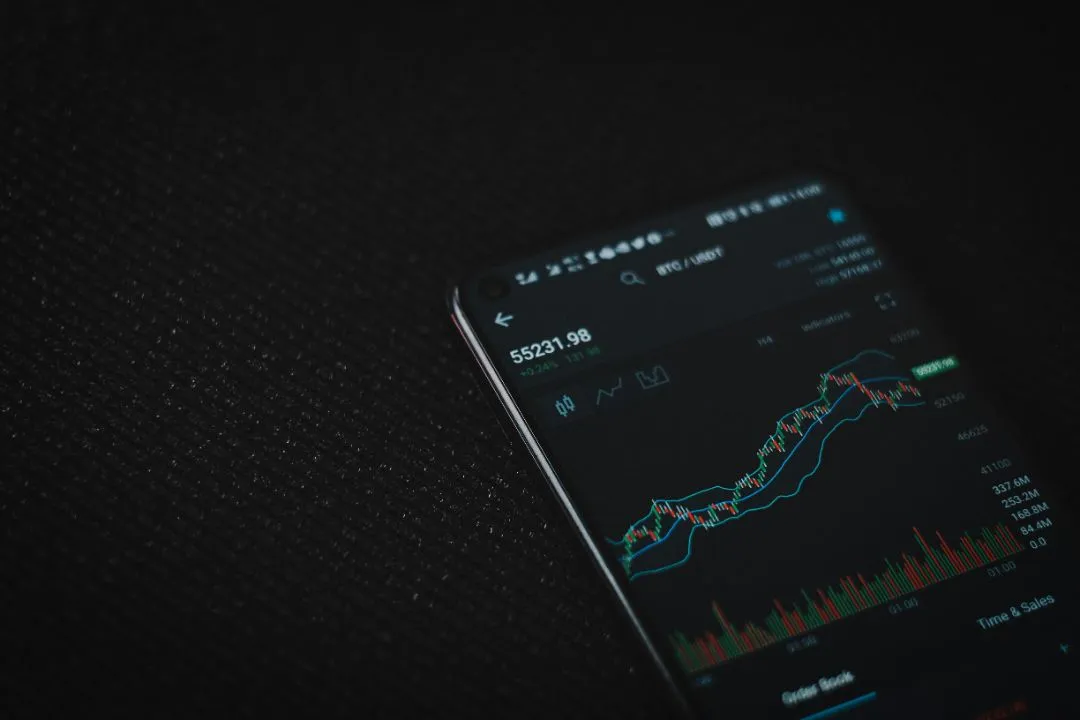
Photo by Philip Jang on Unsplash


Support measures for security token Industry

Next month, the Financial Services Commission (FSC) will draw up support measures and policy improvement plans to bolster the nascent security token industry. An FSC representative mentioned that the agency intends to work with the National Assembly to finalize the legislation of security token-related bills by November. Furthermore, the government official said the FSC will actively seek input from industry stakeholders to formulate strategies for enhancing policies designed to promote the growth of the security token market.

To align with the national objective titled “The Establishment of Digital Asset Infrastructure and Regulatory Framework,” the FSC revealed regulatory guidelines for security token issuance and distribution in February. These new guidelines are centered around the establishment of institutions responsible for account management and entities engaged in over-the-counter (OTC) trading. Subsequently, in July, lawmaker Yun Chang-hyun, a member of the National Assembly’s National Policy Committee, proposed a bill to amend the Electronic Securities Act and the Capital Markets Act with the aim of ensuring that these Acts are consistent with the new regulatory guidelines.


Security token market’s growth potential

With growing anticipation that the security token market could rival the size of the exchange-traded fund (ETF) stock market, securities firms, banks, and blockchain companies have been eager to carve out a niche for themselves since the start of the year. However, their progress has been hindered by a potentially extended period of higher interest rates in the US and the slow advancement of security token-related legislation. While these organizations tried to explore opportunities through the financial regulatory sandbox, their endeavors proved more or less fruitless. An official from a securities firm voiced concerns over the escalating costs of setting up security token infrastructure, especially with legislative delays.

On this matter, the Korea Financial Investment Association (KOFIA) has emphasized the urgent need to pass security token legislation to clear up regulatory ambiguities. They’ve also called for measures to stimulate market growth, such as relaxing regulations related to token issuance and distribution and increasing investment caps.

At a seminar hosted by the Korea Capital Market Institute, Ahn Hyuk, Head of the Platform Division at Korea Investment and Securities, highlighted that the rigorous review of security registration applications by the Financial Supervisory Service (FSS) might impede the security token market’s growth. Responding to this, Jang Young-shim, Head of the Corporate Disclosure Department at FSS, said that both the FSC and FSS will carefully listen to industry feedback, addressing a range of topics from regulatory relaxation to investor protection.

More to Read
View All
Web3 & Enterprise·

Jun 19, 2025

China’s JD.com to apply for stablecoin licenses in key markets

JD.com, also known as JINGDONG, a NASDAQ-listed Chinese e-commerce giant, is understood to be making plans to acquire stablecoin licensing in key international markets.  According to Chinese news site, Guancha.cn, Richard Liu, the founder of JD.com, which recorded revenues of $41.5 billion in Q1 2025, outlined details regarding the company’s stablecoin plans in a press briefing held in Beijing on June 17. Liu stated: "We hope to apply for stablecoin licenses in all major countries with sovereign currencies. With these licenses, our goal is to enable global foreign exchange transactions, starting with business-to-business payments."Photo by Shutter Speed on UnsplashReducing costs & settlement timeThe JD.com founder added that using stablecoins, the company “can reduce payment costs by 90% and complete transactions within 10 seconds,” while going on to point out that payments made by way of the traditional SWIFT financial messaging system take up to four working days to settle. While JD.com plans to commence with a utilization of stablecoins for business-to-business transactions, Liu said, “We hope that one day, people around the world will be able to use JD’s digital currency for global payments.” JD.com’s move towards the use of stablecoins follows a similar step taken by Ant Group, an affiliate company of Chinese e-commerce rival, Alibaba Group. It emerged last week that subsidiary company Ant International intends to apply for stablecoin licensing in Hong Kong, Singapore and Luxembourg. Additionally, Ant Digital Technologies, another Ant Group subsidiary, is also planning on applying for a stablecoin license in Hong Kong, once the Chinese autonomous territory rolls out its stablecoin regulation this summer. Stablecoin sandbox participantWhile JD.com has now announced its intentions with regard to the use of stablecoins, it has not as yet fully deployed its own token. However, JD Coinlink, a subsidiary company under its JD Technology arm, recently launched the second testing phase for a Hong Kong dollar (HKD)-pegged stablecoin.  The project first announced its intentions to issue a HKD-pegged stablecoin called the “JD Stablecoin,” back in June 2024. At that time, it asserted that reserves would be composed of highly liquid and credible assets, with those funds being regularly audited and held independently via licensed financial institutions.  Last July, the Hong Kong Monetary Authority (HKMA) launched a regulatory sandbox for stablecoin issuers with JD Coinlink joining Animoca Brands, Standard Chartered and Hong Kong Telecommunications as participants. The sandbox allows participants to test both the issuance and the use of stablecoins for a variety of use cases including payments, supply chain management and capital markets. Hong Kong has set Aug. 1 as the effective date for its Stablecoin Ordinance, which will enable certain stablecoins to be issued without a license when offered to professional investors, while a stablecoin must be licensed if offered to a retail market participant. JD.com has developed its own proprietary blockchain, Zhizhen Chain, with that network already accounting for $7 billion in supply chain finance-related transactions. KuCoin CEO BC Wong commented on JD.com’s stablecoin plans, stating that the development is a “big signal,” while noting that in the United States, the GENIUS Act, legislation concerned with the issuance and exchange of stablecoins, has just been passed by the U.S. Senate.

news
Web3 & Enterprise·

Sep 13, 2023

Incheon City Creates Metaverse Representation of Incheon Landing Operation Within The Sandbox

Incheon City Creates Metaverse Representation of Incheon Landing Operation Within The SandboxIncheon Metropolitan City announced Wednesday that the metaverse representation of the Incheon Landing Operation, the turning point of the Korean War, will be accessible on virtual gaming platform The Sandbox. Incheon is the first public organization in South Korea to collaborate with The Sandbox.Photo by Ian Hutchinson on UnsplashHonoring veteransThe metaverse content depicting the military operation has been developed to commemorate the 70th anniversary of the Korean War Armistice Agreement and to honor the soldiers who protected the freedom and peace of the Republic of Korea.This urban experiential content aims to offer virtual gamers the opportunity to gain a deeper understanding of the Incheon Landing Operation and engage in interactions with historical figures. Additionally, the platform will feature a variety of mini-games.Support through NFTsAs part of this initiative, Incheon will create and release a limited NFT collection, with all proceeds from the sales being donated to support Korean War veterans, both domestically and abroad, through the Korean War Veterans Association.The NFT collection will be available for purchase on the Sandbox Marketplace. Moreover, NFT buyers will have the opportunity to win Incheon tourism products like hotel vouchers and passes to tourist destinations.Meanwhile, Incheon is creating more content within The Sandbox, with the objective of showcasing the city to a global audience. It also plans to explore avenues for inviting metaverse users to Incheon, providing them with chances to enjoy its urban landscape.

news
Policy & Regulation·

Jul 21, 2023

Korea’s FSC Embarks on Developing Regulatory Framework for VASPs

Korea’s FSC Embarks on Developing Regulatory Framework for VASPsThe South Korean Financial Services Commission (FSC) has taken a step towards the development of a virtual asset regulation system by seeking external parties to undertake a research project in this area, according to local news agency News1.Photo by Joshua Miranda on PexelsSecond phaseEarlier this month, the National Assembly passed the Virtual Asset User Protection Bill, aimed at protecting investors and preventing unfair trading practices. This legislative accomplishment, scheduled to go effective in July next year, is referred to as the “first phase” of virtual asset regulations. Building upon this foundation, the FSC has now shifted its focus to the “second phase,” which involves the regulation of virtual asset service providers (VASPs).Regulating VASP operationsOne primary concern regarding VASPs is the potential for conflicts of interest arising from their involvement in the issuance and distribution of virtual assets. In response, the FSC is determined to design a regulatory framework that covers a wide range of virtual assets, including stablecoins, security tokens, and utility tokens.In addition to this, the FSC intends to establish a system that governs advisory and disclosure businesses, which will play a crucial role in disseminating information about asset prices and disclosures.Moreover, the regulatory system will include guidelines for holding parties accountable in case of incidents and for overseeing the operations of VASPs to maintain a safe and fair market environment.The FSC acknowledges the significance of aligning policies with international standards. To achieve this, the commission will conduct an examination of virtual asset regulatory approaches taken by different countries and international organizations. Through this study, the FSC aims to integrate global best practices and approaches into Korea’s own regulatory framework for virtual assets.Once the study is complete, the FSC has to report the result to the National Policy Committee of the National Assembly by July 2024 before the Virtual Asset User Protection Bill goes into effect.

news
Loading