Top

Okto commits $5 million treasury fund to support Vauld users

Web3 & Enterprise·November 07, 2023, 1:08 AM

Okto, the self-custody DeFi wallet app offered by Indian crypto exchange CoinDCX, has pledged a $5 million treasury fund to provide support to Vauld users.

Vauld, a Singapore-based crypto lending platform, brought a halt to all trading, withdrawal and deposit activities in 2022 as it ran into liquidity issues. The business has been undergoing a process of restructuring under the protection of the courts in Singapore ever since.

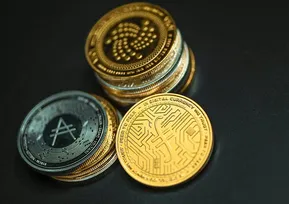
Photo by Towfiqu barbhuiya on Unsplash


Incentivizing user asset transfer

In response, Okto has stepped forward with a proactive approach to assist Vauld users in their transition. Okto is offering a 2% bonus to users who opt to transfer their assets from Vauld to Okto.

Neeraj Khandelwal, the Founder of Okto, emphasized the company’s overarching mission while unveiling this $5 million initiative. He said: “While this $5 million fund represents one of our initiatives to support the crypto ecosystem, our overarching vision is to empower the Web3 community through cutting-edge technology-backed platforms and apps designed to tackle the broader challenges within the ecosystem.”


Self-custody assurance feature

In addition to this incentive, Okto is also offering a self-custody assurance feature. This feature allows users to gain complete ownership of their private keys, ensuring that access to their funds remains exclusively in their hands. Moreover, users can benefit from round-the-clock access to monitor their assets. That delivers a reassuring sense of control and peace of mind regarding the users’ cryptocurrency holdings, against a backdrop of those users having had the experience of being unable to withdraw their funds when the Vauld platform paused trading.

The concept of self-custody is central to what crypto was supposed to be about. It grants complete ownership of assets to the user. Khandelwal outlined that Okto was established on the basis that it could strike a balance between security, convenience and custody. In this way, it felt that it could resolve what could be termed as the crypto wallet trilemma. “Okto’s enduring mission has been to provide users with a secure and user-friendly app, and we will persistently strive to achieve this objective,” Khandelwal added.


Mitigating risk

Launched globally earlier this year, Okto is a keyless, self-custody Web3 wallet that ensures secure access to DeFi services while prioritizing the safety of users’ funds. This all-in-one Web3 app approach eliminates the cumbersome need to safeguard seed phrases, ensuring users have full control of their funds.

Moreover, it mitigates the risk of a single point of failure through its state-of-the-art, custom-built, consensus-driven Multi-Party Computation (MPC) technology. With MPC, private keys required for fund access and control are never fully exposed, guaranteeing the constant security of users’ assets.

Vivek Gupta, Chief Technology Officer at Okto, elaborated on the technology behind Okto’s product offering, stating:

“Okto uses state of the art Multi-Party-Computation algorithms to create users’ private keys. Our MPC algorithm never produces a complete private key. Our MPC algorithm uses three nodes which communicate with each other under proprietary encryption channels and create a unique sensitive material on each node.”

In addition to its security measures, Okto wallet boasts compatibility with multiple Web3 chains such as Polygon, BSC and Avalanche, along with protocols like Stader and WooFi, among others.

More to Read
View All
Markets·

May 01, 2025

Crypto fraud hits 20% of Korean investors, global trend shows seniors most vulnerable

A recent survey in South Korea found that 20.3% of crypto investors have fallen victim to financial losses. Conducted by the Korea Financial Consumers Protection Foundation in late December, the survey polled 2,500 adults aged 19-69, with respondents able to select multiple loss categories. Investors in their 60s were most vulnerable, reporting a 25.3% loss rate. Exchange-related problems constituted the majority of incidents (72.8%), followed by online chat room scams (44.7%) and investment fraud (35.5%).Photo by Growtika on UnsplashExchange failures lead lossesAmong exchange-related losses, 40.6% of users couldn't sell assets due to system failures, while 11.5% lost digital assets through exchange hacking. Overall, exchange technical issues accounted for 52.1% of reported losses, with another 20.7% losing assets when exchanges closed completely. Chat group scam victims experienced various forms of fraud: 23.2% paid for worthless or false information, while 21.5% suffered financial losses through market manipulation or proxy trading schemes. Investment scams included fake crypto projects or fraudulent firms (18.0%), deceptive exchanges (10.3%), and other scams (7.2%). Most victims (75.1%) reported losses under 10 million won (approximately $6,945), with 34.6% losing less than 1 million won. Due to these relatively small amounts, 67.7% took no action following their losses. Of the 32.3% who sought help through various channels, 73.9% were unable to fully recover their funds. Problem worsening across Asia and beyondThis problem extends beyond South Korea. In neighboring Japan, police reported 19,038 crypto fraud cases in 2023, with damages totaling 45.26 billion yen (about $300 million), according to Chainalysis, citing Japanese National Police Agency data. These figures surpass 2022 numbers, indicating continued growth in fraudulent activities. A recent case highlighted by the Fukushima Minyu Shimbun involved a Soma City woman in her 50s who lost approximately 116.6 million yen ($780,000) to scammers impersonating police officers. The fraud began with a fake customer service call, followed by deceptive claims about fraudulent accounts and threats of arrest, which led her to create cryptocurrency accounts and transfer funds before eventually reporting the scam. Elderly at highest risk as fraud surgesThe FBI's Internet Crime Complaint Center's 2024 report further confirms this trend, documenting 149,686 crypto fraud complaints in the U.S. with $9.3 billion in reported losses—66% higher than in 2023. Notably, people over 60 were the most affected demographic, consistent with the Korean study's findings.

news
Web3 & Enterprise·

Jun 20, 2023

Gemini Announces Singapore Expansion Plans

Gemini Announces Singapore Expansion PlansGemini, the US-based cryptocurrency exchange and custodian, has announced its plans to expand its team in Singapore over the course of the next 12 months.Photo by Pixabay on Pexels100 new hiresGemini made the announcement by way of a blog post published to its website on Monday. In that post, the company outlined that it intends to add over one hundred new hires over the course of the next year. Gemini aims to focus on the Asia-Pacific (APAC) market, which it believes will play a crucial role in its next phase of growth.Indian engineering hubIn addition to its Singapore expansion, Gemini is actively working on setting up an engineering center in Gurgaon, India. Back in April, the firm’s newly appointed Chief Technology Officer and APAC region CEO, Pravit Tiwana, announced the intention of establishing the India-based engineering center. An intention to expand the Singapore base was also suggested at that time, with the company now following up with firm expansion plans.This engineering hub in Gurgaon is expected to become the second largest for Gemini, after its operations in the United States. By expanding its engineering capabilities, Gemini aims to bolster and support its global operations effectively.APAC to drive crypto growthGemini sees the APAC region as the driving force behind what it termed “the next wave of growth for crypto.” The exchange plans to use its Singapore office as a hub from which to run broader operations in APAC.This strategic move follows Gemini’s addition of support for the Singapore dollar (SGD) three years ago, enabling local residents to access cryptocurrencies directly using their native currency. The expansion plan provides Gemini with the potential to capitalize on the growing opportunities within the APAC market, further establishing a foothold in a significant regional market.Gemini’s decision to focus on international expansion aligns with the growing trend among cryptocurrency companies. Regulatory pressures in the US crypto market have escalated, exemplified by recent lawsuits filed by the US Securities and Exchange Commission (SEC) against major exchanges like Binance and Coinbase.These circumstances have prompted many companies to seek opportunities beyond the United States. In particular, exchanges are looking for markets with clearer regulatory landscapes and significant growth potential. Hong Kong, Singapore, and several European countries have emerged as attractive options.Coinbase, one of the largest cryptocurrency exchanges globally, has also followed a similar path to Gemini by expanding its services in Singapore. Singapore’s reputation as a crypto-friendly financial hub makes it an attractive location for such expansion efforts.Gemini’s decision to expand its team in Singapore and its focus on the APAC market reflects a strategic approach to capitalize on the increasing global demand for cryptocurrencies. By establishing a strong presence in key international markets, the company has found a workaround for the current impasse in the United States with regard to the lack of sane, workable regulation.The company has identified a region that is taking a more accommodating approach, while recognizing the APAC region’s potential as a significant driver of growth and is proactively positioning itself to tap into the region’s expanding crypto market.

news
Policy & Regulation·

Oct 07, 2023

Taiwan Crypto Trader Strikes it Lucky in Tax Receipt Lottery

Taiwan Crypto Trader Strikes it Lucky in Tax Receipt LotteryA trader on Taiwan’s MaiCoin Max crypto exchange has struck it rich in an unexpected way, winning a grand prize of 10 million NTD (approximately $310,000) in the country’s monthly national tax receipt lottery.Photo by Nick Fewings on UnsplashFrom 6 cents to $300KWhat makes this story, which was reported by CoinDesk on Friday, even more surprising is that the trader had paid a mere 2 NTD (equivalent to $0.06) in fees on the exchange as they engaged in relatively small trades.The lucky individual, who chose to remain anonymous, didn’t earn this windfall through traditional trading profits or by accumulating tokens. Instead, their fortune came from Taiwan’s unique approach to tax compliance.For crypto exchanges like MaiCoin, every trade conducted on their platform technically counts as a taxable event. This means that active traders can amass numerous virtual “lottery tickets” each month through their trading activities and transaction fees.Uniform invoice lotteryTaiwan introduced its tax receipt lottery system, known as the uniform invoice lottery, back in the 1950s as an innovative method to encourage tax compliance among consumers. While tax authorities worldwide struggle to capture revenue from cryptocurrency holders, Taiwan’s approach allows them to indirectly benefit from the earnings generated on crypto exchanges.For every transaction made by an individual, whether that should occur on a crypto exchange or elsewhere, the individual is issued with a tax receipt. An electronic copy is also registered with Taiwan’s tax authority. Essentially, every receipt then becomes a lottery ticket as the tax authority then runs a draw on an ongoing basis where taxpayers can earn cash prizes.This particular win involving a Taiwanese crypto trader has drawn attention from the broader public. Paul Huang, a Research Fellow at the Taiwanese Public Opinion Foundation, took to X (formerly Twitter) on the subject, stating:”Who says retail users can’t profit from trading cryptos? Taiwan’s largest crypto exchange @MAX_exch announced some user made a tiny trade that paid $2 NTD ($0.06 USD) in fee on platform, the tax receipt ended up winning 10mil ($310k USD) in Taiwan govt’s invoice lottery!”The recent $310,000 jackpot represents the largest prize ever won by a crypto trader through this lottery. Nevertheless, Taiwan’s tax receipt lottery typically produces smaller windfalls, with the country collecting over $7 billion in sales tax revenue in 2021, and a significant proportion paid out in lottery winnings.Critics argue that this system may not be the most efficient way to boost tax compliance, but Taiwan maintains one of the world’s most effective tax regimes, consistently generating impressive revenue relative to its GDP. Additionally, stories of remarkable lottery jackpots serve as excellent public relations for the scheme.There’s little doubt that cryptocurrencies have brought about significant challenges for tax authorities worldwide. In this particular instance, Taiwan’s tax receipt lottery stands as a unique and intriguing approach to fostering compliance while occasionally making crypto traders unexpectedly wealthy.

news
Loading