Top

As Excitement for First US Spot Bitcoin ETF Intensifies, South Korea Still Faces Mountain to Climb

Policy & Regulation·October 25, 2023, 8:35 AM

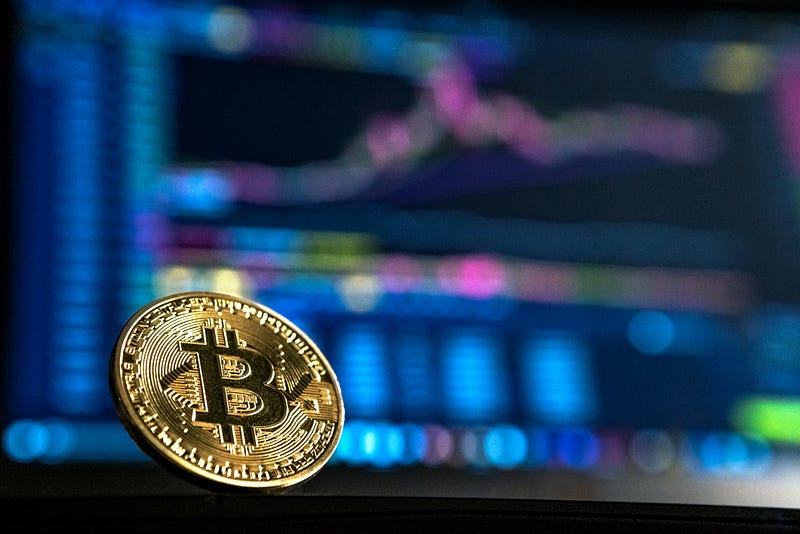
The price of bitcoin has surged significantly as it recorded an 18% increase in the past week, spurred by mounting anticipation surrounding the US’ first spot bitcoin exchange-traded fund (ETF) propelled by asset management juggernauts BlackRock and Fidelity Investments — a threshold that had not been crossed in over a year. According to CoinMarketCap, bitcoin is trading in the upper $33,000 range as of 5 p.m. KST on Wednesday.

Photo by André François McKenzie on Unsplash


Ongoing buildup

The approval of a spot bitcoin ETF — long rejected or delayed due to a plethora of reasons like the volatility of cryptocurrencies and their susceptibility to market manipulation — would in the long run open up the possibility for institutions to earmark bitcoin as a major asset that can be integrated into the sphere of traditional finance. This would make bitcoin easier to handle and increase its exposure to traditional investors. “The mere possibility of this development marks a significant shift in the market landscape,” said an unnamed executive at a Korean asset management company in a news article by South Korean news outlet Maeil Business Newspaper.

BlackRock’s spot bitcoin ETF, the iShares Bitcoin Trust, was also listed on the US Depository Trust & Clearing Corporation (DTCC)’s website with the ticker symbol IBTC on Monday before it mysteriously disappeared the following day. It has since been relisted on the website. The listing is “all part of the process of bringing ETF to market”, as explained by Bloomberg’s senior ETF analyst Eric Balchunas via his X (formerly Twitter) account on Tuesday.


Is a spot bitcoin ETF on the table for Korea?

However, Korean experts believe that there are still numerous hurdles to overcome in order for a spot bitcoin ETF to settle in Korea. In particular, some question whether cryptocurrency platforms that offer custodial services can even be classified as exchanges. There is also the issue of bitcoin’s varying prices across different exchanges. Its current price on Upbit, the country’s largest crypto exchange, is in the KRW 45.9 million range as of 5 p.m. on Wednesday. Local financial authorities have reportedly expressed skepticism about bitcoin ETFs for these reasons, suggesting a murky future for this development becoming a reality in Korea.

More to Read
View All
Web3 & Enterprise·

Aug 28, 2023

BC Card Accelerates Launch of NFT Guarantees for Secondhand Luxury Goods Trades

BC Card Accelerates Launch of NFT Guarantees for Secondhand Luxury Goods TradesSouth Korean credit card issuer BC Card announced on Sunday that it has applied for two domestic patents for blockchain technology that will be used to issue digital guarantees for purchases of luxury goods, such as bags, watches, and more. These guarantees will be minted as non-fungible tokens (NFTs) that can later be accessed by buyers or sellers during secondhand trades, which often pose risks and uncertainty regarding product quality or authenticity.Enhancing trust and securityThese NFTs will be based on paper or digital payment receipts — which contain detailed information on purchase receipts, such as product names, payment amounts, purchase dates, and shop information — that a customer receives after purchasing goods at stores that accept BC cards.Photo by Towfiqu barbhuiya on UnsplashBecause the guarantees are stored on a blockchain, they are almost impossible to tamper with. BC Card anticipates that this service will offer advantages like boosted safety, convenience, and security for both buyers and sellers who wish to partake in transactions of secondhand luxury goods.In addition, the data distributed across servers eliminates concerns about data loss. To achieve this, BC Card plans to collaborate with telecommunications provider KT and BC’s subsidiary, VP, which specializes in electronic payment services.“Through this patent application, we expect to significantly enhance the trustworthiness of secondhand luxury goods transactions in Korea,” said Kwon Sun-moo, Director of the New Financial Research division at BC Card. “After the patents are registered, we plan to collaborate with companies under KT Group like KT Alpha as well as other distribution companies in a business-to-business-to-consumer (B2B2C) system.”Access through a digital walletCustomers can take a photo of a receipt with their phones or download it, then upload it to BC Card’s financial platform, Paybook. The photo is then converted into an image that is automatically stored as an NFT on the blockchain network.Once a seller registers a payment receipt for a product that they bought, then the subsequent NFT guarantee can be accessed or sent through their BC Card digital wallet — a feature that the company plans to launch soon — at any time during future transactions. This offers a convenient solution to the possibility of losing receipts, which traditionally requires manually downloading them again from the card company’s website or app.Revolutionizing secondhand tradeThis new technology could play a significant role in the booming resell and secondhand goods trading market, the company said. According to data from the Korea Internet & Security Agency last year, the domestic secondhand market has grown from a scale of KRW 4 trillion in 2008 to KRW 24 trillion in 2021 and is projected to exceed KRW 30 trillion this year.“Through the registration of payment receipts, we can analyze consumption patterns and even suggest improvements in spending habits to our customers,” Director Kwon highlighted.BC Card is also considering offering luxury appraisal and authentication services along with the future launch of the NFT service.

news
Policy & Regulation·

Jan 23, 2024

Hong Kong crypto executive anticipates spot crypto ETF approvals by mid-2024

The launch of Hong Kong's inaugural spot crypto exchange-traded funds (ETFs) is expected to occur by mid-2024, according to one of Hong Kong’s leading crypto executives. Gary Tiu, the executive director and head of regulatory affairs at OSL, a licensed cryptocurrency exchange based in Hong Kong, made that assertion in discussion with The Hong Kong Economic Journal. Tiu provided the publication with insights into the accelerating pace of negotiations between cryptocurrency exchanges and fund companies in the region.Photo by Stella P on UnsplashUp to ten firms contemplating ETF launchOSL is actively engaged in discussions with multiple fund companies, with five to ten firms contemplating the introduction of spot crypto ETFs. Tiu revealed that certain firms have made notable progress, raising the possibility of the debut of these ETFs in Hong Kong by the middle of the year. Additionally, the OSL executive emphasized the significance of maintaining reasonable fees in collaborations between OSL and fund companies, given the limited presence of licensed crypto exchanges in the city – a total of two at present. This suggestion from Tiu aligns with similar recent soundings emanating from HashKey, another licensed crypto exchange in Hong Kong, which recently disclosed its ongoing discussions with asset managers exploring the potential launch of spot crypto ETFs. Livio Weng, the CEO of HashKey, indicated that approximately ten fund companies are considering the introduction of such ETFs in the city. VSFG’s ETF plansAligned with Tiu’s thoughts on the matter, according to a Bloomberg report last week, Venture Smart Financial Holdings Ltd (VSFG), a Hong Kong-based financial services firm, expressed plans to potentially launch a spot bitcoin ETF within the first quarter of this year. Bloomberg reported the company's goal of growing the ETF's assets under management to $500 million by the end of 2024. The regulatory landscape in Hong Kong is actively adapting to accommodate spot crypto ETFs, with the Securities and Futures Commission (SFC) and the Hong Kong Monetary Authority (HKMA) announcing in December that they have reviewed their existing policies. Two circulars were published, outlining the requirements for spot crypto ETFs, with the SFC stressing that transactions should be conducted through SFC-licensed crypto platforms or authorized financial institutions. Currently, Hong Kong has listed several futures-based crypto ETFs, including the Samsung Bitcoin Futures Active ETF, CSOP Bitcoin Futures ETF and CSOP Ether Futures ETF. Hong Kong venue for Bitcoin conferenceIn a related development, local lawmaker Johnny Ng revealed on social media on Monday that Hong Kong will host The Bitcoin Conference this year. Earlier this month Ng urged the local administration in Hong Kong to swiftly follow the United States' approval of spot bitcoin ETFs and position the city as a leading hub in the cryptocurrency space. With Hong Kong and Singapore vying for hub status in the Asian region relative to the digital assets space, the launch of ETF products would give the Chinese autonomous territory a competitive head start given that Singapore doesn’t appear to be close to accommodating crypto ETFs for the time being.

news
Policy & Regulation·

May 12, 2023

China Launches National Blockchain Center to Develop Talent

China Launches National Blockchain Center to Develop TalentHaving initially been announced in February, China’s National Blockchain Technology Innovation Center was formally launched on Wednesday. The center is based in China’s capital city of Beijing, and plans to collaborate with existing crypto and blockchain businesses, think tanks that concern themselves with blockchain and digital assets, and local universities in an effort to further advance blockchain technology within China’s borders.Photo by Hanson Lu on UnsplashEnterprise blockchain developmentEncompassed within the National Blockchain Technology Innovation Center lies the Beijing Academy of Blockchain and Edge Computing. The academy’s leading achievement to date has been its development of the ChainMaker blockchain. The state-sponsored blockchain incorporates clusters of high performance servers of 1,000 units or more, and it claims to achieve a throughput of 240 million transactions per second.The blockchain is being geared towards enterprise use, and the sharing of information between businesses. The ChainMaker project team has also developed an immutable storage mechanism called “Hong”. It’s understood that the team plans to open-source that technology in due course. The storage system is being used by around 80 government departments in Beijing to collect and store data.ChainMaker is collaborating with fifty corporations, with most of them being state-owned entities.Linking up separate networksIn these efforts to advance China’s blockchain sector, the Center is being backed by China’s Ministry of Science and Technology. One of its key objectives is to ensure that the research center enables a comprehensive, nation-wide network to link together disparate blockchain systems, including those already built, within China. Furthermore, the Chinese authorities want the Center to support existing industries, serving them by bringing blockchain technology to their operations, and in that way advancing businesses with that added competitive edge.Zheng Zhiming, a leading academic at the Chinese Academy of Sciences said that existing blockchain projects are isolated from each other. Zhiming believes that this is holding them back, impeding their growth. This latest approach through the National Blockchain Technology Center is geared to address that shortcoming.It’s interesting to note that while the Chinese authorities have taken a very hard line in relation to cryptocurrencies, they are very much trying to advance their blockchain sector. Likewise, they are pulling out the stops for China’s central bank digital currency (CBDC) project, the digital yuan or e-CNY.It emerged last week that the Bank of China has partnered with French international banking group BNP Paribas, in an effort to promote further use of the digital yuan among the bank’s corporate clients.A dual strategyMeanwhile in China’s autonomous territory of Hong Kong, the city has been given an implicit mandate from the Chinese central government to open its doors to cryptocurrency-related businesses. Cleverly, the Chinese are covering both eventualities. While they don’t want citizens within mainland China to have access to decentralized cryptocurrencies and dApps, they still don’t want to miss out on any upside that the technology and its innovation may bring.On that basis, Hong Kong has been given the space and freedom to compete for crypto business on a global basis, competing in that respect with other emerging centers such as Singapore and Dubai.

news
Loading