Top

UAE Emirate Launches Digital Asset Oasis Free Zone

Web3 & Enterprise·October 21, 2023, 1:56 AM

Ras Al Khaimah (RAK), one of the seven Emirates of the United Arab Emirates (UAE), has launched the RAK Digital Assets Oasis (RAK DAO), a free zone tailored exclusively for digital and virtual asset enterprises.
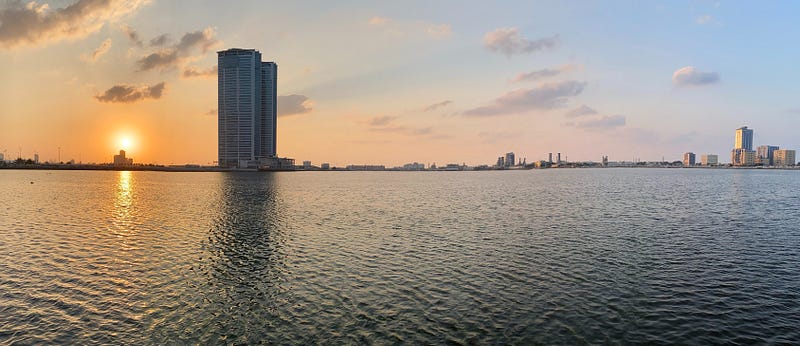
Photo by Mostafa Ashraf Mostafa on Unsplash


From conception to launch

The Emirate has been working on the RAK DAO project for some time, having enacted a law to establish the free zone in March of this year. In July it emerged that RAK Digital Assets Oasis had partnered with the HBAR Foundation, the project team behind the Hedera public ledger, with HBAR extending funding and resources to fuel the growth of free zone members.

Having put in the hard yards to establish the free zone, RAK DAO, under the patronage of RAK Emirate ruler His Highness Sheikh Saud Bin Saqr Al Qasimi, had its launch event on Thursday. The event included a range of industry speakers including Ledger Chairman and CEO Pascal Gauthier, Animoca Brands Co-Founder and Executive Chairman Yat Siu, DFINITY Founder Dominic Williams, and TON Foundation President Steve Yun, among others.

During the event, DAO creation and governance platform DeXe DAO Studio announced its partnership with RAK DAO.

With an eye towards keeping the RAK Emirate ahead of the technological curve, RAK DAO aims for the digital assets oasis to become the world’s first free zone dedicated solely to digital and virtual asset companies. While RAK DAO is initially expected to focus on non-financial activities, it holds the potential to introduce financial activities at a later stage.


Nurturing Web3 innovation

The mandate of RAK DAO is to provide robust support to companies engaged in cutting-edge technologies. This includes but is not limited to ventures in the metaverse, blockchain, utility tokens, virtual asset wallets, non-fungible tokens (NFTs), decentralized autonomous organizations (DAOs), decentralized applications (DApps), and various other Web3-related businesses.

Entrepreneurs who establish their presence within the confines of this free zone will be granted the privilege of retaining 100% ownership of their enterprises. Moreover, they will benefit from innovative tax schemes and a regulatory framework that is tailored to the unique demands of the digital asset industry.


Progressive approach to Web3

The UAE, as a nation, has actively pursued and courted crypto and blockchain firms by cultivating a progressive regulatory environment. Dubai led the charge by introducing a virtual assets law and establishing the Virtual Asset Regulatory Authority.

RAK is not the first Emirate to establish a free zone that caters to crypto and Web3 business within the UAE. The Emirate of Abu Dhabi has established the Abu Dhabi Global Market (ADGM) while the Dubai International Financial Centre (DIFC) established its own financial regulator in Dubai, paving the way for attractive free zones for digital asset businesses. The Dubai Virtual Assets Regulatory Authority (VARA) even took its commitment a step further by inaugurating its headquarters in The Sandbox in May 2022.

Dubai has issued operational licenses to several crypto firms, including prominent names like Binance, Crypto.com, and Nomura’s Laser Digital and digital asset custodian Komainu. These licenses have further solidified the UAE’s position as a preferred destination for crypto, blockchain, and Web3 enterprises.


More to Read
View All
Web3 & Enterprise·

Oct 11, 2023

Eureka Entertainment Hosts Opening Event for Coin Musme’s Korean Discord Community

Eureka Entertainment Hosts Opening Event for Coin Musme’s Korean Discord CommunityEureka Entertainment has opened a celebratory event for the opening of an online Korean language Discord community for its upcoming Play-to-Earn (P2E) blockchain game, Coin Musme, which is scheduled for release later this year.Photo by Alexander Shatov on UnsplashBridging crypto and entertainmentCoin Musme revolves around a storyline where characters inspired by cryptocurrencies undergo a process of becoming popular idols at the Coin Musme Academy in order to revive the public’s interest in crypto after a major market collapse. Players can earn non-fungible tokens (NFTs), which are sold through the gacha mechanic. The gacha mechanic allows players to spend in-game currency — in this case, Musme Coin (MSM) — in exchange for a random item. The MSM utility token will be listed on multiple exchanges leading up to the game’s official launch.The game’s official Discord community server called Coin Musme Academy was launched publicly on August 2 in various countries. It is led by Musme-chan, the non-playable official PR character, and operates in a school-themed roleplay style. Participants can find information about Coin Musme on the server, such as interaction events, campaigns, and more.Notably, last Tuesday (local time), a designated channel for Korean and Chinese users was added. To mark the occasion, the game is hosting an event for Korean users, who will get a chance to receive free gacha NFT vouchers that can be used in the game. Users can participate by joining the Coin Musme Korean Discord channel and following the official global Coin Musme X (formerly Twitter) account. 20 winners will be selected through a draw.Users can change their language settings to Korean and join the #general-kr channel, where they can find details about the event. The community is also recruiting Korean ambassadors, who will be responsible for promoting the game through their personal social media accounts as well as those under Musme-chan’s name.Meanwhile, another event is taking place to celebrate the recent listing of MBX, MARBLEX’s governance token, on the Japanese exchange Zaif, and the debut of a new Musme character representing MBX named Marblex-chan. Her character NFT can be found on Zaif’s NFT marketplace.Fostering fun and communityEureka Entertainment emphasized that the goal of everyone making money in the gaming world is essentially unattainable, expressing their intention to instead present a user-centered game focused on providing fun experiences, encouraging user interaction, and enhancing gameplay experiences.

news
Web3 & Enterprise·

Jul 19, 2024

UK startups move to expand into Asia

It has emerged in recent days that two London-headquartered crypto startups have taken steps towards expanding into the Asian market.  Funding to fuel Asian expansion Haruko, an investment platform that focuses on digital assets based in London, announced that it has raised $6 million in a Series A funding round, with the intention of using the funds to propel the company’s expansion into Southeast Asia. The round was led by White Star Capital and MMC Ventures. Combined with an initial seed round which was completed in March 2022, Haruko has raised a total of $16 million. The firm provided details of its latest funding earlier this week through a press release published via AccessWire.  Having been founded in 2021, the startup has established its operations in Europe and North America, adding in excess of 50 institutions to its client list. Those clients include hedge funds, family offices, market makers, over-the-counter (OTC) trading desks, digital asset custodians and prime brokerages. Haruko co-founder and CEO Shamyl Malik spoke to the firm’s global expansion plans, stating: "We're looking forward to continuing our global expansion, investing in exceptionally talented team members to support us in our goal of building out an industry-leading, end-to-end solution for digital assets and the future of the finance industry. We will continue to invest singularly in this mission, ensuring the quality of our products and services is at the forefront of all our activity." The company has already established a base in Singapore through which it can expand further into the Asian market. Asia is clearly becoming an attractive destination for crypto startups as alongside Haruko, a recent announcement from crypto custodian Copper outlined that it has acquired a trading license in Hong Kong.Photo by CHUTTERSNAP on UnsplashTCSP license in Hong Kong The London-headquartered digital assets custodian outlined on X that it has secured a Trust or Company Service Provider (TCSP) license in Hong Kong from the autonomous Chinese territory’s Companies Registry. Copper CEO Dmitry Tokarev commented on the milestone, stating: "Combining trust and efficiency is fundamental to our institution-first approach. This license approval in a key global hub only strengthens that unique offer, highlighting Copper’s compliance with Hong Kong’s regulatory frameworks and standards." The license enables the company in extending the offering of its digital asset custody services to clients in Hong Kong. Tokarev added that the license approval “is a key development in Copper’s expansion in the Asia Pacific market.” Back in 2020, the firm raised $8 million in funding in a Series A round that, as with Haruko, featured MMC Ventures, with a view towards expanding into Asia and North America. Towards the end of last year, the firm launched a settlement network for institutional crypto traders. Its ClearLoop network enables clients to manage collateral and settle trades across a number of exchanges while increasing capital efficiency and mitigating counterparty risk. Over the course of the month of June, the company claimed to have processed 13.1 million trades via ClearLoop, accounting for a notional traded volume of $109.9 billion. 17,500 individual risk clearing settlements were finalized, with 3,600 inter-exchange movements. The company had a number of significant announcements last month, including a collaboration with the Sui layer-1 blockchain and the integration of the ClearLoop system by global crypto exchange, Kraken.

news
Policy & Regulation·

Jun 04, 2025

MAS sets deadline for unlicensed crypto firms serving clients overseas from Singapore

The Monetary Authority of Singapore (MAS), the city-state’s central bank and primary financial regulator, has set a deadline of June 30 for unlicensed digital token service providers (DTSPs) working out of Singapore to cease offering their services to clients in overseas markets.Photo by Hu Chen on UnsplashResponding to feedbackThe deadline emerged by way of a process MAS has followed as part of the Financial Services and Markets Act 2022 (FSM Act). Last October, the regulator invited feedback from stakeholders related to the authority’s approach to the regulation of DTSPs. MAS published its response to that feedback on May 30.  It stated:”DTSPs which are subject to a licensing requirement under section 137 of the FSM Act must suspend or cease carrying on a business of providing DT services outside Singapore by 30 June 2025.” It added that it was not including any transitional arrangement for DTSPs despite MAS receiving such a suggestion from a number of feedback respondents. Instead, unlicensed DTSPs will need to abide by the June 30 deadline and have acquired a license by then or cease unlicensed activity.The regulator defines DTSPs as individuals, partnerships or Singapore corporations operating from a place of business in Singapore, including those formed or incorporated in Singapore who offer digital token services outside Singapore. Those found in breach of the regulation could face up to three years in prison and fines of up to S$250,000 ($195,000). Companies who have already obtained licensing or those exempted by way of the Securities and Futures Act, Payment Services Act and the Financial Advisers Act are free to continue trading. Challenging licensing requirementsThose who wish to become compliant will have to satisfy some challenging requirements. For those granted a license, an annual license fee of S$10,000 ($7,780) applies. Small-scale DTSPs need to satisfy a $150,000 ($116,670) ongoing capital requirement, while larger, well-established DTSPs must comply with a S$250,000 ($195,000) capital requirement. Additionally, MAS has put in place competency requirements related to a DTSP's CEO, directors, partners and managers. Hagen Rooke, a partner at law firm Gibson, Dunn & Crutcher, outlined on LinkedIn that while it's possible for unlicensed operators to obtain licensing, it will be very difficult to get a license. In its feedback response document, the regulator stated: “MAS will approach the licensing of DTSPs in a prudent and cautious manner and there will be extremely limited circumstances under which MAS will consider granting an applicant a licence under section 138 of the FSM Act.” Rooke advised crypto companies that may be affected to act swiftly in order to derisk through an operational restructuring or removing the businesses' Singapore touchpoints. He suggested that firms need to consider if it has customers outside of Singapore or front-office functions located outside of the city-state to determine if they could be affected by this regulatory measure. A number of Asian countries have moved to take action against unlicensed foreign firms that have engaged with local investors, with Thailand becoming the latest country to do so recently. However, the Singaporean authorities have approached the issue from the opposite perspective, citing the potential reputational risk that unlicensed DTSPs pose for Singapore.

news
Loading