Top

Indonesia to Launch Blockchain Trials to Enhance Public Services

Policy & Regulation·October 14, 2023, 4:10 AM

In the wake of its recent government-backed cryptocurrency exchange launch, Indonesia is moving further forward to launch trials that employ blockchain technology within its public services sector.

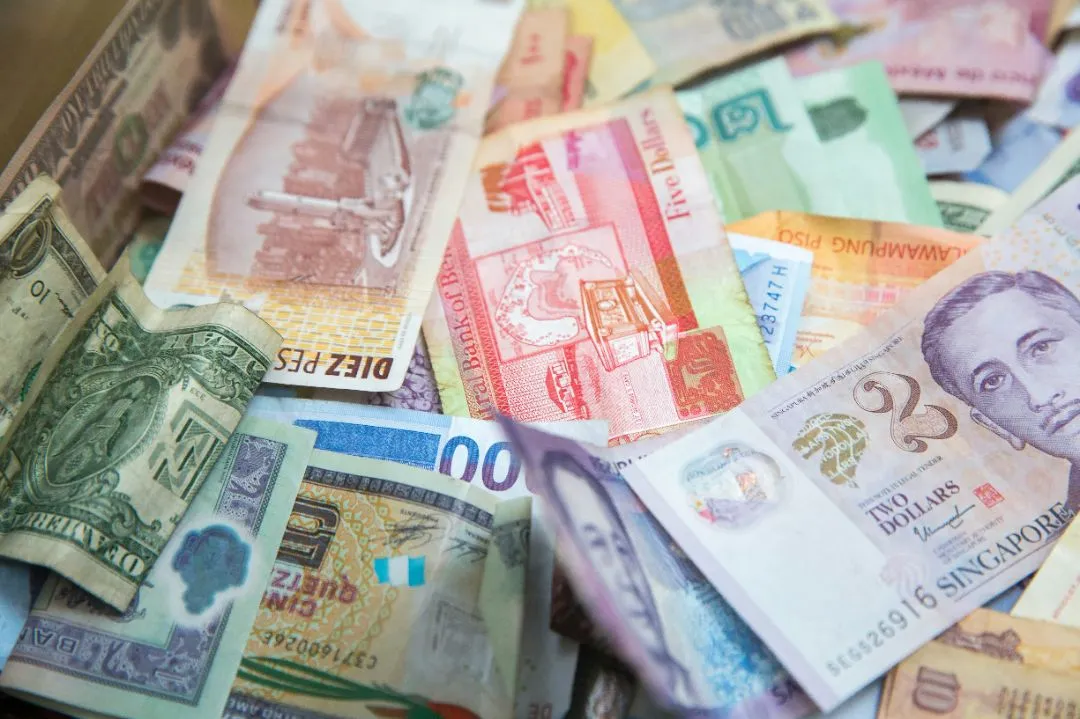
Photo by Bisma Mahendra on Unsplash


Blockchain-based land ownership records

At the recent Blockchain Economy Summit held in Dubai, Tuhu Nugraha, the Principal of the Indonesia Applied Digital Economy and Regulatory Network (IADERN), told Cointelegraph that these trials will encompass the utilization of blockchain-based digital certificates for land ownership and certificates of competence within the education sector.

The executive believes that blockchain’s inherent attributes, which include characteristics such as immutability and transparency, can be harnessed to combat certificate fraud. By anchoring these certificates in blockchain’s secure ledger, the government can efficiently verify the authenticity of various digital certificates, which is a significant leap forward in ensuring the integrity of critical documents.

Nugraha is an advisor to the Indonesian government on blockchain and metaverse technologies. He emphasized the government’s collaborative approach to Web3 technology. Additionally, Nugraha revealed that the Indonesian government is working in close partnership with various blockchain-focused associations to conduct experiments and gather insights into the multifaceted implications of blockchain across diverse sectors. Instead of imposing rigid regulations, Nugraha maintains that the Indonesian government is committed to crafting regulations that spur innovation.

Cointelegraph also spoke with Grace Sabandar, Co-Founder of the Indonesia Blockchain and Metaverse Center (IBMC). Sabandar, an advocate of blockchain’s potential, emphasized the pivotal role of Indonesia’s youthful demographic on the basis that this dynamic demographic is inherently adaptable to new technology.


Youthful demographic to capitalize on Web3

Sabandar made the point that this younger Indonesian demographic has already demonstrated itself to be one of the world’s largest user bases for Web2 social media platforms such as Facebook and Instagram. On that basis, she believes Indonesia is poised to lead in the adoption of Web3 technology. She remarked:

“We want to be the leader, not only the user of technology, because now, because of decentralization, anybody can do something, anybody can create something.”

Furthermore, Sabandar highlighted the crucial educational role played by the IBMC in collaboration with the government, private sector stakeholders, media, and academia. Their mission revolves around enlightening the nation about the manifold benefits of blockchain, emphasizing transparency, the utility of smart contracts in business operations, the essence of decentralization, and other fundamental aspects.


Realizing blockchain and Web3 potential

Earlier this week, a report published by South Korean crypto data platform Xangle in conjunction with Web3 consulting firm Tiger Research concluded that Indonesia has significant potential to grow its Web3 sector.

Reports in recent days have also demonstrated further instances of the use of blockchain technology in the country, with state-owned ID Food collaborating with Singapore’s D3 Labs to establish a blockchain-based fish trading process. In July, South Korean tech company Milk Partners launched its blockchain-based reward points service in Indonesia.

Indonesia’s blockchain development and adoption are being spurred on by the enthusiasm of its tech-savvy youth, collaborative partnerships, and a government dedicated to innovation and transparency. As it paves the way in the Web3 era, Indonesia seeks to leverage blockchain technology to benefit public services, foster trust, and lead by example in the global digital revolution.

More to Read
View All
Policy & Regulation·

Oct 22, 2025

Singapore launches BLOOM initiative to advance digital finance infrastructure

The Monetary Authority of Singapore (MAS) has unveiled a new initiative aimed at enhancing the nation’s financial infrastructure through the use of stablecoins and tokenized commercial bank money. Announced on Oct. 16, the project, known as BLOOM, short for Borderless, Liquid, Open, Online, Multi-currency, brings together 16 financial sector participants, including Anchorage Digital, Ant International, Circle, Coinbase, and DBS Bank. According to MAS, BLOOM is open to additional participants through a registration form available on its official website.Photo by Jason Leung on UnsplashBuilding on Project OrchidBLOOM operates under Project Orchid, a digital Singapore dollar initiative launched in 2021 to explore potential applications of central bank digital currency (CBDC) in strengthening Singapore’s financial ecosystem. Through BLOOM, it will examine use cases involving G10 and Asian currencies, covering both domestic and cross-border payments, as well as wholesale financial transactions. The project’s focus includes coordinating interoperability between different networks to enable the distribution and clearing of settlement assets. It will also explore automated compliance checks and study methods to make wholesale settlements more efficient and cost-effective. Artificial intelligence (AI) agents are expected to play a supporting role, executing transactions automatically within predefined limits and regulatory parameters. Expanding stablecoin usage in SingaporeThe MAS initiative comes shortly after the listing of XSGD, a Singapore dollar–backed stablecoin, on the U.S.-based crypto exchange Coinbase on Oct. 1. XSGD is issued by StraitsX, a digital payments provider, and is fully backed by reserve assets held with DBS Bank and Standard Chartered. Stablecoin payments have gained traction in Singapore’s retail sector as well. StraitsX recently began supporting settlements in USDT and USDC through OKX Pay. Consumers can use SGQR codes at participating GrabPay merchants to make everyday purchases, such as coffee, with transactions settled directly in Singapore dollars into merchant accounts. Rising local interest in digital assetsSingapore’s growing engagement with digital assets reflects a broader trend of public interest. A report from ApeX Protocol, cited by Cointelegraph, ranked Singapore as the world’s most “crypto-obsessed” nation, awarding it a composite score of 100. The ranking considered ownership rates, adoption growth, search activity, and ATM availability. The study found that 24.4% of Singapore’s population holds cryptocurrency, ahead of the United Arab Emirates (UAE), which scored 99.7 despite a 25.3% ownership rate. In a separate development, Channel News Asia reported that three Singaporeans have been implicated in a large-scale fraud scheme linked to Cambodia’s Prince Group. The U.S. Department of Justice recently confiscated 127,271 Bitcoin tied to the operation—the largest seizure in its history. Following the investigation, the U.S. Department of the Treasury’s Office of Foreign Assets Control imposed sanctions on the three individuals as well as 17 Singapore-registered entities. The sanctions block access to any property in their possession and prohibit U.S. persons from engaging in transactions with them, citing risks to U.S. national security and foreign policy interests. 

news
Policy & Regulation·

Nov 17, 2025

Japan Exchange Group weighs tougher scrutiny of crypto treasury firms

The Japan Exchange Group (JPX), operator of the Tokyo and Osaka stock exchanges, is considering measures to curb the expansion of publicly listed digital-asset treasury (DAT) firms, according to sources speaking to Bloomberg. JPX is reportedly exploring various regulatory avenues, ranging from tightening backdoor listing rules to mandating new audits for applicable firms. Following recent scrutiny from the exchange, three Japanese public companies have suspended their cryptocurrency purchase plans since September. These firms were reportedly warned that pursuing crypto investment as a core strategy could restrict their ability to raise future capital. While JPX currently lacks binding regulations explicitly prohibiting listed companies from accumulating digital assets, a representative stated that the exchange is monitoring firms with potential governance and risk issues to protect the interests of shareholders and investors.Photo by Su San Lee on UnsplashMetaplanet responds to regulatory concernsFollowing the Bloomberg report, Metaplanet, a Japanese public company that has adopted a Bitcoin accumulation strategy similar to that of the American firm Strategy, issued a clarifying statement. The firm asserted that it "has not been subject to any regulatory actions or investigations by relevant authorities concerning our business operations." Metaplanet emphasized its willingness to engage in constructive dialogue with regulators should any inquiries arise. According to BitcoinTreasuries.net data, Metaplanet is currently Japan’s largest corporate Bitcoin holder and ranks fourth globally among public companies, trailing only Strategy, MARA Holdings, and XXI. The extent of the firm’s commitment to this strategy was highlighted by Shinpei Okuno, Metaplanet’s Head of IR and Capital Strategy, who shared the company’s holdings via X. Balance sheet data as of September 30, 2025, reveals that Bitcoin accounts for 99% of Metaplanet’s total assets, 542.7 billion yen out of 550.7 billion yen. Okuno noted that the company aims to maintain a balance sheet structure that supports the issuance of digital credits collateralized by its crypto holdings. Market performance and sector outlookThe stock performance of DAT firms highlights the market's reaction to these risks. According to Yahoo Finance data, Metaplanet’s share price has declined 40.29% over the past six months to 372 yen. This drop outpaces Bitcoin’s 8% decline over the same period. This downward pressure is visible across the broader DAT sector. Decrypt reported that Strategy's stock has fallen 50% from its July peak, while SharpLink, which invests in Ethereum, has dropped nearly 90%. Data from StrategyTracker indicates that the market-net-asset values (mNAVs) of these firms have slipped to near or below 1, reflecting depressed valuations. Analysts warn that low mNAVs complicate capital raising efforts, potentially forcing these firms to liquidate crypto holdings to cover operating expenses. At the same time, the analysts acknowledged possible tailwinds. Fakhul Miah, Managing Director at GoMining Institutional, told Decrypt that Bitcoin-oriented DATs generally outperform those investing in multiple, higher-risk crypto assets. He suggested that if U.S. economic data indicates easing inflation and the Federal Reserve cuts rates in December, Bitcoin could rally. Yaroslav Patsira, Fractional Director at CEX.IO, echoed this sentiment, noting that the outlook for DATs is tied closely to Bitcoin’s potential upside. Taking a longer-term view, Decrypt noted that despite the recent pullback, crypto-related equities have shown strong year-to-date (YTD) performance relative to the underlying asset. Galaxy Digital is up 73.4% and SharpLink 43.2% YTD, compared to Bitcoin’s 8.6% gain, suggesting the current correction is taking place within a broader uptrend. Japanese stablecoin push faces U.S. resistanceBeyond the equity markets, Japanese crypto initiatives are also encountering regulatory friction in the U.S. Decrypt reported that a coalition of small U.S. banks has formally objected to a bid by Connectia Trust, a proposed subsidiary of Sony Bank, to issue dollar-backed stablecoins in the U.S. Sony Group’s banking arm last month applied to the Office of the Comptroller of the Currency for a national trust charter to facilitate these issuances. The Independent Community Bankers of America (ICBA) argues that the Japanese institution is attempting to exploit regulatory gaps to avoid the oversight applied to traditional banks, noting that Connectia’s stablecoin bears similarities to bank deposits. However, Kadan Stadelmann, CTO of Komodo Platform, offered a different view, telling Decrypt the concerns are “overstated and driven by big-bank interests.” As Connectia’s application undergoes U.S. regulatory review, it has once again exposed the underlying divide between established banking interests and crypto-native approaches to financial services, particularly around how stablecoin issuers should be overseen.

news
Policy & Regulation·

May 28, 2025

Pakistan appoints crypto advisor to PM & allocates 2K MW to Bitcoin mining

Recent weeks have seen a positive policy shift in Pakistan with regard to digital assets and blockchain and that initiative has gathered further momentum with the appointment of a special assistant on blockchain and crypto to the Pakistani prime minister and the allocation of 2,000 MW of surplus electricity to Bitcoin mining and AI data centers.Photo by Abuzar Xheikh on UnsplashOn May 26, the Pakistan Observer, an English language daily newspaper, reported that Bilal bin Saqib has been appointed to serve as a special assistant on blockchain and crypto matters to Pakistani Prime Minister Shehbaz Sharif. Forbes ‘30 under 30’ social entrepreneurIn this role, Saqib assumes the status of a minister of state under Rule 4(6) of the Rules of Business, 1973, with the appointment effective immediately. Saqib had been featured by Forbes through its “30 under 30” list of social entrepreneurs in Asia in 2020. He is the founder of Tayaba.org, a non-governmental organization (NGO) focused on the provision of clean drinking water to vulnerable communities in Pakistan. Saqib came to prominence in the crypto sector earlier this year when he was appointed CEO of the newly formed Pakistan Crypto Council (PCC), an agency established to promote blockchain technology and digital assets within the South Asian country. In April he was added by World Liberty Financial, a crypto project connected with the family of U.S. President Donald Trump, as an advisor. Earlier this month, Pakistan’s Ministry of Finance gave the go-ahead for the establishment of the Pakistan Digital Assets Authority (PDAA), a body that will be responsible for the implementation of regulations governing the crypto and blockchain sector.  Utilizing surplus energyAt the time, one area of focus that had been highlighted in the announcement of the establishment of the PDAA was a desire to make better use of Pakistan’s surplus energy. The country runs an annual average surplus of 4,000 megawatts. A report by 24 Digital on May 25 indicated that action has already been taken in this regard. It outlined that Pakistan has allocated 2,000 megawatts of surplus electricity for the exclusive use of operators of AI data centers and Bitcoin mining facilities.  This plan is being rolled out in phases. The first phase makes surplus energy available to these operators. Phase 2 will focus on enabling crypto mining operators to avail of renewable energy to power their facilities, in an effort to develop the sector in Pakistan in an environmentally responsible manner. According to the Ministry of Finance, interest has already been expressed by international operators in the crypto mining and AI data center sectors. A number of international firms are understood to have visited the country in an effort to explore potential collaboration opportunities.  Earlier this month, Saqib claimed on social media that Pakistan “is moving at crypto speed.” He made the case that the country is a breeding ground for crypto innovation, citing the opportunity to exploit surplus electricity via crypto mining and the potential for crypto adoption given a $36 billion remittance market, millions of unbanked citizens and 64% of the population under 30.

news
Loading