Top

Short-Term Crypto Investment Prevails Among Hong Kong’s Retail Investors

Policy & Regulation·October 13, 2023, 2:03 AM

Hong Kong’s retail investor interest in virtual assets has experienced a significant surge in recent years, albeit a recent survey suggests that most retail investors take a short-term investment view relative to crypto assets.

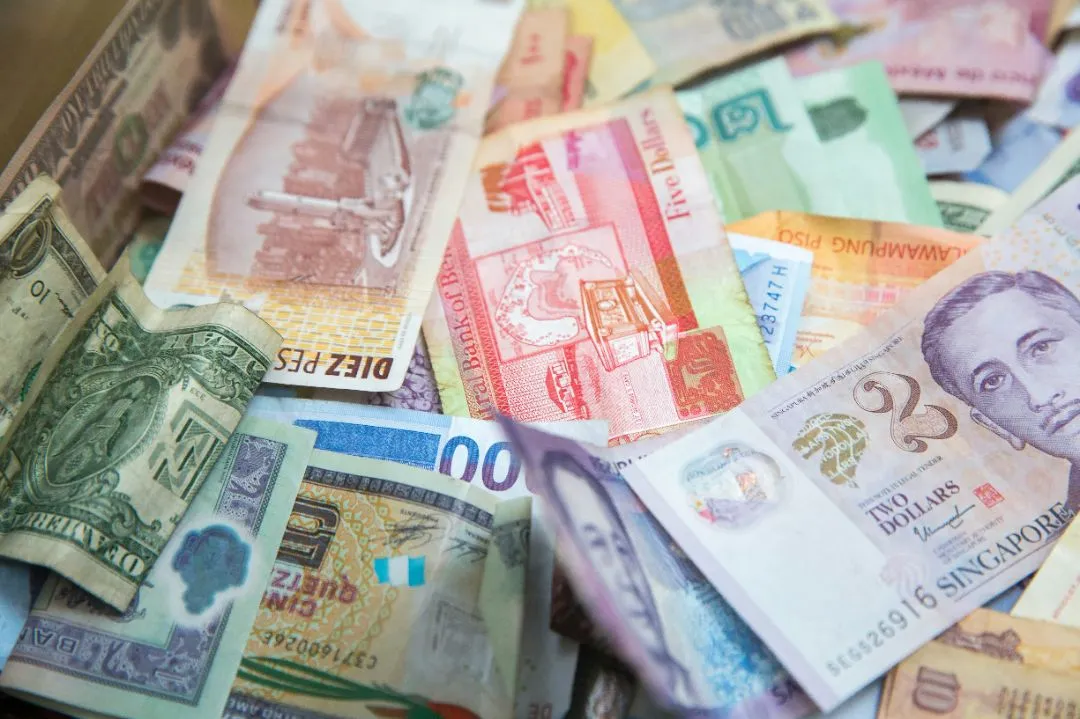
Photo by Robert Bye on Unsplash


IFEC study

This newfound enthusiasm for virtual assets emerges from a recent study published by the Investor and Financial Education Council (IFEC), a subsidiary of the Securities and Futures Commission (SFC), Hong Kong’s securities regulator. The survey found that 6% of retail investors in the city had entered the virtual asset market in 2023, as compared to merely 1% in 2019.

Conducted from June to July of this year, the study encompassed 1,000 individuals aged between 18 and 69. The survey uncovered a trend toward crypto investing among retail investors who’ve been enticed by the allure of the emerging asset class. Intriguingly, every single one of the digital asset retail investors in the study held cryptocurrencies in their portfolios. Non-fungible tokens (NFTs) and stablecoins, while still relatively niche, were also present in the portfolios of 6% and 2% of investors, respectively.


11% to invest in crypto within 12 months

Anticipating a further uptick in interest, the IFEC report posits that 11% of those surveyed have intentions to invest in virtual assets or related products within the next 12 months. This indicates that the allure of virtual assets continues to exert its magnetic pull on investors in Hong Kong.

Despite the growing interest, a noteworthy finding in the survey is that 75% of retail virtual asset investors admitted to their primary motivation being the pursuit of short-term gains. Simultaneously, 74% of these investors perceived virtual assets as a prevalent investment trend, and 73% cited the fear of missing out on popular investment opportunities as a driving factor. These statistics underscore the need for enhanced investor education within the sphere of virtual assets.


Lack of regulatory awareness

Another interesting aspect of the data which emerged from the survey was the finding that only 47% of all surveyed investors are aware of Hong Kong’s recently introduced virtual asset trading regulations, which came into effect on June 1.

An additional facet of this investor behavior study was illuminated by research conducted by the Department of Applied Social Science at Hong Kong Polytechnic University (PolyU). This research, based on data from a separate IFEC report that surveyed 501 people from November to December of last year, revealed that many retail investors in virtual assets exhibited overconfidence in their judgment.

These investors were also found to have a proclivity to overemphasize past information, lean heavily on readily available and easily recalled information, and overestimate personal intuition.

With that in mind, Eric Chui, Head of PolyU’s Applied Social Science unit, advised virtual asset investors to adopt a more deliberate and rational approach. Chui emphasized the importance of building financial literacy and collecting high-quality market information to make informed investment decisions, while steering clear of irrational investment behavior and biases.

More to Read
View All
Web3 & Enterprise·

Oct 15, 2024

OKX launches in UAE with full operating license

Global crypto exchange OKX has acquired full licensing in the United Arab Emirates and with that, it has launched its trading platform in the Gulf state. Serving retail and institutional clientsThat’s according to a press release published by PR Newswire on the company’s behalf on Oct. 10. The platform has now been opened to both retail and institutional investors in the UAE. Those customers who have completed the required onboarding steps, either via the OKX app or the OKX website, can now access the firm’s range of services. Those services include spot trading, on-chain yield-bearing products, token conversion and express buy and sell services. For retail-level customers to qualify for derivatives trading, they are obliged to undergo a knowledge test in addition to undertaking a suitability assessment.  When it comes to institutional clients, the platform has advised that they will have access to derivatives trading so long as they have met specific criteria set out by the company. It’s understood that this will include specific "Know Your Customer" requirements set out by OKX. Photo by Phil Shaw on UnsplashMinimum liquidity requirementsAdditionally, an institutional investor must meet two out of three minimum liquidity requirements. These are understood to include a net annual turnover of $40 million, the institution’s own funds being in excess of $2 million or a balance sheet demonstrating a minimum of $20 million. Investors will be able to deposit or withdraw UAE dirhams (AED) to/from the OKX platform, with AED trading pairs having been established for a range of cryptocurrencies including Bitcoin, Tether and Ether. Launch eventAside from the company’s press release, OKX made its announcement at an event at the Museum of the Future at an event which it titled “A New Alternative for Dubai.” The event featured OKX CEO Star Xu, the firm’s CMO Haider Rafique, SkyBridge Capital’s Anthony Scaramucci, Polygon Co-Founder Sandeep Nailwal and Stacks Co-Founder Muneeb Ali.  Scaramucci spoke positively about the business conditions that have been created in the UAE, stating that the change “in 20 years is nothing short of a miracle.” With that, he recognized that’s why OKX has established itself within the UAE. OKX General Manager for the Middle East and North Africa (MENA), Rifad Mahasneh, told Cointelegraph that the company is “extremely bullish on the UAE as a crypto hub and only see the sector growing in the next few years.” Mahasneh told CoinDesk that the firm has two targets in the UAE, with its intention to onboard retail clients via the OKX app and lure TradFi institutions. "The return on investment is going to come from our ability to convert traditional institutions,” he stated. OKX has been working towards this moment for some time. It opened an office in Dubai in mid-2023, quickly expanding its presence by hiring local staff. Its local subsidiary, OKX Middle East Fintech FZE, received a non-operational license from Dubai’s Virtual Assets Regulatory Authority (VARA) in January of this year.

news
Web3 & Enterprise·

Nov 21, 2024

DMM Crypto shutters Seamoon Protocol

DMM Crypto, the crypto exchange, blockchain gaming and NFT arm of Japanese e-commerce and internet firm DMM, has taken the decision to shut down the Seamoon Protocol. Economic zone concept projectTaking to X on Nov. 15, the project outlined that it has decided to cancel the economic zone concept project, Seamoon Protocol. The project added:”We would like to express our deepest gratitude to the business operators who have provided us with so much support thus far, as well as to all those who have placed their hopes in this project and shown us their kind support, and we would like to offer our heartfelt apologies.” The move suggests a sudden change in the fortunes of the project. As recently as last August, DMM Group had announced a collaboration with Progmat, a distributed ledger technology (DLT) platform for tokenization and stablecoins, with a view towards looking into the issuance of a stablecoin. The stablecoin was intended to act as a reserve currency, providing backing for Seamoon Protocol’s treasury pool while also acting as a price stabilization mechanism. At the time, DMM Crypto CEO Nagato Kasaki had said that the Seamoon Protocol had been launched in order to create a space “where a global community could experience DMM’s cultural universe and co-create new experiences together.” Notwithstanding that goal, no new services are planned to replace the Seamoon Protocol.Photo by Shubham Dhage on UnsplashLaunched in 2023, Seamoon Protocol ran on the DM2 Verse, a layer-2 network associated with the Oasys blockchain. DM2 Verse was designed to act as a community hub for the Seamoon Protocol, hosting NFT drops, games, tournaments and collaborations. Activity on Seamoon was powered by its own native SMP token. Changing business environmentNorbert Gehrke, a commentator on the Japanese fintech sector, outlined in a Medium blog post that Seamoon was abruptly terminated “due to recent rapid changes in the business environment that have created challenges for the project’s sustainability.” The company didn’t provide detail on the nature of the challenges encountered which impacted on the sustainability of the project. With the shutdown, issuance of the SMP token will be discontinued. Furthermore, new service applications for the Seamoon Protocol platform have been suspended. It’s unclear what will now happen with existing services which have been built on the platform. The company has suggested that this matter is under discussion.  One exception is the Kanpani Girls RE:BLOOM project, a Web3 game that was the first of five games that had been envisaged for the protocol. The company has confirmed that this project will be terminated.  In-game notices will be provided at a later stage to provide users with advice regarding refunds and compensation for game items. The game will be wound down by the end of January. Once decisions have been made relative to other services and projects, the company will make announcements on the social media channels of those affected services. DMM Crypto received investment from Neoclassic Capital last month, with a view towards pursuing a global expansion strategy.

news
Policy & Regulation·

Dec 15, 2023

Banking giants in Turkey embrace crypto ahead of legislative change

Banking giants in Turkey embrace crypto ahead of legislative changeIt remains unclear what the underlying environment for the further development of the crypto sector in Turkey will be until such time as the country introduces a legislative framework to shape the industry’s development. However, that fact is not deterring a couple of Turkey’s leading banks, who have decided to embrace the digital asset realm.Photo by Michael Jerrard on UnsplashStablex acquisitionOn Monday CoinDesk Turkiye reported that the investment arm of Turkish bank Akbank had acquired local crypto company Stablex. Stablex was founded in May 2020 by Jihad Shannak with the objective of providing professional services, including trading relative to cryptocurrencies in Turkey. Majority shareholding passed to Ak Investment in May of this year, with initial negotiations on the sale having commenced in August 2022.A high-ranking official at Ak Investment expressed the group’s ambition to become a pivotal figure in the digital asset realm, signaling a proactive approach to the evolving financial landscape. Akbank also banks the majority of crypto start-ups based in Turkey.Speaking about the acquisition recently, Akbank executive Mert Erdoğmuş stated:“We have invested in Stablex to respond to the need for reliable and innovative service in the cryptocurrency market. Stablex reflects our values with its experience in the sector, pioneering achievements and professional service approach.”BBVA crypto walletAlongside Akbank’s move into the digital assets arena, Garanti BBVA, Turkey’s second largest private bank, recently unveiled its crypto wallet app. The feature-rich application includes a cold wallet, empowering users to seamlessly send and receive assets such as bitcoin (BTC), USD Coin (USDC) and ether (ETH).The pilot project for the app commenced in August, with the application currently available on iOS. In bringing the app to market, the bank created Garanti BBVA Digital Assets, a dedicated subsidiary firm. Commenting on that development back in August, the subsidiary’s Chairman of the Board, M. Çağrı Süzer, stated:”Our research shows that customers significantly value trust in their crypto transactions and especially on its storage. Hence, we are happy to launch our Crypto Custody Wallet addressing these real needs.”Despite uncertainties, Turkey has firmly established itself in the global crypto landscape, ranking among the top 20 countries in Chainalysis’ Global Crypto Adoption Index 2023. The instability of the Turkish lira in recent years has been a driver for crypto adoption in the country. In recent days, the bitcoin unit price has reached its highest exchange rate level against the local sovereign currency.Earlier this week, it emerged that crypto platform Blockchain.com is adding headcount and has its sights set on expansion into Turkey as one of its growth opportunities.FATF-compliant regulatory approachTurkey’s regulatory stance has been to take a cautious approach. In 2021, the central bank restricted the use of crypto for payments, although a complete ban on digital assets was ruled out by officials.Looking ahead, a government official revealed plans for crypto legislation to be presented to Parliament in November. While details remain scarce, this legislative move aligns with Turkey’s broader strategy to exit the Financial Action Task Force’s (FATF) “gray list.”

news
Loading