Top

Incheon Partners with Daehong to Implement Web3-Driven Urban Marketing Strategy

Web3 & Enterprise·October 11, 2023, 7:23 AM

Incheon Metropolitan City, renowned for its international airport in South Korea, has partnered with Daehong Communications, a marketing solutions subsidiary of the country’s retail giant Lotte Group, to leverage Web3 technology for the purpose of promoting the city.

Daehong has established an extensive global network within the blockchain industry. Among its notable partners are layer 1 blockchain Aptos, Metaverse company Animoca Brands, and decentralized social protocol CyberConnect. One of Daehong’s primary initiatives is the NFT project associated with Bellygom, a pink bear character of Lotte Homeshopping, a media commerce affiliate of Lotte Group.
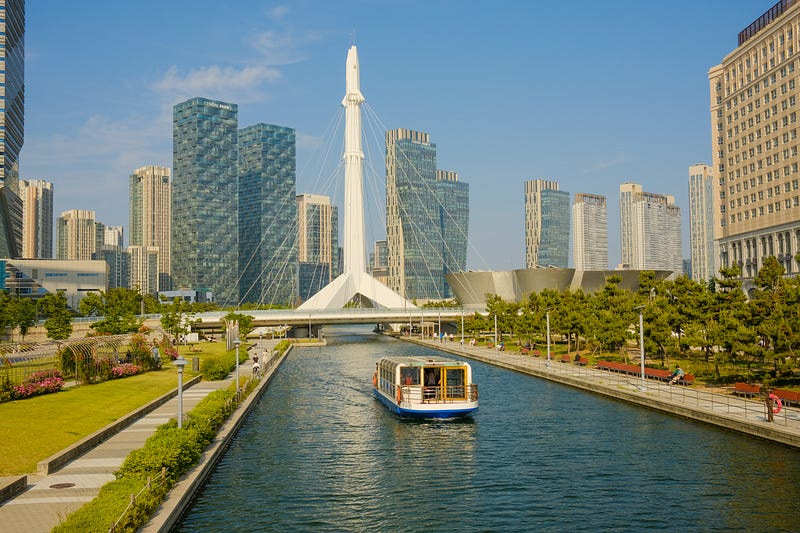
Photo by Daesun Kim on Unsplash


Harnessing blockchain for city promotion

Through this collaborative effort, Incheon aims to harness blockchain technology to explore innovative ways of promoting the city and building stronger connections with its residents.

Incheon has recently been very dedicated to Web3 initiatives in promoting the city. Last month, it worked with The Sandbox, the virtual gaming platform of Animoca Brands, to create a metaverse representation of the Incheon Landing Operation to commemorate the 70th anniversary of the Korean War Armistice Agreement. More recently, the city unveiled its NFT membership program named “Incheon Heroes,” demonstrating its commitment to pioneering its unique path in the era of Web3.


Daehong’s role in Web3 adoption

In the private sector, Daehong has been working towards the widespread adoption of Web3. The marketing firm introduced business models that integrate NFTs into areas that have significant public engagement, such as ticketing, memberships, and brand characters. Daehong has been actively working to facilitate many brands’ entry into the Web3 space.

Lee Se-woong, Brand Manager of Incheon City, anticipates that the collaboration with Daehong will serve as a fresh catalyst for Incheon, expressing excitement about the potential synergies between Incheon’s public infrastructure and Daehong’s industrial expertise.

Incheon is set to initiate a range of projects by leveraging the Incheon Heroes NFT membership program and the Incheon Universe, a virtual space that allows visitors to immerse themselves in various facets of the city. Furthermore, the city is in the process of establishing collaborations with enterprises, brands, and artists who share a common interest in promoting the sustainability of both the planet Earth and the city itself.


More to Read
View All
Policy & Regulation·

Apr 13, 2023

Hong Kong Reiterates Web3 Credentials and Commitment

Hong Kong Reiterates Web3 Credentials and CommitmentHong Kong is committed to growing the Web3 industry under appropriate regulations, according to government officials.©Pexels/Andrea PiacquadioAt the four-day Web3 Festival, which is the largest Web3 event that the city has hosted since declaring its intention last year to become a digital asset hub, Financial Secretary Paul Chan stated that the stability of the financial system and investor protection should not be damaged, and that appropriate regulations are a must to create a sustainable development environment and a more ideal space for development.DeFi licensing requirementSome attendees were surprised to learn that the Securities and Futures Commission (SFC) believes that decentralized finance (DeFi) platforms for virtual assets need a license under existing rules. Keith Choy, interim head of the intermediaries division at the SFC, stated that people operating or performing DeFi activities should be subject to Hong Kong’s licensing requirements.This means that if Hong Kong really intends to regulate DeFi, it will have a stricter environment than Singapore. The Web3 industry has been closely watching the development of a new regulatory framework for virtual assets in Hong Kong since the city revealed at the end of October its intention to become a cryptocurrency hub. Under new regulations that go into effect in June, cryptocurrency exchanges serving customers in Hong Kong must be licensed by the SFC.10,000 Web3 Festival attendeesThe event attracted more than 10,000 people ahead of the conference, with several big-name speakers and exhibitors looking for new opportunities in the city. OKX and Filecoin were some of the large cryptocurrency firms in attendance, as were traditional tech firms like Tencent Cloud, which had a booth touting its blockchain-related services for corporate clients. Alibaba Cloud was also a co-organiser, along with Amazon Web Services and Hong Kong’s Cyberport.Binance co-founder and CEO Zhao Changpeng (CZ) also dialed in via video for a fireside chat. Last month, the US Commodity Futures Trading Commission (CFTC) sued CZ and Binance over what it alleged was “sham” compliance with domestic regulations. The company has been scrutinized over connections to its local firm Binance.US, which legally is meant to operate as a separate entity. Zhao was not asked and did not address his legal troubles at the conference. However, he did note that Binance is in talks with regulators in many markets.“We are actively engaged with regulators all around the world,” Zhao said. “Many of them are very receptive, some of them are still skeptical, and that’s fine, but we need to engage. We need to have dialogue, we need conversations, and we also need patience.”Singapore comparisonsHong Kong has frequently been compared with Singapore, which had been considered a friendlier market for related activity until Hong Kong’s policy shift. Some attendees had hoped that Hong Kong’s shift would provide some competition for Singapore in the region. “We did see a very obvious trend of people flying to Singapore to make sure their business was part of this space,” said Luke Liu, chief core ecosystem contributor at cross-chain protocol developer Poly Network. “Hong Kong and Singapore can coexist in some sense, but there is definitely a very positive change going on recently because of the Hong Kong policy announcement.”Hong Kong has reaffirmed its commitment to growing the Web3 industry under “appropriate” regulations, with the stability of the financial system and investor protection as a top priority. This has been reiterated during the largest Web3 event in the city since declaring its intention to become a digital asset hub.

news
Web3 & Enterprise·

Mar 02, 2024

OKX adds Uniswap in bid to eliminate gas fees

Leading crypto exchange OKX has announced the seamless integration of Uniswap Labs' application programming interface (API) into its decentralized exchange (DEX). The objective of the Uniswap addition is to usher in an era of gas-free trading through its innovative feature called "Snap” for OKX service users. Snap trading modeThe company made the announcement by way of a PR Newswire press release on Feb. 29. OKX asserts that Uniswap is one of the most trusted names in DeFi. As part of the integration, the Snap trading mode will be included as a feature on OKX DEX, with the objective of aggregating Uniswap’s liquidity.The feature operates directly on the OKX DEX interface by way of the UniswapX protocol. UniswapX is an immutable smart contract built with the intention to be fully permissionless. The contract cannot be modified or paused by anyone, including Uniswap Labs. Liquidity providers pay the feeIn explaining away the technology, Jason Lau, the chief innovation officer at OKX told Cointelegraph the mechanics behind the no-fee swaps. Lau unveiled a novel model wherein liquidity providers absorb transaction fees on behalf of users. He asserted that this approach not only enhances convenience but also facilitates cost savings for traders. Lau elaborated further, stating: “By agreeing to a price and signing a transaction off-chain, then settling the transaction on-chain, users end up paying no gas fees because the liquidity providers will pay the fee on the user’s behalf.”Photo by Shubham Dhage on UnsplashGoing beyond trading fee reductionAnticipating a positive response from DeFi enthusiasts, Lau highlighted additional features that go beyond transaction fee savings. These include the elimination of slippages, maximum extractable value (MEV) bot attacks and transaction failures, addressing prevalent concerns within the DeFi space.In tandem with the gas-free trading initiative, OKX announced a seamless integration for its wallet users within the Uniswap interface, courtesy of the Multi-Injected Provider Discovery upgrade on Ethereum, based on Ethereum Improvement Proposal (EIP)-6963. This enhancement extends to all browser extension wallets, enabling OKX wallet users to seamlessly connect with Uniswap, facilitating activities such as cryptocurrency swapping, NFT trading, liquidity pool participation and decentralized application (dApp) development. Positioning this integration as a pivotal addition to their ecosystem, Lau reiterated OKX's commitment to broadening user access to diverse on-chain use cases. He expressed enthusiasm for ongoing development initiatives and urged users to actively contribute feedback for further enhancements. The crypto exchange platform achieved further technical progress recently, with the addition of support for atomicals, runes, doginals and stamps to its Web3 wallet. Providing further detail on these additions last month, the company said that they were part of a "first-to-market" initiative relative to Bitcoin NFTs. Alongside technical advancements like these, earlier this week it emerged that the company was further advancing its market expansion strategy, through the launch of OKX TR, its Turkish platform. With OKX pioneering gas-free trading and bolstering user accessibility to decentralized finance, the convergence of traditional finance and blockchain technology accelerates, indicating an ongoing transformative shift in the crypto space.

news
Policy & Regulation·

Aug 09, 2023

Blockchain.com Secures License to Expand Operations in Singapore

Blockchain.com Secures License to Expand Operations in SingaporeBlockchain.com, the London-headquartered crypto financial services company, has achieved a significant milestone by obtaining a payment license in Singapore.Photo by Mike Enerio on UnsplashAsian expansionThe move signifies the platform’s expansion not only within Asia but also on a global scale. In a press release issued on Monday, Blockchain.com proudly announced its acquisition of a major payment institution (MPI) license from the Monetary Authority of Singapore (MAS) on August 1.The development follows an in-principle approval granted to Blockchain.com by the Singaporean central bank back in September 2022. With the newly acquired MPI license, the platform is now authorized to provide “digital payment token” (DPT) services to both institutional clients and investors in Singapore.Removal of transaction volume limitsUnder the regulatory framework of MAS’s Payment Service Act, the license grants Blockchain.com the authority to operate as a platform facilitating the exchange of various DPTs while also conducting DPT transactions themselves. An interesting facet of the license is that it liberates the crypto exchange from certain transaction volume limitations set within Singapore, as outlined on MAS’s official website.Expressing enthusiasm about this accomplishment, the Co-Founder and CEO of Blockchain.com, Peter Smith, lauded the crypto-friendly environment in Singapore. Smith commended the Monetary Authority of Singapore for its transparent regulatory process, on the basis that it strikes a balance between overseeing the crypto industry and fostering innovation. He stated:“We are thrilled to receive this license that will allow Blockchain.com to bring our industry-leading products and services to Singapore. We commend the Monetary Authority of Singapore on its transparent regulatory process that prioritizes crypto industry oversight while allowing innovation to thrive.”Over a decade in operationHaving been established in 2011, Blockchain.com boasts a reputable standing as one of the crypto industry’s pioneers. It’s most well known for its Bitcoin blockchain explorer and its wallet service. With a user base of 87 million active wallets and 37 million verified customers, the exchange business claims that it accounts for a large chunk of all Bitcoin network transactions.Singapore, heralded for its emergence as a crypto hub, has welcomed other crypto entities holding Major Payment Institution (MPI) licenses, including prominent stablecoin issuers Circle and Paxos. The city-state has drawn a significant influx of crypto businesses in recent years, supported by its well-defined regulatory framework and the government’s commitment to nurturing the burgeoning crypto landscape within its borders.Fostering Web3 innovationMAS has demonstrated that it is aligning itself with a dedication to fostering innovation, with its recently announced plans to allocate $112 million over a span of three years for the development of cutting-edge financial technologies. This initiative will encompass fintech solutions grounded in Web3 principles.Nevertheless, Singapore remains cautious about the potential risks associated with the crypto space. In July, MAS directed all crypto businesses within its jurisdiction to transfer user assets to statutory trust accounts before the end of 2023. This precautionary measure is likely to be a reaction to crypto failures such as that of crypto-lender Hodlnaut and crypto exchange FTX, which affected Singaporeans disproportionately. It aims to minimize the risk of asset loss or misappropriation.MAS also has moved to permit crypto firms to offer staking and lending services solely to institutional clients, imposing a ban on the retail market for these services.

news
Loading