Top

Blockchain.com Secures License to Expand Operations in Singapore

Policy & Regulation·August 09, 2023, 3:01 AM

Blockchain.com, the London-headquartered crypto financial services company, has achieved a significant milestone by obtaining a payment license in Singapore.

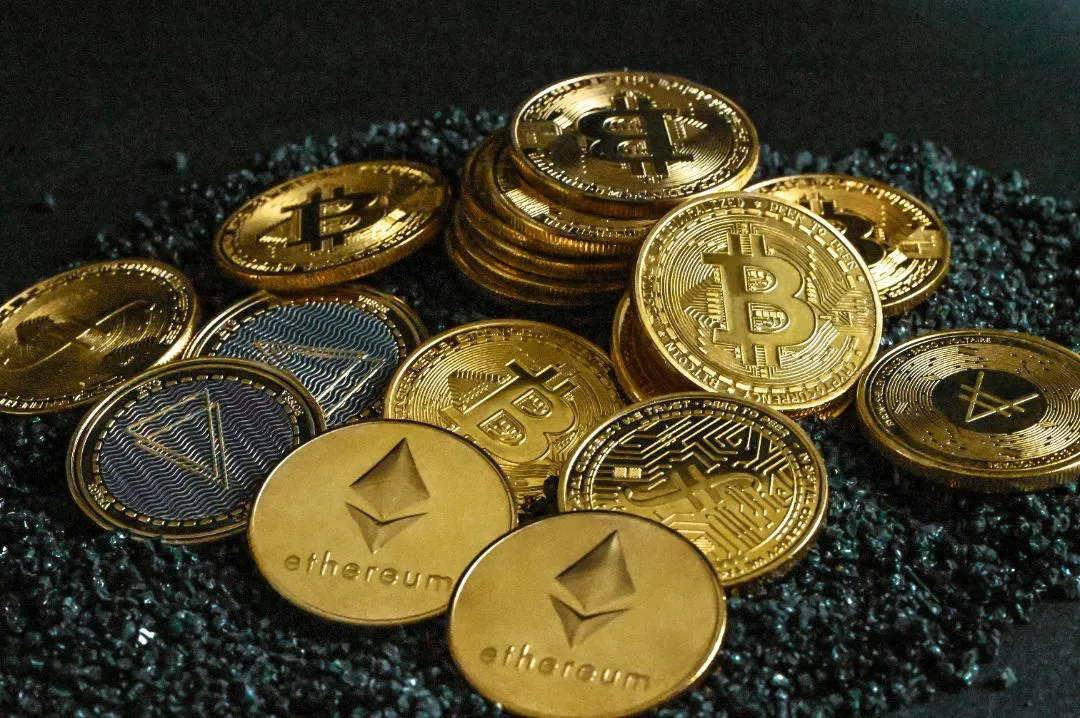
Photo by Mike Enerio on Unsplash


Asian expansion

The move signifies the platform’s expansion not only within Asia but also on a global scale. In a press release issued on Monday, Blockchain.com proudly announced its acquisition of a major payment institution (MPI) license from the Monetary Authority of Singapore (MAS) on August 1.

The development follows an in-principle approval granted to Blockchain.com by the Singaporean central bank back in September 2022. With the newly acquired MPI license, the platform is now authorized to provide “digital payment token” (DPT) services to both institutional clients and investors in Singapore.


Removal of transaction volume limits

Under the regulatory framework of MAS’s Payment Service Act, the license grants Blockchain.com the authority to operate as a platform facilitating the exchange of various DPTs while also conducting DPT transactions themselves. An interesting facet of the license is that it liberates the crypto exchange from certain transaction volume limitations set within Singapore, as outlined on MAS’s official website.

Expressing enthusiasm about this accomplishment, the Co-Founder and CEO of Blockchain.com, Peter Smith, lauded the crypto-friendly environment in Singapore. Smith commended the Monetary Authority of Singapore for its transparent regulatory process, on the basis that it strikes a balance between overseeing the crypto industry and fostering innovation. He stated:

“We are thrilled to receive this license that will allow Blockchain.com to bring our industry-leading products and services to Singapore. We commend the Monetary Authority of Singapore on its transparent regulatory process that prioritizes crypto industry oversight while allowing innovation to thrive.”


Over a decade in operation

Having been established in 2011, Blockchain.com boasts a reputable standing as one of the crypto industry’s pioneers. It’s most well known for its Bitcoin blockchain explorer and its wallet service. With a user base of 87 million active wallets and 37 million verified customers, the exchange business claims that it accounts for a large chunk of all Bitcoin network transactions.

Singapore, heralded for its emergence as a crypto hub, has welcomed other crypto entities holding Major Payment Institution (MPI) licenses, including prominent stablecoin issuers Circle and Paxos. The city-state has drawn a significant influx of crypto businesses in recent years, supported by its well-defined regulatory framework and the government’s commitment to nurturing the burgeoning crypto landscape within its borders.


Fostering Web3 innovation

MAS has demonstrated that it is aligning itself with a dedication to fostering innovation, with its recently announced plans to allocate $112 million over a span of three years for the development of cutting-edge financial technologies. This initiative will encompass fintech solutions grounded in Web3 principles.

Nevertheless, Singapore remains cautious about the potential risks associated with the crypto space. In July, MAS directed all crypto businesses within its jurisdiction to transfer user assets to statutory trust accounts before the end of 2023. This precautionary measure is likely to be a reaction to crypto failures such as that of crypto-lender Hodlnaut and crypto exchange FTX, which affected Singaporeans disproportionately. It aims to minimize the risk of asset loss or misappropriation.

MAS also has moved to permit crypto firms to offer staking and lending services solely to institutional clients, imposing a ban on the retail market for these services.

More to Read
View All
Web3 & Enterprise·

Jan 10, 2025

Backpack acquires FTX EU

Backpack Exchange, a crypto exchange that joined the Japan Virtual Currency Exchange Association (JVCEA) last December, has recently acquired FTX EU, the European arm of the failed crypto exchange business FTX. According to a press release, the business comes with a European MiFID II license, with the acquisition having been approved by the Cypriot regulator, the Cyprus Securities and Exchange Commission (CySEC). Furthermore, a Delaware bankruptcy court in the United States, which is dealing with the FTX bankruptcy, has also rubber-stamped the acquisition. Backpack Exchange was co-founded by CEO Armani Ferrante, alongside other former FTX executives. According to the firm’s LinkedIn page, it has established its headquarters in Japan. The company also has links to Dubai, having acquired a Virtual Asset Service Provider (VASP) license for its Backpack Wallet product from  Dubai’s Virtual Assets Regulatory Authority (VARA) in 2023.Photo by Christian Lue on UnsplashRebuilding trust As a consequence of having acquired FTX’s European arm, Backpack Exchange will now assume responsibility for the distribution of court-approved FTX bankruptcy claims to FTX EU users. In the company’s press release, Ferrante spoke of the importance of the distribution process in rebuilding trust. He stated: "Customer restitution is a crucial step to rebuild trust and confidence in the industry, and Backpack is committed to returning FTX EU customers’ funds as fast and as safely as possible." In response to a query from FTX creditor activist Sunil Kavuri on X, Ferrante outlined that FTX EU users “will only be able to claim their euro claims funds directly from Backpack EU.” Ferrante clarified that FTX EU customers who had pending crypto withdrawals at the time of the bankruptcy will have their crypto claims dealt with via the FTX bankruptcy estate. In a Series A financing round early last year, Backpack was valued at $120 million. Through FTX EU, it now acquires a MiFID II license, further facilitating the global expansion of the company. With FTX EU now forming Backpack’s EU arm, the company will offer crypto-derivative products, including perpetual futures. This product offering is scheduled to go live in Q1 2025. Bankruptcy process controversy The bankruptcy of FTX EU has been controversial, starting off with the European entity being illegally filed into a U.S. bankruptcy process. In early 2024, the FTX Debtors suggested that the entity was worthless. It later wanted to buy out the entity itself, outbidding a third-party bidder. A short time afterwards, the FTX Debtors reached a settlement with the former FTX EU team. It’s understood that Backpack has acquired FTX EU for $32 million.  The FTX Debtors’ attempt to buy the business itself has cast a cloud over the bankruptcy process. When it first emerged that the business had been sold, there was some speculation as to if this would mean a rebooted FTX within the European market, but Backpack’s acquisition confirms that this was not to be the outcome.  Japan could have offered another opportunity to reboot the business, but instead, FTX Japan was acquired by bitFlyer and absorbed into its existing business. With regard to the main FTX business entity, the FTX Debtors told the bankruptcy court that there was no interest in the business from buyers. 

news
Policy & Regulation·

Feb 27, 2024

Korea offers on-site consultation for virtual asset businesses for law compliance

South Korea’s Financial Supervisory Service (FSS) has initiated on-site consultation services for virtual asset businesses to help them comply with the upcoming Virtual Asset User Protection Act (Virtual Asset Act), which is set to be effective in July. This news was reported yesterday by local media outlet News1. Photo by Hunters Race on UnsplashSupporting VASPs in preparation for the Virtual Asset ActThe consultation services offered by the FSS are fundamentally different from the on-site inspections that have been conducted by the Financial Intelligence Unit (FIU).  Until now, the FIU has been conducting on-site inspections to ensure virtual asset service providers (VASPs) have adequate anti-money laundering (AML) systems in place and comply with the Act on Reporting and Using Specified Financial Transaction Information (the Financial Transaction Information Act). While the FIU has been tasked with conducting inspections, the FSS’s latest on-site consultation services are dedicated to supporting businesses in developing new monitoring systems, which would enable them to prevent unfair transactions ahead of the implementation of the Virtual Asset Act. The FSS has already begun providing consultation services, with the local crypto exchange Upbit being its first client last week. An insider of FSS stated that the schedule for the on-site consultation will be arranged in advance for those seeking the service.  Demand for new FDSDuring a roundtable meeting with VASP CEOs held on Feb. 7, Lee Hyun-deok, the director of the Virtual Asset Regulatory Bureau under the FSS, emphasized the importance of coming up with a new fraud detection system (FDS) specifically designed to block unfair transactions. Most of the current FDSs within local crypto exchanges are focused on AML.  Unlike the Financial Transaction Information Act which mainly focuses on AML, the Virtual Asset Act focuses on punishing unfair trading practices that exploit abnormal price fluctuation or undisclosed information. The FSS recommends that VASPs implement a new system preventing such practices by April, as the Virtual Asset Act’s enactment is just around the corner.  An FSS insider said there is a high chance that VASPs will get the consultation service multiple times on various themes since a lot has to be done before the Act takes effect in July, adding that this consultation is to encourage VASPs to comply with the law rather than to conduct inspections on them. 

news
Markets·

Jul 03, 2023

Korean Crypto Market’s Healthy Growth Requires Corporate Participation

Korean Crypto Market’s Healthy Growth Requires Corporate ParticipationA healthy growth of the South Korean virtual asset industry needs the private sector’s investment in cryptocurrencies, a legal scholar argued at a recent international academic conference titled “Digital Financial Transition and International Trends in Commercial Law.”That’s according to a report by local news outlet Edaily. Namgung Ju-hyun, an assistant professor of commercial law at Sungkyunkwan University Law School, attended the two-day event hosted over the last weekend by the Korea Commercial Law Association to point out that the current restrictions on corporate investments in cryptocurrencies have not only increased speculation within the domestic market but have also hampered Korean companies’ endeavors in pursuing blockchain-powered projects.Banks and companiesProfessor Namgung addressed the current situation where Korean commercial banks are withholding real-name bank accounts from firms without specific legal grounds. This practice became common after the Act on Reporting and Using Specified Financial Transaction Information was revised in March 2021. This Act requires virtual asset service providers (VASPs) to adhere to anti-money laundering (AML) regulations; therefore, firms wishing to trade cryptocurrencies with the South Korean currency must have real-name accounts with domestic banks. While the Act doesn’t explicitly restrict issuing such accounts to corporations, banks have shown reluctance to do so.However, in countries like the United States, cryptocurrency trading in the corporate world is thriving. For instance, institutional investors at Coinbase, America’s largest crypto exchange, accounted for over 85% of the total trading volume in the first quarter, a rise from 76% during the same period last year.Photo by JESHOOTS.COM on UnsplashMinor altcoins’ strong presenceProfessor Namgung identified the prevalence of retail investors and their speculative behaviors as the primary issue plaguing the Korean crypto market. A case in point is a relatively large proportion of trades in minor altcoins. As per a report by the Korean Financial Services Commission (FSC), the combined market cap of BTC and ETH accounted for only 33% in the domestic market, a contrast to their 58.2% share in the global market. Namgung underscored that the high trade volumes of volatile crypto assets contribute to the Kimchi premium, a phenomenon where crypto prices in Korea are higher than those in other countries.Namgung also mentioned that Korean companies like Hyundai Motor, Lotte Homeshopping, and Shinsegae, despite promoting projects based on non-fungible tokens (NFTs), face difficulties due to their inability to convert cryptocurrencies to cash on domestic crypto exchanges. In comparison, global companies like Nike are successfully leveraging NFTs for their projects and exploring new business opportunities.Role of financial authoritiesProfessor Namgung urged Korean financial authorities to devise guidelines that encourage corporate participation in the crypto market, eliminating uncertainties. As a step towards risk management, he recommended considering publicly traded companies or established firms of a certain size as initial participants in the crypto market.Input from international scholarsPrior to Professor Namgung’s talk, the international academic conference also featured presentations from foreign scholars, namely Mirella Pellegrini, a professor at LUISS University of Rome; Marco Bodellini, an associate lecturer in banking and financial law at Queen Mary University of London; and Albert H. Choi, a professor of law at the University of Michigan Law School.Professor Pellegrini discussed personalized financial products and investor protection in the digital market from the perspective of the European Union. Dr. Bodellini provided insights into central bank digital currencies (CBDCs) from a policy perspective, while Professor Choi focused on digital transformation and retail shareholder engagement.

news
Loading