Top

BC Card Launches Innovative Card Payment NFT Service

Web3 & Enterprise·October 05, 2023, 3:52 AM

South Korean credit card issuer BC Card announced Wednesday (local time) that it has launched a non-fungible token (NFT) issuance service linked to card payments — the first of its kind in the country — marking a significant step in the financial industry’s adoption of blockchain technology.

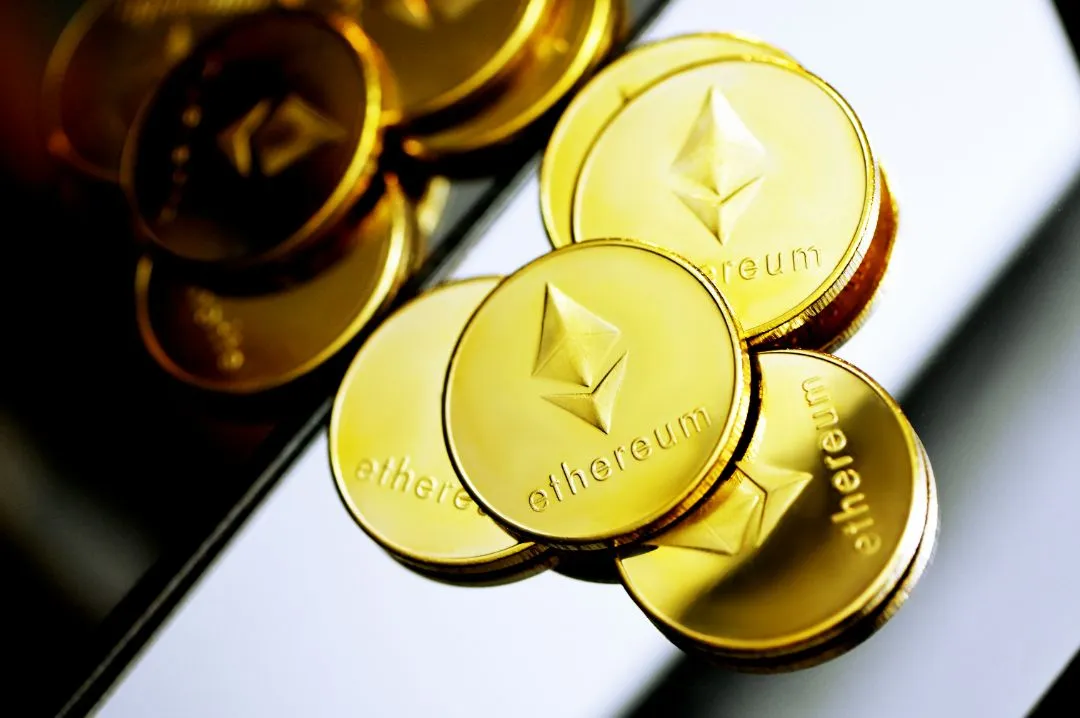
Photo by rupixen.com on Unsplash

“The digital finance market is an area of technology and imagination, and it will continue to grow in various ways,” said BC Card Director Lee Sang-jun. “We are pioneering the industry by introducing payment-linked utility NFT services for the first time.”


Revolutionizing the use of NFTs

Typically, NFTs are primarily used to prove the uniqueness of digital assets based on their non-replicability, but the card issuer has now integrated them into card payments. This service offers customers proof of payments in the form of NFTs along with various other benefits.

BC Card has been preparing for the NFT market to pick up momentum since 2021. After rigorous internal testing, it first developed and opened its own NFT wallet dubbed “NFTbooc” on the private Ethereum network in April last year. Since then, the NFT wallet has been improved to be more user-friendly. Notably, it was integrated into BC Card’s financial platform PayBook in order to provide customers with a more convenient means to check their personal NFT holdings and participate in events.

The credit card company also issued limited edition NFTs through NFTbooc to celebrate the 40th anniversary of its foundation last year, making them available for both customers and employees. Even during the ongoing crypto winter, the company has continued efforts to integrate NFTs into customer services by facilitating NFT-based payments and emphasizing their technological value.


Boosting customer engagement

To celebrate the launch of the newest service, BC Card is also holding a special event for customers until December 31. Each participant will receive random missions, such as using their card within a specific time slot or at a specific store and engaging in a minimum number of transactions. Those who complete the challenges will be airdropped certificates of completion minted as NFTs after the event is closed with the chance to win cashback rewards of up to 100% of the amount of money that they spent during the challenge.

The card issuer plans to hold two additional events, which will be outlined on the PayBook and NFTbooc event pages.

The card company has also applied for three NFT-related patents this year, including one for issuing NFT receipts for secondhand transactions and asset certification NFTs that can be used to prove asset details in the event of a system failure at a given financial company.


More to Read
View All
Web3 & Enterprise·

Sep 09, 2023

Founders Exit Following Overhaul of NFT Startup Rario

Founders Exit Following Overhaul of NFT Startup RarioPolygon-based NFT platform Rario, specializing in cricket-related non-fungible tokens (NFTs), is experiencing a major transformation, with its founders, CEO Ankit Wadhwa and CTO Sunny Bhanot, departing the company after a two-year tenure.Investors in the startup are taking on a more prominent role in steering the direction of the Indian startup, according to a report from TechCrunch on Friday.Photo by Alessandro Bogliari on UnsplashDream11Dream11, a prominent Mumbai-based fantasy sports platform and one of Rario’s primary backers, alongside other investors, is said to be exerting pressure to gain greater control, resulting in the ousting of the firm’s founders. The development comes amid other significant shifts in Dream11’s leadership.Additionally, Rario is undergoing a broader restructuring effort that includes the elimination of various roles, according to sources who were cited by TechCrunch as being familiar with the matter.This recent upheaval coincides with reports of Dream11’s parent company, Dream Sports, taking measures to reduce operational costs. TechCrunch noted that Dream Sports is actively renegotiating several licensing agreements previously inked by Rario as part of cost-cutting measures.High profile investorsRario boasts a roster of high-profile investors, including global investment company Alpha Wave Global and cricket icon Sachin Tendulkar. In April 2022, the cricket NFT platform made waves by securing $120 million in a Series A funding round, asserting its dominance in the cricket NFT rights arena with over 900 cricketers on board at that time. It’s not clear what valuation the firm had at the time of the Series A funding round but in a prior round, Rario had been valued at $250 million.Founded in 2021, Rario set out with a mission to create digital cricket collectibles and foster an online community for passionate fans. By April 2021, the company had successfully sold 50,000 NFTs to sports enthusiasts spanning 20 countries.Cricket world partnershipsCricket is the second largest sport in the world with in excess of 1.5 billion fans worldwide. That leaves a lot of scope for Rario to harness NFTs to bring about new forms of engagement.Among Rario’s notable partnerships are agreements with cricket leagues such as Cricket Australia, the Australian Cricketers’ Association, the Caribbean Premier League, the Lanka Premier League, and the Abu Dhabi T10 League Legends League Cricket.Polygon changesPolygon Labs, the developer of the Ethereum-centric layer two scaling network upon which the Rario platform runs, also features India in its origin story. It too has seen upheaval at a managerial level recently. In July, the firm announced a number of senior positional changes. Its former Chief Legal Officer (CLO) was elevated to the position of CEO. Those changes saw Polygon Labs’ Indian Co-Founder Sandeep Naiwal transition to the role of Executive Chairman.Rario’s ongoing evolution reflects the dynamic nature of the NFT space, where startups must adapt to changing investor interests and market conditions. With its investors taking the reins, Rario faces a pivotal juncture in its journey to redefine how cricket fans engage with the sport through the exciting world of NFTs.

news
Policy & Regulation·

Apr 28, 2025

Russian exchange raided against backdrop of cash-to-crypto ban proposal

Mosca, a cash-to-crypto exchange headquartered at the Moscow International Business Center, was subject to a raid carried out by the Russian authorities on April 23. The raid occurred in the immediate aftermath of a call from a member of the commission of the Public Chamber (OP) of the Russian Federation to ban crypto exchanges from facilitating the purchase of cryptocurrencies using cash.Photo by Egor Filin on UnsplashInvestigating fraudWhile attending the Blockchain Life 2025 event in Moscow, Mosca’s Head of Development, Dmitry Titarenko, confirmed to Cointelegraph that the rationale provided for the raid was that it was in connection with fraud perpetrated by one of its platform users. Titarenko added: “Law enforcement agencies have carried out a standard procedure of checking our customer data.” The raid occurred during the company’s attendance at the Blockchain Life conference. Mosca was a key conference participant, having established two stands at the event and winning an award for the best crypto exchange service. Reporting on the raid, local media outlet Baza said that it had been carried out in relation to fraud perpetrated against the former head of the Samara Region Development Corporation, Olga Serova. It explained that Serova had been conned into handing over 350 million rubles ($4.24 million) and $800,000 to the scammers.  Seven arrestsShe withdrew these funds from her bank at the end of last year, despite bank officials having tried to persuade her against the withdrawal for this purpose. The news outlet added that to date, seven people have been arrested in connection with the alleged fraud. The Mosca exchange service may be proving to be attractive to scammers as the platform allows users to buy up to 100,000 USDT per day using cash. Titarenko couldn’t confirm that the raid was carried out in connection with the Serova fraud case. He said that “maybe it was [in relation to] another client.”The exchange executive also confirmed that the company had been in the process of putting in place more resources to carry out anti-money laundering (AML) and know-your-customer (KYC) checks, together with a blacklisting system related to suspicious platform users. Cash-to-crypto ban proposalThe raid occurred within 24 hours of Yevgeny Masharov, a member of the commission of the Public Chamber (OP) of the Russian Federation, putting forward a proposal to ban crypto exchanges from receiving cash, making services like Mosca’s cash-to-crypto exchange illegal. According to state-owned Russian news agency TASS, Masharov said that such a move would “cause a large-scale blow to scammers, because it’s no secret that telephone scammers use crypto exchangers to withdraw cash.”Sergey Mendeleev, a well-known figure within crypto circles in Russia, told attendees at the Blockchain Life conference that such a cash-to-crypto ban would be an unwelcome development for the sector. If such a ban were to materialize, Mendeleev suggested that it would be an indication that the Russian authorities were turning away from the greater development of cryptocurrency in Russia. Last week, it emerged that Russia’s Ministry of Finance, in collaboration with the country’s central bank, plans to launch a crypto exchange for qualified investors. The central bank also confirmed plans to launch a digital ruble payment network in 2026.

news
Markets·

Sep 19, 2025

New K-drama ‘To the Moon’ debuts amid Ethereum price gains

As cryptocurrencies continue to captivate South Korea, the world of ordinary digital asset investors is set for its primetime debut. Today, major broadcaster MBC is scheduled to premiere “To the Moon,” a new television drama that explores the risks and rewards of crypto investing. In crypto slang, “to the moon” refers to expectations of a sharp price surge, a phrase often used by traders to signal bullish sentiment. The series, airing Fridays and Saturdays, is an adaptation of Jang Ryujin’s 2021 novel of the same name, with an English edition released on June 19 of this year. It chronicles the lives of three young women who, despite landing what most would consider solid positions at a confectionery company, find their ambitions stifled by economic realities. Confined to small studio apartments and seeing little room for advancement, they turn to the volatile world of cryptocurrency as their pathway to upward mobility. The publisher describes these burnt-out protagonists’ journey as one that oscillates between humor and despair.Photo by Kanchanara on UnsplashEthereum’s rally and rising optimismIn the original novel, the plot is ignited when one of the women achieves a significant windfall by investing in Ethereum (ETH), inspiring her colleagues to join the fray. What follows is a familiar tale for many investors. They experience a period of wild price swings and respectable profits, only to see their winning streak abruptly halted by a severe market downturn. At the time the book was published in April 2021, ETH traded at roughly $2,100. Today, by contrast, CoinMarketCap data shows the asset trading at $4,543.14, more than doubling since the book’s release. Support for this bullish outlook comes from well-known market voices. Tom Lee, Fundstrat founder and chairman of ETH treasury firm Bitmine, told CNBC that Ethereum (ETH), Bitcoin (BTC), and the Nasdaq 100 would benefit most if the Federal Reserve cut rates, predicting a strong rally in the next three months. He made these comments before the Fed’s actual move, a quarter-point rate cut announced at its Sept. 17 Federal Open Market Committee (FOMC) conference. In a separate Fox Business interview, VanEck’s CEO echoed this view, saying ETH will emerge as the leading asset as banks adopt blockchain for stablecoin transactions. Data also points to growing strength. According to Token Terminal, the supply of Ethereum-based stablecoins has recently reached an all-time high of $168 billion. This milestone is largely attributable to the fact that over half of the entire stablecoin supply now operates on the Ethereum network, underscoring its foundational role in the digital economy. Talent drain and security risksStill, there are headwinds that could slow Ethereum’s ascent. A recent survey by Protocol Guild, an independent funding group for Ethereum core developers, revealed a compensation gap that threatens the network's long-term health. The survey found that Ethereum core developers are receiving external job offers with a median salary of $300,000—more than double the $140,000 median they currently earn for maintaining and upgrading the network. Protocol Guild has noted that this disparity could precipitate a talent exodus, potentially slowing future development. Security has been an ongoing concern, with ETH often targeted by hackers. In a reminder of the sector's vulnerabilities, the crypto exchange Bybit reported a theft of 401,000 ETH in February, an amount valued at roughly $1.5 billion at the time. The U.S. Federal Bureau of Investigation later identified the exploit, one of the largest in crypto history, as the work of the North Korean hacker known as “TraderTraitor.” "To the Moon" is set to air at a time when its themes of innovation and risk are playing out in the real world of crypto. The industry is riding a wave of institutional adoption and high valuations, but it's also facing a talent crunch and security concerns. These dynamics continue to keep digital assets on investors’ radar in South Korea and beyond. 

news
Loading