Top

Binance Collaborates with Thai Police to Bust $277 Million Crypto Scam

Policy & Regulation·October 04, 2023, 2:20 AM

In a crackdown on cryptocurrency-related crime, Binance, the world’s largest global exchange, has partnered with Thailand’s Royal Thai Police to aid them in dismantling a major criminal network behind a crypto scam.

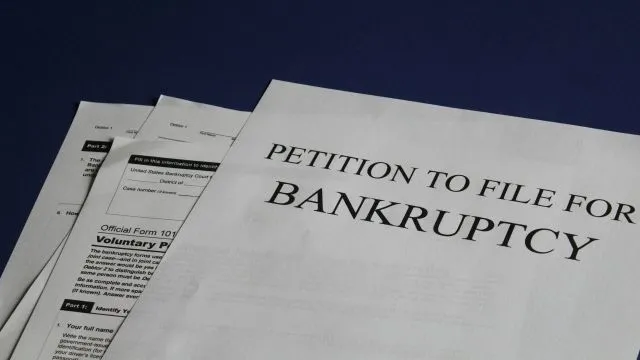
Photo by Dan Freeman on Unsplash


Operation “Trust No One”

According to a blog post published by the exchange, the operation, code-named “Trust No One,” has not only resulted in the arrest of five key members of the syndicate but has also seized assets worth a staggering $277 million. Importantly, the operation is likely to offer restitution opportunities for more than 3,200 victims.

Binance collaborated closely with the Cyber Crime Investigation Bureau (CCIB) and the United States’ Homeland Security Investigations (HSI) to combat these illicit activities. Police Lieutenant Colonel Thanatus Kangruambutr, an inspector at CCIB, expressed his appreciation for Binance’s involvement, underscoring the exchange’s role in the fight against scams and cybercrimes.


Successful collaborations

Tigran Gambaryan, Binance’s Head of Financial Crime Compliance, reaffirmed the exchange’s commitment to partnering with authorities worldwide to restore trust in the digital asset ecosystem. This operation adds to Binance’s growing list of successful collaborations in its efforts to combat crypto-related crimes, following the recovery and freezing of $450,000 in stolen assets linked to the Curve Finance hack in 2022.

In a separate case, Binance’s investigative team played a pivotal role in exposing a major cryptocurrency scam orchestrated by an extensive network of international criminal organizations. This investigation resulted in the arrest of suspects across 30 different locations in Bangkok and the provinces of Samut Prakan and Udon Thani. Binance provided critical information that facilitated these arrests, even sending an investigator to Thailand to support the process of obtaining arrest warrants.

This collaborative effort empowered the Royal Thai Police to confiscate illicit assets, which included 16 opulent residences, 12 high-end vehicles, and 16 million Thai Baht (approximately $440,000) in cash.

Notably, Binance’s proactive cooperation with law enforcement agencies has yielded an impressive average response time of just three days, surpassing the customary response times of traditional financial institutions. Taking to X (formerly Twitter), the company stated: “Our recent support helped [the Royal Thai Police] to conclude two separate investigations, leading to the arrests of criminals behind major crypto scams.”


Ongoing issue

Cryptocurrency scams have been on the rise in Thailand, posing a substantial financial threat to its residents. Last month Thai authorities detained five foreigners due to their involvement in a $76 million crypto-related scam.

In August, Thailand’s Ministry of Digital Economy and Society (MDES) issued Meta (the company behind Facebook) with a warning due to what it deemed to be an inadequate response by the social media giant in Thailand to the prevalence of crypto-related fraudulent ads on the platform.

Binance has been active in collaborating with law enforcement in various jurisdictions to combat crypto-related crime. Over the last three years, the exchange has actively cooperated with and provided assistance in more than 103,000 law enforcement investigations worldwide.

Although Thailand has witnessed a surge in cryptocurrency-related scams, the collaborative efforts between the Royal Thai Police and Binance serve as a commendable model for addressing these challenges going forward.

More to Read
View All
Policy & Regulation·

Sep 24, 2023

FTX Initiates Lawsuit Against Former Hong Kong Affiliate Staff

FTX, the failed cryptocurrency exchange founded by Sam Bankman-Fried, has taken legal action by filing a lawsuit against four former employees of Salameda, a Hong Kong-based affiliate closely linked to the exchange’s former CEO.According to a Delaware bankruptcy court filing in the United States on Thursday, the lawsuit alleges that five individuals exploited their personal connections to prioritize their asset withdrawals from FTX during a period of uncertainty regarding the exchange’s stability. The defendants in question are Salameda’s former employees — Michael Burgess, Matthew Burgess, Kevin Nguyen, and Darren Wong — as well as Michael and Matthew’s mother, Lesley Burgess, and two companies: 3Twelve Ventures and BDK Consulting.Photo by Bermix Studio on Unsplash Preference period clawbackThe critical withdrawals occurred within the 90-day period leading up to FTX’s bankruptcy filing on November 11, commonly referred to as the “Preference Period.” Under US law, customers who withdrew their crypto assets during this timeframe could potentially face lawsuits from the exchange’s creditors seeking to recover these funds, a process known as a “clawback” under bankruptcy regulations.The total value of these suspicious transfers is estimated at $157.3 million, with more than $123 million of that sum withdrawn after November 7, 2022. Michael Burgess is alleged to have received around $73 million of these illicit withdrawals.The lawsuit claims that the individuals leveraged their connections within FTX Group to ensure preferential treatment over other customers. In a specific accusation, Matthew Burgess is said to have engaged other FTX Group employees to expedite certain withdrawal requests from his FTX US exchange accounts while falsely representing the accounts as his own. 11th hour withdrawalsIn this way, Burgess and the other four defendants managed to get funds out when most other FTX customers couldn’t. The final withdrawals were executed only hours before FTX.com suspended all withdrawals on November 8, 2022, according to the lawsuit. As one commentator on X put it, “FTX employees were manually reviewing large withdrawals & pushing some ahead.”The legal filing also delves into the significant profits the defendants reportedly accrued from trading cryptocurrencies in the months leading up to FTX’s collapse. Even after their apparent departure from the FTX Group, Michael Burgess, Nguyen, and Wong actively traded through entities such as 3Twelve and BDK, with monthly trading volumes ranging from $100 million to $400 million.A noteworthy aspect of this activity is that their trading capital was allegedly derived from the FTX Group. The court filing goes on to claim that “Burgess, Nguyen and Wong received substantial transfers of digital assets and fiat currency from exchange accounts associated with FTX Group entities, including approximately 13.1 million FTT sent to Darren Wong, more than 1 million SOL sent to Michael Burgess, and nearly $4 million USD for ‘bonuses’ between Michael Burgess, Nguyen and Wong.” Retail clawback riskThis legal battle and the allegations against the former Salameda employees are being watched closely by other FTX bankruptcy stakeholders. The FTX Debtor has suggested that it will pursue clawbacks vigorously. That has concerned former retail customers who managed to withdraw assets in the final days before the platform collapsed. Equally, it is a worry for current FTX creditors who may have withdrawn some but not all of their assets before the exchange was shuttered.

news
Web3 & Enterprise·

Jan 23, 2024

Terraform Labs files for bankruptcy in wake of $40 billion crash

Singapore-based Terraform Labs, the company behind the failed algorithmic stablecoin TerraUSD, has officially filed for Chapter 11 bankruptcy protection in the United States. It appears that the crypto space is not finished with dealing with the excesses and mismanagement that emerged at the end of the last market cycle. This move from Terraform comes in the wake of a $40 billion cryptocurrency crash and ongoing legal scrutiny, with the firm stating its intention to continue operations and support for the Terra community.Photo by Melinda Gimpel on UnsplashBusiness plan executionTerraform Labs was co-founded by Do Kwon, who is currently under investigation for its alleged wrongdoing relative to the failure of TerraUSD. The bankruptcy filing, submitted on Sunday to the Bankruptcy Court for the District of Delaware, aims to facilitate the company's business plan execution while navigating ongoing legal proceedings, including representative litigation in Singapore and the United States involving the Securities and Exchange Commission (SEC). In a statement, Chris Amani, CEO of Terraform Labs, commented on the decision, stating:"The Terra community and ecosystem have shown unprecedented resilience in the face of adversity, and this action is necessary to allow us to continue working toward our collective goals while resolving the legal challenges that remain outstanding." Amani reassured stakeholders that the decision ensures the company can maintain its commitment to working with the community on infrastructure, innovative tools, products and other ecosystem support. Amani became CEO of the company in July of last year, having been acting as Terraform’s COO prior to that. He acknowledged the challenges faced and expressed optimism about overcoming them, highlighting the resilience of the ecosystem after previous hurdles. Liabilities and assets in $100M to $500M rangeThe company emphasized that the Chapter 11 filing is designed to allow it to meet all financial obligations to employees and vendors without requiring additional financing. The estimated liabilities and assets fall within the range of $100 million to $500 million, as indicated in the filing. The SEC has initiated a civil trial against Terraform Labs and Do Kwon, accusing them of orchestrating a $40 billion cryptocurrency fraud through the TerraUSD algorithmic stablecoin and its sister token Luna. The SEC alleges that Terraform Labs and Kwon raised billions of dollars from investors through unregistered transactions, leading to the collapse of TerraUSD and Luna in May 2022. Both the SEC and Terraform have unsuccessfully filed for summary judgment in the case. Far-reaching consequencesThe crash had far-reaching consequences, impacting several crypto firms, including Singaporean crypto hedge fund Three Arrows Capital, Singaporean crypto lender Hodlnaut, Voyager Digital and Celsius Network. Do Kwon, a South Korean national, faces additional criminal charges in the United States related to fraud and market manipulation. His arrest in Montenegro in March 2023 and pending extradition requests from South Korea and the United States underscore the global legal challenges confronting him. The U.S. District Court for the Southern District of New York has scheduled the SEC trial against Terraform Labs and Kwon for late March, accommodating Kwon's extradition process. Meanwhile, in South Korea, Terraform Labs co-founder Daniel Shin has denied wrongdoing in the collapse as part of separate proceedings taken against him.  

news
Policy & Regulation·

May 30, 2024

Hong Kong SFC to inspect crypto trading platforms post-licensing deadline

The Hong Kong Securities and Futures Commission (SFC) announced plans to conduct on-site inspections of local virtual asset trading platforms (VATPs) that are still in the process of regulatory applications after the June 1 licensing deadline. The SFC has emphasized that starting from June, all local crypto trading platforms must either possess a license or be deemed-to-be-licensed to operate legally. Operating an unlicensed VATP post-deadline will be considered a criminal offense, with the SFC actively pursuing compliance.Photo by farfar on UnsplashFocus on compliance and market adjustmentsThe inspections aim to ensure adherence to regulatory standards, particularly in safeguarding client assets and executing Know Your Customer (KYC) processes. The SFC has advised investors to only engage with licensed platforms and cautioned unlicensed companies against marketing their services or accepting new retail clients. Amidst these regulatory changes, the number of license-seeking crypto exchanges has declined. Notably, 11 firms, including OKX and Huobi's local branch, have retracted their licensing applications, leaving 18 still pending. Meanwhile, Gate.HK has halted certain operations in anticipation of meeting the new regulatory demands. To date, only two companies, OSL Digital Securities Limited and Hash Blockchain Limited, have secured a license to operate under the new framework in Hong Kong. 

news
Loading