Top

Binance Takes P2P Service Measures in Response to Sanctioned Russian Banks

Policy & Regulation·August 26, 2023, 1:37 AM

Global crypto exchange Binance has removed the option for users to conduct transactions via sanctioned Russian banks on its peer-to-peer (P2P) platform, a decision that comes on the heels of a Wall Street Journal exposé published earlier this week, shedding light on the platform’s involvement in facilitating the movement of funds for Russian users.

Previously, Binance’s peer-to-peer service featured five Russian banks under sanctions as a method for ruble transfers between users. However, the company swiftly acted to address potential compliance concerns. Fittingly, this latest news was also broken by the Wall Street Journal on Friday.
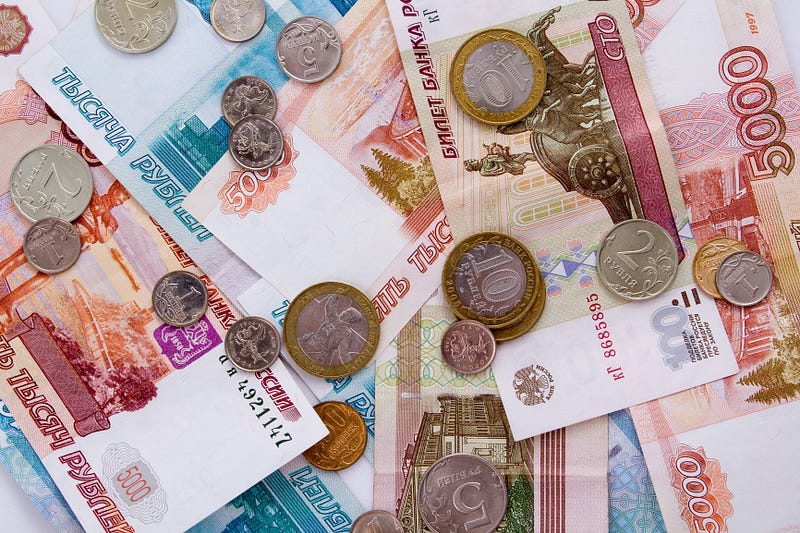
Dmitry Sidorov on Pexels


Sailing too close to the wind

When approached regarding the omission of these banks, a Binance spokesperson stated: “We regularly update our systems to ensure compliance with local and global regulatory standards. When gaps are pointed out to us, we seek to address and remediate them as soon as possible.”

The Wall Street Journal’s article outlined how Binance’s peer-to-peer platform facilitated ruble-to-crypto trades that frequently involved the sanctioned Russian banks, with Rosbank and Tinkoff Bank being prominent examples.

These trades often utilized layers of intermediaries to convert funds from these banks into Binance balances, as detailed by various company resources, user screenshots, and messages in official chat groups. Despite these revelations, Binance’s exchange had continued to handle significant volumes of ruble trading, according to data compiled by digital asset research firm CCData.


US DoJ probe

Binance’s activities in Russia could potentially contribute to its ongoing legal challenges in the United States. The US Justice Department (DoJ) has been probing the company’s actions for potential violations of American sanctions on Russia. In response to such concerns, the Binance spokesperson emphasized:

“Binance aims to diligently comply with the global sanctions rules and enforces sanctions on people, organizations, entities, and countries that have been blacklisted by the international community, denying such actors access to the Binance platform.”


Workarounds

Traders, however, had reportedly found workarounds to the bank removals, as observed in the official Telegram chat group for Russian clients. Many shared that they could still engage with sanctioned banks by selecting alternative payment methods and then manually inputting their Rosbank or Tinkoff bank details.

Earlier this year, an investigative report by CNBC alleged that employees of the company had told it that Binance staff regularly helped Chinese customers to bypass Know Your Customer (KYC) controls in order to access the platform. More recently, another report, once again by the Wall Street Journal, found that business in China was booming, which surprised many given that China banned crypto trading within the country in 2021.

It’s apparent that the company is reacting to regulatory and legal pressures in taking the decision to make these changes to its P2P service. Perennial crypto critic US Senator Elizabeth Warren took to X (formerly Twitter) on Friday, stating:

“I rang the alarm about sanctions evasion by Russia using the crypto platform Binance — and urged [the DoJ] to investigate potentially false statements it made to Congress. We need stronger crypto regulations to rein in illicit finance.“


More to Read
View All
Web3 & Enterprise·

Jan 23, 2024

NEOPIN to launch bridge platform for Finschia, Ethereum and Klaytn networks

Centralized decentralized finance (CeDeFi) protocol NEOPIN is gearing up to launch NEOPIN Bridge, a platform designed to bridge the Finschia network with Ethereum Virtual Machine-based (EVM) networks like Ethereum and Klaytn. According to an official announcement via Medium on Tuesday (KST), the service will be launched by the end of February.Photo by Shubham's Web3 on UnsplashLinking ecosystemsEver since its establishment of an official partnership with the Finschia Foundation last month, NEOPIN has been developing Finschia’s first EVM-compatible bridge. The project is intended to facilitate the process of exchanging cryptocurrencies for users on the Finschia, Ethereum and Klaytn networks. This will enhance the development and liquidity of the Finschia and Klaytn ecosystems through the integration of Ethereum-based stablecoins.  Currently, NEOPIN’s DeFi protocols are accessible only through the NEOPIN Wallet. But with NEOPIN Bridge, user accessibility and convenience will be enhanced through provided support for various wallets like MetaMask, Kaikas, DOSI Vault and more. New services will also be implemented, including token swaps for users to transfer the converted Finschia tokens (FNSA) through the bridge. NEOPIN is the only DeFi protocol that simultaneously supports both the Finschia and Klaytn mainnets, who recently announced a joint proposal for the Dragon DeFi Initiative – a project to build a DeFi ecosystem active on both the Finschia and Klaytn mainnets. NEOPIN’s strengthsWith a record of zero incidents including stake slashing since 2018, along with a 99.99999% block generation rate, the protocol touts a clean track record in node validation across multiple blockchains, emphasizing its dedication to trust and stability. “NEOPIN is recognized for its robust security and reliability, serving as a role model for the Abu Dhabi DeFi regulatory framework. The launch of our self-developed NEOPIN Bridge is a significant stride towards encouraging the growth of the Finschia and Klaytn ecosystems,” said Ethan Kim, CEO of NEOPIN.

news
Web3 & Enterprise·

Sep 25, 2023

Korea Investment and Securities Completes the Construction of Security Token Infrastructure

Korea Investment and Securities Completes the Construction of Security Token InfrastructureKorea Investment and Securities (KIS) recently announced that it has become the first securities firm in South Korea to successfully establish an infrastructure for security token offerings.Photo by Joshua Sortino on UnsplashReal-world assetsSecurity tokens are a new class of securities that are based on distributed ledger technology, allowing individuals to invest in real-world assets (RWAs) that can be tokenized. Such assets include real estate, ships, airplanes, and artworks.In March, KIS initiated a security token consortium named “Korea Investment ST Friends,” collaborating with Internet-only banks KakaoBank and Toss Bank, AI company Kakao Enterprise, and blockchain developer Open Asset. Since May, the consortium has been diligently working with the principal objective of constructing an infrastructure leveraging distributed ledgers. Consequently, the group has finalized the development and testing of a system that manages the entire trajectory of security token projects, from issuance to liquidation.Cloud systemSpecifically, KIS has built its infrastructure on a cloud network, bearing in mind that the regulatory framework for security tokens is still in development. This cloud system is capable of adapting to regulatory modifications and implementing improvement updates. Moreover, it utilizes an agile development approach to encourage rapid decision-making and productive collaborations, enhancing time efficiency.Compatibility with the traditional systemThe newly established security token infrastructure is also compatible with the traditional security trading system. Achieving this compatibility posed numerous technical challenges as the new system operates on distributed ledgers, whereas the existing one relies on centralized servers.KIS is preparing to file patents for some of the technologies incorporated into the new system. These technologies encompass the payment of dividends through smart contracts, assurance of immediate settlements using deposits on distributed ledgers, and the management and safeguarding of personal information. By demonstrating the infrastructure’s capability and stability, the securities firm aims to gain a technological edge.Choi Seo-ryong, the head of the platform division at KIS, expects the new infrastructure to mark a significant milestone as distributed ledger technology merges with traditional finance. He further mentioned that the securities company will discover blue-chip assets meeting investor needs while committing to the stable establishment of the regulatory framework and the protection of investors.Moving forward, ST Friends will continue to enhance the stability and functionalities of the infrastructure through a series of field tests related to the entire process of security token products. Aiming to construct a security token ecosystem, the group will also concentrate on developing products by collaborating with various firms, including Korean content investment platform Funderful and real estate trading platform Valuemap.

news
Web3 & Enterprise·

Jun 10, 2025

Metaplanet raises funds to fulfill 2027 Bitcoin goal

Japanese Bitcoin treasury company Metaplanet, whose shares are listed on the Tokyo stock exchange (3350/TYO), has taken an important step towards its goal of holding 210,000 BTC by 2027. ‘Asia’s largest-ever equity raise’The firm’s CEO, Simon Gerovich, took to the X social media platform on June 6 to outline details of what he termed “Asia’s largest-ever equity raise.” Gerovich stated that Metaplanet had raised 770.9 billion yen ($5.4 billion) by means of moving strike warrants, implicating 555 million shares. Moving strike warrants are a type of equity warrant through which the strike price changes over time. Photo by Cullen Cedric on UnsplashGerovich claimed that the warrants were issued at a premium to the market due to Metaplanet’s “high volatility and deep liquidity.” The Metaplanet CEO stated that the firm is targeting 100,000 BTC by the end of 2026 and 210,000 by the end of 2027. On June 2, the firm announced that it had acquired its latest tranche of Bitcoin, adding another 1,088 BTC to its corporate treasury. The company paid an average Bitcoin unit price of 15,519,019 yen ($107,000). Metaplanet has adopted the treasury playbook first pioneered by Michael Saylor’s Strategy (formerly MicroStrategy), acquiring the leading crypto asset through a combination of equity issuance, debt financing and opportunistic buying.  Russell Okung, a former professional American football player and well-known Bitcoin proponent, took to X on June 6 to highlight that Saylor “lit the match” through Strategy in the United States.  Okung stated: “Metaplanet just launched the rocket in Asia. When capital moves, narratives follow.”He added that “Metaplanet didn’t just buy Bitcoin. They’re directing global attention toward Japan.” Both Metaplanet and Strategy have appealed to investors who are otherwise not in a position to gain exposure to Bitcoin directly, either as a result of regulatory issues or concerns with regard to the custody of the digital asset.  Corporate treasuries adopting BitcoinIn addition to these companies who have led first with a Bitcoin treasury as their primary attraction, other corporates have added Bitcoin to their corporate treasuries while maintaining their focus on other business activities.  Announcements have come thick and fast over the course of recent weeks, particularly in the Asian region.  A number of Nasdaq-listed companies, including Hong Kong-based Reitar Holdings, Indonesian fintech firm DigiAsia, Malaysia-based Treasure Global and South Korea-based K Wave Media, have all announced the addition of Bitcoin to their corporate treasuries.  Metaplanet’s new funding round will put it on track to achieve the goal of obtaining 210,000 BTC by 2027, equating to approximately 1% of the entire Bitcoin supply. The Japanese firm’s shares have risen in price by over 275% since the beginning of this year. According to BitcoinTreasuries.net, Strategy remains the largest corporate treasury holder of Bitcoin with 582,000 BTC. It’s followed by MARA Holdings, Twenty One, Riot Platforms, Galaxy Digital Holdings and CleanSpark. Tesla, Hut 8 Mining Corp and Coinbase Global also feature prior to Metaplanet which comes in tenth place.

news
Loading