Top

Japan’s Largest Airline Opens NFT Marketplace

Web3 & Enterprise·May 31, 2023, 12:29 AM

All Nippon Airways (ANA), Japan’s largest airline, has ventured into the world of Web3 by launching its own non-fungible token (NFT) marketplace through its subsidiary, ANA Neo.
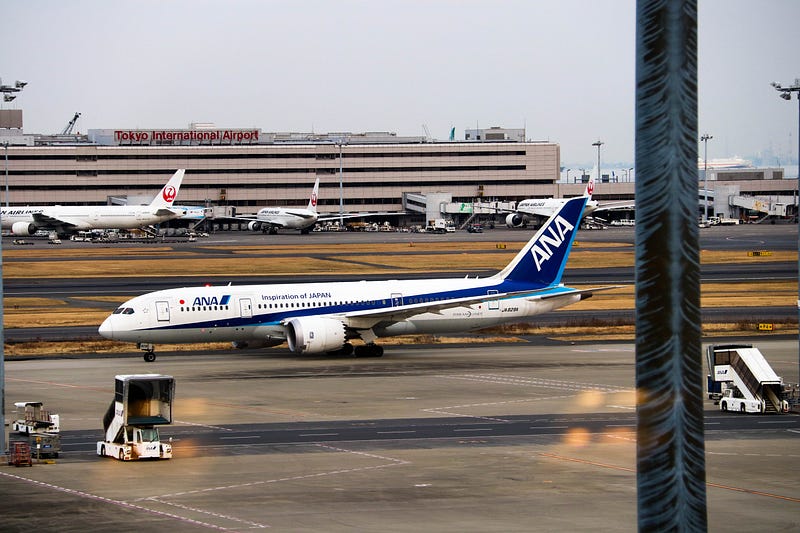
Photo by Marcus Ng on Unsplash


ANA GranWhale NFT marketplace

The newly introduced platform, called the “ANA GranWhale NFT Marketplace,” will showcase an exclusive digital art collection crafted by renowned aerial photographer Luke Ozawa.

The NFT marketplace commenced on Tuesday with the conversion of Ozawa’s first digital photograph into an NFT. One of these unique pieces will be auctioned alongside the positive film, which served as the source for the photo’s development. The starting price for this item is set at 100,000 yen, offering collectors the opportunity to acquire an NFT paired with a tangible artifact.

Following this initial collection, ANA plans to release its second batch of NFTs on June 7. This collection will feature the NFT rendition of the first Boeing 787 operated by ANA, presented in the form of a 3D model airplane. The offerings include a total of 1,574 items, comprising two types of 787 models, with each item priced at 7,870 yen.

ANA, a company with revenues of $12.2 billion in its previous fiscal year, aims to expand its NFT product line in the future. The airline envisions leveraging NFTs to enhance the customer experience and add value to its services.


Airline industry NFT Potential

The development of ANA Neo’s GranWhale initiative began in August of last year. The project focuses on creating a virtual travel platform that utilizes various technologies, including virtual reality (VR), to recreate destinations and cultures from around the world. These recreations take the form of metaverse parks, allowing users to explore and immerse themselves in virtual travel experiences.

ANA Neo President Mitsuo Tomita emphasized the significance of this venture, stating that the ANA GranWhale logo symbolizes the fusion of the virtual and the real, signifying the airline’s journey into the future, where Web3 and metaverse travel will become increasingly prevalent. “Through this initiative, we aim to unlock the potential of NFTs in the aviation industry, bringing together the digital and physical realms to create unique and memorable experiences that unite the world in wonder,” Tomita stated.


Club Toki NFTs

ANA is not the first Japanese airline to involve itself with the NFT space. Earlier this month, regional Japanese airline Toki Air announced the launch of Club Toki, a fan community centered around NFTs. The initiative claims that community members join by purchasing NFTs, and as NFT holders, they receive further club benefits. The NFTs can be purchased by credit card or payment in ETH, with the buyer needing a MetaMask wallet in order to receive the NFT.

In March, Argentinian low-cost airline Flybondi integrated Web3 into its ticketing process by issuing tickets as NFTs in a partnership with NFT ticketing firm, TravelX. With this initiative, Flybondi became the first airline to offer flight tickets as NFTs.

With its entry into the NFT marketplace, ANA joins the growing number of companies embracing Web3 technologies to offer unique digital assets and experiences. As the airline continues to develop its GranWhale platform, it seeks to cater to the evolving demands of the market and establish a presence at the intersection of aviation and the metaverse.


More to Read
View All
Policy & Regulation·

Oct 29, 2025

EU bans Ruble-backed stablecoin A7A5 in latest round of Russia sanctions

The European Council has banned all transactions within the European Union (EU) involving the Russian Ruble-backed stablecoin A7A5, according to a press release published Oct. 23. The prohibition targets the stablecoin itself, its developer, its Kyrgyzstan-based issuer, and the operator of a platform that facilitates major A7A5 trades. The package also takes aim at Russian crypto exchanges.Photo by Christian Lue on UnsplashAdditional banking restrictionsThis measure is part of a broader set of economic sanctions against sectors the EU stated assist the Russian invasion of Ukraine, including energy, finance, and defense industries. As part of this financial clampdown, the EU will also impose a ban on five additional Russian lenders starting Nov. 12. One of those lenders, Alfa-Bank, recently began offering Bitcoin buying and selling services, according to an X post by journalist Pete Rizzo. The European body said the new crypto measures address Russia’s increasing use of digital assets to circumvent existing sanctions. Russian banks were cut off from the SWIFT international payment system in early 2022, following the onset of the Russo-Ukrainian war. Reports of Russia using cryptocurrency to finance malign activities have surfaced previously. Earlier this month, Sławomir Cenckiewicz, the head of the Polish National Security Bureau (BBN), told the Financial Times that Russia has employed crypto to finance attacks on EU countries. Cenckiewicz said that a network of agents recruited by Russia’s GRU military intelligence agency and uncovered in Poland in 2023 had been substantially funded with cryptocurrency. Reflecting this concern, lawmakers in Poland’s lower house approved a bill in September to strengthen national crypto oversight, a move also expected to help curb Russian funding channels. Cenckiewicz noted that Polish intelligence agencies are closely monitoring the legislation to prevent loopholes that allow foreign actors to support agents using digital assets. Russia’s evolving crypto policyThe EU’s action comes as Russia itself is attempting to refine its own cryptocurrency rules. According to the Moscow Times, Russia's central bank wants to limit cryptocurrency use strictly to cross-border payments within an experimental legal regime (ELR). The institution continues to reject recognition of cryptocurrency as a legal means of payment and has advocated banning its use for domestic payments and retail investment, while permitting trading only for high-net-worth individuals through licensed platforms. Russia’s finance ministry has expressed a more flexible view, pointing to the scale of crypto adoption among the public. Earlier this year, the central bank estimated that domestic crypto transactions exceeded 1 trillion rubles (about $12.4 billion) per month, and that as of March, wallets linked to Russian users held roughly 827 billion rubles (about $10.2 billion). The finance ministry and the central bank have agreed to tighten supervision of the crypto market, with officials expecting to finalize the new framework before the end of the year. 

news
Web3 & Enterprise·

Mar 26, 2025

Chainlink partners with Abu Dhabi’s ADGM on tokenization framework development

Chainlink, a prominent decentralized oracle network, has partnered with the Abu Dhabi Global Market (ADGM), a free zone and international financial center located on Al Maryah Island in Abu Dhabi in the United Arab Emirates (UAE), with a view towards further developing tokenization frameworks.Photo by Shubham Dhage on UnsplashCompliant tokenization frameworksAccording to an announcement on the ADGM website, the international financial center signed a memorandum of understanding (MOU) with Chainlink. It claimed that the collaboration marks “a major step in advancing compliant tokenisation frameworks.” Chainlink provides a suite of services. Central to that is the delivery of real-world data feeds into blockchain networks. ADGM believes that through the partnership, projects located within the free zone will be able to access this technology, while the ADGM’s Registration Authority will ensure regulatory compliance. The CEO of the ADGM Registration Authority, Hamad Sayah Al Mazrouei, said that the strategic alliance is a significant step towards ADGM leadership in blockchain innovation. He added: “By collaborating with Chainlink, we are aiming to set a global benchmark that spearheads transparency, security, and trust across the blockchain space.” The collaboration includes plans to host events and workshops aimed at educating the blockchain sector within the UAE. The two parties also aspire to the initiative, sparking greater dialogue on regulatory matters relative to blockchain, artificial intelligence and other emerging technologies. Global collaborationsThis is the latest in a long list of collaborations that Chainlink has entered into, relative to asset tokenization. In October, it partnered with Singapore’s DigiFT, an exchange dedicated to tokenized real-world assets (RWAs). The following month, it completed a pilot program alongside financial messaging service SWIFT and UBS Asset Management under the umbrella of the Monetary Authority of Singapore’s (MAS) Project Guardian. The project concerned itself with the settlement of tokenized funds. Earlier in 2024, Chainlink partnered with U.S. financial market infrastructure firm DTCC on the Smart NAV pilot project. The initiative centered on the creation and issuance of tokenized funds, counting JPMorgan, State Street, BNY Mellon, Invesco and Franklin Templeton among its participants. In the UAE, Chainlink has been added as a member of the Digital Asset Lab of one of the country’s largest banking groups, Emirates NBD. For its part, the ADGM has also been on the front foot with regard to tokenization initiatives. Its Regulatory Authority has established a regulatory framework with regard to asset tokenization, with an emphasis on investor protection. In October of last year, RWA tokenization platform Realize launched the financial center’s first tokenized U.S. treasury bill fund. At the time, the ADGM said that the development highlighted an objective for the region in becoming the global market leader where RWA tokenization is concerned. The ADGM began operations in 2015 with its own legal system. As of the end of 2024, the financial center hosted 134 fund and asset managers. Market maker and Web3 investment firm DWF Labs moved its headquarters from Singapore to Abu Dhabi’s ADGM at the end of last year, citing the goal of wanting to expand tokenized RWA-based projects as one of the reasons for the move.

news
Web3 & Enterprise·

Apr 19, 2023

Korean Game Company to Reward Female Golfers with WEMIX Tokens

Korean Game Company to Reward Female Golfers with WEMIX TokensKorean game company Wemade has teamed up with television channel SBS Golf to reward Korean professional female golfers with WEMIX tokens, according to a Wemade press release.Photo by Allan Nygren on UnsplashWEMIX point systemGolfers participating in the regular tours of the Korea Ladies Professional Golf Association (KLPGA) can earn WEMIX points based on their performance and records. At the end of the 2023 season, the top 60 players in the WEMIX point system will share a total of 500,000 WEMIX, with the player in first place earning 90,000 WEMIX.Golfers can earn WEMIX points in three ways: by ranking in the top 10 for each tour, advancing to the final round of each tour and earning points based on the number of strokes for each hole, or consecutively ranking in the top 10 for tours. Meanwhile, golfers who don’t make the cut may face penalties.Sports NFTsThe top 60 players in the WEMIX point system will receive sports NFTs, which can be exchanged for WEMIX tokens any time after a certain date.For the gallery, Wemade’s NFT platform NILE marketplace will feature NFTs corresponding to the top 60 players in the WEMIX point rankings.More intensified competitionAn SBS Golf official expressed excitement about the new point system for KLPGA players. The extra rewards are expected to spark more intensified competition and provide fans with unique experiences, contributing to the promotion and development of the league.Wemade has stated that this initiative is just the beginning, and that the company plans to continue developing innovative ways to provide new experiences to players and fans across various sports in the future.

news
Loading