Top

Korean Prosecutors Allocate $734K Budget for Crypto Crime Investigations

Policy & Regulation·August 21, 2023, 8:32 AM

The South Korean Supreme Prosecutors’ Office has earmarked a budget of up to KRW 986 million (approximately $734,000) this year for investigations pertaining to virtual assets, according to data received by the local newspaper Law Times from the Ministry of Justice last Thursday. The significant size of the budget suggests that the prosecution is prioritizing efforts to combat the growing surge in virtual asset-related crimes.

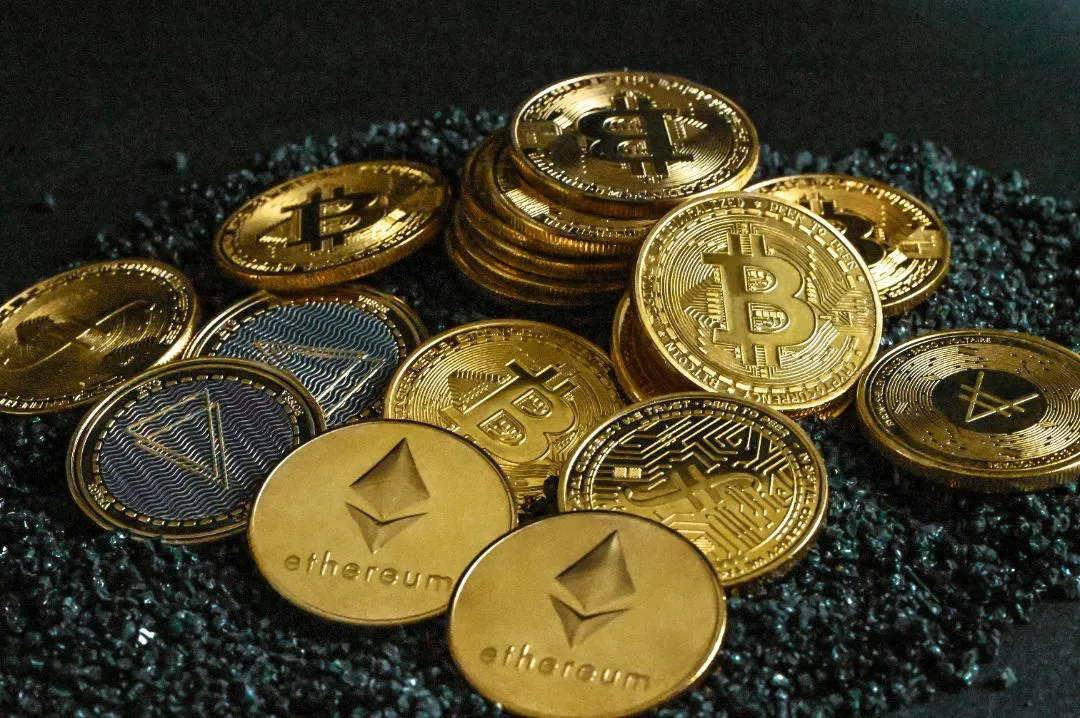
Photo by Tingey Injury Law Firm on Unsplash


Budget division

Within this budget, KRW 778 million has been designated for the purchase of software licenses for virtual asset tracing and analysis equipment, while KRW 280 million has been allocated for an integrated strategic plan to establish a platform for analyzing and tracing unauthorized virtual asset transactions. The budget for this platform consists of preliminary planning costs. Related expenditures are expected to increase as the project is fully implemented.

“It is true that our budgets are being concentrated on crimes related to virtual assets due to the fact that they have recently become a social issue,” said a prosecution official. “It may not be a lot compared to our overall budget, but assigning almost KRW 1 billion for one specific field of investigation is still a considerate amount.”


Rising crypto crimes

In Korea, crimes associated with virtual assets have been increasing annually. This includes tax evasion, bribery, foreign exchange law violations, and money laundering, as well as cryptocurrency market issues including issuance, listing, and distribution. According to the Supreme Prosecutors’ Office, reported cases of suspicious virtual asset transactions received by the Korea Financial Intelligence Unit (KoFIU) surged from an average of 66 cases per month in 2021 to 900 cases in 2022, then 943 cases in 2023 — a fourteen-fold increase in just three years.

Subsequently, the scale of the damages caused by cryptocurrency crimes has also seen a sharp rise. The total value of all reported damages skyrocketed from KRW 467.4 billion in 2017 to KRW 1.02 trillion last year, more than doubling in five years. The cumulative loss over this period exceeds KRW 5.3 trillion.


Focused efforts

The prosecution has thus dispatched financial experts from organizations including KoFIU and Korea Exchange to create a joint virtual asset crime investigation unit under the Seoul Southern District Prosecutors’ Office dedicated to investigating cryptocurrency crimes.

The prosecution’s Cybercrime Investigation Division has also begun developing a tracking system optimized for the Korean market to trace the flow of virtual assets. The foreign software that is currently being used for tracking comes with considerable expenses and limitations, particularly for tracking flows within the domestic market, where there are many transactions involving smaller, locally-issued cryptocurrencies called “kimchi coins.”

“We are dedicating our manpower and technological development to virtual asset investigations,” said a high-ranking official from the prosecution. “We will also strive to secure the budget necessary for these efforts.”

More to Read
View All
Web3 & Enterprise·

May 31, 2023

Metaverse Expo 2023 in Seoul: Exploring the Future of the 3D Internet

Metaverse Expo 2023 in Seoul: Exploring the Future of the 3D InternetThe Metaverse Expo 2023 is scheduled to be held at the COEX, an exhibition and convention venue in Seoul, from June 14 to 16, according to a press release. With its focus on the future of the three-dimensional Internet, this event seeks to attract metaverse enthusiasts eager to explore cutting-edge technologies. This year, the “Metaverse + Generative AI Summit” will run alongside the expo, showcasing the diverse applications of generative AI in enhancing efficiency within the metaverse.Photo by julien Tromeur on UnsplashKorea’s strategy for metaverse promotionIn February last year, the Korean Ministry of Science and ICT revealed a metaverse promotion strategy involving a comprehensive support plan of 237 billion KRW ($179.6 million). This initiative seeks to cultivate an augmented reality ecosystem by developing metaverse platforms, fostering metaverse companies, and aiding their international expansion.The expo will host exhibits centered around four key topics: metanomics, digital twins, education, and NFTs. Attendees will explore innovative business models, learn about the replication of physical objects in the virtual realm, discover the potential of the metaverse in reshaping educational approaches, and understand the role of non-fungible tokens in establishing digital ownership.Side events to support businessesIn addition to the main exhibits, the expo will host various side events such as export and investment counseling sessions, new product presentations, and seminars. In collaboration with the Korea Trade-Investment Promotion Agency (KOTRA), a consultation program will be offered to encourage overseas buyers to engage with Korean companies. This program aims to support Korean businesses in promoting their products and services overseas, as well as connecting them with new buyers and investors who can contribute to their growth and expansion.Previously known as the Seoul VR-AR Expo, this event has been an annual feature since 2018, with VR representing virtual reality and AR representing augmented reality. In line with evolving industry trends, the event was rebranded to the “Metaverse Expo” in 2022. This year’s event will mark its sixth running, further cementing its role as a beacon for developments in the rapidly advancing metaverse landscape.

news
Web3 & Enterprise·

Nov 08, 2023

Lotte’s NFT marketplace partners with upcycling brand NiUl for membership NFTs

Lotte’s NFT marketplace partners with upcycling brand NiUl for membership NFTsLotte Data Communication, an affiliate of South Korean retail conglomerate Lotte Group, issued a press release on Wednesday (local time) to reveal that its NFT marketplace, Kottonseed, has issued new non-fungible tokens (NFTs) in partnership with upcycling brand NiUl whose name stands for “Nothing is Useless.”Photo by MSA-90 on PixabayPlastic lids to stylish keychainsNiUl recycles discarded plastic lids, transforming them into vibrant, stylish key ring pendants known as NiUl rings. NiUl has successfully sold over 2,000 pendants across a mix of online and offline platforms, with 300 kilograms of plastic lids donated by supporters. In a strategic move to broaden its reach, the company has been partnering with diverse firms and ramping up its donation initiatives, targeting environment and fashion-conscious millennials and Generation Z consumers.In their latest venture with Kottonseed, these pendants have been digitized into membership NFTs, which come with a suite of benefits like a special edition rope strap and discounts on products. Some lucky members may even get the opportunity to be involved in creating a NiUl ring. These membership NFTs are being released in limited numbers and are up for grabs starting today on NiUl’s page on Smart Store, an e-commerce platform of popular search engine Naver.NFTs in five colorsThe NFTs are offered in five distinct colors, each named after the sky’s varying appearances: “Post-rain Clear,” “Blue Sky,” “Sunset,” “Aurora” and “Night Sky.”A spokesperson for Lotte Data Communication expressed that the company sees great value in participating in upcycling initiatives with NiUl through their NFT marketplace, Kottonseed. They are keen on pursuing enjoyable and varied collaborations to support NiUl’s socially beneficial endeavors. Moreover, Lotte is actively exploring ways in which NFTs can contribute to environmental, social and governance (ESG) objectives.

news
Policy & Regulation·

Oct 17, 2025

Regulator in Tokyo moves to ban insider trading in crypto market

Japan’s Financial Services Agency (FSA) plans to ban insider trading in the cryptocurrency market, according to an Oct. 15 report in Nikkei, cited by CoinPost. The forthcoming rules would amend the Financial Instruments and Exchange Act to explicitly bar trading based on nonpublic information, with violators subject to administrative fines.Photo by Louie Martinez on UnsplashTightening oversight through the SESCThe FSA intends to hammer out the details through a working group by year’s end and aims to submit a bill amending the securities law during the 2026 ordinary session of the Diet. Under the proposal, the Securities and Exchange Surveillance Commission (SESC) would gain authority to investigate suspected violations and could recommend fines or criminal charges in cases of alleged insider trading. Experts say Japan’s system of self-regulation, led by cryptocurrency exchanges and the Japan Virtual and Crypto Assets Exchange Association (JVCEA), lacks sufficient data monitoring. The government hopes that granting the SESC oversight of crypto transactions will help ensure fairer trading and make the market more attractive to investors. The new rules would target the use of confidential information, such as advance knowledge of a token listing or a major security flaw. Yet applying insider-trading standards to crypto may prove difficult. Many tokens have no clear issuer, making it harder to determine whose information could move markets or who should be held accountable. Crypto investing has surged in Japan, with domestic trading accounts quadrupling in five years. The FSA now aims to update its rules to reflect that digital assets are traded mainly as investments, not as payment instruments. Leadership transition brings policy uncertaintyJapan’s plan to strengthen oversight of cryptocurrencies coincides with a period of political transition. Prime Minister Shigeru Ishiba has announced his intention to step down but remains in office for now. According to CNBC, Sanae Takaichi, newly elected president of the ruling Liberal Democratic Party (LDP), would typically be expected to assume the premiership, but the coalition’s collapse has upended what would otherwise be a routine transition. The parliamentary vote to choose Japan’s next leader, initially slated for Oct. 15, has been postponed to Oct. 21. In the wake of the split, the main opposition Constitutional Democratic Party (CDP) is reportedly seeking Komeito’s support for a joint prime ministerial candidate. Yuichiro Tamaki, leader of the Democratic Party for the People (DPP), is seen as a potential consensus choice. The ruling LDP currently holds 196 seats in the lower house, but a united opposition could command a larger bloc. Tamaki has also drawn attention in crypto circles. About a year ago, he proposed cutting taxes on cryptocurrency gains to 20%, a flat rate similar to that on stock profits, during his campaign against Ishiba. At present, crypto gains in Japan are classified as miscellaneous income and taxed at progressive rates that can exceed 50% when local levies are included. Metaplanet’s Bitcoin strategy tested amid market shiftsAgainst that backdrop, Metaplanet, often dubbed Japan’s answer to the U.S. firm Strategy for its aggressive Bitcoin (BTC) accumulation, is under pressure as its valuation slips below the value of its crypto holdings. The company’s market-to-BTC net asset value (mNAV) ratio fell to 0.99 on Oct. 14, dropping below 1 for the first time. The metric compares the company’s market value with its BTC holdings, and a reading below 1 means the stock is trading at a discount to its BTC reserves. The decline comes after Metaplanet paused BTC purchases for the past two weeks. As of Oct. 1, the company held 30,823 BTC on its balance sheet. 

news
Loading