Top

Colt Technology Partners With Singapore’s AsiaNext

Web3 & Enterprise·August 18, 2023, 1:17 AM

Colt Technology Services, an established player in the digital infrastructure sector, has unveiled a strategic partnership with AsiaNext, an emerging name in the crypto exchange domain.

News of the collaboration emerged on Thursday, with the partnership designed to harness the strengths of Colt’s secure and high-performance digital infrastructure solutions to foster high-frequency trading of various digital securities and crypto derivatives on the AsiaNext platform.

AsiaNext is a joint venture between Japan’s SBI Digital Asset Holdings and Swiss digital infrastructure firm, SIX Group. The entities behind the venture identified similarities in the regulatory approach taken in Switzerland and Singapore, and for that reason, AsiaNext was developed to grow the business in the city-state.
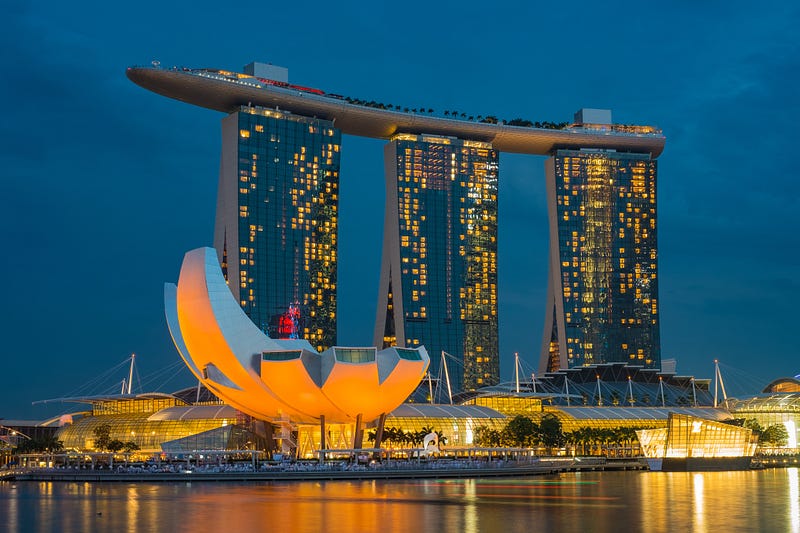
Photo by Julien de Salaberry on Unsplash


Accessing Multicast Market Data

The partnership will see AsiaNext leverage Colt’s Multicast Market Data in the Cloud. This service facilitates seamless connectivity between buyers and sellers, bridging the divide between mainstream finance and the secure realm of digital assets trading. The move takes on greater significance against the backdrop of Asia’s rapid ascent in digital asset trading and its central role in shaping global cryptocurrency regulations.

AsiaNext has been targeting institutional investors and aims to offer a comprehensive suite of services encompassing listing, trading, and post-trade functions for digital assets. The exchange is attempting to provide institutional investors with a secure platform for trading digital assets, bolstering the crypto derivatives market in the region.

Alongside Colt’s Multicast Market Data product, AsiaNext will also benefit from access to Colt’s PrizmNet, which enables low latencies for global delivery of data, software, content, and financial services.

Commenting on the deal, Russell Toop, Colt’s Team Lead, Capital Markets Asia, remarked: “Our partnership with AsiaNext demonstrates our firm commitment to capital markets in Asia and across the world, and we’re excited to be part of its journey at the earliest stages as it sets out to bring digital assets to the mainstream.”

Yuen Keng Yin, Chief Technology Officer of AsiaNext, echoed the sentiment by highlighting the transformative potential of Colt’s solutions for institutional investors, stating:

“Their solutions support our investors in securing their position in this rapidly-growing market, so they can optimize their digital assets trading strategies and open up exciting new opportunities for their clients.”


Working towards a full CMS license

AsiaNext has been making progress within the Singaporean market. In June, the local regulator and central bank, the Monetary Authority of Singapore (MAS), granted the institutional grade exchange regulatory approval in principle.

That Capital Markets Services (CMS) license is now on the cusp of full license approval from MAS. Furthermore, the firm is also working towards obtaining a Recognised Market Operator license.

These regulatory milestones all feed into AsiaNext’s overall goal, which is to offer a service which can bridge the gap between traditional finance and the digital assets space. In building out that offering, Marek Socha, Head of Corporate Development at SIX Group, said in an interview last year that important partnerships would be established by AsiaNext. No doubt accessing Colt’s service offering with this latest partnership is another step for the firm in reaching its objective.

More to Read
View All
Policy & Regulation·

Apr 14, 2023

Hong Kong Enticing Crypto Firms from Mainland China

Hong Kong Enticing Crypto Firms from Mainland ChinaIn the wake of various scandals and high-profile bankruptcies, some governments have shunned the cryptocurrency industry, but Hong Kong is instead embracing mainland China crypto companies, urging them to relocate to the city in a bid to bolster its status as a financial hub.©Pexels/RODNAE ProductionsEmbracing cryptoAfter enduring an exodus of bankers amid a China security crackdown and stringent COVID curbs, Hong Kong is now making a concerted effort to revitalize its finance sector by embracing crypto. Top Hong Kong government officials, including Chief Executive John Lee, have voiced their support, and the city is planning to hold 100 crypto-related conferences and lavish parties throughout April. Hong Kong is “very serious about building an international virtual asset center,” said Xiao Feng, chairman of Hong Kong crypto exchange HashKey, which drew 13,000 people on the first day of its Hong Kong Web3 Festival, the most significant conference of the month.HashKey obtained a license to operate in Hong Kong last November, making it one of two licensed crypto exchanges in the city, alongside rival exchange OSL. Xiao told Reuters that many people in the crypto industry had initially assumed that Hong Kong would inevitably adopt the same regulations as mainland China. However, the government is now emphasizing that Hong Kong operates under the “One Country, Two Systems” framework and enforces distinct laws.SkepticsDespite this, many remain skeptical of Hong Kong’s promise of a stable regulatory regime on cryptocurrencies. One crypto venture capitalist, who spoke to Reuters on the condition of anonymity due to the sensitive nature of the matter, expressed concern over China’s crypto ban, which still looms large in the background. “If Hong Kong can suddenly claim to be crypto-friendly, that switch can be flipped off just as quickly should things become challenging,” he said.Crypto licensing interestNevertheless, at least 10 companies with Chinese founders, including OKX, Bybit, and Huobi, have announced or are planning to announce their bid for licenses in Hong Kong. These firms, which have exited countries like Canada and the UK, are among the sponsors of the most glamorous Hong Kong parties this week. Bybit held a private dinner for industry heavyweights, and OKX reserved a rooftop venue overlooking Victoria Harbour, where guests could enjoy a stunning view.At one event on Tuesday, Tron founder Justin Sun, addressed a mainly Chinese-speaking audience, stating, “I can’t believe that we are having such conferences on Chinese soil.” Sun has been charged with fraud by the US Securities and Exchange Commission (SEC), but he argued that the charges lacked merit and accused the regulator of targeting crypto players. “Hopefully, one day, we will have such events in Shanghai and Beijing,” he remarked.Despite the lingering concerns, Hong Kong is committed to establishing itself as a leading finance hub in the cryptocurrency industry and is sparing no effort to achieve its goals.

news
Policy & Regulation·

Nov 03, 2023

Abu Dhabi’s ADGM unveils DLT foundations regulations

Abu Dhabi’s ADGM unveils DLT foundations regulationsThe Registration Authority (RA) of Abu Dhabi Global Market (ADGM) has officially unveiled the Distributed Ledger Technology (DLT) Foundations Regulations 2023, marking yet another milestone in the evolution of digital assets regulatory frameworks both regionally and internationally.Photo by Kamil Rogalinski on UnsplashFramework for DAOs and foundationsThe new regulations were published to the ADGM website on Wednesday, with enactment occurring on Thursday. This legislative framework has been crafted to offer a comprehensive structure for DLT foundations and decentralized autonomous organizations (DAOs), addressing their unique operational needs within the blockchain sector. ADGM’s strategic vision to promote initiatives in the broader blockchain and digital asset sphere has culminated in the creation of this regulatory regime.As a global first of its kind, the DLT foundations regulation sets a precedent for blockchain foundations, Web3 entities, DAOs and traditional foundations seeking to enhance their operations through DLT. This forward-thinking framework is poised to provide a unified solution for digital asset-related activities and the broader foundations landscape, fostering transparency and efficiency.Establishing governance structuresThe ADGM DLT foundations regulation represents an effective means to establish governance structures while acknowledging the imperative decentralization characteristic of the industry. This regulatory development followed a robust public consultation process, actively involving stakeholders and industry participants to gather feedback and refine the regulations.In the realm of digital assets, ADGM continues to push towards taking leadership in regulatory standards, providing an attractive environment for Web3 startups. Ahmed Jasim Al Zaabi, Chairman of ADGM, emphasized the pivotal role that the DLT Foundations Regime plays in shaping the future of digital asset development. According to a press release on PR Newswire, Al Zaabi stated:“Abu Dhabi is rapidly emerging as the destination of choice for global players at the forefront of digital asset development. The introduction of the DLT Foundations Regime marks a revolutionary step forward, reinforcing ADGM’s commitment to a proactive approach rooted in extensive cross-industry dialogue and collaboration with various stakeholders. The new regime serves as a driving force for positive change in the digital assets sector. By transforming the blockchain and Web3 landscape, we are moving towards a future characterised by setting global benchmarks with enhanced transparency and efficiency.”Nurturing Web3 innovationOver the course of the past 12 months, the authorities in Abu Dhabi, alongside the United Arab Emirates (UAE) itself and other emirates such as Dubai, have been allocating resources towards developing the right conditions for the Web3 sector to flourish. In April of this year, a legislative framework was proposed by the ADGM.Recent months have seen a plethora of digital asset sector firms gain trading approval within the emirate. These included virtual asset firm M2, Standard Chartered digital asset subsidiary firm Zodia Markets and Laser Digital, the digital assets subsidiary of Japanese financial services conglomerate Nomura.By way of its DLT foundations regulations, the ADGM is attempting to go beyond simply creating a set of rules. The aspiration is to strive towards a future where the blockchain and digital asset industry operates within a transparent, efficient and globally respected framework. As blockchain technology continues to gain traction, Abu Dhabi’s ADGM is positioning itself to play a role in driving these advancements.

news
Web3 & Enterprise·

Nov 21, 2025

Grab joins hands with StraitsX to enable stablecoin retail payments across Asia

Grab, the Nasdaq-listed Southeast Asian superapp, has signed a strategic memorandum of understanding (MOU) with StraitsX, a Singapore-based stablecoin payment infrastructure provider, to develop Web3 wallets and a payment network powered by stablecoins. A Nov. 18 press release said Web3 wallets will be added to the Grab app, allowing merchants in Asia to accept stablecoin payments from local and overseas customers.Photo by Grab on UnsplashXSGD and XUSDUnder the partnership, Grab users may be able to hold and use stablecoins like XSGD and XUSD, which are pegged to the Singapore dollar and U.S. dollar respectively, and convert between fiat and other stablecoins in-app, provided they meet regulatory compliance requirements. Grab expects the integration to facilitate real-time cross-border settlement with transparent foreign-exchange rates, improving efficiency through faster, cheaper, and compliant transactions. The superapp operator seeks to create a single, interoperable Web3 payment framework that eliminates the need to switch between country- or method-specific systems. Merchants are expected to benefit from enhanced liquidity and capital management via programmable settlement features enabled by smart contracts and on-chain treasury tools. ASEAN’s regulatory gapsThis industry development comes amid growing interest in digital finance among intergovernmental organizations. In a blog post, Yasuto Watanabe, Director of the ASEAN+3 Macroeconomic Research Office (AMRO), noted the private sector’s growing involvement in stablecoins, outlining their advantages and risks. He said stablecoins offer greater accessibility and enable faster, cheaper transactions compared with traditional banking.  Stablecoins are widely used for remittances in Southeast Asia, particularly in the Philippines and Vietnam, and are also a common tool for small businesses engaged in cross-border trade. Watanabe also warned of risks such as anonymity-driven money laundering and capital control evasion. He also pointed to concerns that the rise of U.S. dollar–denominated stablecoins could undermine monetary sovereignty. In this context, the AMRO Director underscored the importance of the ASEAN+3 region addressing existing gaps through concerted action. 12M USDT seized in Thailand crackdownGovernment concerns are reflected in recent crypto-related crimes making headlines. In a recent case, Thai authorities, in coordination with the U.S. Secret Service, detained 73 individuals and confiscated assets valued at more than 522 million baht. About 400 million baht of that total was in USDT (12 million USDT). Tether said in an announcement that it supported law enforcement in the operation. The emergence of stablecoins is clearly transforming the traditional financial landscape. Companies are racing to harness new technologies, while regulators focus on combating illicit activity and strengthening consumer protections. As the sector evolves, new opportunities and risks will surface, and the balance between innovation and safety will be a key question moving forward. 

news
Loading