Top

Singapore Takes Lead in Regulating Stablecoins

Policy & Regulation·August 16, 2023, 2:01 AM

Singapore has taken a proactive step by finalizing regulations for stablecoins, solidifying its position as one of the first jurisdictions to do so on a global scale.

The Monetary Authority of Singapore (MAS) has established a comprehensive framework that outlines essential prerequisites for stablecoin operations, according to an announcement made by the central bank on Monday.

Key highlights include:

Reserve Backing: Stablecoins must be backed by reserves consisting of low-risk and highly liquid assets. The value of these reserves should equal or surpass the circulating stablecoin value at all times.

Prompt Redemption: Stablecoin issuers are mandated to return the par value of the digital currency to holders within five business days upon redemption requests.

Transparency: Issuers must furnish users with “appropriate disclosures,” including audit outcomes of the backing reserves.

These regulations will be applicable to stablecoins issued in Singapore that mirror the value of the Singapore dollar or any G10 currency, such as the US dollar. Stablecoins meeting all the requirements outlined by the regulations will receive recognition from the regulator as “MAS-regulated stablecoins.” This distinct categorization will differentiate them from tokens lacking regulation.
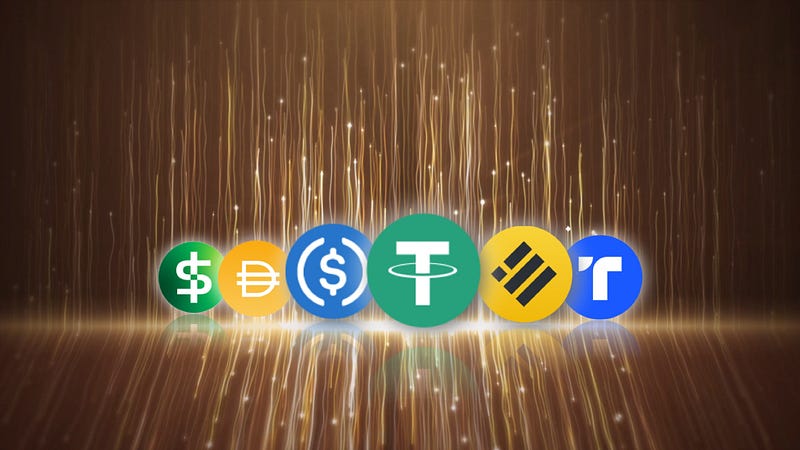
Photo by CoinWire Japan on Unsplash


Key role

With a market valuation of approximately $125 billion, stablecoins have rapidly emerged as a significant force within the crypto space. Leading the pack are Tether’s USDT and Circle’s USDC, which together command around 90% of the market’s total value.

Stablecoins play a key role in the crypto trading market. They allow traders to move in and out of various cryptocurrencies and back into fiat. However, despite their immense influence, stablecoins have largely remained unregulated across the globe. While their primary use has been in trading, stablecoin proponents assert their versatility in various applications, including remittances.


Digital currency hub

Singapore has been actively positioning itself as a hub for digital currencies, striving to attract foreign companies seeking refuge from the crypto industry’s apprehensions surrounding the current unwelcoming US regulatory approach.

Despite their prevalence, stablecoin issuers have faced criticism regarding the transparency of their reserve holdings. Singapore’s regulatory measures aim to bring increased clarity to this sector.

Ho Hern Shin, Deputy Managing Director of Financial Supervision at MAS, expressed that the framework’s purpose is to enable stablecoins to serve as a credible digital medium of exchange and bridge the gap between fiat and digital asset ecosystems.


Positive industry response

Leading stablecoin firms, Tether and Circle, have applauded Singapore’s new regulations. Yam Ki Chan, Vice President of Strategy and Policy for APAC at Circle, stated that MAS is at the forefront of forward-looking regulators globally, establishing a transparent regulatory framework for stablecoins and digital assets. Paolo Ardoino, CTO of Tether, hailed the framework for providing a clear structure, accountability, and transparency in stablecoin operations within Singapore.

The collapse of algorithmic stablecoin UST last year drew regulatory attention to this category of stablecoins. Unlike traditional stablecoins like USDT and USDC, UST was governed by an algorithm and lacked real-world assets as reserves.

Singapore’s stablecoin regulations have placed it in a select group of jurisdictions pioneering such rules. Hong Kong is presently undergoing public consultation on stablecoins and plans to introduce regulations in the coming year.

More to Read
View All
Policy & Regulation·

Oct 20, 2023

Regulatory Caution Among Asian Nations Amid Reports of Illicit Financing

Regulatory Caution Among Asian Nations Amid Reports of Illicit FinancingWith a plethora of reports of crypto-related terrorist financing having been published in recent weeks, it’s understood that Asian nations may be looking to exercise caution when it comes to the current ongoing process of establishing regulatory guidelines for crypto.That’s according to a report published by the South China Morning Post (SCMP) on Thursday. The use of cryptocurrency by Hamas to fund its attack on Israel is being seen as the catalyst that may drive authorities in various Asian nations to take a more cautious approach to regulating digital currencies, according to analysts cited by the publication.Raj Kapoor, the founder of India Blockchain Alliance (IBA), commented on these recent developments, stating:”It is a kick on the backside for most governments. All regulatory bodies will take a closer look at crypto regulation. Governments will need to start implementing new rules and regulations.”At the recent G20 summit held in New Delhi, a joint declaration called for the regulation, supervision, and oversight of crypto assets, among other measures. The declaration emphasized the importance of supporting “a coordinated and comprehensive policy and regulatory framework.”Kapoor stressed the importance of revisiting the declaration and developing solutions to implement its objectives.Photo by Adolfo Félix on UnsplashRenewed scrutinyEvents in Palestine in recent weeks have led to renewed scrutiny when it comes to monitoring illicit financing activity via cryptocurrency. Only days following the recent Hamas attack, Israeli authorities moved to freeze specified crypto accounts.That scrutiny has continued in recent days, with more accounts having been frozen on crypto platforms such as Binance, while more still have been identified as suspicious, with requests for further information having been submitted in respect of over 200 additional accounts.On Wednesday it emerged that the United States Treasury’s Office of Foreign Assets Control (OFAC) had sanctioned a Gaza-based crypto platform.Potential over-reactionWhile crypto-related terrorist financing has been widely publicized, blockchain analytics firm Chainalysis warned on Wednesday that crypto’s role in this illicit activity has likely been overstated. In its blog post on the subject, the firm stated:“Although terrorism financing is a very small portion of the already very small portion of cryptocurrency transaction volume that is illicit, some terrorist organizations raise, store, and transfer funds using cryptocurrency.”Additionally, Chainalysis stated that it had seen “overstated metrics and flawed analyses of these terrorist groups’ use of cryptocurrency.” Peter Van Valkenburgh, Director of Research at non-profit crypto advocacy group Coin Center, also believes that reporting on the matter is not balanced. Taking to X, he stated:“Sensational early reporting on the scale of Hamas crypto fundraising significantly misstated the amounts involved.”Coin Center’s Director of Communications, Neeraj Agrawal, highlighted an article which claimed that crypto “fueled Hamas’ terror attack on Israel” in its title, only to reveal within the body of the article that “cryptocurrency is still far from the largest funding source for terrorism.”Anndy Lian, a Singapore-based author and inter-governmental blockchain adviser, noted that while some countries may consider banning cryptocurrencies as a solution, this could merely drive illicit financing underground and make it more challenging to trace and halt. Lian argued that cryptocurrencies are traceable and trackable, unlike traditional fiat currencies like US dollars.

news
Web3 & Enterprise·

Nov 17, 2023

Korbit hosts its first cryptocurrency investment league

Korbit hosts its first cryptocurrency investment leagueKorean cryptocurrency exchange Korbit announced yesterday (local time) its inaugural virtual asset investment league, set to begin at midnight between Nov. 26 and 27. This event, a first since Korbit’s establishment, invites any investor with a Korbit account to participate. Interested individuals can join the league by using the mobile app to click on the “Join League” button and consenting to the collection and disclosure of their personal information.Photo by Florian Schmetz on UnsplashRealized returns in Korean wonKorbit’s investment league ranks participants every week, from the start of Monday (00:00) to the end of Sunday (24:00). The ranking is based on the “realized return” in Korean won (KRW), which reflects the profits earned by investors from their cryptocurrency investments. To qualify for the ranking, participants must have made cryptocurrency sales totaling at least KRW 100,000 (approximately $77.4).The exchange will reward the top 100 performers each week in the investment league with KRW points, which can be used for investing in crypto assets on their platform. The first, second and third-place winners will receive KRW 200,000, KRW 100,000 and KRW 50,000, respectively. Additionally, all participants who rank in the top 100 will be awarded KRW 5,000 each.Social trading opportunityThe league offers a great opportunity for social trading, allowing investors to study and emulate the tactics of the market’s top traders. Users can click on the profiles of the top 100 traders to view the three cryptocurrencies those traders engaged with over the week.Moreover, each investor on Korbit will have the ability to monitor their cryptocurrency holdings in real-time. They can also view their total realized return, calculated from the beginning of their trading journey on Korbit up to the present moment, irrespective of the league.Pre-event bonusesTo encourage active participation in the upcoming competition, Korbit launched a pre-event yesterday, scheduled to run until Nov. 26. During this period, the first 10,000 investors who agree to the collection and disclosure of their personal information will instantly receive KRW 1,000. Additionally, the first 1,000 investors who sell crypto assets worth KRW 100,000 or more within the first four weeks following the league’s commencement will be rewarded with an extra KRW 5,000.Commenting on the event, Oh Se-jin, the CEO of Korbit, emphasized that unlike a simulation, this competition involves real investments, offering customers a more authentic and immersive experience. Oh expressed his hope to regularly host such events, aiming to foster a community where investors not only compete for returns but also share information. This approach, he believes, will contribute to cultivating a healthy culture of cryptocurrency investment.

news
Web3 & Enterprise·

Dec 13, 2023

Bitget invests in Morph layer 2 network

Bitget invests in Morph layer 2 networkBitget, the Seychelles-incorporated crypto derivatives exchange, has injected a multi-million dollar investment into Morph, a Layer 2 blockchain that puts consumer experience at the forefront.Photo by Shubham Dhage on UnsplashCombining zero knowledge and optimistic rollupsThe collaboration, unveiled on Monday, signals a significant stride toward cultivating a novel, value-driven decentralized application (dApp) ecosystem. Morph, formerly known as Morphism, has garnered attention for its unique use of roll-up technology. By seamlessly blending optimistic and zero-knowledge (ZK) roll-ups, Morph aims to revolutionize scalability, reduce cost barriers, expedite dispute resolutions and ensure secure and adaptable transactions.The project’s modular framework allows individual components of the ecosystem to evolve independently, staying abreast of rapid innovations in consumer applications.Combating MEVA distinctive feature of Morph’s design is the Decentralized Sequencer Network, a mechanism that ensures swift and cost-effective Layer 2 transactions. This challenges the dominance of maximal extractable value (MEV) and eradicates central points of control. MEV involves the maximum amount of value that can be extracted from a block on a blockchain network. It may be manipulated through the ordering and sequencing of transactions on the chain.Technological innovation is not the sole objective of the Morph development team. Their ambition extends to creating a space where dApps seamlessly integrate into users’ daily lives, delivering tangible value. This consumer-centric approach prioritizes user experience through easy onboarding processes and intuitive interfaces. The network is attractive to developers due to lower cost barriers and accelerated dispute resolution.Gracy Chen, Managing Director of Bitget, underscored the significance of the collaboration, praising Morph’s exceptional team, multicultural approach and strategic capabilities. Chen notes that Morph’s emphasis on a decentralized and consumer-centric approach aligns seamlessly with Bitget’s vision. This partnership, she believes, has the potential to transform the blockchain space, making the technology more accessible for everyday use and unlocking widespread consumer adoption.Cecilia Hsueh, Co-Founder and CEO of Morph, expressed gratitude for Bitget’s support, emphasizing that the recent capital infusion underscores confidence in Morph’s unique value proposition, setting the stage for an upcoming seed funding round. The strategic alliance with Bitget provides Morph with a robust platform for growth, tapping into Bitget’s expansive user base of 20 million exchange users and 12 million Bitget Wallet users. Notably, Morph had previously entered into a strategic alliance with Foresight Ventures, a crypto fund based in Singapore.Looking ahead, Morph is gearing up for significant milestones as it develops further. The project plans to intensify the refinement of its technical framework and broader ecosystem in the coming months. Notably, Morph is slated to launch its public testnet in January 2024, followed by the beta mainnet of its Optimistic zkEVM, which is scheduled for Q2 2024.As Bitget continues to forge ties with up-and-coming Web3 entities, this collaboration with Morph has the potential to propel the project towards its strategic goals but also sets the stage for a transformative shift in the landscape of Layer 2 solutions.

news
Loading