Top

Bitmain Pays Employees Following Salary Suspension

Web3 & Enterprise·October 11, 2023, 12:59 AM

Bitmain, the Beijing-based Bitcoin mining equipment manufacturer, has somewhat resolved its cash flow issues, having recently suspended employee salaries in response to ongoing financial struggles and sluggish progress in its mining operations.
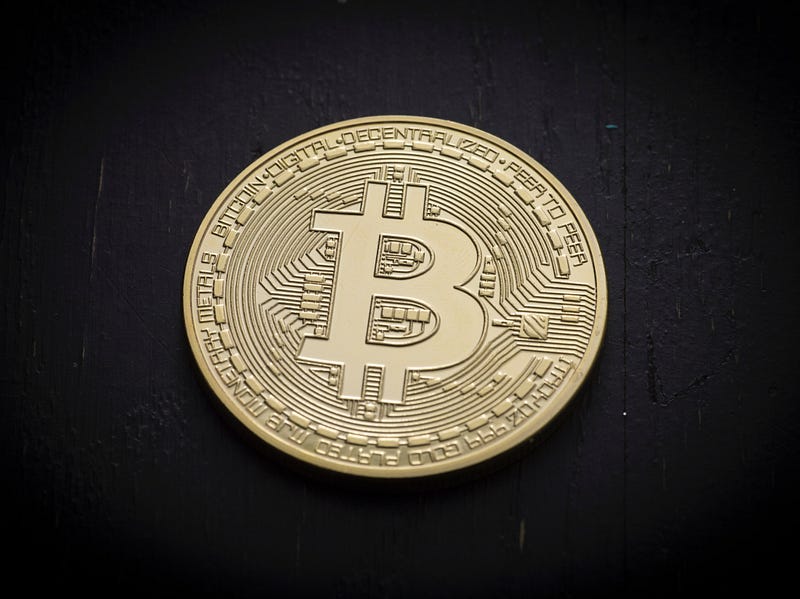
Photo by Thought Catalog on Unsplash


Cash flow challenges

News of the payment issue emerged via employee reports online on Monday. The suspension encompassed both performance-based and basic wages, affecting all Bitmain personnel. The dire situation has marked a critical juncture for the ASIC manufacturer, which once held a commanding 70% share of the global Bitcoin mining machine market.

Chinese crypto reporter Colin Wu had also outlined the firm’s difficulties on social media. In a subsequent post on X (formerly Twitter), Wu stated:

”On the afternoon of October 7, Bitmain has repaid September wages, and stated that it only did not pay the performance salary of some people. It has also been repaid, and the basic salary has been released normally on September 30.”

More recent reports by local news media in China indicated that the firm has proceeded to pay part of its staff salaries.


Internal conflicts

Bitmain’s financial woes are not new. The company has been plagued by internal conflicts between its co-founders, Wu Jihan and Zhan Ketuan, resulting in a debilitating power struggle that severely eroded its market dominance. Earlier efforts to restore financial stability included a restructuring of employee compensation in the first quarter of this year. Under this reform, the original fixed salary was divided into a basic salary and a performance-based component linked to rank.

Regrettably, these measures have proven insufficient to reverse Bitmain’s fortunes. In a company announcement issued in September 2023, Bitmain acknowledged that its operating cash flow had plunged into negative territory, and the performance of its mining machines fell short of expectations.

Consequently, the company suspended employee salaries, with the prospect of resuming payments contingent upon developments after the October 7 holiday.

It emerged in April that the firm had been fined for tax code violations in China.


Core Scientific deal

In August, Bitmain explored the possibility of acquiring an equity stake in Core Scientific, a prominent North American crypto-mining company, as part of Core Scientific’s bankruptcy restructuring plan. This proposed agreement, pending final documentation and court approval, entails Bitmain acquiring 27,000 S19j XP Bitcoin miners from Core Scientific.

The Core Scientific deal represents a potential lifeline for Bitmain. Nevertheless, the suspension of employee salaries underscores the prevailing uncertainty surrounding the company’s future. Whether the completion of the Core Scientific transaction will usher in the much-needed financial turnaround for Bitmain remains uncertain as the company grapples with its ongoing financial challenges.

Bitmain’s decision to suspend employee pay highlights the gravity of the situation and the urgency of finding a sustainable solution to its financial woes. The outcome of the Core Scientific deal could determine Bitmain’s fate as it strives to regain its once-dominant position and secure its financial stability. In the meantime, the firm continues to develop the latest generation of Bitcoin mining equipment.
More to Read
View All
Web3 & Enterprise·

Sep 04, 2023

Ethereum Co-Founder Highlights User-Friendly Crypto Wallets at Ethcon Korea 2023

Ethereum Co-Founder Highlights User-Friendly Crypto Wallets at Ethcon Korea 2023Ethereum co-founder Vitalik Buterin delivered a keynote speech last Friday at Ethcon Korea 2023 — a hackathon and conference sponsored by Ethereum for the Korean Ethereum community in Seongsu-dong, Seoul — where he emphasized the importance of making crypto wallets user-friendly by striking a balance between user familiarity and decentralization.Photo by Nenad Novaković on UnsplashEnhancing security and convenienceParticipating in the event via video call, Buterin explained Ethereum’s ERC-4337 account abstraction upgrade during his speech, which was livestreamed on the Ethcon Korea YouTube channel. “The goal of account abstraction — a field that many wallets are currently working on developing — can be broadly categorized into two areas: security and convenience,” he said.Deployed on the Ethereum mainnet in March, the ERC-4337 is a standard that makes it possible to transact and create contracts in a single contract account, paving the way for more user-friendly crypto wallet designs. At its core are features such as easy account recovery, improved security, and customized services like auto-pay and bundled transactions. This provides a more convenient alternative to other crypto wallets, which mostly rely on private keys for account access, complicating setup and recovery procedures especially if a user loses their seed phrase.“Wallets must fundamentally be secure in a decentralized way, but there should also be ways to recover passwords as hardware wallets do,” Buterin stated. “However, many projects still rely on methods such as account recovery via email.”Simplifying transactionsAnother change introduced through the update is gas flexibility. Gas is a fundamental fee that users must pay to conduct transactions or execute a contract on Ethereum. Wallets backed by ERC-4337 can pay gas fees with any Ethereum utility tokens and more, including USD coins (USDC).From a convenience standpoint, Vitalik argued, it is very useful for first-time Ethereum users to be able to pay for gas with the USDC they already have. Sponsored transactions, where applications pay for fees, will be a great way to attract new users, especially for non-financial applications.He further elaborated that in order to transition from being user-friendly but centralized to more decentralized, a combination of a faster but precarious centralized approach with a slower but safer decentralized approach is required.He also stressed the importance of utilizing the various options available in modern technology concerning convenience, security, and decentralization, saying that it is essential to utilize these options effectively, continuously improve them, and take advantage of the benefits.Since 2019, Buterin has used Ethcon as a platform to announce Ethereum’s development roadmap and major technical updates.

news
Policy & Regulation·

Nov 30, 2023

Regulatory breach sees Philippines initiate blockade on Binance

Regulatory breach sees Philippines initiate blockade on BinanceIt’s been a very challenging year for global crypto platform Binance — one that doesn’t appear to be improving with the latest move to block access to the platform in the Philippines.Photo by Alexes Gerard on UnsplashUnlicensed to tradeIn a noteworthy development, the Philippines Securities and Exchange Commission (SEC) declared on Tuesday its intention to block access to the Binance platform due to regulatory irregularities.The SEC asserted in a statement that Binance lacks the necessary license to operate in the Philippines, cautioning the public against engaging in investment products on the platform. The regulator stated:”BINANCE is NOT REGISTERED as a corporation in the Philippines and OPERATES WITHOUT THE NECESSARY LICENSE AND/OR AUTHORITY.”The regulatory body is actively working to have Binance blocked in the country, citing concerns about unregistered investment products. The impending ban is set to take effect within three months, allowing investors a window to exit their positions held through Binance.Pushback on advertisingIn addition to its attempts to block access to the platform, the SEC has also approached tech giants Google and Meta (Facebook’s parent company), requesting the blocking of Binance advertisements on their platforms within the country. This is a response to social media campaigns designed to attract Filipino investors to the embattled cryptocurrency exchange. While users can still download the Binance app from Google and Apple app stores in the Philippines, the extent of investor activity in the country remains uncertain.Follows U.S. regulatory actionThese actions in the Philippines come hot on the heels of Binance’s CEO Changpeng Zhao (CZ) stepping down and pleading guilty in a U.S. money-laundering case. The Philippines’ ban adds to Binance’s challenges as it aims to expand in Southeast Asia amid legal troubles in the U.S. and restrictions on operations in China.Over the course of a three-month period earlier this year, the world’s largest crypto exchange platform lost its ability to trade in Germany, Canada, Belgium, the Netherlands and Cyprus. Additionally, French authorities have been investigating the platform for alleged illegal provision of digital asset services and aggravated money laundering.Facing regulatory pushback in the U.S. and Europe, Binance appeared to be concentrating on making further in-roads in Asian markets over the course of this past year. It had recently pursued a joint venture with Gulf Energy in Thailand to launch a new digital assets exchange.Media reports previously suggested that Binance was considering acquiring a Philippine company to obtain operating licenses in the country. The SEC’s move to ban the platform follows a warning issued last year against using Binance, and it represents a broader effort to regulate the cryptocurrency sector and protect the public interest.The recent guilty plea by CZ for violating U.S. money laundering laws has added to the legal woes of the cryptocurrency giant. CZ agreed to personally pay $50 million in penalties as part of a $4.3 billion settlement to resolve investigations into Binance’s practices. He may also still face prison time in the U.S. In the Philippines, the SEC warns that Section 28 of the Securities Regulation Code (SRC) allows the application of a fine of up to five million pesos ($90,000) and a maximum prison term of 21 years.

news
Markets·

Oct 30, 2025

Four in 10 wealthy UAE investors hold crypto, survey finds

Wealthy investors in the United Arab Emirates (UAE) are warming to cryptocurrencies while largely bypassing traditional private banks, a new survey shows. The poll, conducted by Swiss wealth manager Avaloq and reported by CoinDesk, found that roughly four in 10 high-net-worth individuals in the country hold digital assets, though only about 20% used conventional wealth managers to make such allocations. The survey gathered responses from 3,851 investors and 456 wealth professionals.Photo by Atikah Akhtar on UnsplashA rising tide in crypto wealthThe findings land amid a broader run-up in crypto fortunes. Henley & Partners’ 2025 Crypto Wealth Report, published in September, estimates 241,700 crypto millionaires worldwide this year—about 40% more than in 2024. Even so, UAE respondents in Avaloq’s poll voiced caution, citing the market’s sharp swings as a primary deterrent. Operational hurdles compound that wariness. Managing wallets, safeguarding private keys, and arranging custody remain friction points for would-be buyers. Among those who remain on the sidelines, Avaloq found that volatility topped the list of deterrents (38%), followed by limited understanding (36%) and distrust of trading platforms (32%). Younger cohorts drive crypto uptake, advisor shiftsFamily dynamics are increasingly driving crypto adoption. Younger members of ultra-wealthy households are introducing parents and grandparents to digital assets, Avaloq’s UAE survey found. Meanwhile, 63% of investors have either changed wealth managers or are considering doing so, often because they feel their questions about crypto are not being adequately addressed. Akash Anand, head of Middle East and Africa at Avaloq, described the moment as one of growing client curiosity met by a slow institutional response, prompting private banks to accelerate work on digital asset services. Dubai’s growing role as a crypto hub will again be on display in December, when it hosts Binance Blockchain Week 2025. The two-day conference, slated for Dec. 3–4, features appearances by Binance co-founder Changpeng Zhao, Strategy Chairman Michael Saylor, Ripple CEO Brad Garlinghouse, and Solana Foundation President Lily Liu. A debate between Zhao and long-time crypto skeptic Peter Schiff on Bitcoin’s merits versus tokenized gold is also expected, after Zhao invited Schiff to participate via X. Combined, the survey data and recent developments depict a UAE wealth market in the early stages of engagement with digital assets. While enthusiasm is building among younger investors and high-profile initiatives continue to draw attention, concerns about volatility and management complexity remain barriers to entry. The extent to which established wealth firms and new entrants can address those concerns will shape the next phase of the market’s growth. 

news
Loading