Top

Crypto Trading Surges in South Korea While Global Trends Decline

Markets·August 04, 2023, 7:25 AM

Despite a global decrease in cryptocurrency trading on centralized exchanges, South Korea has witnessed a significant increase in trading activities. Upbit, the nation’s largest crypto exchange, climbed to the second spot in global spot trading volume for July.
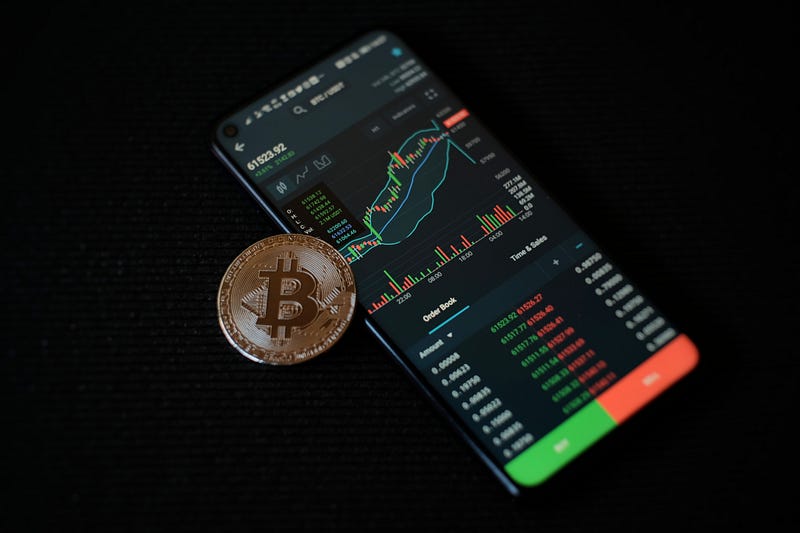
Photo by Viktor Forgacs on Unsplash


Plunges in global trading volumes

According to an Exchange Review for July 2023 by CCData, a virtual asset data provider, the total global spot trading volumes on centralized exchanges dropped to $515 billion in July, a 10.5% decrease compared to the previous month, marking the second lowest level since 2019. Additionally, derivative trading volumes fell by 12.7% to $1.85 trillion, the second-lowest since December 2020.

Experts attribute these declines to increased regulations on cryptocurrencies worldwide, such as legal crackdowns on exchanges like Binance and Coinbase by the US Securities and Exchange Commission.

Binance, the world’s largest cryptocurrency exchange, recorded a trading volume of $208 billion with a market share of 40.4% in July, marking a five-month consecutive decline, although it still maintained its title as the largest platform worldwide for crypto spot trading.

Coinbase — the largest cryptocurrency exchange in the US — and global exchange OKX also saw a decline in trading volume of 11.6% and 5.75% to $28.6 billion and $29 billion, respectively.


Crypto exchanges flourish in Korea

Contrarily, the majority of major crypto exchanges in Korea experienced significant growth in trading volume. Upbit’s trading volume skyrocketed by 42.3% to $29.8 billion in July, surpassing Coinbase and OKX for the first time to claim the second spot in global cryptocurrency exchanges behind Binance.

Other Korean exchanges also saw remarkable increases in trading volume. Bithumb recorded $6.09 billion, a surge of 27.9%, while Coinone’s volume rose by 4.72% to $1.39 billion.

These spikes in trading volume can be accredited to an increased interest in cryptocurrencies and blockchain technology among citizens throughout the country, despite global regulatory challenges impacting the market. As the cryptocurrency industry continues to evolve, Korean exchanges are showing resilience and maintaining their competitive positions on the global stage.


More to Read
View All
Markets·

Jun 13, 2024

Turkish lira becomes third largest fiat currency in crypto trading

The Turkish Lira (TRY) has become the third largest fiat currency by volume in the cryptocurrency market, according to a report by Kaiko. This milestone was reached as TRY's share of the crypto market hit an all-time high of 19% in early June. The increase in volume is attributed to the country's economic challenges, notably its high inflation rate, which has surpassed 70%, making the lira one of the most volatile fiat currencies globally.Photo by Afdhallul Ziqri on UnsplashFactors influencing the increaseThe shift in the Turkish lira's position in the crypto market is partly due to increased foreign exchange volatility and currency devaluation, common catalysts for cryptocurrency adoption in developing economies. Additionally, geopolitical factors such as a record number of elections and diverging monetary policies have intensified market fluctuations. This environment has favored cryptocurrencies like Bitcoin, which reached new highs against the lira in recent months. For instance, Bitcoin escalated to 2.3 million TRY in March from 979,000 TRY in October 2023. The recent adjustments in cryptocurrency trading platforms, particularly Binance's delisting of certain fiat trading pairs due to banking issues, have also increased the dominance of TRY in crypto transactions. This series of events underscores the growing interconnection between traditional and digital finance markets, highlighting the increasing role of cryptocurrencies in regions facing economic instability. 

news
Policy & Regulation·

Nov 22, 2023

Crypto Travel Rule solutions provider CODE obtains ISO 37301 certification

Crypto Travel Rule solutions provider CODE obtains ISO 37301 certificationCODE, a Travel Rule solutions provider and joint venture co-founded by Korean cryptocurrency exchanges Bithumb, Coinone and Korbit, announced on Wednesday (local time) that it has obtained the ISO 37301 certification for compliance management systems (CMS) from the Korea Compliance Initiative (KCI).Photo by Héctor J. Rivas on UnsplashBoosting complianceISO 37301 is an international standard that outlines the requirements and guidelines for an organization in establishing, developing, implementing, evaluating, maintaining and improving a CMS. It provides a framework for organizations to ensure that they are following all relevant and applicable laws, regulations, codes of conduct and more to exercise good governance, transparency and accountability.CODE has taken the initiative to bolster its CMS to provide more secure and reliable Travel Rule solutions by analyzing and managing compliance risks. The firm’s CEO Lee Sung-mi is responsible for overseeing these efforts as the recently appointed head of compliance. Through these measures, the company explained that it has been capable of building a system to comply with strict international standards.The Travel Rule under the Financial Action Task Force’s (FATF) Recommendation #16 outlines that virtual asset service providers (VASPs) must share certain personal information about customers — including names and account numbers — when facilitating crypto transactions that exceed a certain amount.CODE is also running mandatory training sessions and various programs for all employees to ensure adherence to compliance requirements. In particular, the firm operates a system to monitor Travel Rule compliance risks that may arise during cryptocurrency deposits and withdrawals.“Beyond establishing a robust compliance management culture as a Travel Rule solution provider, we will continue to work with our corporate members to ensure that this culture can be more widely adopted across the crypto industry,” said Lee Sung-mi.Contributing to anti-money launderingCODE has also recently teamed up with global blockchain analytics and crypto compliance solutions provider Elliptic to help Korean VASPs adapt to the evolving international regulatory landscape for anti-money laundering (AML) and the crypto Travel Rule.

news
Policy & Regulation·

Oct 05, 2023

KDIC Seizes Crypto from Debtors Linked to Losses at Financial Firms

KDIC Seizes Crypto from Debtors Linked to Losses at Financial FirmsDuring the first half of this year, the Korea Deposit Insurance Corporation (KDIC) tracked the cryptocurrency holdings of 1,075 individuals and debtors responsible for causing losses at financial entities, including savings banks, according to documents obtained by local news outlet Herald Economy, from the office of lawmaker Kim Han-kyu, a member of the National Assembly’s National Policy Committee. From this scrutiny, KDIC identified 29 wrongful cases and proceeded to confiscate cryptocurrencies in 16 of those instances.KDIC is a semi-state body that has been instrumental in tracing and recovering assets from culpable employees at troubled financial firms and debtors in arrears. Meanwhile, methods for hiding wealth have become more sophisticated, typically unfolding behind the curtain.Photo by Georg Bommeli on UnsplashFirst crypto seizureOut of these individuals, 900 had taken out loans of at least KRW 3 billion ($2.2 million) from beleaguered financial institutions, while the remaining 175 were employees of these institutions, held responsible for their failures. This occasion represents the KDIC’s first seizure of virtual assets.Until recently, the KDIC struggled to reclaim hidden assets funneled into cryptocurrency exchanges, given their limited authority to seek documentation. KDIC’s purview mainly extended to requesting information from public institutions, banks, insurance companies, and securities firms. However, KDIC has now found a way to seize crypto assets by investigating the bank accounts linked to these exchanges. In Korea, crypto exchanges facilitating Korean won trades are legally mandated to secure real-name accounts from banks.Call for expanding KDIC’s authorityGiven the evidence of using cryptocurrencies to conceal wealth, many suggest that amendments to the Depositor Protection Act are necessary, enabling KDIC to directly request relevant data from exchanges and recover more hidden assets effectively.Furthermore in August KDIC secured a court order allowing them to liquidate these assets. Following this successful confiscation, the debtors’ cryptocurrencies have been frozen in their wallets, rendering them unresponsive to any market shifts. Discussions are now underway regarding the method of liquidating the debtors’ cryptocurrencies at market value on exchanges. This includes deliberations on whether KDIC will assume ownership of the cryptocurrencies and directly proceed with their sale.In a chat with Herald Economy, Lawmaker Kim emphasized the need for KDIC to have the authority to access information from virtual asset service providers. This would enable them to more effectively retrieve assets from responsible debtors. Kim further stated that such steps would enhance both the efficiency of debt collection and overall market fairness.

news
Loading