Top

Korean Financial Watchdog Warns Investors Against Crypto Scams

Policy & Regulation·August 03, 2023, 7:29 AM

The South Korean Financial Supervisory Service (FSS) issued a press release today to warn investors against fraudulent cryptocurrency investment schemes.


406 reported scams in two months

Between June 1 and July 30, the FSS received a total of 406 reports of crypto scams that lured individuals with false promises of high returns. Some of these perpetrators went to the extent of misrepresenting themselves as employees at crypto exchanges or project foundations. The FSS installed a virtual asset scam report center two months ago, which will run until this year’s end, as an interim measure before the implementation of the Virtual Asset User Protection Act in July of next year.

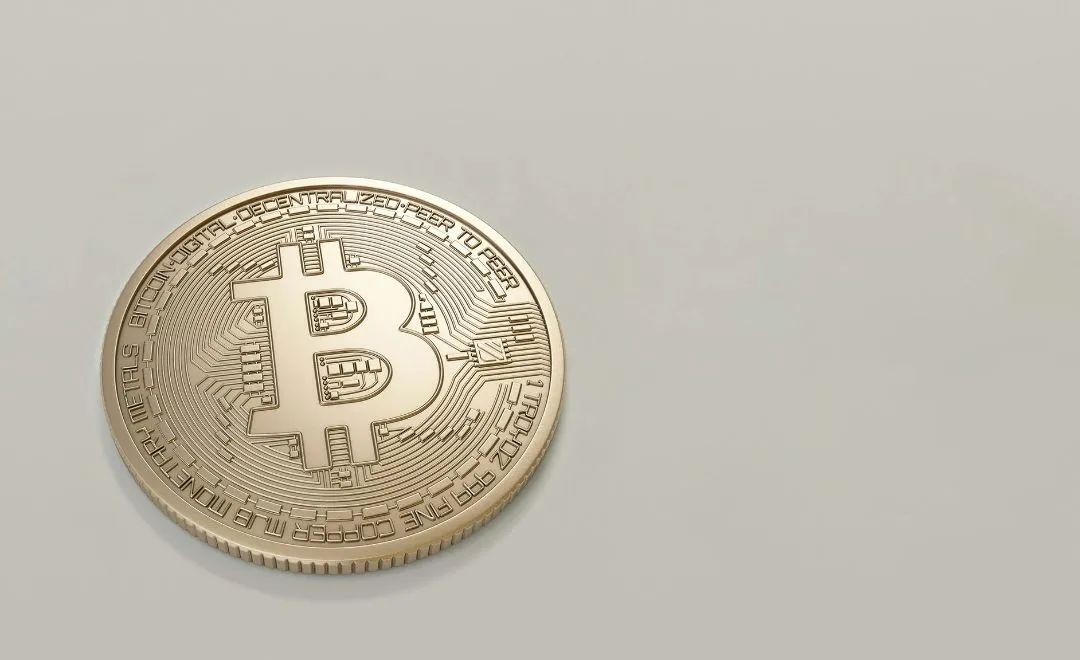
Photo by Growtika on Unsplash


Six scam types

To strengthen its efforts, the FSS has shared six reported case types with the public and has issued investment warnings accordingly. Investors are advised to exercise caution when dealing with unlisted cryptocurrencies at low prices, as accurately determining their value can be challenging. Similarly, the FSS cautions against investing in cryptocurrencies sold at low prices with trading restrictions, as this could lead to difficulties in liquidating tokens if the price drops.

The FSS also emphasizes the importance of being wary of cryptocurrencies with low trading volumes, as they can experience drastic price fluctuations due to limited activity. To prevent falling victim to impersonation scams, investors are urged to be cautious of individuals claiming to be employees of domestic virtual asset service providers or presenting official documents to solicit investments.

Furthermore, the financial watchdog stresses the risks associated with suspicious requests associated with electronic wallets, particularly connecting to them via unsolicited emails, as they pose a high risk of being hacked.

Lastly, the watchdog warns against falling for promises of high returns linked to cryptocurrencies endorsed by celebrities or well-known companies, as these may be illegal deposit-taking activities performed by unlicensed entities. The FSS advises investors to remain vigilant, conduct thorough research, and approach investment opportunities with skepticism to protect themselves from potential crypto scams.


More to Read
View All
Policy & Regulation·

Jun 16, 2023

Tether Critics Point to Previous Chinese Securities Backing

Tether Critics Point to Previous Chinese Securities BackingUSDT stablecoin issuer Tether (USDT) has long faced persistent scrutiny and criticism due to the lack of transparency surrounding the assets backing their digital currencies. The latest allegations come in the form of a report by Bloomberg on Friday suggesting that the world’s largest stablecoin was once backed by securities issued by Chinese companies.Photo by Manuel Joseph on PexelsNYAG releases documentsThese findings were based on documents made public by the New York Attorney General (NY AG). The documents disclosed that Tether had listed securities issued by China’s state-owned Industrial and Commercial Bank of China, China Construction Bank, and Agricultural Bank of China as part of its reserves backing the USDT stablecoin.Rumors about USDT’s exposure to Chinese securities have circulated for a number of years. In 2021, a Bloomberg research report revealed that Tether’s reserves reportedly included billions of dollars in short-term loans to China-based companies, as well as a significant loan to the collapsed crypto lender Celsius Network.However, in February 2021, Tether reached a settlement with the NY AG’s office over accusations of providing misleading information about its reserves and losses. To address these concerns, Tether handed over documents such as letters, bank accounts, reserve holdings, and wallet addresses through the law firm Steptoe.Attestation reportTether’s latest attestation report for Q1 2023, released on May 10, offered further details about its reserves. According to the report, Tether’s reserves were valued at $81.8 billion at the end of the quarter, a significant increase from the earlier period of $14.8 billion. These reserves consisted of $53 billion in US Treasuries, $1.5 billion in Bitcoin, and $5.3 billion in loans described as “over-collateralized.”The disclosure of Tether’s previous backing by Chinese securities adds another layer of complexity to the stablecoin landscape, raising questions about the risk exposure and potential impact on the stability of these digital assets. Using Chinese commercial paper to back a US dollar stablecoin is a risky endeavor.It raises the same issues as we’ve seen with the plethora of crypto lenders that went bankrupt in 2022. In those cases, they were using customer money to speculate and turn a profit. That’s fine when it works but when it goes wrong, it is customers who suffer. In its defense, Tether has stated that it only held A1 rated banking sector Chinese commercial paper in 2022 in state-owned Chinese companies like Industrial & Commercial Bank of China Ltd., China Construction Bank Corp., and Agricultural Bank of China Ltd. It reduced this exposure to zero later that year.With the cryptocurrency community and regulators seeking greater transparency and accountability, the industry is likely to face increased scrutiny and calls for enhanced regulations to ensure the integrity of stablecoin operations moving forward.As regulators continue to assess and navigate the evolving crypto market, it remains to be seen how the industry will address these concerns and establish clearer guidelines for stablecoin issuers to ensure the trust and confidence of market participants.

news
Web3 & Enterprise·

Jan 26, 2024

HashKey Capital and FTSE Russell introduce crypto index suite

HashKey Capital, a Singapore-based crypto fund manager, and FTSE Russell, a subsidiary of the London Stock Exchange Group (LSEG), have collaboratively launched a series of indices designed to track cryptocurrencies. Three indicesRevealed on the FTSE Russell website on Wednesday, these three indices provide traders with the ability to monitor diversified baskets of digital assets aligned with various investment strategies. They cater to nuanced preferences across different crypto segments and market capitalizations. The flagship index in this suite is the FTSE Custom Digital Asset Top 20 Index, tracking the top 20 crypto assets based on market capitalization. This index is positioned to accurately reflect more than 90% of the overall performance of the digital asset market, offering investors insights into the dynamics of the most significant players in the crypto space.Photo by Markus Winkler on UnsplashFocus on infrastructure and application layerBeyond tracking market capitalization leaders, the suite includes indices with a specific focus on the crypto ecosystem's infrastructure layer (FTSE Custom Digital Asset Infrastructure Index) and application functionalities (FTSE Custom Digital Asset Application Index). One of them, the infrastructure index, zeroes in on digital assets forming the infrastructure layer, including smart contract platforms, protocol interoperability and distributed computation and storage. Meanwhile, the FTSE Custom Digital Asset Application Index concentrates on digital assets associated with application functionalities, such as those linked to staking instruments and decentralized finance. From Wednesday, these indices have been made accessible on the FTSE Russell website, with plans for future availability through major data providers like Bloomberg, Factset, LSEG Data & Analytics, Morningstar and S&P Capital IQ. U.S. ETF approvalThe introduction of these indices follows the recent milestone approval by the Securities and Exchange Commission (SEC) of spot bitcoin ETFs in the United States. It’s likely that the milestone ETF approval in the largest capital market is having a knock-on effect, proving to be a catalyst for other such offerings implicating the intertwining of crypto and traditional finance on an international basis. These products offer investors a more accessible entry point into the crypto market's largest asset, currently boasting a market capitalization of approximately $780 billion. Industry watchers anticipate the potential approval of a U.S. spot ether ETF later in 2024, with the SEC expected to make rulings on proposed funds by May. Deng Chao, managing director of HashKey Capital, noted a significant surge in demand from investors seeking to diversify their portfolios beyond established cryptocurrencies. This move aligns with broader market trends, as investors increasingly explore opportunities in diverse crypto assets. Notably, these index launches follow FTSE Russell's partnership with Grayscale Investments in October, aimed at enhancing crypto diversification. The earlier collaboration focused on various crypto sectors, including currencies, smart contract platforms, financials, consumer and culture and utilities and services. This development comes on the heels of HashKey Group, the Hong Kong-headquartered parent company of HashKey Capital, securing $100 million in a Series A funding round at a $1.2 billion valuation. OKX Ventures participated in the funding round, signaling strong support for HashKey Group's plans to accelerate product diversification in its Hong Kong business and drive compliant and innovative development globally.   

news
Policy & Regulation·

Oct 30, 2024

Bhutan moves $66M in Bitcoin to Binance

The Royal Government of Bhutan has moved $66 million in Bitcoin (BTC) to global crypto exchange Binance. That’s according to blockchain data analytics firm Arkham Intelligence, outlining that the assets were moved to Binance over two separate transactions. The firm took to the X social media platform on Oct. 29 to highlight the digital asset transfer. In its X post, the firm wrote:”Crypto wallets belonging to the Royal Government of Bhutan moved $66.55M BTC to Binance this morning. The last time they deposited to exchanges was 4 months ago, at the start of July.”Photo by Moose Photos on PexelsSell-off concernsSome crypto community commentators have expressed concern of a sell-off given that the nation nestled in the Himalayas still has a holding of 12,456 Bitcoin, worth in the region of $900 million. The transfer was made on a day in which Bitcoin reached a unit price in excess of $73,000.  Arkham outlined that geographical data suggests that Bhutan’s Bitcoin mines remain active. On Oct. 29, they had accumulated $600,000 worth of Bitcoin mining rewards on-chain.  In this latest market activity, the Bhutanese began selling when the Bitcoin unit price had exceeded $70,000. As Bitcoin reaches towards new all-time-high pricing, Bitcoin whales often take profits. Mining Bitcoin since $5KIt emerged in 2023 that Bhutan had been quietly mining Bitcoin over the course of a number of years, since the leading digital asset had a unit price of around $5,000. The commercial activity has been enabled via Druk Holding and Investments (DHI), the commercial arm of the Royal Government of Bhutan. The Asian nation has ample hydroelectricity resources, being the only carbon-negative country in the world. Consequently, all its Bitcoin mining is carried out using hydro. While mining activity had been ongoing for a number of years and had largely gone unnoticed by the industry, an entanglement between DHI and failed crypto lenders BlockFi and Celsius brought more attention onto the Bhutanese holding company’s activities relative to crypto.  LawsuitsDHI was sued by BlockFi with the action subsequently voluntarily dismissed. In the case of Celsius it withdrew around $65 million from the platform prior to Celsius declaring bankruptcy. As a consequence, Celsius is currently suing DHI to claw back the funds that were removed from the platform. In 2023 Singaporean Bitcoin mining firm Bitdeer entered into a partnership with DHI with a view towards jointly developing green digital asset mining operation within the Kingdom of Bhutan. At the time, DHI CEO Ujjwal Deep Dahal said that the partnership formed part of an overall strategy to ensure that Bhutan took its place at the forefront of global innovation. Arkham Intelligence outlined on X that in H2 2023, Bhutan’s Bitcoin mining operations were producing in the region of 26 Bitcoin per day, or 780 Bitcoin per month. However, over the past three months, that mining rate has decreased to 8.6 BTC per day or 260 BTC per month. Arkham suggests that the Bitcoin halving, together with the increase in the Bitcoin hashrate, explains the reduced output, although it speculated that some unknown issue with Bitcoin mining rigs may also be a contributing factor. 

news
Loading