Top

KuCoin Halts Bitcoin and Litecoin Mining Pools Amidst Strategic Shift

Web3 & Enterprise·August 03, 2023, 12:16 AM

In an announcement on Tuesday, Seychelles-based cryptocurrency exchange KuCoin revealed its decision to temporarily suspend its Bitcoin and Litecoin mining pools, effective from 16:00:00 on August 15, 2023 (UTC).
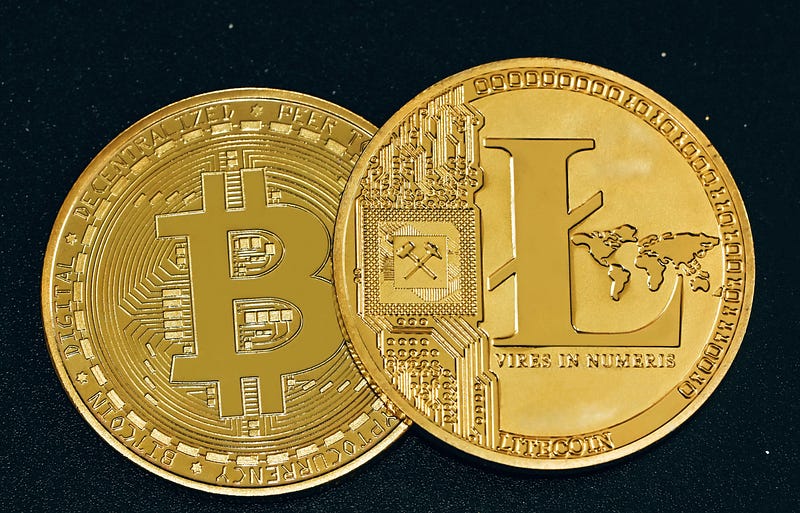
Photo by Traxer on Unsplash


Changing business strategy

This move is attributed to KuCoin’s evolving business strategy, although specific details remain undisclosed. The exchange expressed its regret for any inconvenience caused and extended gratitude for users’ continued support.

It appears that the company wants to focus on core business activities and for that reason, it’s terminating its mining pool activity. That said, the discontinuation was described in its statement as being “temporary” although that has been left open-ended with no indication of if or when it would bring the service back into operation.

The company is open to the idea of revisiting the facilitation of mining pools in the future. “We will see if it is needed to restart based on the market and users’ demand in the future,” a spokesperson for the company told The Block.

To ensure miners’ uninterrupted earnings during the suspension, KuCoin advised users engaged in cryptocurrency mining to transition their Bitcoin (BTC) and Litecoin (LTC) miners to alternative mining pools before the specified suspension date. Additionally, the exchange emphasized the importance of backing up and preserving mining records and related data, recommending users complete these actions before August 27.

Presently, the KuCoin Bitcoin mining pool maintains a hash rate of 9.08 exahash per second (EH/s), while the Litecoin pool operates at 3.90 terrahash per second (TH/s). These figures contribute to the broader hash rate landscape, where the entire Bitcoin network boasts a hash rate of 349.19 EH/s, compared to the Litecoin network’s 792.16 TH/s.


Workforce reduction

It is clear that the company is in the process of adjusting to current market conditions. Last week, rumors surfaced of a plan to effect a workforce reduction. That prompted KuCoin’s CEO Johnny Lyu to respond, clarifying that the exchange’s operations are running smoothly. Dismissing layoff speculation, Lyu highlighted the exchange’s steady expansion and strong growth as demonstrated by the H1 2023 report. The report showcased an increase in users and new listings, underscoring the platform’s vitality and development.


Mandatory KYC

In recent months, KuCoin has also implemented mandatory Know Your Customer (KYC) requirements, obligating users to undergo verification processes. Existing customers who fail to complete KYC procedures will be unable to make deposits. With over 20 million registered accounts, the exchange felt that it needed to improve on its level of regulatory compliance and security measures.

It’s highly likely that an action taken by authorities in New York in the United States in March prompted KuCoin’s decision to tighten up on KYC. At that time, the New York Attorney General said that action was being taken against KuCoin due to its failure to register as a securities and commodities broker-dealer.

As KuCoin undergoes these changes, the suspension of its mining pools raises questions about the broader implications for its business strategy and the potential impact on miners within its ecosystem. That said, the firm is not alone in making changes, with most crypto exchanges having had to adjust to a business and regulatory environment that has changed considerably since the 2021 crypto bull run.


More to Read
View All
Web3 & Enterprise·

Jan 26, 2024

Bakkt targets business expansion in Asia

Bakkt Holdings, a software as a service (SaaS) and API platform for owning and trading cryptocurrency, has unveiled its plans for an extensive expansion into Asia and other crypto-friendly international jurisdictions. Focus on Hong Kong and SingaporeAccording to a recent press release, Bakkt has broadened its footprint into two additional Asian markets, namely Hong Kong and Singapore. This strategic expansion aligns with the company's key objectives for 2024. Data from South Korean Web3 advisory and research firm Tiger Research suggests that Asia is poised to become the epicenter of the global crypto landscape within the next five years. In particular, Singapore and Hong Kong have emerged as dominant forces in the Asian crypto landscape. Their well-defined regulations, favorable tax structures and status as international financial hubs have attracted major players in the crypto industry. The announcement emphasizes Bakkt's commitment to making cryptocurrencies more accessible globally. The company envisions that crypto has the potential to enhance financial inclusivity and connect communities within the global economy. CEO Gavin Michael expressed excitement about the opportunities these regions present, highlighting the company's dedication to reaching millions of people through its crypto services.Photo by Jigar Panchal on UnsplashBroader global expansionBakkt's international expansion is not limited to Asia. Additionally, the company is targeting Latin America. Brazil, Argentina and Mexico lead the way in the adoption of crypto assets in Latin America. The digital assets solutions firm has successfully established crypto trading and on-ramp capabilities in Brazil and Guatemala, adding to its existing operations in Argentina and Mexico. Furthermore, Bakkt has plans to establish a presence in the United Kingdom and Australia in the coming months.   The decision to expand into these specific jurisdictions is influenced by the rapid growth of the crypto economy and the regulatory clarity observed in these regions. Despite global market fluctuations and recoveries, certain countries continue to welcome crypto-related businesses with robust regulatory frameworks. In collaboration with Bakkt Holdings, Hapi and SogoTrade have launched new crypto trading capabilities, expanding their offerings across Asia, Europe, North America and South America. Hapi, a stock trading platform, has extended its crypto trading services to Brazil, Guatemala and Spain, deepening its relationship with Bakkt. On the other hand, SogoTrade, a digital brokerage, has initiated crypto trading in Hong Kong and Singapore, marking the beginning of its foray into Asian markets. Bakkt, established in 2018, is focused on providing institutional-grade custody, trading and on-ramp capabilities. The company positions itself as a partner for sustainable, long-term crypto involvement. The firm was established with Intercontinental Exchange (ICE), the owners of the New York Stock Exchange, having a 66.7% controlling interest in the company.  Bakkt's strategic expansion into diverse international jurisdictions, including the Asian region, underscores its intention to enable global platform accessibility, together with its belief in the transformative power of cryptocurrencies within the financial landscape. 

news
Web3 & Enterprise·

Jul 11, 2025

Chinese FTX creditors push back against potential payout exclusion

A Chinese creditor of failed crypto exchange FTX has filed an objection on his own behalf and that of 300 others, with a U.S. bankruptcy court against a motion lodged with a view towards excluding payouts to creditors resident in China, Russia and 47 other foreign jurisdictions.Photo by Mariia Shalabaieva on UnsplashPotential distribution forfeitureThe FTX Recovery Trust, an entity formed in January to oversee the FTX bankruptcy estate following the adoption of a plan of reorganization, filed a motion last week seeking the approval of the Delaware Bankruptcy Court in the United States to adhere to new parameters related to the claims of creditors residing in restricted overseas jurisdictions. Besides China and Russia, the list of restricted jurisdictions also includes many within the Asian region, including  Afghanistan, Iran, Iraq, Macau, Myanmar (Burma), Nepal, North Korea, Pakistan, Qatar, Bangladesh and Cambodia. The FTX estate claims that these jurisdictions have regulations and laws restricting cryptocurrency transactions. In such cases, the FTX Recovery Trust claims that it cannot break local laws.  The difficulty for creditors resident in these countries is that if it's deemed illegal to reimburse them, they won’t qualify for the next scheduled distribution from the estate. In that instance, distribution forfeiture will be triggered. Taking to X on July 7, FTXcreditor.com, an entity that has been buying up bankruptcy claims from FTX creditors over the course of the FTX bankruptcy process, highlighted the peril that creditors residing in these restricted countries may face. It stated: “Distribution forfeiture is triggered at every distribution record date. The first record date already passed, if your claim is still tied to a local KYC when the stamp drops, that tranche is potentially gone.” Short timeframe for objectionsMr. Purple, a pseudonymous distressed assets bankruptcy professional who has been advocating for FTX creditors since the collapse of the business in November 2022, concurred with this view in a subsequent post on X. He pointed out that an extremely short timeframe has been given to affected creditors to respond. The motion was filed on July 2 and objections are due by July 15. $500 million in claims are at stake which accounts for 5% of all creditor claims. Of this, 82% of these claims belong to Chinese creditors. In a series of follow-up posts, the bankruptcy professional describes several procedural issues that he believes will result in it being incredibly difficult for affected creditors to have their funds reimbursed.Mr. Purple concludes:”The incentives are designed to be extremely risk averse in finding [a legal opinion] that paying creditors is legal! [The estate’s lawyers will] take the fees and say its not legal.” In his court filing, the Chinese creditor, who is resident in Singapore, stated: “My family holds four KYC-verified accounts with aggregate claims exceeding $15 million USD.” . . . “We have fully complied with every procedural requirement under the Plan. The proposed motion now jeopardizes our right to distribution in an arbitrary and inequitable manner.” On X, he asserted that the FTX Recovery Trust’s motion “constitutes an impermissible and material modification of the Plan.” Aside from legal action, the only other potential solution for creditors residing in restricted countries is to sell their claims. However, claims buyers are pricing in greater risk with lower rates and less favorable terms.

news
Web3 & Enterprise·

Nov 01, 2023

Backpack crypto wallet secures VASP license for crypto exchange in Dubai

Backpack crypto wallet secures VASP license for crypto exchange in DubaiThe Dubai Virtual Assets Regulatory Authority (VARA) recently granted a Virtual Asset Service Provider (VASP) license to the Backpack crypto wallet project. This development has paved the way for the launch of Backpack Exchange, a crypto trading platform.Details of the licensing approval and exchange launch were provided via a press release published by Backpack on Tuesday. The VASP license obtained by the fledgling startup is specific to crypto exchange services within the Dubai jurisdiction. Although it restricts Backpack from offering other virtual asset products and services, the company is embracing the opportunity via the newly launched exchange.Photo by Wael Hneini on UnsplashBackpack ExchangeThe new exchange, Backpack Exchange, incorporates cutting-edge technologies such as zero-knowledge (ZK) proof-of-reserves, multi-party computation (MPC) for custody and low-latency order execution, among other features. These technologies are poised to enhance the security, privacy and efficiency of the exchange in an effort to set it apart in the competitive crypto market.By all accounts, this will not be the last licensing announcement from Backpack. Over the past five months, Backpack Exchange has been working to secure operational licenses across multiple jurisdictions worldwide. This global expansion showcases the company’s interest in taking its product offering in the form of a secure and transparent trading experience further afield.Fiat-to-dApp bridgeWhile the wallet currently operates without specific regulatory oversight, it serves as a bridge for users to transition seamlessly from fiat to on-chain applications. Armani Ferrante, CEO and Co-Founder of Backpack, expressed his ambition to bring greater transparency to the crypto exchange sphere. He emphasized the importance of trust and verification in a sector often shrouded in opacity.Ferrante believes that leveraging cryptographic techniques such as zk-proofs, MPC, and state machine replication can elevate industry standards. Backpack Exchange aims to set a precedent by providing users with the tools and knowledge to verify transactions, ultimately fostering trust and confidence within the crypto community.Dubai’s VARA regulator has been actively enhancing its crypto-friendly regulatory environment. In February 2023, the regulator issued guidelines for VASPs operating within the emirate, emphasizing the importance of adhering to marketing, advertising, and promotion regulations. Violators may face fines ranging from 20,000 UAE dirhams ($5,500) to 200,000 dirhams, with repeat offenders potentially incurring fines as high as 500,000 dirhams.Solana ecosystem projectBackpack is very much a Solana-centric project. As a lead developer of the layer one blockchain, Ferrante is bullish in terms of future development on the Solana blockchain. His Mad Lads NFT project is the top-rated collection by market cap within the Solana ecosystem.In a podcast earlier this year, he outlined that the prospects for the blockchain are bright going forward. Backpack was first established by crypto infrastructure firm Coral, the creator of Anchor, one of the most popular smart contract developer frameworks for Solana.For existing Backpack and Mad Lads users (Mad Lads is a collection of 9,966 NFTs created by Ferrante), exciting prospects are on the horizon via the new exchange. Initial access to Backpack Exchange will be granted starting in November, with full public availability anticipated in Q1 2024. During this interim period, Backpack plans to introduce various trading functionalities, including derivatives, margin trading and cross-collateralization.

news
Loading