Top

Energy Theft Results in Crypto Mining Operation Shutdown in Borneo

Policy & Regulation·August 01, 2023, 12:47 AM

Authorities in Miri, a city on the island of Borneo in Malaysia, swiftly responded to a tip-off from the public, leading to the successful shutdown of an illegal cryptocurrency mining operation.

According to local news source, The Borneo Post, during a well-executed raid, 34 mining servers were confiscated, all of which were illicitly drawing power through cable tapping.
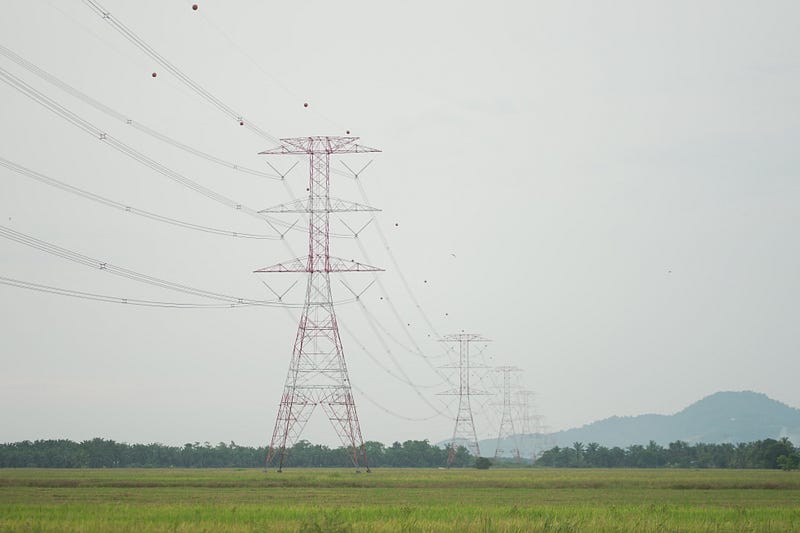
Photo by Muhammad Faiz Zulkeflee on Unsplash


Energy thieves turn to mining

While Borneo offers some of the lowest energy prices in Malaysia, it continues to struggle with the problem of energy theft. That issue has been highlighted via a recent utility announcement. Sarawak Energy, the local energy provider, estimated that the criminal operation caused losses of approximately 6,000 Malaysian ringgits ($1,300) worth of stolen electricity each month.

The rise of the Bitcoin mining industry in 2023 has brought about record-high network hash rates and network difficulty. While the growth of miners generally signifies the robustness of the Bitcoin network, smaller operators without the economies of scale enjoyed by larger corporations face challenges.

One such challenge is energy generation to power their mining servers. In pursuit of higher profit potential with lower electricity rates, illegal mining operators are drawn to stealing electricity from the grid. By eliminating energy expenses, these illicit miners can accumulate profits and offset equipment costs.


Fourth recent instance

The recent incident marks the fourth major operation in Senadin, where Miri is located, where authorities have cracked down on power theft cases related to cryptocurrency mining in 2023. So far, over 137 Bitcoin mining servers have been seized during these operations.

On the other side of the spectrum, legitimate crypto mining companies are actively securing funding to support their mining projects. Riot Platforms, for instance, invested a substantial $162.9 million to acquire 33,280 state-of-the-art equipment from MicroBT, a leading producer of mining machinery.

In another example, Coinbase extended a $50 million credit line to Canadian cryptocurrency firm Hut 8 Mining, facilitating its operations. Furthermore, Volcano Energy, a public-private partnership in El Salvador, secured an initial funding of $250 million for its ambitious Bitcoin mining venture.


Appropriate mining activity

The spate of recent instances of illegal mining in Borneo acts as a reminder of the importance of regulatory compliance and adherence to the law within the cryptocurrency industry. While the allure of lucrative profits may tempt some to engage in illegal activities, the consequences can be severe. Mining can be a positive societal force when applied within appropriate circumstances.

A move by the President of Kyrgyzstan last week to harness crypto mining in order to utilize energy that is otherwise being wasted at the central Asian country’s Kambar-Ata-2 hydropower plant serves as a recent example of a positive use case for the activity.

In Texas in the United States, crypto miners are collaborating with those that manage the local energy grid, turning off miners at times when the state is on the brink of suffering blackouts.

As the crypto mining landscape continues to evolve, it is essential for both authorities and legitimate operators to work together in finding sustainable solutions that ensure the industry’s growth while maintaining the integrity of the energy infrastructure.

More to Read
View All
Policy & Regulation·

Feb 27, 2024

Thai SEC seeks to revoke license of troubled Zipmex exchange

Zipmex, the Asian digital asset exchange, faces another setback as the Securities and Exchange Commission Board of Thailand (SEC Board) moves to recommend the revocation of its digital asset business license. This decision, announced last week, marks the latest in a series of challenges for the exchange, which has struggled to navigate the complexities of the crypto market's downturn.Photo by Oleksandr P on PexelsCapital requirements failureThe SEC's recommendation stems from Zipmex's failure to meet the increased net capital requirement and address deficiencies in its personnel and management structure. These shortcomings were deemed unacceptable by the regulatory body, prompting a 15-day ultimatum issued on Feb. 1. Earlier this month, the Commission ordered a halt to Zipmex operations, enforcing a temporary suspension until such time as the company had improved its financial position and applied needed changes to its management structure.Despite this window for compliance, Zipmex fell short of meeting the specified conditions, leading to the current proposal for license revocation and the imposition of stringent regulatory measures on Thailand's digital asset exchanges. Business suspension extensionDuring a meeting on Feb. 21, the SEC further resolved to extend Zipmex's business suspension, initiated on Feb. 1, and allowed clients to request asset returns on the exchange until March 11. Any unclaimed assets after this date will be required to be placed in a "trusted and secured system," with Zipmex obligated to report this to the SEC. Notably, even after the potential revocation of its license, Zipmex will retain its status as a limited company, subject to associated rights, responsibilities and liabilities, including the possibility of legal action. Zipmex's woes trace back to 2022 when it faced significant challenges due to exposure to failed crypto lender Babel Finance. In July of that year, the exchange suspended withdrawals for weeks due to concerns over its ties to crypto lenders Babel and Celsius, both facing financial distress. Although access to Trade Wallets was restored after three days, Z Wallets remained inaccessible into the following year. Failed Coinbase and V Ventures dealsIn the midst of its troubles, Zipmex attracted interest from Coinbase, albeit without success. While Coinbase made a strategic investment in Zipmex, the acquisition attempt did not materialize as initially intended. Furthermore, Zipmex's financial struggles led it to file for debt relief in Singapore in July 2022, further complicating its position in the market. The exchange's regulatory challenges continued as it faced scrutiny from the SEC regarding compliance with the Digital Assets Act. Despite attempts to secure acquisition deals, such as the proposed acquisition by Thai investor V Ventures, Zipmex has been unable to alleviate regulatory concerns or stabilize its operations effectively. Since obtaining its license from the SEC in January 2020, Zipmex has operated in Thailand, Indonesia, Singapore and Australia. However, its inability to address regulatory requirements and financial challenges has cast doubt on its future viability in these markets.  In November of last year, the company itself announced a temporary cessation of trading in Thailand while it worked towards becoming compliant within that jurisdiction. Earlier this month, Thailand’s SEC took legal action against Akarlap Yimwilai, the former CEO of Zipmex Thailand.

news
Policy & Regulation·

Aug 26, 2023

Binance Takes P2P Service Measures in Response to Sanctioned Russian Banks

Binance Takes P2P Service Measures in Response to Sanctioned Russian BanksGlobal crypto exchange Binance has removed the option for users to conduct transactions via sanctioned Russian banks on its peer-to-peer (P2P) platform, a decision that comes on the heels of a Wall Street Journal exposé published earlier this week, shedding light on the platform’s involvement in facilitating the movement of funds for Russian users.Previously, Binance’s peer-to-peer service featured five Russian banks under sanctions as a method for ruble transfers between users. However, the company swiftly acted to address potential compliance concerns. Fittingly, this latest news was also broken by the Wall Street Journal on Friday.Dmitry Sidorov on PexelsSailing too close to the windWhen approached regarding the omission of these banks, a Binance spokesperson stated: “We regularly update our systems to ensure compliance with local and global regulatory standards. When gaps are pointed out to us, we seek to address and remediate them as soon as possible.”The Wall Street Journal’s article outlined how Binance’s peer-to-peer platform facilitated ruble-to-crypto trades that frequently involved the sanctioned Russian banks, with Rosbank and Tinkoff Bank being prominent examples.These trades often utilized layers of intermediaries to convert funds from these banks into Binance balances, as detailed by various company resources, user screenshots, and messages in official chat groups. Despite these revelations, Binance’s exchange had continued to handle significant volumes of ruble trading, according to data compiled by digital asset research firm CCData.US DoJ probeBinance’s activities in Russia could potentially contribute to its ongoing legal challenges in the United States. The US Justice Department (DoJ) has been probing the company’s actions for potential violations of American sanctions on Russia. In response to such concerns, the Binance spokesperson emphasized:“Binance aims to diligently comply with the global sanctions rules and enforces sanctions on people, organizations, entities, and countries that have been blacklisted by the international community, denying such actors access to the Binance platform.”WorkaroundsTraders, however, had reportedly found workarounds to the bank removals, as observed in the official Telegram chat group for Russian clients. Many shared that they could still engage with sanctioned banks by selecting alternative payment methods and then manually inputting their Rosbank or Tinkoff bank details.Earlier this year, an investigative report by CNBC alleged that employees of the company had told it that Binance staff regularly helped Chinese customers to bypass Know Your Customer (KYC) controls in order to access the platform. More recently, another report, once again by the Wall Street Journal, found that business in China was booming, which surprised many given that China banned crypto trading within the country in 2021.It’s apparent that the company is reacting to regulatory and legal pressures in taking the decision to make these changes to its P2P service. Perennial crypto critic US Senator Elizabeth Warren took to X (formerly Twitter) on Friday, stating:“I rang the alarm about sanctions evasion by Russia using the crypto platform Binance — and urged [the DoJ] to investigate potentially false statements it made to Congress. We need stronger crypto regulations to rein in illicit finance.“

news
Web3 & Enterprise·

Oct 31, 2023

Korean Crypto Exchange Giants Lead Market Expansion With Increased Listings

Korean Crypto Exchange Giants Lead Market Expansion With Increased ListingsSouth Korea’s top three cryptocurrency exchanges Upbit, Bithumb and Coinone have all increased the number of cryptocurrencies they listed for trading this year compared to last year, making them responsible for leading the market’s activity and expansion.Photo by Maxim Hopman on UnsplashDynamic shifts in listing and delisting trendsA recent analysis by local news outlet News1 on the number of cryptocurrencies listed and delisted this year on the country’s major fiat-to-crypto exchanges Upbit, Bithumb, Coinone, Korbit and Gopax — listed in order of market share size — revealed that Upbit and Coinone have increased their number of listings and delistings compared to last year.The remaining three exchanges, on the other hand, showed differing results. Bithumb increased its number of listings by 47 compared to the number listed last year, while delistings decreased by three, and Gopax listed eight fewer tokens and delisted one more token. Meanwhile, Korbit’s listings decreased by 37 tokens, while delistings decreased by only one.Among the five exchanges, Bithumb listed the highest number of new cryptocurrencies this year, with 80 new currencies in total added as of Monday (local time). This represents a more than double increase compared to the 33 currencies added last year. It is also 18 more than Coinone’s 62 new currencies and 50 more than Upbit’s 30.Differing approaches based on situational factorsGopax and Korbit have taken a more conservative approach compared to Upbit, Bithumb, and Coinone, which have been more aggressive in their listing strategies. In particular, as of Oct. 4, Bithumb has also been offering free transaction fees in an effort to regain its market share. This aggressive approach can be interpreted as an effort to weather the recent crypto winter, although it hasn’t been very successful.Conversely, the exchange that delisted the most cryptocurrencies this year was Coinone, with 38 taken down as of Monday, marking a significant increase compared to last year when it delisted 26. This can be accredited to the platform’s efforts to improve its reputation and operating system following an incident earlier this year where two former employees were booked for taking bribes in exchange for listing certain cryptocurrencies. Coinone CEO Cha Myung-hun subsequently issued an apology and pledged to take proper measures to prevent such an event from recurring. Since then, the exchange has been actively looking into carrying out delistings tied to issues like the amount of currency in circulation or market price manipulation.Bithumb and Upbit came in second and third for most delistings this year, with 22 and 18, respectively.However, Korbit showed the least fluctuation in the number of listings and delistings this year — nine and three, respectively — among the five exchanges. This is a sharp contrast owing to its conservative listing policy. Speculation suggests that the platform might adopt a more aggressive stance if market conditions improve in the second half of the year.On the other hand, Gopax listed 10 tokens and delisted eight tokens. The exchange has notoriously been dealing with operational difficulties due to regulatory roadblocks despite optimistic outlooks after its acquisition by Binance, one of the world’s most prominent exchanges. Along with the recent appointment of Cho Young-joong as the new CEO of CityLabs, the company that acquired an 8.55% stake in Gopax, the exchange has been working on resolving regulatory issues and improving the state of operations.

news
Loading