Top

Huobi Expands Crypto Trading Services in Hong Kong

Policy & Regulation·June 17, 2023, 12:07 AM

Huobi, the Seychelles-headquartered prominent cryptocurrency exchange, is making strides in Hong Kong as its local subsidiary, Huobi HK, now offers crypto trading services to clients in the region.

Following its expressed intention to apply for a virtual asset exchange license from the Hong Kong Securities and Futures Commission (SFC), Huobi HK has commenced providing crypto spot trading and virtual asset custody in Hong Kong. In order to comply with regulatory and anti-money laundering (AML) requirements, the exchange will collaborate with independent auditors, as announced by Huobi HK on Twitter.

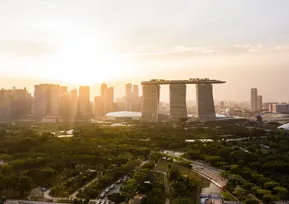
Photo by Shubham Dhage on Unsplash


Crypto business licensing

This move aligns with the broader trend of crypto firms shifting their focus toward the East, where regulatory environments are becoming increasingly accommodative. A spokesperson for Huobi stated in a prepared statement: “Regulation of Web3 in Hong Kong will contribute to the widespread adoption of cryptocurrencies on a global scale.”

Hong Kong, a Special Administrative Region under Chinese governance, recently introduced a regulatory framework for crypto exchanges, which took effect on June 1. Under these new regulations, retail investors in Hong Kong will be able to trade cryptocurrencies on licensed platforms, removing previous restrictions that limited trading to investors with portfolios exceeding HK$8 million (approximately $1 million).

The new regulations impose requirements on virtual asset trading platforms to implement “suitable” onboarding processes and disclosures. Additionally, tokens must meet “minimum criteria” to ensure that “retail investors should be less prone to market manipulation.”


Crypto sector interest

Hong Kong’s inviting regulatory landscape has already piqued the interest of crypto firms. The Greater China division of WeWork, a coworking provider, reported receiving 40 to 50 applications and inquiries from crypto businesses seeking to establish a presence in Hong Kong in recent months.

Justin Sun, Tron founder and Huobi global adviser, drew parallels between the developments in Hong Kong and Beijing in a tweet, stating, “It is indeed fascinating to witness the Beijing government’s recent focus on Web 3.0, particularly considering the imminent June 1st developments in Hong Kong.” Sun added that this represents “a significant step towards recognizing the transformative potential of decentralized systems and blockchain-based solutions.”

Huobi is actively involved in the development of Hong Kong’s Web3 ecosystem. In addition to its cryptocurrency trading license application, the firm became a significant contributor to Hong Kong’s first Web3 ecosystem fund during this year’s Hong Kong Web3 Carnival.


HK Virtual Assets Consortium

In a separate announcement, Huobi disclosed that it has become the first member of the Hong Kong Virtual Assets Consortium (HKVAC), an organization dedicated to providing credit ratings for crypto asset exchanges and trading products. HKVAC, a collaborative effort between crypto industry players, including exchanges, institutional investors, and Hong Kong-licensed rating agencies, aims to enhance the security risk management capabilities of the crypto industry and assist authorities in establishing Hong Kong as a regional hub for virtual assets and digital finance.

As a founding member of HKVAC, Huobi will serve as a reference point for the organization, leveraging its expertise in security technology and its compliance-oriented, standardized processes.

More to Read
View All
Web3 & Enterprise·

Mar 16, 2024

MANTRA sets sights on real-world asset tokenization in Middle East and Asia

MANTRA, a real-world asset (RWA) layer one blockchain built on Cosmos, recently outlined its vision for the on-chain financial ecosystem, outlining that it plans to acquire licensing in the Middle East and Asia as part of its efforts to expand. In a press release published on Chainwire on March 14, the company outlined that it has applied for licensing in the United Arab Emirates (UAE) in an effort to pave the way for MANTRA to target a global clientele who want to harness the potential of RWA asset tokenization. Issuing and trading tokenized RWAsAt the core of the Hong Kong-headquartered project’s offering lies its layer one blockchain, aptly named MANTRA Chain. The network is designed to streamline the issuance and trading of tokenized RWAs. Having established this technological product base, the company is now on a mission to onboard financial institutions and commercial entities with an interest in asset tokenization. With teams stationed in Hong Kong and the UAE, MANTRA has honed a full understanding of the shifting regulatory landscapes in pivotal regions. By securing its inaugural financial licenses in the UAE, MANTRA is aiming to take a slice of market share in the swiftly evolving RWA sector across the Middle East and Asia. The overarching goal for 2024 is to tokenize a diverse spectrum of assets, spanning real estate, private market funds, equity, art and treasuries.Photo by Sigmund on UnsplashIn an X social media post, MANTRA Founder and CEO John Patrick Mullin outlined that the company is already engaging with institutions and partners in the private sector. Mullin stated: “MANTRA is actively collaborating with real-world institutions and partners, including real estate, private market funds, private equity, the art sector, and treasuries, among others, to help bring these traditional asset classes onchain.” Mullin claims that the current crypto market capitalization of around $2 trillion is just a drop in the ocean by comparison with the potential that exists in the tokenization of RWAs and in unlocking the RWA economy. Hong Kong licensingAlongside the Middle East, Asia is the other target market for the company. Mullin suggested that Asian countries are already preparing for this fundamental shift, having developed RWA regulations. Last November, it emerged that Hong Kong was setting out a regulatory roadmap in respect of RWA tokenization. In February 2023 the Chinese autonomous territory achieved a first-of-its-kind tokenized green bond issuance.With that, the company’s home base of Hong Kong will also be central to its efforts to acquire relevant licensing. In recent weeks, MANTRA claims to have made significant progress in decentralizing its network, garnering validator support on a more broadly distributed basis. The project is expected to launch its final testnet, dubbed “Hongbai,” shortly. MANTRA is aiming to emerge as the pioneer RWA layer one blockchain with the capability to ensure real-world regulatory compliance. By expediting the adoption of tokenized RWAs, the project suggests that there’s an RWA economy value unlock potential of $16 trillion with its regulatory-ready blockchain being positioned to benefit from that. The network is gearing to offer a compliant framework, so that traditional finance (TradFi) companies can seamlessly transition to and harness asset tokenization and blockchain solutions, propelling global RWA expansion. 

news
Web3 & Enterprise·

Jan 10, 2024

Partnerships enable AsiaNext to launch crypto derivative trading

AsiaNext, a Singapore-based institutional digital asset trading venue, has officially rolled out its cryptocurrency derivatives trading platform.Photo by Kirill Petropavlov on UnsplashWintermute and B2C2 collaborationsThe launch involves notable trading members such as Wintermute and London-headquartered liquidity provider B2C2. B2C2 is a subsidiary company of Japanese financial services conglomerate SBI Holdings. SBI acquired the company in August of last year with B2C2 expressing the view that the acquisition would represent an opportunity for the company to broaden its client base. SBI partnered with Swiss financial infrastructure firm Six Group in a joint venture to establish AsiaNext back in 2020 with a view towards driving institutional digital asset liquidity. Meanwhile, Wintermute’s involvement with AsiaNext in this instance follows its move in 2023 to expand its Singapore base, where it conducts its derivatives business. In November, Wintermute Asia conducted its first-ever options block trade through the CME Group, one of the world’s leading derivatives marketplaces. Wintermute's Founder & CEO, Evgeny Gaevoy, highlighted the significance of the partnership with AsiaNext in the context of traditional financial institutions seeking alternative exposure to digital assets. Gaevoy stated: "Partnering with AsiaNext enables us to elevate our derivatives offering, positioning Wintermute in the foreground of the expanding digital asset ecosystem." The AsiaNext platform asserts that it provides enhanced risk management with reduced counterparty and settlement risk. Additionally, AsiaNext offers capital efficiencies through intraday margining and settlement processes, supporting high-frequency trading and ensuring availability 24/7 for crypto derivatives trading. Chong Kok Kee, CEO of AsiaNext, emphasized the platform's commitment to providing a secure environment for institutional investors to explore digital assets in the region. By prioritizing regulation and rigorous governance, AsiaNext aims to establish itself as a trusted venue for exposure to digital assets. B2C2 CEO Thomas Restout commented on the positive nature of the collaboration. He stated:”We’ve witnessed [AsiaNext’s] unwavering commitment to governance and risk management, alongside their focus on aligning closely with our needs. This instills a high level of confidence in our partnership. Being at the forefront of digital asset adoption, we are pleased to provide liquidity on the venue through our collaboration.” Licensing approvalsIt's worth noting that AsiaNext obtained a Recognized Market Operator (RMO) license from the Monetary Authority of Singapore (MAS) in September. However, this license specifically pertains to tokenized securities, and as such, the crypto derivatives trading operates through a separate subsidiary. In June the company had acquired in-principle approval for a Capital Markets Services (CMS) license. On the digital securities front, SIX Digital Exchange (SDX) and Osaka Digital Exchange (ODX), operated by SIX and SBI respectively, play key roles in secondary markets, showcasing the partners' commitment to advancing regulated digital securities markets. Launched in late 2021, SDX was the world's first regulated digital securities market. SBI followed suit with the recent launch of ODX on Christmas Day. The anticipated approval of the first U.S. spot bitcoin ETFs adds a timely dimension to the launch, potentially driving increased demand for hedging strategies in the market. 

news
Web3 & Enterprise·

Sep 08, 2023

Grab Turns to Web3 With Crypto Wallet Integration

Grab Turns to Web3 With Crypto Wallet IntegrationGrab, the Singapore-headquartered Asian ride-hailing firm with a user base of 180 million people, is integrating a crypto wallet into its platform.That’s according to Chinese crypto reporter Colin Wu. Wu tweeted out news of the development on Thursday, including screenshots which he had obtained that provide further detail relative to Grab’s Web3 wallet.Often dubbed the “Uber of Southeast Asia,” Grab’s foray into Web3 technology could reshape how the region engages with cryptocurrencies. This move, initially available in Singapore, aligns with the city-state’s reputation as a fintech leader and developing crypto hub, suggesting it may serve as a testing ground for Grab’s crypto integration.Photo by Afif Ramdhasuma on UnsplashPolygon wallet integrationOne pivotal aspect of this integration is Grab’s support for the Polygon wallet, a layer-2 scaling solution for Ethereum. Known for its speed and low transaction fees, Polygon aids Grab’s venture into crypto, as these characteristics feed into its practicality for everyday crypto transactions. This strategic choice aims to make cryptocurrencies more accessible and usable for the masses.Venturing beyond paymentsIt seems like Grab’s ambitions extend beyond basic cryptocurrency payments. It is also setting the stage for users to explore non-fungible tokens (NFTs) and blockchain technology. The company has provided guidance content for wallets and NFTs which would suggest that Grab’s vision goes beyond mere transactions and that it sees the potential for NFTs in terms of transforming digital ownership and other such use cases.The Web3 wallet stands out in terms of user experience. Unlike traditional crypto wallets that are reliant on private keys, Grab employs a PIN password system. This simplifies the crypto experience. This is of particular importance when it comes to trying to find ways to bring Web3 and crypto into everyday use by the mass market.Additionally, Grab introduces an account recovery system based on questions and answers, in an effort to strike a balance between security and convenience.MAS collaborationAs part of the firm’s journey into Web3, it has been collaborating with the Monetary Authority of Singapore (MAS), the city-state’s central bank and financial regulator. Together, they’ve explored digital assets, central bank digital currencies, and innovative payment systems, and it also indicates that the company is working towards including a Web3 offering while remaining in regulatory compliance.According to the company’s Q2, 2023 results, Grab records an average of 34.9 million monthly transactions.By integrating a user-friendly crypto wallet, supporting Polygon, and exploring NFTs, it appears that Grab is aiming to empower its massive user base to participate in the digital asset revolution. With Singapore as the initial launchpad, Grab’s Web3 journey holds the potential to influence how the entire region embraces cryptocurrencies.In simplifying crypto access, supporting innovative technologies like Polygon, and educating users about NFTs and blockchain, the Singaporean firm is paving the way for a more inclusive and decentralized financial future in the region.

news
Loading