Top

FPG Halts Withdrawals Following Hack

Web3 & Enterprise·June 15, 2023, 12:09 AM

Floating Point Group (FPG), a prominent crypto prime brokerage platform, has temporarily halted trading, deposits, and withdrawals following a cyber security incident that occurred on Sunday.
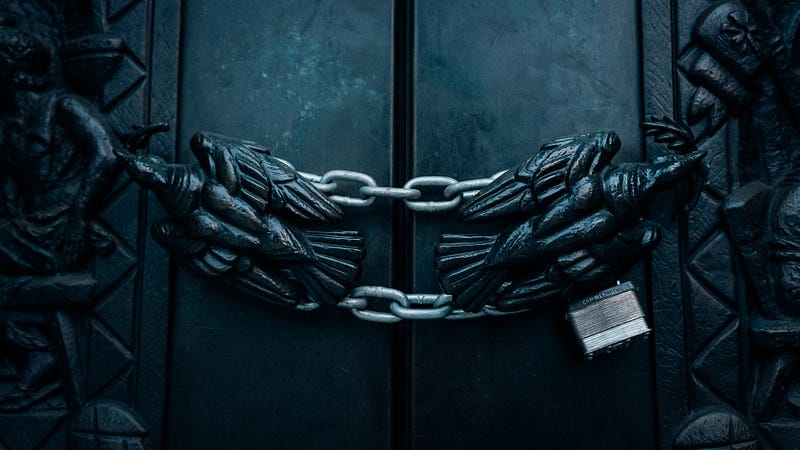
Photo by Thom Milkovic on Unsplash


Incident response

FPG, headquartered in Singapore while maintaining a base in Hoboken, New Jersey in the United States, manages over $50 billion in assets. The firm took immediate action upon discovering the incident by engaging third-party forensics experts and law enforcement agencies.

The company acknowledged the problem publicly via a tweet thread on Twitter on Wednesday. FPG stated that the company has locked all third-party accounts and secured its wallets while it investigates the extent and details of the breach. Although the full extent of the loss is still under investigation, the current estimate stands at approximately $15 million to $20 million in lost cryptocurrencies.


Investigative cooperation

In response to the incident, FPG is collaborating with the FBI, the Department of Homeland Security, regulatory bodies, and Chainalysis to comprehend the nature of the attack and initiate asset recovery measures. As the investigation involving those entities is ongoing, specific details are not being disclosed at this stage, but FPG has pledged to provide updates as new information becomes available.

The cyber security incident comes six months after FPG obtained a SOC 2 certification, which verifies the implementation of robust security, privacy, and control measures by service organizations to ensure the reliable handling of sensitive data and systems.

Originally founded in 2018 at the Massachusetts Institute of Technology (MIT) in the US, FPG functions as both a crypto prime brokerage platform and an agency trading desk for asset managers, offering access to liquidity across various markets. In December, FPG announced that its blockchain foundation customers accounted for 5% of the total treasury management market.

Backed by prominent investors such as Coinbase Ventures, Anthony Scaramucci of SkyBridge Capital, and Naval Ravikant, the founder of AngelList, FPG has raised a total of $12 million in funding thus far.

In August of the previous year, FPG successfully registered as a virtual asset service provider (VASP) in the Cayman Islands. This registration ensured the secure custody of customer assets and safeguarded them from the company’s creditors in the unlikely event of bankruptcy.


Broader crypto issues

It has not been a good couple of weeks for the crypto sector relative to hacks and platform withdrawal pauses. Within the past twenty four hours, two Asia-based crypto lending platforms, Haru Invest and Delio, have suspended withdrawals. In those cases, the issue is suspected to relate to platform contagion and solvency issues.

Earlier this month, the Atomic Wallet platform was hacked despite the understanding that the project offered self-custodial wallets. Originally, the loss was estimated at $35 million, but more recent reports are now estimating that figure to be in excess of $100 million.

As FPG continues its efforts to mitigate the aftermath of the cyber attack, industry participants eagerly await further updates and measures undertaken by the company to recover from this incident and restore trust among its clients.

More to Read
View All
Policy & Regulation·

Mar 10, 2025

Government-owned bank enables crypto trading through digital app in Dubai

Dubai-based Emirates NBD, one of the United Arab Emirates’ (UAE) top banks, has enabled a crypto trading service via its subsidiary bank, Liv Digital Bank. Liv Digital Bank has launched the crypto trading service through its Liv X mobile banking app. App users now have the ability to buy, hold and sell a range of cryptocurrencies. Users will have access to custody solutions. They can control both virtual currencies and fiat currencies from within one application.Photo by Markus Winkler on UnsplashAquanow collaborationThe offering has been brought online through a collaboration with digital assets infrastructure provider Aquanow. Taking to X, Aquanow CEO Phil Sham said that "incumbent institutions like Emirates NBD will play a pivotal role in driving the next wave of digital asset adoption.” Aquanow has acquired the necessary licensing from the Virtual Assets Regulatory Authority (VARA) in Dubai to enable the service offering on a compliant basis. Sham told Cointelegraph that the collaboration “showcases how traditional banking and digital assets can coexist, providing consumers with seamless, secure, and compliant access to the evolving digital economy.” Zodia as digital asset custodianZodia Custody, a virtual asset custodian that serves institutional clients, has been chosen to custody assets held as a result of crypto trading on the app. The custodian, a subsidiary company of British multinational banking group Standard Chartered, launched its service in Dubai back in 2023. Emirates NBD is government-owned and the UAE’s second largest bank. The service will facilitate users in trading Bitcoin (BTC), Ethereum (ETH), Solana (SOL), XRP, Cardano (ADA) and some other cryptocurrencies. The bank’s Group Head of Retail Banking and Wealth Management, Marwan Hadi, commented on the development, stating: “Offering cryptocurrency on Liv X is the next step towards the overall vision of Liv being a pioneer in innovation and excellence.” He added that “with the highest crypto adoption rate in the UAE, [Emirates NBD is] keen to launch [its] own virtual asset offering to capitalise on this trend.” This is not the first touch point with the crypto sector for the Emirates NBD subsidiary. Last year, Liv Digital partnered with tokenized real-world assets (RWA) firm Ctrl Alt. Accessing Ctrl Alt’s RWA tokenization expertise, Liv is opening investing opportunities for its customers in the area of tokenized assets. In November 2024, Emirates NBD signed up as a member of the Partior Network, the distributed ledger technology (DLT) clearing and settlement network. Partior uses tokenized instruments for the wholesale settlement of cross-border payments in conjunction with correspondent banks. In the past, the Dubai-based bank had made efforts to educate its customers with regard to the benefits of cryptocurrency and blockchain. Last year, American blockchain analysis firm Chainalysis reported that the Middle East and North Africa (MENA) accounted for 7.5% of global digital asset trading volume over the course of 12 months from July 2023 to June 2024. Chainalysis itself chose Dubai to set up its regional headquarters in May 2024.

news
Web3 & Enterprise·

Feb 06, 2024

Animoca Brands makes key appointment to drive Japanese market expansion

Animoca Brands Japan, a key subsidiary of Hong Kong-headquartered Web3 investor Animoca Brands, has welcomed Kensuke Amo as its Chief Operating Officer (COO) to spearhead the company's growth in Japan. Industry credentialsAmo, a seasoned industry veteran who previously served as the managing executive officer at Japanese bitcoin wallet and exchange service Coincheck, officially assumed his role as COO last Thursday. With a proven track record in launching NFT businesses and steering new crypto asset ventures, Amo played a pivotal role at Coincheck. During his tenure as an executive officer from 2020, he pioneered initiatives such as Japan's first NFT marketplace for crypto asset exchanges and an inaugural initial exchange offering (IEO). In a social media post, Amo stated that in the role, he “will be committed to doing [his] best to contribute [to] Web3 technology [so that it takes] root in society.” In 2022, Amo ascended to the leadership position at Coincheck, where he led the NFT business and metaverse business, heading three distinct web domains. His involvement in the expansion of "The Sandbox" and "Otherside" in Japan, stemming from the partnership between Coincheck and Animoca Brands in 2020, further underscores his influence in the sector.Photo by Richard Tao on UnsplashJapanese market expansionRegulatory headwinds in the United States in 2023 led to the company pivoting and focusing on non-U.S. markets. It became clear later in 2023 that the company had a specific interest in growing its business in Japan when Animoca Brands Japan acquired an equity share in Cool Cats Group, an NFT-related project. That deal also implicated a collaboration with Animoca’s digital experience label, KLKTN. As Animoca Brands Japan strategically aligns itself within Animoca Brands' larger framework, Kensuke Amo aims to leverage the company's extensive assets and network, including over 400 portfolio companies. His mission involves combining his expertise in business and rule-making within the Japanese Web3 industry to facilitate the integration of Web3 into society. Commenting further on his appointment, Amo expressed his commitment to advancing the Web3 landscape in Japan. He stated: “As a strategic subsidiary of Animoca Brands, Animoca Brands Japan will make the most of its assets and network, including its more than 400 portfolio companies, while combining its knowledge and experience in business and rule-making in the Japanese Web3 industry.” Established in 2021, Animoca Brands Japan has played a crucial role in supporting Japanese intellectual property and content holders in their global Web3 expansion efforts. The company secured an undisclosed investment from Mitsui & Co., one of Japan’s largest trading companies, in June. Daisuke Iwase, the CEO of Animoca Brands Japan, expressed optimism about the collaboration with Kensuke Amo, emphasizing his leadership in the realms of crypto assets, NFTs and the metaverse in Japan. Amo’s industry involvement extends beyond Animoca Brands Japan, as he currently advises the Japan Cryptoasset Business Association (JCBA), Shibuya-ku Startup Ecosystem, Web3 project "OASIS" and real estate information service company LIFULL Co., Ltd. Additionally, he is the author of "Textbook of NFT" and "Non Fungible Me." 

news
Policy & Regulation·

Aug 31, 2024

Global crypto fraud suspect arrested in Istanbul

Accused of one of the world's largest cryptocurrency scams, Andreas Szakacs, a Swedish national who became a Turkish citizen under the name Emre Avcı, was detained in Istanbul. The alleged international fraud scheme, led by Szakacs, began in 2019 under the guise of OmegaPro, a company dealing in forex and cryptocurrency trading. OmegaPro claimed to generate significant profits for its investors through complex financial algorithms and high-risk leveraged trading. The company, registered in opaque jurisdictions like Saint Vincent and the Grenadines and headquartered in Dubai, promised returns as high as 300% within 16 months, attracting investors from across the globe. High-profile endorsements and lavish eventsTo bolster credibility, Szakacs and his partners, including well-known figures in the finance and crypto sectors like Dilawar Singh and Mike Sims, organized extravagant events. These included the OmegaPro Legends Cup, a football tournament featuring former stars like Ronaldinho, Kaka and Iker Casillas, who were branded as OmegaPro ambassadors. The company also sponsored car races and held opulent conferences in luxury hotels, where gifts and prizes were distributed to participants, further enticing new investors. OmegaPro's operations spanned multiple continents, with representatives in countries such as Colombia, Mexico, the UK and Nigeria. Over time, the company claimed to have attracted 1.5 million investors. However, in late 2022, as withdrawals were suddenly halted, suspicions grew. By July 2023, the company had shut down, leaving an estimated three million investors defrauded and $4 billion unaccounted for.Photo by Xiaoyi Huang on UnsplashAs OmegaPro collapsed, investors from around the world began filing complaints. In France alone, over 1,500 victims have initiated a class-action lawsuit. Similar legal actions have been reported in countries including Mexico, Congo and Myanmar. Despite multiple investigations, the whereabouts of Szakacs and his partners remained unknown—until recently. A tip-off leads to arrest in IstanbulThe breakthrough came on June 28, when an anonymous informant tipped off Turkish authorities about Szakacs' presence in a luxury villa in Istanbul's Acarkent neighborhood. Following an investigation, the Istanbul Gendarmerie identified 18 complainants connected to OmegaPro. On July 9, Szakacs was arrested in a raid on the villa, where authorities found 32 cold wallets containing cryptocurrencies, along with extensive documentation related to OmegaPro’s operations. During questioning, Szakacs denied all allegations, claiming that OmegaPro was a legitimate business that went bankrupt in late 2022, resulting in significant losses for him and his partners. He also refused to provide access to the cold wallets and the encrypted data on his devices. Despite his defense, Szakacs was charged with fraud using information systems and detained by the Beykoz Criminal Court of Peace on July 10. Ongoing legal battles and future implicationsAs the investigation continues, authorities are scrutinizing Szakacs' digital transactions, which reportedly involve $160 million in movements over a single month. His legal team argues that investors knowingly took on risks in the forex market, but the sheer scale of the losses—especially the $103 million claimed by a Dutch complainant representing 3,000 victims—has intensified the case. The outcome of this case could set a precedent for how international crypto-related fraud is handled, particularly in an era where digital currencies and high-risk investments are increasingly intertwined. 

news
Loading