Top

China Sees Further Metaverse Development Through Nanjing City Initiative

Policy & Regulation·June 12, 2023, 11:47 PM

Nanjing City’s Jiangning district recently unveiled its ambitious plans for metaverse development as competition in China’s metaverse sector intensifies.

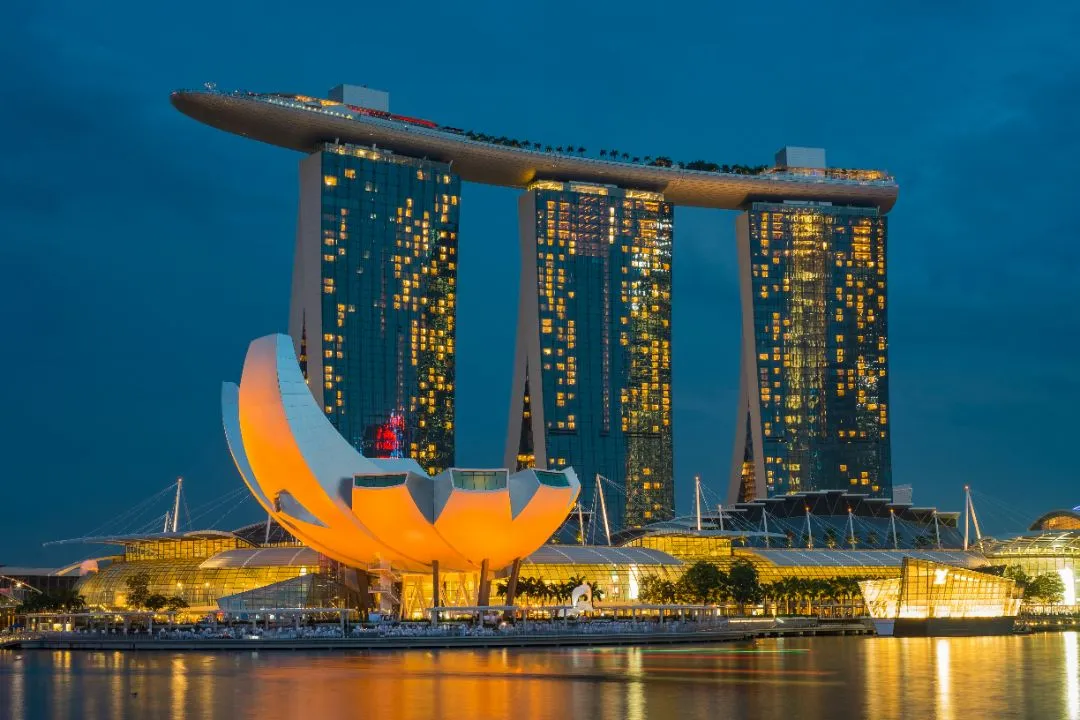
Photo by 李 亨 on Pexels


Three-year plan

The district aims to lay the groundwork for blockchain-based applications by attracting 200 metaverse companies and generating an industry with an annual revenue of 20 billion yuan ($2.80 billion) by the end of 2025. That’s according to a three-year plan to accelerate metaverse development published by Jiangning district’s management committee on Saturday.

To support this vision, Jiangning plans to foster collaboration between local enterprises and academic institutions, with the goal of training 10,000 metaverse professionals over the next three years.


Metaverse roadmap

The district’s comprehensive roadmap includes the identification of key metaverse technologies, such as blockchain, artificial intelligence (AI), and virtual reality. Additionally, the plan outlines the establishment of 50 research centers and laboratories dedicated to these areas of expertise.

These initiatives were unveiled during a joint summit on metaverse and artificial intelligence-generated content (AIGC) held at the Jiangning High-tech Development Zone, a specialized industrial park known for its focus on life sciences, software development, and equipment manufacturing.

At the summit, 16 metaverse-related projects were introduced, representing a total investment of 8.1 billion yuan ($1.13 billion). These projects encompass diverse fields, including A.I., cloud computing, big data, and healthcare. Jiangning’s commitment to the metaverse extends beyond the recently announced plan, as the district has been offering financial incentives to metaverse companies since May 2022.

Moreover, an investment of 800 million yuan ($112 million) has been allocated to construct a dedicated “metaverse industrial building” that will provide office spaces for metaverse enterprises.

Jiangning’s efforts contribute to Nanjing City’s broader aspiration of becoming a prominent metaverse hub in China. In February of this year, Nanjing unveiled its metaverse strategy and set the ambitious target of establishing an industry generating over 135 billion yuan ($19.13 billion) in annual revenues by the end of 2025. Additionally, Nanjing launched “the Blockchain Technology and Application Innovation Platform of China” in May, aimed at promoting and advancing metaverse research nationwide.


Broader Chinese metaverse strategy

While Nanjing is moving towards metaverse development, other Chinese metropolises, including Beijing, Shanghai, and Hangzhou, are also vying for dominance. Cities such as Zhengzhou and Suzhou are also endeavoring to participate in the trending technology.

Last month, Zhengzhou announced a set of policy proposals aimed at supporting metaverse-centric enterprises locally. Earlier in May, the administrative body that governs Henan Province established a 150 million yuan ($21.7 million) private equity investment fund relative to the financing of metaverse-themed projects.

As cities and regions in China compete to seize the opportunities presented by the metaverse, the country is witnessing significant investments and initiatives to establish a strong foothold in this transformative technology. Nanjing’s Jiangning district’s comprehensive plan and strategic partnerships signify the region’s dedication to becoming a flourishing metaverse ecosystem, while executing on a mandate from the central government to further develop metaverse technologies within China.


More to Read
View All
Policy & Regulation·

Jan 31, 2024

Hong Kong’s SFC bolsters investor protection with new insurance mandate

In an effort to fortify the cryptocurrency market and safeguard investors' funds, the Hong Kong Securities and Futures Commission (SFC) has introduced a minimum insurance requirement of 50% for licensed cryptocurrency exchanges handling customers' assets.Photo by Simon Zhu on UnsplashGuarding against insolvency riskThe move came to light through a statement published recently by OSL, one of Hong Kong’s licensed virtual asset trading platforms. It’s aimed at enhancing security measures, protecting users from potential security breaches or insolvency. As part of that disclosure, OSL announced a two-year partnership with Canopius, an underwriter syndicate associated with Lloyd's of London. Under this collaboration, OSL will provide insurance coverage for an impressive 95% of its users' assets, surpassing the mandated 50%. OSL emphasized its commitment to safeguarding regulated assets under custody, irrespective of the regulatory guidelines permitting virtual asset service providers (VASPs) to reduce insurance coverage to 50%. Response to recent failuresThis decision is grounded in the acknowledgment of the volatile market conditions and the series of cryptocurrency firm collapses witnessed in recent years. 2022 saw a number of high-profile crypto platform collapses, such as the demise of FTX. HashKey Exchange, another licensed crypto exchange in Hong Kong, has also proactively secured its users' assets by entering into a crypto insurance agreement with Hong Kong headquartered fintech firm OneDegree back in September. The insurer entered the digital assets space last July, expanding into the Middle East last month. OneDegree’s arrangement with HashKey offers coverage ranging from $50 million to $400 million, extending beyond standard security breaches and insolvency to include server downtime, data back-up and load management incidents, ensuring comprehensive protection. Broader regulatory effortsThe minimum insurance requirement is part of the SFC's larger strategy to regulate the cryptocurrency industry in Hong Kong. While the Chinese autonomous territory enabled cryptocurrency trading for retail investors in August, only OSL and HashKey have obtained virtual asset trading licenses. Thirteen other entities are currently in the application process, undergoing rigorous due diligence checks, including comprehensive financial audits exceeding the scope beyond proof-of-reserve systems. This insurance mandate represents a significant step toward enhancing investor confidence in the cryptocurrency market. As digital assets gain popularity, ensuring the security of customers' funds has become paramount. The SFC's proactive approach seeks to strike a balance between fostering innovation and safeguarding investors. Products are also emerging that crypto users themselves can access. UK-based CryptoShield offers insurance protection directly to users that covers potential loss of funds on crypto platforms. The cryptocurrency landscape in Hong Kong is evolving rapidly, with the SFC playing a pivotal role in shaping the regulatory environment. Regulators aim to establish a robust framework addressing potential risks and protecting market participants while embracing digital innovation. As the regulatory landscape matures, more licensed crypto exchanges in Hong Kong may be required to meet the 50% minimum insurance requirement, further strengthening security measures and making the market a safer place for investors.  

news
Web3 & Enterprise·

Oct 27, 2023

Bithumb and Korbit Struggle to Gain Traction Despite Zero Trading Fees

Bithumb and Korbit Struggle to Gain Traction Despite Zero Trading FeesSouth Korean cryptocurrency exchanges Bithumb and Korbit have recently eliminated trading fees, but their bold decision hasn’t yielded much results. Bithumb was the first to implement this change and attracted users for about a week, but it is now seeing a loss in market share. Korbit, following Bithumb’s example, is also struggling to achieve meaningful outcomes.Photo by Alexander Grey on UnsplashLimited impactLocal media outlet Chosun Biz used data from crypto data platform CoinGecko to draw this conclusion. On October 26, Korbit’s daily trading volume represented 0.19% of the total trading volume among South Korea’s top five crypto exchanges (Upbit, Bithumb, Coinone, Korbit, and Gopax). This figure marked a 0.14 percentage point increase compared to the 0.05% recorded on October 19. Korbit had implemented a zero trading fee policy at 9 a.m. (KST) on October 20. Additionally, they launched a promotion offering KRW 5,000 ($3.69) worth of bitcoin to users who transferred virtual assets totaling KRW 1 million or more from Travel Rule-compliant exchanges to Korbit. While the promotion did contribute to Korbit’s market share, it still remains below 1%.Bithumb’s performance showed some improvement, albeit briefly. As of October 26, Bithumb’s market share stood at 18%, marking a 4.7 percentage point increase from its 13.3% share on October 3, the day before it eliminated trading fees. However, it’s worth noting that its market share had reached almost 30% shortly after the promotion’s launch. This indicates that its strategy is losing efficacy over time.The less-than-enthusiastic results from their daring marketing endeavors can be attributed to their inability to draw in retail investors. To begin with, Upbit, the leading player in the market, had already been providing a relatively low fee of 0.05%. Furthermore, adapting to new user interfaces on these exchanges posed a challenge. Zero trading fees weren’t attractive enough for crypto investors to leave their current platforms.Trading volume mattersIn the case of Korbit, its lower trading volume was a disadvantage when it came to attracting users. On crypto exchanges, a higher trading volume typically translates to faster trade executions. As a result, users of Korbit might experience delays in executing trades at their preferred price.Jeong Hye-won, a research associate at crypto data analytics platform Xangle, told Chosun Biz that users on exchanges with lower trading volumes tend to experience slippages due to slower transaction speeds and sparsely populated order books. A slippage means the difference between the initially placed order price and the executed order price. Jeong further explained that Korbit’s zero trading fee policy didn’t have a significant impact because it offers fewer listed tokens compared to Upbit and Bithumb.There is speculation that the free-trading fee promotions introduced by Bithumb and Korbit, despite their revenue sacrifices, might conclude sooner than initially anticipated due to their perceived ineffectiveness. Bithumb derives 99.95% of its revenue from trading fees, while Korbit relies on trading fees for 99.79% of its income. An industry insider has commented that trading fees play a vital role in an exchange’s revenue, and given Bithumb’s reported loss in earnings during the second quarter, there are concerns about their capacity to sustain this strategy.

news
Policy & Regulation·

Jun 01, 2023

Korean Crypto Exchange Alliance Reveals Standardized Regulation Guidelines

Korean Crypto Exchange Alliance Reveals Standardized Regulation GuidelinesThe Digital Asset eXchagne Alliance (DAXA), consisting of five leading cryptocurrency exchanges in South Korea, today revealed standardized regulation guidelines, according to a report by news media The Asia Business Daily.Photo by Nick Fewings on UnsplashStandardized guidelinesTwo important documents — the standardized internal control framework and the code of conduct and ethics — were released by DAXA today. These documents were developed based on data provided by financial investment firms and member exchanges. Reviewed by DAXA members and advisors, this documentation represents a significant milestone as it is the first of its kind to address the unique characteristics of the crypto industry. The establishment of unified rules and regulations through the collaborative efforts of the member exchanges stands as a commendable achievement.Internal control frameworkThe internal control framework consists of five parts, encompassing a total of 68 articles. These parts cover general provisions; governance of virtual asset service providers (VASPs); organization and standards for internal control; compliance officers and internal control system management; and compliance details.Code of ethicsThe code of conduct and ethics comprises five chapters with 24 articles. These chapters focus on general provisions, customer ethics, employee ethics, corporate management ethics, and societal ethics.DAXA Vice Chairman Kim Jae-jin expressed optimism that these guidelines will serve as a valuable reference for all VASPs, fostering the development of a fair, trustworthy, and globally competitive crypto market.DAXA’s websiteLast month marked the launch of DAXA’s official website, and their YouTube channel has been active since January. The alliance is made up of five member exchanges: Gopax, Bithumb, Upbit, Korbit, and Coinone. At the helm of the alliance is Chairman Lee Sirgoo, who concurrently serves as CEO of Dunamu — the company operating Upbit, the largest cryptocurrency exchange in the nation.

news
Loading