Top

First Digital to Introduce USD-Backed USD Stablecoin

Web3 & Enterprise·June 02, 2023, 2:55 AM

First Digital Trust, a Hong Kong-based qualified custodian and trust company, is set to introduce a new stablecoin called “First Digital USD,” with the short-code $FDUSD. This stablecoin will be pegged to the US dollar but regulated within Asia.

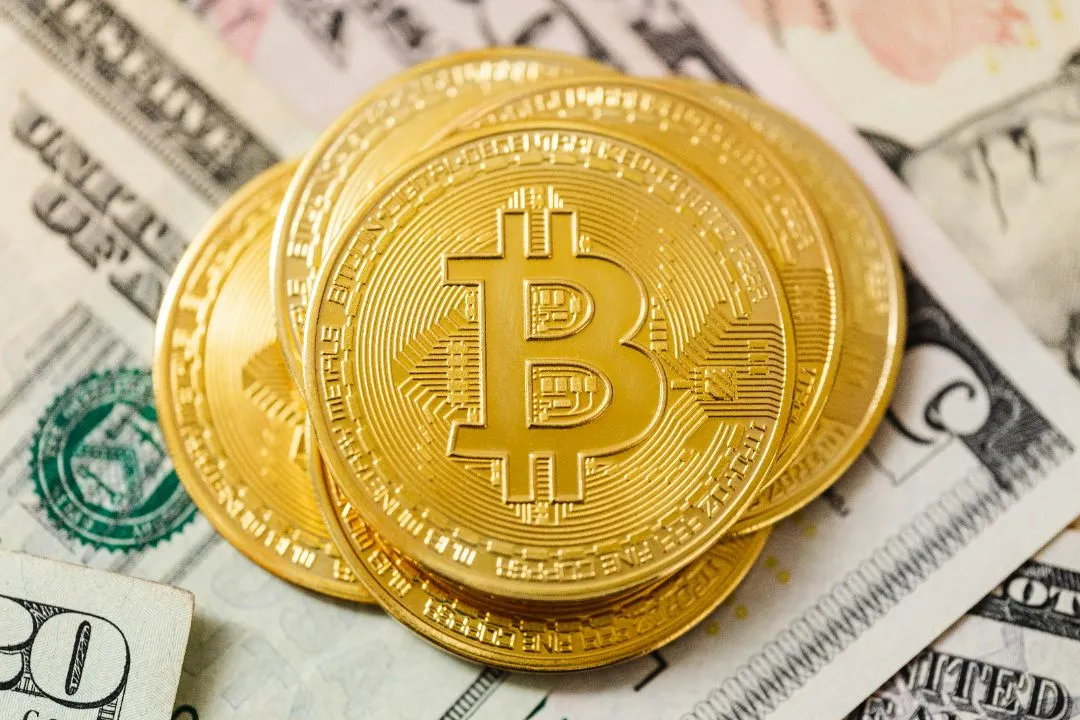
Photo by Alexander Grey on Unsplash


Introducing $FDUSD

According to First Digital, $FDUSD will be backed by one US dollar or an asset of equivalent fair value on a one-to-one basis. The reserves supporting FDUSD will be held in segregated accounts at institutions in Asia.

$FDUSD aims to provide stability and will be programmable, enabling the execution of financial contracts, escrow services, and insurance without the need for intermediaries. In a statement published on Thursday, First Digital emphasized its commitment to full compliance with current and future laws and regulations. The company also expressed its intention to participate in shaping the regulatory landscape for $FDUSD and First Digital itself.

The announcement of $FDUSD is particularly significant in light of the new “Guidelines for Virtual Asset Trading Platform Operators” set to take effect in Hong Kong on June 1. These guidelines outline rules for safe asset custody, client asset segregation, conflict of interest avoidance, and cybersecurity standards, as mandated by Hong Kong’s Securities and Futures Commission (SFC).


Hosted on BNB Smart Chain

FDUSD will operate on the BNB Smart Chain and will be issued by First Digital Labs, a subsidiary of First Digital Trust, a regulated digital asset custodian under the Hong Kong Trustee Ordinance. The law ensures that $FDUSD will be fully backed by US dollar reserves or highly liquid, high-quality assets held in regulated Asian financial institutions, with no commingling with other assets of First Digital.

Vincent Chok, CEO of First Digital, emphasized the company’s commitment to regulatory compliance and setting a new standard for legitimacy in the industry. First Digital intends to comply with all applicable laws and regulations and actively contribute to the shaping of regulatory regimes for $FDUSD and First Digital in the future.

The $FDUSD stablecoin will be redeemable for US dollars, providing users with a reliable bridge between the digital and fiat currencies.


Biden administration's own goal

As regulatory uncertainty persists in the United States, some industry players are expressing concerns about losing the country’s leadership position in the crypto sector. They warn that the industry may be offshore to more favorable jurisdictions.

News of First Digital Trust’s US dollar stablecoin intentions brought scathing criticism of US policy from US commentators within the crypto space. Austin Campbell, Managing Partner at Zero Knowledge Consulting, a firm that advises on crypto payments and stablecoins, stated that the US government and US regulators had created a paradigm where they now have less control over distribution and regulation while the product they were suppressing continues to exist and scales elsewhere.

Nic Carter, Partner at venture capital firm Castle Island Ventures, wrote that “the wise sages in US government took one look at the onshore registered stablecoin market and decided they’d much prefer unaccountable offshore crypto-eurodollars.”

Macro-economist Luke Gromen described this consequence of US policy as the “monetary equivalent of deciding they would prefer making their goods in China rather than paying US workers and deal with union labor.” Meanwhile, Caitlin Long, Founder and CEO of digital asset-focused Custodia Bank, suggested that US federal regulators “thought they could kill USD stablecoins” but that “they miscalculated.”

More to Read
View All
Policy & Regulation·

Jun 27, 2023

Singapore’s Central Bank Paves the Way for Digital Asset Networks

Singapore’s Central Bank Paves the Way for Digital Asset NetworksSingapore’s Monetary Authority (MAS) has taken a significant step towards the future of digital assets by proposing a comprehensive framework for the design of open and interoperable networks for tokenized digital assets.Photo by Pixabay on PexelsDetailed frameworkIn a report published on Monday, titled “Enabling Open & Interoperable Networks,” MAS presented a detailed framework aimed at understanding the design options necessary to facilitate the seamless trading of digital assets across diverse networks and liquidity pools. The framework is rooted in the core principles of financial market infrastructure and draws inspiration from cutting-edge projects that have been at the forefront of advancing these concepts.To ensure a robust and comprehensive approach, the report was jointly developed with subject matter experts from the Bank for International Settlements’ (BIS) Committee on Payments and Market Infrastructure (CPMI), with valuable contributions from prominent financial institutions including DBS Bank, JP Morgan, HSBC, SBI Digital Asset Holdings, Standard Chartered, and UOB.MAS defines digital asset networks as platforms that leverage distributed ledger technology (DLT) or blockchain to enable secure and efficient transfers of digital assets without the need for traditional intermediaries. These networks serve as the foundation for open and interoperable infrastructure, facilitating the issuance, transfer, and custody of digital assets. By promoting transparency, efficiency, and trust, the report suggests that they will play a pivotal role in shaping the digital asset ecosystem.Project GuardianThe report underscores the immense potential of digital asset networks in a future financial landscape, where digital assets and currencies can be seamlessly exchanged across different networks. MAS believes that these networks could revolutionize the way financial transactions occur, leading to increased efficiency and expanded possibilities. The framework also lays the groundwork for future exploration as part of the Project Guardian initiative, encompassing additional focused themes such as Trust Anchors and Institutional DeFi.MAS has also announced the expansion of Project Guardian to include a broader range of financial asset classes. The project now features an industry group comprising 11 leading financial institutions that will spearhead industry pilots in asset and wealth management, fixed income, and foreign exchange. Esteemed banks such as HSBC, Standard Chartered, DBS, and Citi are set to conduct multiple trials focusing on tokenization. For instance, Standard Chartered, in collaboration with Linklogis, is developing an initial token offering platform to issue asset-backed security tokens listed on the Singapore Exchange.Despite its cautious stance on cryptocurrency speculation, MAS recognizes the immense potential for value creation and efficiency gains within the digital asset ecosystem. Leong Sing Chiong, MAS’ Deputy Managing Director of Markets and Development, emphasized the authority’s optimism, stating: “We see significant potential for value creation and efficiency gains in the digital asset ecosystem.”This latest initiative by MAS comes on the heels of its recent proposal for standards governing the use of digital money, including central bank digital currencies (CBDCs) and stablecoins. Singapore’s central bank is paving the way for the future of digital assets and making a strong effort to assert its position as a global leader in digital asset innovation through the establishment of this framework alongside industry collaboration.

news
Policy & Regulation·

Jan 20, 2024

China establishes metaverse working group with Chinese tech giants

China's Ministry of Industry and Information Technology (MIIT) has stepped into the realm of the metaverse by forming a working group tasked with setting standards for the burgeoning technology.Photo by Li Yang on UnsplashChinese corporate participationThe announcement, made on Friday, revealed that the working group would comprise representatives from the government, academic institutions and major corporations. In its statement, MIIT explained that the establishment of the metaverse working group aligns with the nation's emphasis on industrial development within the technology sector. Notably, the group will feature key figures from major Chinese tech corporations, including Huawei, Ant Group, ZET, Tencent, Baidu, NetEase, Sense Time and others. Public feedback on the selection of group members is invited until Feb. 18, although the specific areas of focus for the group are not detailed in the document. Initial in-roadsThe working group’s headline tech participants have all made some initial in-roads into metaverse technology. Baidu established its own metaverse project, XiRang, in 2021. Late last year it partnered with Qualcomm on the use of extended reality (XR) technology for use on a new metaverse platform. Huawei is paying attention to the promising metaverse space by building up a catalog of metaverse-related patents. Like Baidu, Tencent is focusing on developing XR technology with metaverse development in mind. Last year NetEase collaborated with a Chinese liquor brand to launch a winery-themed metaverse, while issuing NFTs linked to liquor bottles. Establishing metaverse standardsChina has been contemplating the formulation of metaverse standards for some time. In September 2023, MIIT advocated for the creation of a dedicated working group to address the ongoing challenges in metaverse technology. The government's overarching objective is to ensure the healthy and orderly development of the metaverse industry through standardization and guidance, reducing redundant investment costs and fostering collaborative forces for industrial development. Analysts from JPMorgan foresee a potential uptick in the value of Chinese tech stocks if the metaverse gains traction in the country. According to their analysis, Chinese web giants like Tencent and NetEase stand to benefit significantly from metaverse development. Even non-web companies such as China Mobile, Sony and Agora could witness positive impacts should the technology gain widespread adoption. In fact, China Mobile led the development of a metaverse industry alliance in China in 2023. Regional developmentIn a December document, MIIT outlined plans to formulate strategy documents clarifying the development path of Web3.Last year, several local governments in China committed to the development of the metaverse industry. Sichuan, a province once known as a crypto mining hub, aims to reach a market size of 250 billion yuan ($35.1 billion) in the metaverse industry by 2025. Last May, the city of Zhengzhou announced policy proposals to support metaverse companies. The same month, the province of Henan established a $21.7 million fund to support metaverse-related projects. The following month, an initiative was established in Nanjing to nurture metaverse development. Additionally, Shandong province has plans to grow its metaverse-related initiatives to achieve a market size of 150 billion yuan by 2025. 

news
Web3 & Enterprise·

Jun 12, 2023

Japan’s Mitsui Introduces Security Token Service to Sony Bank Customers

Japan’s Mitsui Introduces Security Token Service to Sony Bank CustomersAccording to a press release, Mitsui & Co. Digital Asset Management (MDM), a blockchain-based asset management company in Japan, forged a partnership with Sony Bank, a member of Sony Financial Group, to introduce its security token service, Alterna, to the Tokyo-based online bank’s clientele, beginning June 9.Photo by Aleksandar Pasaric on PexelsBank customersMDM aims to establish security token funds and offer them to Sony Bank customers via Alterna, aiming to facilitate stable asset accumulation. This partnership will allow Sony Bank to provide a broader range of financial services.Under the agreement, MDM has entrusted Sony Bank to handle the process of gathering customers interested in purchasing security tokens offered by Alterna. Sony Bank, as MDM’s first online banking partner, will introduce the security token service platform to its customers. MDM is responsible for designing and selling security tokens through Alterna, which will benefit Sony Bank customers.Alterna enables users to transfer funds to securities accounts on its platform without any charges, 24/7. Through the partnership, users can move funds from their Japanese yen deposit accounts at Sony Bank to the accounts available on the Alterna platform. This interlinking of securities and bank deposit accounts will furnish customers with a variety of options for asset accumulation through the use of security tokens.Savings to investmentsBoth MDM and Sony Bank plan to encourage a shift from savings to investments, exploring the development of security tokens and related initiatives.Alterna made its official debut last month, garnering more than 10,000 pre-registrants before its launch. Alterna enables individuals to invest in real-world assets, such as large-scale real estate properties, that generate stable rental income. With security tokens, the platform opens doors to previously inaccessible opportunities, requiring a minimum investment of 100,000 yen.

news
Loading