Top

South Korea's prestigious university to launch philosophy major dedicated to Bitcoin

Policy & Regulation·April 17, 2024, 1:32 AM

Hanyang University, one of South Korea’s most prestigious educational institutions, has embarked on launching a new major dedicated to Bitcoin and cryptocurrencies, named "Bitcoin Philosophy" at its graduate school. Yoon Seong-ho, the vice dean of the College of Humanities, will spearhead organizing the new major and overseeing its courses, according to local media ETNews. 


The Bitcoin Philosophy major merges two different academic fields – philosophy and emerging blockchain studies. This unprecedented combination has drawn the attention of many local crypto investors and industry insiders. Typically, crypto or blockchain experts in Korea have educational backgrounds in computer science, software engineering, information security studies or cryptology. 

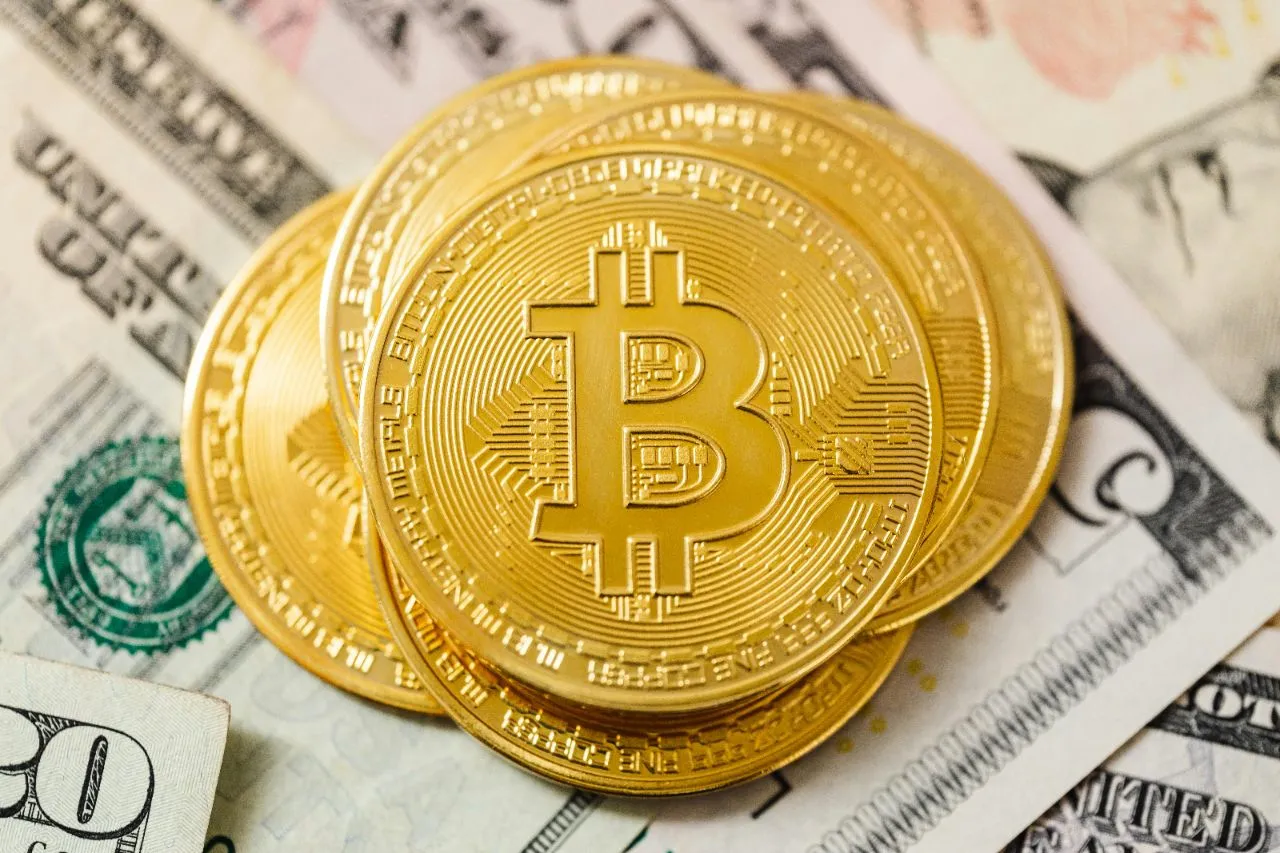
https://asset.coinness.com/en/news/6f5d46560365c3985ac1220eddee73da.webp
Photo by Karolina Grabowska on Pexels

Humanistic approach to cryptocurrency 

The school stated that the planned major will be taking a humanistic approach to Bitcoin and cryptocurrencies, focusing less on their technological aspects. The specifics of the courses, however, are yet to be disclosed. 


Hanyang University is no stranger when it comes to blockchain and cryptocurrencies. The institution has already established the Department of Blockchain Computing and Cryptoeconomics back in 2018, which started enrolling students the following year. Currently, around 20 experts from across various fields including engineering, business management, law and medicine, serve as faculty members. 


Furthermore, the school is considering a proposal to establish a "Bitcoin Philosophy Research Center" on campus and dedicated courses for the Advanced Management Program (AMP). If approved, admissions for the new crypto major could open as early as next year. 


More to Read
View All
Policy & Regulation·

Nov 22, 2023

Korea’s KFTC launches blockchain-powered loan service for public servants

Korea’s KFTC launches blockchain-powered loan service for public servantsThe Korea Financial Telecommunications and Clearings Institute (KFTC) today launched a new blockchain-based loan service tailored specifically for public servants. This initiative is a collaborative effort with the Government Employees Pension Service (GEPS) and involves five banks: BNK Kyongnam Bank, Busan Bank, Woori Bank, Kwangju Bank and Jeonbuk Bank.Photo by REDioACTIVE on PixabaySimplified loan processAdministered by GEPS, this loan program offers loans up to KRW 50 million (approximately $38,600) to government employees based on their projected retirement benefits and years of service. Leveraging the joint financial blockchain system, KFTC has established an infrastructure to issue and verify digital loan recommendation letters, simplifying the loan application process for public servants.Up until now, the loan application process has been cumbersome, requiring government employees to obtain a recommendation letter from GEPS and physically submit it at a bank branch. The new service streamlines this process by allowing them to apply for loans at bank branches or through mobile banking using digitized recommendation letters.More banks to joinKFTC and GEPS are set to increase the number of participating banks, allowing government employees to access loan services at a total of 10 banks. Furthermore, KFTC and GEPS intend to introduce additional financial products that utilize recommendation letters and verification processes underpinned by blockchain technology.The plan indicates that starting early next year, five additional banks will participate in this initiative. These banks are KB Kookmin Bank, Nonghyup Bank, Daegu Bank, Hana Bank and Korea Post.In a statement, KFTC stated its plans to further expand identification verification services within the financial sector, aiming to streamline the application processes for various financial products, including deposits and loans.

news
Web3 & Enterprise·

Nov 15, 2024

Coincheck to become first Japanese crypto exchange to list on Nasdaq

Coincheck, a subsidiary of Monex Group, a Tokyo-based global financial services firm, has gained U.S. Securities and Exchange Commission (SEC) approval to become the first Japanese crypto exchange to list on the Nasdaq, an American stock exchange.Photo by Denys Nevozhai on UnsplashSPAC mergerThe approval by the U.S. regulator was filed on Nov. 13. The listing has been enabled due to the company’s decision to enter into a merger with a special purpose acquisition company (SPAC), namely Thunder Bridge Capital Partners (TBCP).  A SPAC raises money through an initial public offering (IPO) to either acquire or merge with an existing company. Opting for a SPAC means that Coincheck can forego a lot of the time and expense that would be necessary if it attempted to effect an IPO on its own. Parent company Monex Group published a statement outlining that Coincheck CEO Yuko Seimei had “been diligently preparing for listing its common stock on the Nasdaq Global Market (“Nasdaq”) through a previously announced business combination with Thunder Bridge Capital Partners.” Possible Nasdaq listing on Dec. 10 In a press release issued by TBCP, the company claimed that the proposed merger is anticipated to close on or about Dec. 10, 2024. That eventuality is subject to stockholder approval, Nasdaq approval and specific closing conditions. Consequently, Coincheck’s Nasdaq listing could potentially happen as early as Dec. 10. TBCP is holding a shareholder vote on the merger on Dec. 5. If all conditions are satisfied to pave the way for listing, the company’s stock will be listed using CNCK as the Nasdaq stock ticker. Once the merger and Nasdaq listing have been accomplished, Coincheck will still remain a subsidiary of Monex Group. The merged business will gain access to $237 million, held in trust by TBCP, with Monex retaining an 82% stake in the company. Furthermore, Thunder Bridge CEO Gary Simanson will lead the new company. The $1.25 billion merger had been in the works since 2022, having faced multiple delays on the path towards merger completion and Nasdaq listing. Coincheck finally filed with the SEC to merge back in May. Parent company Monex has other interests in the digital asset sector beyond its involvement with Coincheck. Last December the company acquired a majority stake in 3iQ Digital Holdings, a Canadian crypto asset management company.Monex has just launched a new brand, Monex Web3, comprising of Monex’s Web3 business portfolio. It also offers a Web3 consulting business, using its local know-how to guide Web3 startups in entering the Japanese market. Coincheck has also engaged in partnerships to assist other firms in gaining access to the Japanese market. Earlier this year the leading Japanese crypto exchange partnered with USD Coin (USDC) stablecoin issuer Circle, in an effort to expand USDC access within the local market. In January 2018 the exchange suffered what was at the time the world’s largest ever digital asset theft, losing $534 million in virtual assets in a hack of the platform.

news
Policy & Regulation·

Sep 21, 2023

Mt. Gox Extends Repayment Deadline to 2024

Mt. Gox Extends Repayment Deadline to 2024In a development that has captured the attention of the cryptocurrency community, failed Japanese crypto exchange Mt. Gox has officially announced a one-year extension of its repayment deadline.The decision, authorized by the Tokyo District Court, represents a one-year delay from the previously stipulated date of October 31, 2023.Photo by Andre Benz on UnsplashInfamous collapseAt its height, Mt. Gox was the world’s largest cryptocurrency exchange, facilitating over 70% of all cryptocurrency trades. However, its fall from grace began in 2014 when it fell victim to a colossal hack, resulting in the loss of 850,000 Bitcoins. The collapse left approximately 24,000 creditors in its wake, each of them agonizing over a multi-year period for the return of their digital assets.In a letter dated September 21, Rehabilitation Trustee Nobuaki Kobayashi announced the extension of the repayment deadline. This extension applies to the base repayment, early lump-sum repayment, and intermediate repayment, all of which have been rescheduled to October 31, 2024.The rationale behind this delay is twofold. Firstly, to provide creditors with additional time to furnish essential information required for the repayment process. Secondly, it will allow the trustee to coordinate with associated banks, fund transfer service providers, and cryptocurrency exchanges to facilitate the repayments.Potential payout for diligent creditorsA glimmer of hope exists for creditors who have diligently provided the necessary information. Repayments may commence sequentially as early as the close of this year. That said, it should be noted that the specific timing of repayments for each creditor remains uncertain.Kobayashi emphasized that the schedule is subject to change depending on circumstances, and further adjustments are possible. The Mt. Gox Debtor has encouraged creditors who have as yet not provided required information to facilitate payments to do so.Naturally enough, long suffering creditors are frustrated by this latest update. Taking to X (formerly Twitter), one user named “Mt.Gox’ed” wrote: “People will not get their Mt.Gox money back.” . . . “I’ve been tweeting for a long time that infinite delays are coming.”The move evoked a similar response from distressed debt specialist Thomas Braziel, who wrote: “Another delay from the MtGox trustee’s office — COME ON!”Mt. Gox’s journey towards rehabilitation has been arduous and protracted since its declaration of insolvency in 2014. Legal battles, extensive delays, and the need for meticulous coordination have all contributed to this postponement. Nonetheless, creditors are holding onto the hope that, with this extension, the path to recovering their lost assets will become smoother.Crypto market impactThis latest news has drawn considerable attention within the broader crypto sector as it may have implications for the market as a whole. The repayment delay holds the potential to impact Bitcoin prices, given the sheer volume of tokens that will be released when repayments begin. The Mt. Gox estate holds 142,000 BTC, 143,000 BCH, and 69 billion JPY.As per UBS analysts, while this influx of funds could influence the market, it is unlikely to destabilize Bitcoin. Notably, the recovery of approximately 20% of the stolen tokens after the hack reflects a positive step in the ongoing rehabilitation process.

news
Loading