Top

Gate.io Shrugs Off Withdrawal Concerns Amid Multichain Crisis

Web3 & Enterprise·June 02, 2023, 2:31 AM

Gate.io, a prominent cryptocurrency exchange, has refuted rumors circulating within the crypto community about withdrawal issues on its platform. On Wednesday, the exchange reassured users that its operations remain unaffected by recent events.
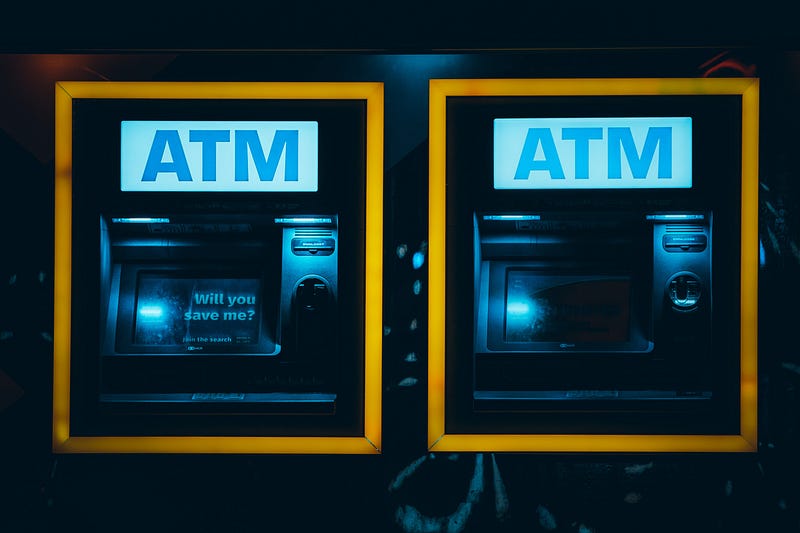
Photo by Keller Chewning on Unsplash


Gate.io confirms smooth operations

Gate.io is one of the oldest Chinese Bitcoin exchanges. It moved its corporate headquarters to the Cayman Islands once the Chinese authorities took a hardline stance on cryptocurrencies a few years ago. It also maintains offices in Seoul, South Korea, and is currently preparing to launch a bespoke Hong Kong-based platform.

According to the exchange, withdrawals are functioning properly, and the overall operations of the exchange are healthy. It explicitly stated, “There are no issues with our operations or withdrawals as rumored.”


Multichain concerns

Speculation emerged on social media on May 24 when Arkham Intelligence reported that members of the separate blockchain project Multichain had transferred $3 million worth of the $MULTI token to Gate.io. Arkham also mentioned other transactions involving Multichain-related tokens, some of which were subsequently suspended for deposit on the leading exchange, Binance.

While Arkham did not directly suggest any risks to Gate.io itself, the combination of market activity and other events led to rumors. ‘Coinsumption,’ a Twitter account with nearly 31,000 followers, suggested on May 31 that Gate.io might be facing insolvency problems and advised users to withdraw their funds from the exchange.

The ongoing issues with Multichain may well be unrelated to Gate.io. Multichain’s team members recently stated that they are unable to contact their CEO or access project servers. The project has experienced transaction delays over the past few days.


Native token price impact

Gate.io’s native token ($GT) has reportedly been affected by these rumors, as its value has declined by 6.59% over the past 24 hours. In contrast, Bitcoin has only experienced a 1.4% decrease.

The $GT token losses can be attributed, in part, to a period of several hours during which the token’s price dropped from $4.92 to $4.49. In isolation, this change represents an 8.7% loss, although there have been partial recoveries and other fluctuations to offset the decline. At the time of publication, the $GT token unit price stood at $4.36.

Despite the recent challenges, Gate.io continues to demonstrate significant trading volume. On the most recent day, the exchange recorded approximately $525 million in trading volume, solidifying its position as one of the largest centralized exchanges with sub-billion daily trading volumes.

The almost ten-year-old exchange is among several cryptocurrency exchanges preparing to comply with upcoming regulations in Hong Kong. It aims to operate alongside other platforms, such as CoinEx, OKX, Huobi, and BitMEX, as they adapt to the regulatory framework being implemented in the region.

Gate.io has dispelled rumors of withdrawal issues, assuring users that its operations are functioning normally. Notwithstanding that, as with everything in the crypto space, the facts and circumstances can change in an instant. Therefore, it’s a topic that is worthwhile watching as further news emerges relative to ongoing issues on the Multichain project.


More to Read
View All
Web3 & Enterprise·

Jul 17, 2023

CertiLife Secures Funding for Blockchain-Based Medical Device Warranties

CertiLife Secures Funding for Blockchain-Based Medical Device WarrantiesCertiLife, a South Korean startup that specializes in blockchain-based warranty services for medical devices, has recently secured seed funding from dentists and the blockchain industry. The amount of the investment remains undisclosed, as reported by local media outlet Mirakle Ahead.Photo by Jonathan Borba on UnsplashBlockchain advantagesCertiLife leverages the power of blockchain technology to issue warranties for medical devices. Unlike traditional physical warranties, CertiLife’s digital warranties are not only environmentally friendly but also offer cost-saving benefits to medical device manufacturers. This is achieved by eliminating the need for physical resources.Through messaging appCertiLife’s blockchain-powered warranties are issued through South Korea’s popular messaging app KakaoTalk, providing convenience to clinics and patients. They can be easily managed using Klip, a digital asset wallet developed by GroundX, a blockchain subsidiary of Kakao Corp.One of the investors expressed expectations that blockchain-based warranties would address the inconvenience and risk of loss associated with traditional warranties. The investor said that CertiLife’s digital warranties will ensure secure data management, save time, and offer improved convenience.CEO Kim Do-hee of CertiLife emphasized the company’s commitment to utilizing investment funds to enhance its services. Kim said that CertiLife is actively preparing to collaborate with various medical device manufacturers and also exploring opportunities to expand into international markets later this year.

news
Web3 & Enterprise·

Sep 14, 2023

Raon Whitehat Launches Cloud-Based NFT Wallet for OmniOne Marketplace

Raon Whitehat Launches Cloud-Based NFT Wallet for OmniOne MarketplaceSouth Korean tech security firm RaonSecure announced Thursday that its subsidiary Raon Whitehat has launched a cloud-based NFT wallet service on the OmniOne NFT marketplace, specializing in utility NFTs that are backed by tangible assets like gold.Photo by C Dustin on UnsplashMore secure and convenientUsers can easily create an account for the OmniOne NFT cloud wallet by entering a username and password. This cloud-based solution offers advantages over mobile app-based NFT wallets, which can present occasional inconveniences. In scenarios involving app deletion, device change, or device loss, one faces the cumbersome task of reinstalling the application and going through the authorization process again. In contrast, the cloud wallet provides a more seamless experience. NFTs are securely stored in the cloud and can be accessed from any device, requiring only the recollection of a username and password.Transferring NFTsIndividuals who have NFTs stored within their current app-based NFT wallet can create a new cloud wallet account and proceed to transfer their NFTs from the existing app-based account to the new cloud account by utilizing the “Send as Gift” feature.RaonSecure CEO Lee Soon-hyung announced that users are now able to store their gold-backed NFTs, purchased from the OmniOne NFT marketplace, in the cloud wallet. He explained that this development addresses the issue of potential NFT asset loss due to app deletion or device loss.Furthermore, Lee emphasized that Raon Whitehat is dedicated to introducing more innovative services in the future. These services will prioritize user convenience and security, specifically in the storage of diverse digital assets like NFTs and certification badges.

news
Policy & Regulation·

Sep 22, 2023

Linear Finance Dealing With LUSD Exploit

Linear Finance Dealing With LUSD ExploitLinear Finance, the Hong Kong-based DeFi protocol, made an announcement by way of a blog post published to the project’s website on Thursday, suggesting that the project’s native stablecoin, LUSD, has come under attack.Photo by Markus Spiske on UnsplashTaking precautionary actionThis security breach has prompted the team to take immediate action to safeguard user accounts and the project’s integrity. The project team is actively investigating the exploit attack on LUSD. It has issued a stern warning to its users, advising them against buying or trading LUSD until the team can confirm the situation’s status.This measure is aimed at preventing further complications and ensuring the community’s interests remain protected. Furthermore, the project has temporarily suspended liquidations to secure users’ accounts. This step has been taken to mitigate immediate concerns and ensure that no user faces undue losses as a result of the exploit.Assets disposed on PancakeSwap & AscendexAmid the ongoing investigation, Linear Finance’s team has pledged to provide timely updates as soon as more information becomes available. In explaining away the nature of the attack, the project team clarified:”The attacker was able to mint an unlimited supply of LAAVE and subsequently traded the liquid asset to LUSD on the Linear Exchange, prior to selling it on PancakeSwap and Ascendex.”Project responseIn its efforts to deal with the issue, the Linear Finance project team has engaged an on-chain data specialist to track down the attackers. The Linear bridge contract has been disabled relative to LUSD. All protocol contracts that allow tokens to be minted, exchanged, or burnt have been paused. Meanwhile, wallets identified as having been involved in the protocol exploit have been shared with the authorities and major cryptocurrency exchanges.Synthetic asset protocolLinear Finance creates synthetic assets with the protocol design enabling unlimited liquidity. The network has been built on top of the Ethereum blockchain. As a consequence of activity surrounding the exploit, trading of LUSD over the course of the past 24 hours has proven to be out of the ordinary. At the time of writing volume over the past 24-hour period had increased by 8412%. The current market price of the stablecoin stands at $0.9874.Protocol and network hacks and exploits have been coming in thick and fast in recent days. Hong Kong crypto exchange CoinEx has been trying to recover from a $70 million hack on the platform over recent days. Meanwhile, Seychelles-headquartered peer-to-peer crypto platform Remitano suffered a $2.7 million hack late last week.On Wednesday, the project team behind DeFi protocol Balancer warned network users that the Balancer front-end user interface was under attack. The Ethereum-based DeFi network fell victim to another exploit last month, resulting in losses in the region of $900,000.In the dynamic crypto sector, unforeseen events like potential exploits can disrupt the market and sow uncertainty. The issue remains a major challenge both for centralized exchange platforms and DeFi protocols.

news
Loading
