Top

Kazakhstan’s sovereign wealth fund to invest in crypto

Policy & Regulation·July 16, 2025, 7:53 AM

With Kazakhstan having recently indicated that it would create a national crypto reserve, the administrators of Kazakhstan’s existing sovereign fund now want to invest in crypto assets as well.


According to a report published by Kursiv, a business media outlet covering Central Asia, the Kazakhstani authorities are planning to invest a portion of the country’s existing gold and foreign exchange reserves in crypto assets. The publication outlined that this was conveyed by Timur Suleimenov, governor of the National Bank of Kazakhstan, in a recent press conference. 

https://asset.coinness.com/en/news/1a422890c0f6f61eba8e3d18d066b2de.webp
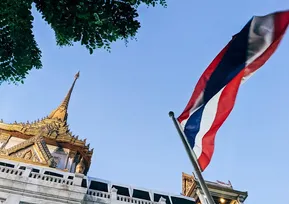
Photo by ANSAR ARCHITECTS on Unsplash

Following an international investment trend

He stated that the country has a portfolio of alternative investments, which includes gold and foreign exchange reserves. Within that particular portfolio, more aggressive investment strategies are pursued in an effort to generate higher investment returns. He added:


“We looked at the experience of the Norwegian fund, the American experience, and the experience of Middle East funds. They have certain investments in either crypto assets directly, or in ETFs and shares of companies that are closely related to crypto assets. They are very small.”


In 2024, it emerged that Norway’s sovereign wealth fund had indirect exposure to 2,446 Bitcoin. By January of this year, the sovereign fund had increased its indirect exposure further through an investment in pioneering American Bitcoin treasury firm Strategy (formerly MicroStrategy).


In the Middle East, the Abu Dhabi Investment Authority (ADIA), which manages the Abu Dhabi sovereign wealth fund, has been exposing the fund to Bitcoin indirectly through investments in BlackRock’s spot Bitcoin exchange-traded fund (ETF), IBIT.


Considering asset volatility

While moving towards a crypto investment within the alternative investments portfolio, Suleimenov struck a cautious note, stating:


“This is not an easy question, so there is no need to rush here. Yes, such assets can bring high returns, but at the same time they are characterized by high volatility.”


This latest development in Kazakhstan coincides with the release of a report by German multinational investment bank, Deutsche Bank. The research report has found that Bitcoin has reached a new all-time-high unit price amid a dramatic drop in the volatility of the leading digital asset when compared with times past. 


The bank explained that this was a sign of a maturing market, while suggesting that Bitcoin’s volatility is likely to decline further as adoption grows. Reduced volatility is making crypto assets like Bitcoin more appealing to long-term capital allocators like sovereign wealth funds and pension funds.


In an interview with Bloomberg back in May, Mike Novogratz, founder and CEO of American digital assets firm Galaxy Digital, said that he has had conversations with heads of large sovereign wealth funds that have said “if America is buying Bitcoin, we’re buying Bitcoin.”

In March, U.S. President Donald Trump issued an executive order setting out the establishment of a strategic Bitcoin reserve in the United States. In moving to establish a crypto reserve in Kazakhstan recently, Suleimenov suggested that international practice demonstrates that such a reserve may include confiscated crypto-assets, with Kazakhstan planning to proceed with the formation of the reserve on that basis.


More to Read
View All
Web3 & Enterprise·

Oct 11, 2023

Lotte World Unveils Theme Park Maps in Metaverse Platform The Sandbox

Lotte World Unveils Theme Park Maps in Metaverse Platform The SandboxLotte World, one of South Korea’s major theme parks, announced Wednesday (local time) that it is making its debut on the global metaverse platform The Sandbox, on which it will unveil a virtual map that mirrors the offline theme park experience with quests and missions.Photo by Shuto Araki on UnsplashImmersive virtual adventuresThe map portrays a fantastical concept with two realms — Lotte World Station and Fairy Tale World. Lotte World Station is a map of a train station modeled after the theme park that serves as both the starting point for all journeys through the metaverse and as a gateway to other maps. Users can explore the map and learn about the various virtual adventures awaiting them. The map also offers information about Lotte World’s five businesses, including Lotte World Adventure, Lotte Water Park, Seoul Sky, and more.Users can even enjoy attractions such as Lotte World Adventure’s Balloon Ride and World Monorail, as well as Seoul Sky’s Sky Bridge and the Water Park’s Tornado Water Slide.On the other hand, Fairy Tale World is a kingdom-themed map where Lorry and Lotty — Lotte World’s famous mascots — reside as queen and knight. Users can access this map by riding the World Monorail from Lotte World Station. They can then embark on quests to save the cursed Fairy Tale World and enjoy rides such as Gyro Drop, Fantasy Dream, Bumper Cars, and Merry-Go-Round.Furthermore, the virtual map features Lotte World Adventure’s iconic landmark, Magic Castle, and Lotte World Adventure Busan’s Talking Tree, where parades will also be held.Special eventThe theme park is also holding an opening event in celebration of the map’s launch. Users who complete quests within Lotte World Station and Fairy Tale World by November 8 will receive rewards. Furthermore, those who possess items that they collected from the Lotte World Adventure game that was released in July will receive additional rewards.“We plan to release three more maps in the future to further diversify our metaverse content. We are committed to showcasing unique content that Lotte World alone can provide, transcending the boundaries of online and offline experiences,” the theme park said.

news
Policy & Regulation·

Dec 08, 2023

UAE researchers introduce carbon trading platform on blockchain

UAE researchers introduce carbon trading platform on blockchainAmid escalating climate concerns, the Technology Innovation Institute (TII) in Abu Dhabi has unveiled a blockchain designed to monitor carbon emissions and facilitate trading.Announcement during COP28The institute’s Cryptography Research Center (CRC) recently announced the launch of its proprietary blockchain-powered carbon trading platform, showcasing the United Arab Emirates’ (UAE) commitment to spearheading global climate initiatives. TII CEO Ray Johnson stated:“We are proud to announce this digitized tracking and trading platform at COP28, representing the UAE’s drive to become a technology and innovation powerhouse and its commitment to leading the world’s climate action agenda.”The revelation coincides with the United Nations Climate Change Conference (COP 28), which runs until Dec. 12 and is taking place in Dubai. The conference involves nations making commitments to reduce emissions and transition various sectors toward sustainable energy sources.Photo by Matthias Heyde on UnsplashEnabling carbon trading internationallyThe newly introduced blockchain platform is poised to enable the international trade of carbon tokens, monitor greenhouse projects and incentivize participation in emission reduction initiatives. By leveraging the principles of carbon trading and tracking, organizations will gain valuable insights into their environmental impact. The platform’s deployment on the blockchain ensures transparency and encourages broader participation, compelling major players to fulfill their environmental promises.The lightweight blockchain has been developed with minimal environmental impact in mind, aligning with the broader goals of the government’s climate action initiatives. This blockchain network allows organizations to record their emissions openly, prompting users to generate tokens that quantify carbon removed from company operations through capture or trading.Moreover, the network incorporates auditors to ensure the entire process is secure, transparent, accurate and safe. This approach aims to provide the industry with accurate data on their activities without relying on cumbersome third-party expert monitoring.Harnessing blockchain’s transparencyThe move to utilize blockchain technology for addressing climate change aligns with the long-standing belief of the United Nations and various international organizations. Blockchain’s transparency and openness empower industries to have accurate data on their activities, eliminating the need for complex third-party monitoring that often comes at a higher cost.In response to growing criticism of the energy consumption associated with blockchain technology, certain firms have taken steps to adopt greener practices. Notably, in 2021, the Ethereum blockchain transitioned to a Proof-of-Stake model, reducing its carbon footprint by over 99% by eliminating miners and introducing validators. Ethereum also launched the Ethereum Climate Platform (ECP), attracting participation from industry giants like Microsoft.Furthermore, cryptocurrency companies have allocated funds for solar-powered digital asset projects, encouraging developers to embrace eco-friendly practices. This shift towards sustainable initiatives underscores the industry’s commitment to addressing environmental concerns.In a related development, in August, it was reported that the UAE Ministry of Climate Change and Environment (MOCCAE) had entered into a collaboration with the Industrial Innovation Group and the Venom Foundation to work towards a blockchain-based carbon credit system.The introduction of the UAE’s blockchain-powered carbon trading platform marks a significant step towards fostering global climate initiatives. The innovative technology not only enhances transparency and accountability in carbon trading but also aligns with the broader global shift towards sustainable and eco-friendly practices within the blockchain industry.

news
Policy & Regulation·

Jan 24, 2025

Hong Kong regulator extends swift licensing process to new applicants

Having introduced its swift licensing process late last year, Hong Kong's Securities and Futures Commission (SFC) has extended access to the process to all new virtual asset trading platform (VATP) applicants. In a statement published on its website on Jan. 16, the regulator outlined that it is extending the swift licensing process to new applicants. Back in December, the SFC approved licensing relative to four exchanges under the expedited process. Those additions included Accumulus GBA Technology Co., DFX Labs Company, Hong Kong Digital Asset EX and Thousand Whales Technology (BVI).Photo by Ruslan Bardash on UnsplashSeven licensed VATPsThat has brought the total number of licensed exchanges to seven, as HashKey, OSL and HKVAX were the first exchanges to be approved. In November, fifteen licensing applications relative to virtual asset platforms, had been pending. According to SFC CEO Julia Leung, the regulator had hoped to issue licenses to eleven VATPs by the end of 2024.  The new expedited process requires applicants to “implement their policies, procedures, systems and controls before conducting an external assessment on these measures.” The regulator decided to extend the swift licensing process due to the effectiveness of the SFC’s engagement with other applicants, relative to the regulatory standards being put in place, implemented through on-site inspections being carried out. Fostering a healthy ecosystem Commenting on the development, Dr. Eric Yip, the SFC’s Executive Director of Intermediaries, stated:“The SFC is committed to fostering a healthy ecosystem and a robust regulatory framework for the development of virtual assets in Hong Kong. With the new approach, we will enhance our collaboration with VATP applicants, providing them with constructive and timely feedback, thereby enabling fully compliant VATPs to bring their services to investors more swiftly.” While the regulator is awarding licensing on an expedited basis through the swift licensing process, licensing is conditional. The VATP can operate on a restricted scope of business once it has completed rectification actions following feedback provided by SFC inspectors.  In October Yip outlined the SFC’s plans to create a consultative panel consisting of senior management executives from licensed VATPs. The objective of the panel is to gather feedback and concerns from licensees, adjusting the regulatory framework where deemed appropriate, relative to that feedback. Commenting on the initial introduction of the expedited approval system last December, Yip stated: “We have been proactively engaging with VATPs’ senior management and ultimate controllers, which helps drive home our expected regulatory standards and expedite our licensing process for VATPs. We aim to strike a balance between safeguarding the interests of investors and facilitating continuous development for the virtual asset ecosystem in Hong Kong.” The Hong Kong government has also been working towards incorporating a stablecoin bill, which will establish a regulatory framework with regard to fiat-referenced stablecoins. The SFC also intends to introduce licensing for crypto custodians in 2025.

news
Loading