Top

Singapore’s Whampoa Plans Crypto-Friendly Bank in Bahrain

Web3 & Enterprise·May 19, 2023, 12:24 AM

Singapore-based privately held investment firm Whampoa Group has announced that it plans to open a crypto-friendly digital bank in the Kingdom of Bahrain in the Persian Gulf.
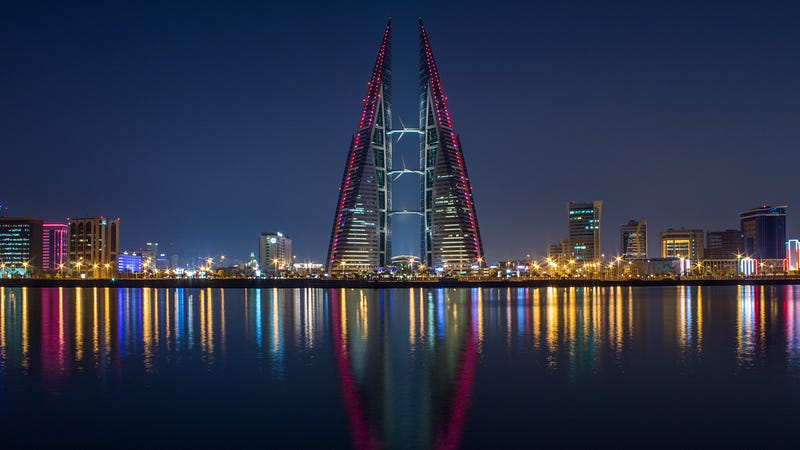
Photo by Charles-Adrien Fournier on Unsplash


Island state diversification

The island state has been looking to diversify from its predominantly oil-based economy into fintech and finance. Whampoa Group CEO Shawn Chan said that the company was “impressed by Bahrain’s solid reputation in the financial services sector, transparent regulatory framework, and ongoing pledge to collaborate and innovate.”

Chan added that Whampoa would commit to providing “secure and innovative digital financial solutions in line with global best practices” relative to the proposed digital bank, with an eye towards setting a benchmark for the industry where digitally-native banking is concerned.


Persian Gulf crypto hubs

The Persian Gulf is proving to be a crypto-friendly region in recent times. Bahrain is one of a number of Gulf Cooperation Council (GCC) countries vying for digital asset-related business. The country’s financial services sector contributes in excess of 17% to Bahraini gross domestic product (GDP). Bahrain has been one of the first in the region to establish a regulatory framework for digital assets, together with a crypto asset licensing system.

Its Persian Gulf neighbor, the United Arab Emirates, including the individual emirates of Dubai and Abu Dhabi, have followed a similar path, establishing a workable set of regulatory rules in relation to digital assets, alongside licensing of crypto businesses.

CEO of the Bahrain Economic Development Board, Khalid Humaidan welcomed Whompoa’s decision to establish the business in Bahrain, emphasizing the importance of crypto-friendly digital banking to support further development of crypto business in Bahrain, while bolstering the infrastructure available to existing digital asset businesses operating within the Kingdom.


Doors open in 2023

The bank is scheduled to open later this year, providing integrated financial services covering traditional banking, together with crypto-specific banking activity. That will include digital asset trading and custody, as well as asset management-based products and services.

Whompoa’s plan is to gear the bank towards meeting the needs of institutions, innovators and crypto start-up companies and sophisticated global investors. Crypto-friendly banking has been a perennial problem that has stymied the development of the digital assets sector since its emergence.

That problem has gotten worse rather than better more recently, with a mixture of banking failures and a crypto sector crackdown leading to the closure of crypto-friendly banks like Silvergate and Signature in the United States in recent months.

In East Asia, Hong Kong, while shaping up to compete on the global stage as a crypto-hub, has seen crypto businesses experience difficulty in terms of securing banking within the Chinese autonomous territory. Efforts are being made to alleviate that issue. Furthermore, Hong Kong’s largest virtual bank, ZA Bank, has set out to become the go-to bank for crypto start-up banking in the city.

Experiences elsewhere exemplify how crucial banking infrastructure is to the embryonic digital assets sector. It underscores the important role that Whompoa could play in boosting crypto sector business in the island state of Bahrain as digital asset innovation continues to be rolled out.


More to Read
View All
Web3 & Enterprise·

Jun 02, 2023

Gemini Targets UAE Crypto License

Gemini Targets UAE Crypto LicenseGemini, the US-headquartered cryptocurrency exchange owned by the Winklevoss twins, has announced its intention to obtain a cryptocurrency service license in the United Arab Emirates (UAE). The move comes as the exchange seeks to navigate the perceived “hostility and lack of clarity” surrounding cryptocurrency regulations in the United States.In a blog post published on Wednesday, Gemini highlighted the growing interest in cryptocurrencies among UAE citizens and referred to positive interactions with UAE regulators as driving factors behind its pursuit of the license. The co-CEOs of Gemini, Cameron and Tyler Winklevoss, explained in an interview with The National that their decision was influenced by the challenges they faced with crypto regulation in the US. Gemini CEO Tyler Winklevoss expressed optimism about the regulatory environment in the UAE, stating:“We’ve been super encouraged with our conversations here with the regulators. There’s an effort to make the UAE a home and a hub for crypto and, most importantly, to enact thoughtful regulation that connects, that protects both consumers, but also a company’s ability to innovate.”Photo by Nextvoyage on PexelsAbu Dhabi or Dubai — or bothAs of now, the Winklevoss twins have not yet determined the specific location for Gemini’s operations in the UAE. They hinted that the exchange’s headquarters could be established in both Abu Dhabi and Dubai, reflecting the potential for growth and development in both cities.Gemini’s decision to pursue a crypto license in the UAE underscores the country’s growing importance in the cryptocurrency industry. With its efforts to create a favorable regulatory environment and attract crypto-related businesses, the UAE aims to position itself as a crypto hub while safeguarding the interests of both consumers and innovators.Discouraging US outlookAccording to Gemini’s Global State of Crypto Report, which provides insights into cryptocurrency adoption and usage, more than 35% of respondents surveyed in the UAE reported purchasing crypto. In contrast, only 20% of respondents in the United States said they had bought cryptocurrencies.The report also revealed that nearly 32% of non-crypto owners in the UAE expressed their intention to enter the market within the next year. Furthermore, 33% of UAE crypto holders indicated that they plan to use their digital assets for in-person purchases at physical retailers, a significantly higher percentage compared to the global average of 19%.Although still a US-headquartered business, Gemini has been turned off the US market more recently. The Winklevii twins have taken a similar stance to Coinbase’s Brian Armstrong and Ripple’s Brad Garlinghouse. Coinbase has expanded in Singapore, acquired digital asset licensing in Bermuda, and has the intention of establishing a presence in Abu Dhabi.Garlinghouse has matched Armstrong’s outspokenness in criticizing the regulatory approach to digital assets in the United States. Likewise, he has acted to place Ripple on an international footing, establishing a presence in Dubai. In April, Gemini announced the opening of an engineering center in India, together with plans to expand its base in Singapore.As Gemini proceeds with its application for the UAE crypto license, industry observers will be closely monitoring the development, anticipating the potential impact of this expansion on the exchange’s operations and the broader cryptocurrency landscape in the region.

news
Policy & Regulation·

May 17, 2023

Korean Blockchain Game Publisher Joins UNGC to Bolster ESG Management

Korean Blockchain Game Publisher Joins UNGC to Bolster ESG ManagementWemade, a Korean blockchain game publisher, joined the United Nations Global Compact (UNGC) to bolster its environmental, social, and governance (ESG) management. The company announced its membership through a press release issued on Wednesday.Photo by Noah Buscher on UnsplashUNGC membershipSince its establishment in 2000, the UNGC has evolved into the largest corporate sustainability initiative worldwide. With a membership base of over 20,000 companies spanning across 162 countries, it serves as a platform for organizations to align their operations with ten principles encompassing human rights, labor, environment, and anti-corruption.Annual reportsUnder the guidelines of the UNGC, Wemade will fulfill its commitment by submitting an annual report called the Communication on Progress (COP). The company’s objective is not only to meet sustainable development goals but also to enhance its ESG management. Along with these endeavors, the company will strive to improve its corporate citizenship.ESG managementIn expressing his thoughts on the matter, Wemade CEO Chang Hyun-guk emphasized that the company’s inclusion in the UNGC would serve as a catalyst for driving sustainable growth through ESG management. He underscored its commitment to fulfilling corporate social responsibility and meeting global standards by practicing ESG management, given its position as a leading entity in the blockchain market.Wemade’s three main objectivesMeanwhile, Wemade is practicing ESG management centered on three main objectives: responsible environmental management, inclusive growth for future generations, and transparent governance.

news
Web3 & Enterprise·

Jun 13, 2025

Ant Group preparing to apply for stablecoin licenses in Hong Kong & Singapore

Ant Group, a Chinese financial services conglomerate and affiliate of the Alibaba Group, has plans to acquire stablecoin licenses across Asian markets and further afield. Its Singapore-headquartered global digital payments and financial technology subsidiary, Ant International, plans to file an application for a stablecoin license in Singapore and in Hong Kong once the Chinese autonomous territory implements its stablecoin regulation later this summer.  That’s according to a report published by Bloomberg on June 12, citing unnamed sources familiar with the matter. Beyond the Asia-Pacific (APAC) region, Ant International also plans to seek a stablecoin license in Luxembourg.Photo by Ban Daisy on Unsplash2 Hong Kong stablecoin license applicationsIn a statement, Ant International stated: “We plan to apply for the fiat-referenced stablecoins (FRS) issuer's license once the process is open after the [Hong Kong] Stablecoins Ordinance takes effect on August 1.”Additionally, Bian Zhuoqun, president of Ant Digital Technologies, another Ant Group subsidiary focused on applying digital technologies, confirmed that it too will be applying for stablecoin licensing in Hong Kong.  Zhuoqun told reporters that the company has already opened dialogue with the regulator in Hong Kong, while also participating in a regulatory sandbox. While the company wasn’t a named participant within Hong Kong’s stablecoin sandbox, it had previously participated in Project Ensemble, an initiative run by the Hong Kong Monetary Authority (HKMA) aimed at establishing a tokenization ecosystem in the city. Exploring stablecoin applicationsOn June 10, Ant International and German multinational investment bank Deutsche Bank announced a strategic partnership geared towards establishing integrated cross-border payment solutions to global merchants.  The two firms stated that they would explore tokenized bank deposits while also looking into stablecoin applications for global payments. It highlighted the potential use of stablecoins within Ant companies, facilitating real-time cross-border treasury management, reserve management and on-ramp and off-ramp services. Back in November, Singapore-headquartered StraitsX, a stablecoin-based payments startup, launched a cross-border payments product in association with AliPay+, Ali International’s offshore digital payments platform. A key component of the product offering is the use of the XSGD stablecoin. Hong Kong passed its stablecoin bill last month. Last week, the city’s government outlined that the effective date for the resultant Stablecoin Ordinance has been set for Aug. 1. Under the Ordinance, only licensed institutions are authorized to offer fiat-referenced stablecoins in Hong Kong, while the issuer of such a stablecoin must be licensed in order for it to be offered to a retail investor. Last month, multinational banking and financial services group HSBC launched Hong Kong’s first blockchain-based settlement service, utilizing tokenized deposits for swift transactions. The company collaborated with Ant International, which became the first client of the service. Entering the financial mainstreamA Financial Times report published on June 12 asserted that stablecoins are entering the financial mainstream, a development that “could have profound implications for the global financial system.” Earlier this week, the South China Morning Post (SCMP) reported that Hong Kong’s stablecoin law could lead to a boom in digital assets.Daniel Tse, managing director of Hong Kong brokerage firm Futu Securities, told the SCMP: “We’re seeing a significant trend in investments related to stablecoins on our platform, which highlights the growing importance of this sector.” 

news
Loading