Top

Growing Concerns about Single Crypto Exchange Listings in Korea

Policy & Regulation·April 14, 2023, 2:11 AM

According to Yonhap Infomax, there is increasing concern about single crypto exchange listings in the Korean market, following the recent arrest of two former Coinone employees.
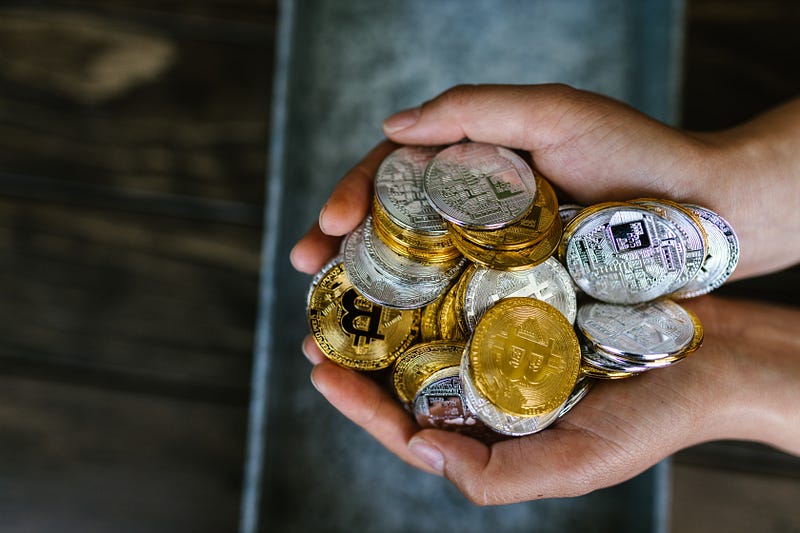
crypto coins
©Pexels/RODNAE Productions


Crypto listing bribery

The individuals were detained by the Seoul prosecution for allegedly accepting about 3 billion KRW (equivalent to over $2.2 million) in bribes to list a certain cryptocurrency on the exchange.

Prosecutors are investigating if these suspects were also involved in the listing of the Puriever token, which is reportedly connected to the kidnapping and murder of a woman in her forties in Gangnam, Seoul.


Single exchange-listed cryptos

A recent report by the Financial Services Commission (FSC) revealed that 389 cryptocurrencies were listed on a single Korean exchange in the second half of last year, a decrease from the previous year’s 403. Despite the decrease, the trend of single exchange listings continued. Exchanges often exclusively list specific cryptocurrencies to gain a competitive edge, as investors typically prefer larger exchanges with greater liquidity.

However, these cryptocurrencies may lack proper review and management and are often highly volatile. The FSC report showed that 34% of cryptocurrencies listed on a single exchange had a market cap of less than 100 million KRW (~$76,000). The Financial Intelligence Unit also warned investors about price fluctuations and liquidity shortages.

High volatile cryptocurrencies are attractive to exchanges, as they can lead to increased transaction fee profits.


Transparent listing

To address this issue, experts advocate for a transparent listing process.

One lawyer in the crypto industry noted that there is a global trend of regulating cryptocurrencies as securities, and if relevant bills pass in Korea, their issuance and disclosure will be regulated. Clear guidelines on disclosures could resolve the issues of single crypto exchange listings, the legal advisor added.

Another industry insider has called for investor caution, stressing the need to consider the potential delisting of these crypto assets.


More to Read
View All
Policy & Regulation·

Jun 20, 2023

Hong Kong Analyzes Web3 Approach of Regional Peers

Hong Kong Analyzes Web3 Approach of Regional PeersHong Kong’s ambitions in Web3 are on the rise as it strives to establish itself as a global hub for digital assets. The Research Unit of the Legislative Council Secretariat of Hong Kong has recently released a summary of a document titled “Development of Selected Regional Web3 Technologies,” shedding light on the city’s involvement in Web3.According to the report summary which was published on June 14, the Hong Kong government is actively promoting the development and utilization of Web3. In the fiscal budget for 2023–2024, the Financial Secretary announced accelerated efforts to build Hong Kong’s Web3 ecosystem, along with the establishment of a dedicated development task force focused on virtual assets.Photo by Jimmy Chan on PexelsPace of developmentHowever, concerns have emerged about Hong Kong’s comparatively slower pace of development in contrast to other regions. Various regions across the globe, particularly in Asia and the Gulf region, have implemented measures to expedite the progress of Web3 and its associated technologies and applications.To address these concerns, the report suggests that Hong Kong should broaden its focus beyond financial services and virtual assets. Instead, it should actively promote innovation in other areas of Web3 technology, such as blockchain and metaverse technology.Scrutinizing regional Web3 developmentIn response to a request from Councilor Wu Kit Ching, the research group has conducted a study on leading regions in Web3 technology and application development, examining their strategies.The study primarily highlights Japan, Singapore, South Korea, and the United Arab Emirates (UAE) as these regions have demonstrated proactive approaches in developing Web3 technologies, and they have become global or regional innovation hubs. Japan, for instance, has established high-level policy guidance and dedicated offices to coordinate Web3 policies across various government departments.Other regions covered in the study have focused on specific areas of Web3. Singapore and the UAE, for example, are exploring blockchain technology through industry collaborations and the establishment of incubation centers. Meanwhile, South Korea is actively launching metaverse strategies to foster innovation across multiple sectors.The summary also provides an overview of the key characteristics, foundational technologies, and applications of Web3. It outlines recent developments in Web3 within Hong Kong and analyzes the development scenarios of selected regions, including Japan’s comprehensive approach and the application-focused initiatives of other regions.The document emphasizes that Web3 represents a decentralized network that empowers users with greater autonomy and control over their digital lives. While the Hong Kong government has introduced measures to support the development of the Web3 ecosystem, particularly in the virtual asset market and related financial services, concerns persist regarding Hong Kong’s slower progress in other areas of Web3 technology compared to its counterparts in Asia and the Gulf region. These regions are capitalizing on their strengths and exploring broader applications of Web3.Hong Kong’s engagement in Web3 and its ambition to thrive in this domain is becoming more evident with each passing day. The summary of the document sheds light on the Chinese autonomous territory’s efforts, while also highlighting the need to expand its focus and foster innovation in various areas of Web3 technology. By doing so, Hong Kong can position itself as a prominent global center for Web3 and leverage the advantages it offers for digital asset development and beyond.

news
Policy & Regulation·

Jun 22, 2023

Ripple Receives In-Principle Approval From Singaporean Regulator

Ripple Receives In-Principle Approval From Singaporean RegulatorRipple, the blockchain-based payments firm, has obtained in-principle regulatory approval from the Monetary Authority of Singapore (MAS) to offer digital asset payments and token products in Singapore.Photo by Dids on PexelsODL service expansionThe approval, announced on Wednesday, will enable Ripple’s subsidiary, Ripple Markets Asia Pacific, to expand its On-Demand Liquidity (ODL) service. ODL facilitates the seamless transfer of the XRP cryptocurrency across borders without the involvement of traditional banking intermediaries.Ripple had applied for an institutional payment license under Singapore’s Payment Service Act to secure the regulatory green light. In response to the approval, Ripple CEO Brad Garlinghouse praised the MAS for its pragmatic and innovation-driven approach to cryptocurrency-related services.He expressed confidence that Singapore would serve as a prominent gateway for Ripple’s business operations in the Asia Pacific (APAC) region. On Twitter, Garlinghouse wrote: “As a major global financial center, Singapore led the way in taking a pragmatic, innovation-first approach to crypto — we’re incredibly proud @Ripple is one of a handful of firms (<20) to receive in-principle approval for a MAS MPI license for digital payment token services!”Stuart Alderoty, Ripple’s Chief Legal Officer, explained that the regulatory approval from MAS would enhance Ripple’s ability to support forward-thinking customers who are exploring the potential of blockchain and crypto technologies to create a more inclusive and borderless financial system.Growing APAC presenceRipple’s presence in Singapore has already been growing significantly. In 2022, the company doubled its number of employees at its Asia Pacific headquarters, with Singapore becoming a major hub for ODL transactions. The MAS, recognizing the potential of fintech firms in the digital money services sector, published its Purpose Bound Money (PBM) white paper on Wednesday, proposing standards for such firms operating in Singapore.While Ripple has made progress with regulatory compliance in Singapore, it has faced legal challenges in other jurisdictions. Since December 2020, Ripple’s legal team has been dealing with a lawsuit filed by the US Securities and Exchange Commission (SEC), accusing Ripple of conducting an unregistered securities offering with its XRP token.The case is expected to reach a verdict in the coming months. While the speculation is that the case has gone well for Ripple, it remains to be seen to what extent it can get the upper hand in taking on a cornerstone institution of the US establishment like the SEC.Either way, Ripple is moving to develop on a global basis. It has recently pursued further development in the Middle East via a Dubai expansion. In Hong Kong, it is collaborating with local regulators in trialing the use of its technology relative to real-world asset tokenization.The company has also established partnerships with central banks in Montenegro and Thailand, as well as numerous regional banks and financial institutions worldwide.The regulatory approval from MAS marks a significant milestone for Ripple, expanding its customer reach and positioning the company for further growth in the digital asset payment sector. Digital asset innovation is truly global and as many organizations are demonstrating, just as Ripple is in this instance, innovative curtailment in one region will simply manifest itself as greater development in another.

news
Policy & Regulation·

May 22, 2023

Cebu Meeting of FSB Highlights Crypto Risks

Cebu Meeting of FSB Highlights Crypto RisksThe Regional Consultative Group for Asia of the Financial Stability Board (FSB) has highlighted the risks implicated by crypto assets in a series of meetings held on Thursday and Friday in Cebu, the Philippines.The FSB is an international body with a mandate to monitor the global financial system, as well as make recommendations in respect of that system. The agency was established by the G20 group of countries in April 2009, replacing its forerunner, the Financial Stability Forum.Photo by John Alvin Merin on UnsplashA regulatory framework for cryptoThe two-day event focused on non-bank financial intermediation (NBFI) in Asia and the development of an effective global regulatory framework for crypto-assets. It discussed recent developments in financial markets, together with their regional impact.In opening remarks, Philippine Central Bank Governor, Felipe Medalla, stated: “Crypto, the biggest issue there is, whether we like it or not is quite a lot, especially younger people who are actually gambling. They have huge losses, our view right now. Well, you’re there, it’s your problem and the regulation becomes strict the moment crypto meets banking.”International participants highlighted the need for the development of an effective global regulatory framework for crypto-assets. Particular concern exists with regard to the potential for systemic risk in relation to crypto and a potential overflow into the traditional financial system.Earlier this year, the FSB proposed a complete regulatory framework for cryptocurrencies, with the report having been originally submitted in October of last year. Among its key components is the imposition of tighter controls. It proposed the guiding principle of “same activity, same risk, same regulation” for crypto assets, mirroring the approach taken for traditional financial assets.Global approach to taming cryptoThis approach has proven to be problematic for people working within the digital assets space. Many of the core facets of cryptocurrencies are entirely different to anything we see in traditional finance. Trying to frame crypto within an existing approach and standard has been perceived by many to be akin to trying to fit a square peg in a round hole.It’s not the FSB's role or place to affect policy directly. That responsibility lies with policymakers and regulators in each individual country. However, the organization is seeking to influence those individuals and entities in the hope that they will employ its suggested regulatory framework.Klaas Knot, Chair of the FSB and President of the Dutch Central Bank, provided this view on crypto: “We will come up with a global regulatory framework. It also only makes sense to regulate this from a global perspective. Because, nowadays you can take a server and put it anywhere in the world and start issuing these digital assets.”From Knot’s take, it’s clear that governments and central bankers are cottoning on to the fact that individual nation-state regulation is futile to an extent where decentralized innovations like cryptocurrency are concerned. Others such as European Central Bank (ECB) President Christine Lagarde and Mark Branson, President of German financial markets regulator BaFin, similarly have called for a globally enforced regulatory approach over the course of the past year.Ongoing struggleWhile regulation can be helpful, particularly when it comes to the points at which crypto meets the traditional system, there’s no doubt that this emerging innovation will disrupt the conventional system to some degree or other. That may place an incentive before central bankers and governments to try and stymie the further development of digital assets.While a truly global approach to regulating digital assets could retard development of the sector, there is rarely total consensus among world governments on a single issue. Therefore, by its very nature, crypto, and the digital assets sector will likely continue to develop regardless. It’s more a question of how long that process takes.

news
Loading