Top

Lambda256 and CryptoLab partner to pioneer privacy-enhanced blockchain technology

Web3 & Enterprise·December 15, 2023, 9:45 AM

Lambda256, the Blockchain-as-a-Service (Baas) arm of South Korea’s largest crypto exchange Upbit, has signed a business agreement with private AI technology developer CryptoLab to develop and commercialize technology that can enhance the privacy of data on blockchain networks, according to local news outlet Kyunghyang Games on Friday (KST).

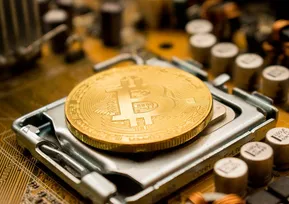
Photo by GuerrillaBuzz on Unsplash


Advanced privacy measures

The two firms will work together to develop various blockchain-based service platforms, such as a token securities offering (STO) platform, that will be equipped with strengthened privacy protection technology for data stored on blockchains.


Innovation unleashed

Lambda256 has been leveraging its Web3 developer platform Luniverse to work with a plethora of businesses, including those in the security token industry, to help them build, deploy and manage blockchain networks. Some of its solutions include DID, a blockchain-based identity management system; Trace, a blockchain verification and tracking system; and Point, a blockchain-based loyalty rewards solution.

CryptoLab, on the other hand, has developed in-house homomorphic encryption technology that can encrypt data while allowing that data to still be operated on. The firm’s CEO, Chun Jeong-hee, who is also a professor at Seoul National University’s Department of Mathematical Science, was selected as a Fellow of the International Academy of Cryptography (IACR) this year in recognition of his contributions to the development of the field of cryptography.

“By combining Lambda256’s blockchain platform with our homomorphic encryption technology, we look forward to exchanging our technology and capabilities,” said Shin Jun-bum, CTO of Cryptolab. Jason Lee, CISO of Lambda256, also reaffirmed the companies’ joint goal of solving data privacy issues that occur in the blockchain space. He added that they would take this opportunity to bring blockchain to fields like finance and healthcare that are sensitive to data privacy.

More to Read
View All
Policy & Regulation·

May 23, 2023

South Korea: Crypto Exchange Execs Indicted on Manipulation Charges

South Korea: Crypto Exchange Execs Indicted on Manipulation ChargesA number of executives at Coinone, one of South Korea’s leading cryptocurrency exchanges, have been indicted on charges related to market manipulation.That’s according to a report published by South Korean news outlet, The JoongAng, on Monday. The complaint details no less than forty-six coins that are alleged to have been the subject of manipulation in some form. That represents one in four of the total number of coins that the exchange has enabled for trading on the platform.Photo by Burak The Weekender on PexelsFour executives indictedThe indictment lists four Coinone executives, Mr. Jeon, Mr. Kim, Mr. Ko, and Mr. Hwang. The four have been charged with employing illegal mechanisms to manipulate coin listings, resulting in the four executives profiting to the tune of 2.98 billion Korean Won, which amounts to $2.26 million dollars according to current fx exchange rates.The complaint specifies that these offenses were committed between December 2019 and November 2022. South Korean prosecutors further allege that prior to various projects obtaining a token listing on Coinone, company executives made them sign third-party market-making contracts. That in and of itself is not unusual.One of the key aspects of a new coin listing (and an ongoing listing for that matter), is the need to have sufficient liquidity in place to ensure that the coin can be traded without being susceptible to market manipulation. Low liquidity conditions open the door to bad actors moving the market relative to a particular token.Cross tradingThe indictment is far more specific in calling out illegal cross trading activity. It’s likely that these key Coinone employees would have been expecting such an indictment to land at their doors. Last week, it emerged that LUNA tokens associated with Terraform Labs’ failed Terra USD (TUSD) algorithmic stablecoin project, had been illegally cross traded on three South Korean crypto exchanges: Bithumb, GoPax and Coinone.Cross trading is the practice of trading an asset on an exchange without recording the transaction transparently on the exchange. Strictly speaking, the activity can be legitimate although most exchanges prohibit the practice as it can be used to affect market manipulation.A cross trade could be permitted in a scenario where the price is deemed to be competitive at the time that the trade takes place. While this can more easily be determined in conventional markets as the practice is covered by specific regulation, that’s not the case in most jurisdictions right now where digital asset trading is concerned. By extension, there’s a complete lack of transparency and a lack of reporting.As other market participants don’t have visibility of this type of trading activity, they are unaware as to whether a better price is available on the market or not. In an unregulated state, the practice undermines trust.In the case of Coinone, the executives enabled the practice in order to provide an illusion with regard to trading activity. That meant that trading volumes claimed were inaccurate, misleading ordinary traders and exchange users. Along with trading volume in these coins being artificially boosted, so too were token prices.In the indictment, prosecutors explicitly alleged that cross trading was being employed in an illegal manner:“This price manipulation causes misunderstandings about the trading volume and market price among general members of the exchange, and induces [service users] to participate in the coin transaction and buy the coin.”

news
Policy & Regulation·

Jun 24, 2023

Chinese Nationals Detained in Crypto Mining Clampdown in Libya

Chinese Nationals Detained in Crypto Mining Clampdown in LibyaAuthorities in Libya have detained 50 Chinese nationals suspected of involvement in an illicit crypto mining operation in Zliten, a city located 160 kilometers east of the Libyan capital of Tripoli.The attorney general’s office in Libya made the announcement on Friday, revealing that the individuals were caught operating a cryptocurrency mining farm within an abandoned iron factory.Photo by Dmitry Demidko on UnsplashMining operation dismantledPhotos and videos released by the office of Attorney General Siddiq Al-Sour showcased the dismantling process of the extensive mining systems discovered in Zliten.This is not the first instance of Chinese miners being detained for crypto mining activities in the North African country. The development follows the recent arrest of ten other Chinese nationals in the city of Misrata on the Mediterranean coast, as well as at two sites within the capital, Tripoli. The individuals were apprehended on Wednesday while being caught “red-handed” with numerous powerful equipment used for intricate proof of work (PoW) mining calculations. The mining rigs were subsequently confiscated by the attorney general’s office.Mining banDespite the official ban on cryptocurrency mining in the country, Libya has witnessed a high prevalence of such activities, with the nation recording the highest percentage of cryptocurrency mining across the African continent in 2021. It is estimated that Libya accounted for approximately 0.6 percent of global Bitcoin production during that year.Libya’s appeal as a destination for cryptocurrency mining stems from its low electricity costs, which stand at a remarkably low rate of $0.004 per kilowatt hour. This cost is approximately 40 times cheaper than in the United States, making Libya an attractive location for miners.While energy may be cheap, the increased demand for electricity that crypto mining brings puts a strain on what was an already vulnerable power grid in the country. That has resulted in frequent and lengthy power blackouts, particularly during the summer months.A lack of oversight has also encouraged an influx of Chinese miners, albeit with these recent arrests, it appears that the Libyan authorities are stepping up the level of oversight and enforcement. The vast majority of Bitcoin miners were based in China up until a mining ban was enforced in 2021.Global issueThat event led to an exodus of miners internationally. Some established themselves legally in the United States and elsewhere. The first casualty of illegal mining was Kazakhstan. The sudden arrival of miners led to its power grid coming under pressure. As a consequence, the Central Asian country clamped down on the activity, and later regulated it.In response to these illegal activities, Libyan authorities have intensified their efforts to combat cryptocurrency mining operations. They are conducting investigations into alleged mining sites in Tripoli and Misrata, aiming to curtail these activities and mitigate the strain on the country’s electricity infrastructure.The recent arrests highlight the ongoing challenges associated with illegal mining activities in jurisdictions globally where cheap energy can be exploited, giving rise to the need for enhanced regulatory measures to address these issues.

news
Web3 & Enterprise·

Aug 10, 2023

Parameta and Solbric Korea to Create First Solar Power Plant Security Token Platform in Korea

Parameta and Solbric Korea to Create First Solar Power Plant Security Token Platform in KoreaSouth Korean blockchain company Parameta (formerly known as Iconloop) said Tuesday it entered a business deal with Solbric Korea, a subsidiary of solar energy innovation company Next Solar Energy, to jointly establish the country’s first solar power plant security token platform that allows investors to make fractional investments in solar energy.Photo by Nuno Marques on UnsplashReceiving approval as an innovative financial serviceIn order to establish such a platform that designates solar power plants as underlying assets, they will jointly apply for a financial regulatory sandbox — a program introduced by the Korean government that offers a special and provisional regulatory exemption for financial services that have been recognized for their innovativeness.Once the platform is recognized under the sandbox as an innovative financial service, the two companies will work together on the issuance and distribution of security tokens.Expanding opportunities to invest in solar energyUltimately, Solbric aims to build a platform that brings security token technology to the solar power sector, which, until now, has presented limited investment opportunities for individual investors in Korea. It will allow them to trade securities and make small-scale, fractional investments in solar power plants.To do so, Solbric intends to leverage the knowledge and expertise of its parent company, Next Solar Energy — an experienced veteran in the solar plant industry.As its partner, Parameta will provide the necessary blockchain technology for constructing and managing the platform based on its security token offering service, Parameta S. This service uses tokens to allow fractional management of real-world assets (RWAs), making it easy to invest in and organize them. This offers more liquidity and flexibility compared to traditional investment methods.“We will focus on providing investment returns to platform users as well as the unique experience of owning various solar power plants,” said Kang Jae-won, the CEO of Solbric Korea.Increased institutional supportThis project is made possible by the recent upturn in institutional support from Korean financial authorities that allows more security token offerings. Last month, the Korean Financial Services Commission ultimately granted regulatory exemptions to several fractional investment firms that have successfully completed the business reorganization as requested by the regulator. The Financial Supervisory Service has also decided to allow fractional investment businesses to apply for investment contract securities.Taking advantage of this momentum, Solbric and Parameta plan to continually explore diverse business opportunities to establish their platform.“We are currently working with various specialized companies, including Solbric, to expand our security token businesses in various fields such as solar power plants, mobility, real estate non-performing loans, carbon emission rights, and electric vehicle batteries,” said Kim Jong-hyup, CEO of Parameta.

news
Loading