Top

Parameta and Solbric Korea to Create First Solar Power Plant Security Token Platform in Korea

Web3 & Enterprise·August 10, 2023, 5:55 AM

South Korean blockchain company Parameta (formerly known as Iconloop) said Tuesday it entered a business deal with Solbric Korea, a subsidiary of solar energy innovation company Next Solar Energy, to jointly establish the country’s first solar power plant security token platform that allows investors to make fractional investments in solar energy.
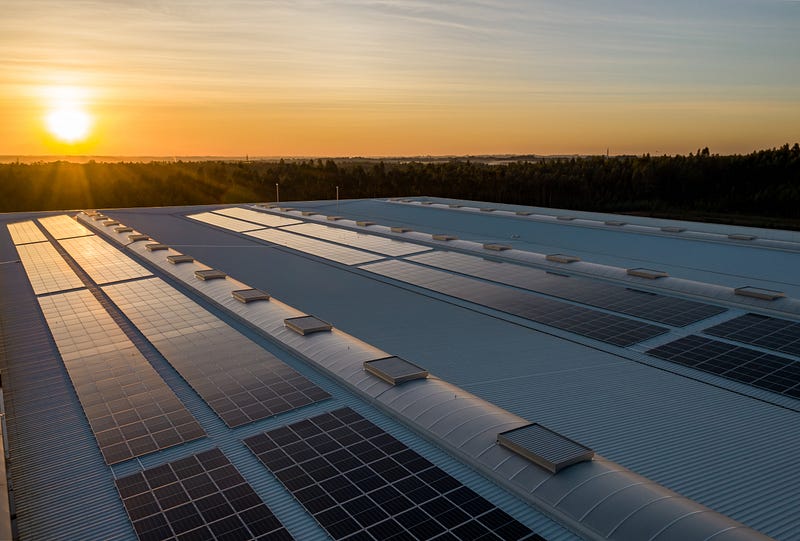
Photo by Nuno Marques on Unsplash


Receiving approval as an innovative financial service

In order to establish such a platform that designates solar power plants as underlying assets, they will jointly apply for a financial regulatory sandbox — a program introduced by the Korean government that offers a special and provisional regulatory exemption for financial services that have been recognized for their innovativeness.

Once the platform is recognized under the sandbox as an innovative financial service, the two companies will work together on the issuance and distribution of security tokens.


Expanding opportunities to invest in solar energy

Ultimately, Solbric aims to build a platform that brings security token technology to the solar power sector, which, until now, has presented limited investment opportunities for individual investors in Korea. It will allow them to trade securities and make small-scale, fractional investments in solar power plants.

To do so, Solbric intends to leverage the knowledge and expertise of its parent company, Next Solar Energy — an experienced veteran in the solar plant industry.

As its partner, Parameta will provide the necessary blockchain technology for constructing and managing the platform based on its security token offering service, Parameta S. This service uses tokens to allow fractional management of real-world assets (RWAs), making it easy to invest in and organize them. This offers more liquidity and flexibility compared to traditional investment methods.

“We will focus on providing investment returns to platform users as well as the unique experience of owning various solar power plants,” said Kang Jae-won, the CEO of Solbric Korea.


Increased institutional support

This project is made possible by the recent upturn in institutional support from Korean financial authorities that allows more security token offerings. Last month, the Korean Financial Services Commission ultimately granted regulatory exemptions to several fractional investment firms that have successfully completed the business reorganization as requested by the regulator. The Financial Supervisory Service has also decided to allow fractional investment businesses to apply for investment contract securities.

Taking advantage of this momentum, Solbric and Parameta plan to continually explore diverse business opportunities to establish their platform.

“We are currently working with various specialized companies, including Solbric, to expand our security token businesses in various fields such as solar power plants, mobility, real estate non-performing loans, carbon emission rights, and electric vehicle batteries,” said Kim Jong-hyup, CEO of Parameta.


More to Read
View All
Policy & Regulation·

May 30, 2025

Kazakhstan plans CryptoCity as pilot project for crypto payments

The Central Asian republic of Kazakhstan is planning to establish a pilot project that will enable the use of crypto as a means of exchange for goods and services within a specific zone. That’s according to a statement published on Akorda.kz, the official website of the President of Kazakhstan. The statement incorporates the text of a keynote speech delivered by President Kassym-Jomart Tokayev at the Astana International Forum. Tokayev stated: “We are planning to create a pioneering pilot zone called CryptoCity where cryptocurrencies might be used for purchasing goods, services, and even beyond.”Photo by Engin Akyurt on PexelsWorking towards digital transformationThe initiative forms part of Kazakhstan’s efforts to make progress in terms of digital transformation, as well as an aspiration to become an IT hub within the Eurasia region.  For the purposes of the pilot program, the use of cryptocurrencies for the payment of goods and services has been authorized by the government within a pre-defined sandbox environment. Alatau City, an urban development located north of the Kazakhstani city of Almaty, has been chosen for the pilot scheme. Alatau has been established as a special economic zone and planned to become a hub for new technology and knowledge, alongside global tourism. It hosts the Innovation Technology Park together with the Kazakhstan National Nuclear Center, Institute of Nuclear Physics and the Physics & Technology Institute.It’s envisaged that the existing technology and knowledge base within Alatau will support its expansion into the area of crypto payments and blockchain development. In addition to crypto payments, other blockchain-based technologies related to taxation systems, investment and decentralized identity systems will be nurtured and encouraged within the Alatau special economic zone. Potential Eurasian crypto hubIn a recent opinion piece published by the Russian-language government-backed newspaper Kazakhstanskaya Pravda, Kanysh Tuleushin, Kazakhstan’s vice minister of digital development, suggested that the Central Asian republic has the potential to position itself as the region’s leading crypto hub.  Tuleushin also suggested that crypto mining operators could help to modernize the country’s energy sector, playing a role in stabilizing the country’s power grid, while making use of surplus electricity. Kazakhstan had proven to be a popular destination for Bitcoin miners in the past. However, the sudden influx of miners following a ban on the activity in China in 2021 was unplanned for.  The surge in electricity demand put the country’s electricity grid under pressure, leading to blackouts in some cases. In 2023 President Tokayev signed legislation into law that limited the energy use of domestic crypto miners. Despite that negative experience, it appears that Tuleushin has seen the benefits that the activity can bring when regulated and planned for. Back in March, it emerged that lawmakers in Kazakhstan had proposed the creation of a crypto bank. One obstacle to the creation of the bank is a lack of a crypto regulatory framework. According to a report published earlier this month, the National Bank of Kazakhstan is now in the process of preparing a regulatory framework for digital assets.

news
Web3 & Enterprise·

Oct 11, 2023

Upbit Launches Campaign for Recovery of Mistakenly Transferred Assets

Upbit Launches Campaign for Recovery of Mistakenly Transferred AssetsUpbit, the cryptocurrency exchange operated by Dunamu, announced on Tuesday (local time) that it is launching a campaign where users can get back the digital assets that they have transferred mistakenly as part of heightened efforts to protect investors and minimize their losses due to such errors.Photo by Luis Villasmil on UnsplashRole of secondary identifiersAmong the virtual assets that Upbit allows users to deposit, some require users to accurately input their unique identifiers — like a Destination Tag (D.tag) or Memo — in order to properly process a deposit. A D.tag or Memo is an additional address used to identify a transaction recipient beyond a wallet address, which is often required when trading altcoins like Ripple (XRP) and Monero (XMR). In the case of XRP, both the exchange address and the D.tag must be entered accurately for deposits to be processed properly.Enhancing investor convenienceHowever, misdirected transfers caused by incorrect or missing secondary deposit addresses occur quite frequently. Many users also remain unaware when their virtual assets have been mistakenly transferred.In response to this issue, Dunamu has organized its latest campaign to make it easier for Upbit users to recover the virtual assets that they mistakenly sent. A user can access the campaign page on the official Upbit website and search for the transaction ID (TXID) of the deposit where the secondary address was either not entered or entered incorrectly. If a matching deposit is found, they can click “Apply for Recovery” to submit a one-on-one inquiry.Previously, users were required to manually enter information such as the name and quantity of the cryptocurrency, as well as the TXID in the one-on-one inquiry. Now, this information is automatically filled in through the TXID search, boosting user convenience.In an effort to encourage campaign participation, Dunamu also said that it will waive all fees for the recovery of mistakenly transferred assets until the end of the year.As of July, the exchange has successfully processed over 99.5% of the total 45,474 recovery requests that it has received over the past five years by leveraging its industry-leading technical expertise.“Upbit will continue its efforts to protect user assets and provide convenient services,” Dunamu said.Global recognitionMeanwhile, Upbit has secured 9th place in the Kaiko Exchange Ranking for the third quarter of 2023, ranking first among Korean exchanges. Kaiko is a crypto market data company with offices in Paris, London, New York, and Singapore.The ranking evaluates exchanges based on the following criteria: governance (30%), security (20%), liquidity (15%), business (15%), technology (10%), and data quality (10%). Upbit earned a score of 76 points.Coming in first overall on the list was Coinbase with 90 points, directly followed by Bitstamp and Kraken with 86 and 82 points, respectively. Among Korean exchanges, Korbit ranked 15th worldwide with 72 points, followed by Bithumb in 17th with 72 points, then Coinone in 27th with 59 points.

news
Markets·

Apr 14, 2023

Report: Asia Set to Dominate Web3 Gaming Market

Report: Asia Set to Dominate Web3 Gaming MarketA new report has revealed that Asia is poised to dominate the growing Web3 gaming market, accounting for as much as 80% of all players. The study, conducted by Japanese firm Pacific Meta and DappRadar, found that the region already accounts for 55% of the global gaming population, with 1.7 billion players.©Pexels/Lucie LizThe report identified that the role-playing genre is the most popular in Asia, with games such as Final Fantasy, Phantasy Star Online and Genshin Impact ranking highly.Legal restrictionsThe research noted that legal restrictions on gaming are prevalent across the region, with China only allowing gamers under 18 to play for one hour a day and blockchain games all but banned in South Korea. Despite these restrictions, the report argued that Nexon’s Web3 play with MapleStory Universe and Square Enix’s upcoming Web3 game Symbiogenesis are two examples of crypto games gaining traction in the East. Both games will use the Polygon blockchain, currently the most preferred network for Web3 gaming from a game studio perspective.The report also concluded that Web3 gaming is a “natural” fit for the Asian market because of the types of games to which the market is accustomed. It argues that as Web3 games become more focused on gameplay over financials, Western and Eastern audiences will come to expect similar experiences.A developing understanding of Web3 gamesTo better understand the market, Pacific Meta surveyed over 1,000 adults in Japan and found that 40% knew about blockchain games. Among those who knew about such games, nearly 57% said Web3 games “seemed interesting”, while roughly 10% said they did not seem interesting. Notably, about 33% said “neither”, suggesting they were perhaps unsure about Web3 games and hadn’t yet formed an opinion on them.When asked about the types of blockchain games they would be interested in, 773 out of the 1,030 surveyed said that they would like a game to be free-to-play, and that initial cost was an important feature to them. 538 said that they would like the game to be playable on a mobile phone. Player earnings, game quality, consoles, and famous IP scored lower on the list.Long road to mainstream adoptionThe report highlights that the nascent industry still has a ways to go before it sees mainstream adoption. Nevertheless, big brands such as Razer and FIFA are doubling down on Web3 gaming projects. With the Asian market poised to take a dominant role in Web3 gaming, developers will need to tailor their offerings to suit the preferences of the region’s gamers.The Web3 gaming market in Asia is enormous and is expected to dominate the global market, with Japan a key market for growth. Developers will need to focus on the role-playing genre and create free-to-play mobile games to appeal to gamers in the region. As the Web3 gaming market continues to grow, and blockchain technology advances, it is likely that we will see more games and platforms targeting Asian gamers in the coming years.

news
Loading