Top

SBI and Saudi Aramco to explore digital asset business partnerships

Web3 & Enterprise·December 12, 2023, 1:31 AM

Japanese financial services conglomerate SBI and Saudi Arabia’s state-controlled energy giant Saudi Aramco have jointly announced their exploration of potential collaboration in the realms of digital assets and semiconductors.

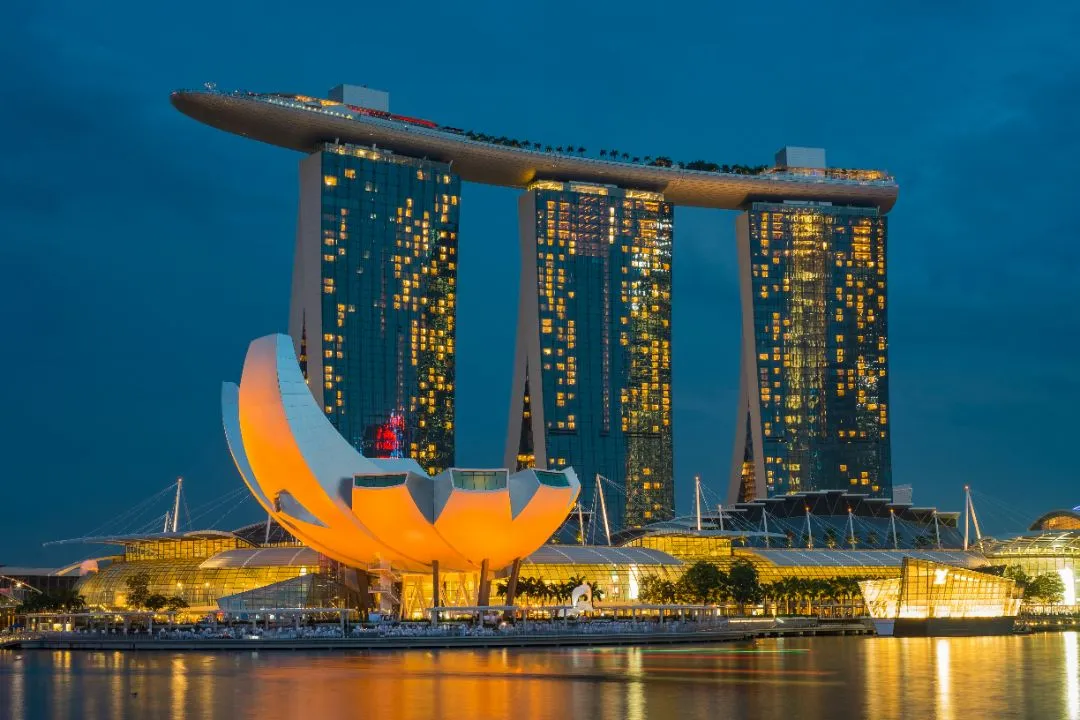
Photo by Chris Liverani on Unsplash


Digital asset portfolio co-investing

The partnership, which was publicly disclosed last week, aims to delve into co-investing in each other’s digital asset portfolios. Such an arrangement will leverage SBI’s substantial holdings and the formidable position of Aramco as the world’s second-largest company by revenue, boasting a staggering $604 billion figure. The partnership will mark a strategic alliance that goes beyond geographical boundaries, underscoring the global impact of digital asset investments.

The collaboration between SBI and Aramco extends beyond mere investment, with SBI actively seeking to identify Japanese digital asset startups keen on expanding their operations into Saudi Arabia. The joint effort aims to provide comprehensive support to these startups, facilitating their integration into the Saudi market and contributing to the growth of the digital economy.


SBI Middle East

In addition to this venture, SBI is set to establish “SBI Middle East” in Riyadh, serving as a central hub for its operations in the Middle East. This move aligns with SBI’s recent announcement of a $100 million joint fund with Standard Chartered, based in Dubai, solidifying its commitment to fostering financial partnerships in the region.

When contemplating cryptocurrency activities in the Middle East, Saudi Arabia might not be the first destination that comes to mind, given Turkey’s significant crypto adoption rate and the UAE’s well-established crypto regulatory authorities, such as Dubai’s VARA and Abu Dhabi’s ADGM.

However, Chainalysis data reveals that Saudi crypto activity is steadily gaining ground, experiencing the most significant year-on-year growth (12%) to June 2023. Additionally, the country’s Vision 2030 initiative involves efforts to diversify its economy. With that, blockchain and Web3 are being embraced.


Tokenization

While lacking a formal crypto regulatory regime, recent reports suggest that Saudi regulators are warming up to the idea, indicating a shift in approach. A recent collaboration has emerged between the central banks of Saudi Arabia and Hong Kong which will explore tokenization and payments infrastructure.

It is noteworthy that both SBI and Aramco explicitly referred to “digital assets” in their collaboration, avoiding the mention of cryptocurrencies. This emphasis raises the possibility that the focus might extend to tokenization, an area where SBI has a robust presence, notably through the establishment of the Osaka Digital Exchange (ODX), set to commence trading tokenized securities later this month.

As part of its digital asset investments, Saudi Aramco has previously engaged in blockchain initiatives, including investments in VAKT, a post-trade solution for the oil sector. Additionally last year Aramco invested in blockchain startup Data Gumbo, which utilizes blockchain in order to bring about operational efficiencies. The collaboration extends to the approval of electronic bill of lading (eBL) providers like TradeGo.

In February, Aramco signed an agreement with droppGroup to build out a range of Web3 technologies. Furthermore, Aramco’s investments in companies like Red Date Technologies and IR4LAB underscore its interest in developing blockchain-based services, including document and supply chain solutions.

More to Read
View All
Web3 & Enterprise·

Jul 18, 2023

Survey Reveals Over Half of Korean Financial Firms Eyeing Both Issuance and Distribution of…

Survey Reveals Over Half of Korean Financial Firms Eyeing Both Issuance and Distribution of Security TokensIn a recent survey conducted by fintech solution provider Koscom, it was found that more than half of South Korean financial companies interested in security token businesses are planning to undertake both the issuance and distribution of security tokens. This result reflects the belief of the financial firms that if they engage only in the secondary market, they will experience reduced profitability due to the necessity of lowering transaction fees amidst fierce competition, as per local business newspaper Hankyung.Photo by Shubham Dhage on Unsplash62% of financial firmsAt a seminar held today, Koscom revealed the result of this survey it conducted among a total of 95 entities interested in security tokens, consisting of 30 securities firms, three banks, one asset management company, and 61 token issuers. Among the financial firms that belong to the first three categories, 62% answered that they will conduct both the issuance and distribution of security tokens. 31% expressed a preference for conducting only issuance, while 7% were inclined towards distribution alone.The survey also highlighted that 38% of financial companies hold a positive outlook on the security token market, although they acknowledge insufficient understanding. Additionally, 34% of respondents anticipate that the security token market will rival the exchange-traded fund (ETF) market in terms of size, while only 10% believe it will eventually replace the initial public offering (IPO) market.Cultural contentWhen it comes to the underlying real-world assets (RWAs) for security tokens, cultural content emerged as the most preferred option, with 71% of respondents selecting it. Real estate followed closely at 66%, with energy (55%), artworks (41%), and agriculture and fisheries (21%) also garnering interest. Respondents were allowed to choose multiple options for this section.Similarly, cultural content remained the top choice among token issuers, favored by 21% of respondents. It was followed by real estate (16%), artworks (14%), intellectual property (14%), and agriculture and fisheries (9%).A Koscom official attributed the preference for cultural content and real estate as underlying assets to their accessibility and profitability.This seminar, organized by Koscom, aimed to create a supportive environment for issuers and distributors struggling to promote security token businesses. Hong Woo-sun, CEO of Koscom, said the company will leverage its expertise in the capital market and blockchain technology to collaborate with authorities and relevant organizations in lowering barriers to entry for market participants who need technical infrastructure.

news
Web3 & Enterprise·

Jul 07, 2025

Bitstamp awarded MPI license in Singapore

Singaporean regulator, the Monetary Authority of Singapore (MAS), has awarded cryptocurrency exchange Bitstamp a Major Payment Institution (MPI) trading license.Photo by Julien de Salaberry on UnsplashExpanding into APACIn a blog post published on July 3, Bitstamp proclaimed that it is “globally trusted & now licensed in Singapore.” The company described the acquisition of the license as a milestone that “marks the start of [its] expansion into the APAC region.” It emerged in June 2024 that Bitstamp had been acquired by American trading platform Robinhood. The $200 million acquisition was finally completed last month. Bitstamp signaled last September that it planned to expand its institutional business across Australia and Asia. Earlier this year, parent company Robinhood outlined that it would use Bitstamp to crypto offerings in Singapore in 2025.Acquiring licensesAt that time, Johann Kerbrat, vice-president and general manager of Robinhood Crypto, said that “part of the reason why Bitstamp was attractive was because of their licenses with Singapore, in addition to its institutional business.” This latest license award strengthens the company’s efforts in gaining more traction in Asia. Licensing is all the more relevant given the recent actions of the Singaporean regulator. Last month, MAS set a June 30 deadline for unlicensed crypto firms operating out of the city-state and serving overseas customers to cease offering such services. Over recent years, Singapore has been striving towards establishing itself as a global hub for crypto startups. It has been successful in that endeavor insofar as a whole host of international crypto businesses have established a presence there.  However, its recent move to curb unlicensed firms working out of Singapore in providing services internationally has been interpreted as a much more cautious approach being taken by the Singaporean authorities. The regulator clarified its concerns recently:”MAS has set the bar high for licensing and will generally not issue a licence. The money laundering risks are higher in such business models and if their substantive regulated activity is outside of Singapore, MAS is unable to effectively supervise such persons. Without a licence, such DTSPs [Digital Token Service Providers] will have to cease their regulated activities.”Caution in Singapore to benefit Hong KongSingapore has been competing with cities like Hong Kong to develop and maintain that crypto hub status. Some commentators have expressed the view that Hong Kong will benefit from this latest move in Singapore.  Joshua Chu, a lawyer who co-chairs the Hong Kong Web3 Association, told the South China Morning Post (SCMP) recently that “this is likely to attract quality projects [to Hong Kong] looking for a compliant, liquid, and globally connected base.” In addition to licensing achieved in Asia, Bitstamp has acquired licensing in a number of European countries such as Italy, Spain, France and the Netherlands. Last month, Robinhood launched the trading of tokenized stocks and exchange-traded funds (ETFs) for users resident within the European Union (EU). It also revealed that it is in the process of building out a layer-2 network on top of the Arbitrum blockchain with a view towards using it to host tokenized real-world assets (RWAs).

news
Web3 & Enterprise·

Aug 30, 2023

Canaan’s Record Q2 Revenue Amid Profitability Struggle

Canaan’s Record Q2 Revenue Amid Profitability StruggleCanaan, a Singapore-based player in the Bitcoin mining sector, has reported a remarkable surge in its Q2 Bitcoin mining revenues, reaching an all-time high of $15.9 million despite continuing to struggle to achieve profitability.The growth, a 43.3% increase quarter-over-quarter, is attributed to the heightened sale of computing power in comparison to Q1, as indicated by the company’s unaudited second-quarter results, which were released on Tuesday.Photo by Rifath @photoripey on UnsplashRevenues boosted by multiple factorsThis surge in revenues was propelled by a range of factors, including the recovery of Bitcoin’s price, amplified computing power, and increased rewards. Notably, Canaan managed to sell 6.1 million TH/s worth of computing power. This marked 44.2% growth when compared with the previous quarter and an 11.7% surge from the same period last year.Despite this surge, Canaan’s overall financial status continues to exhibit challenges in terms of profitability. The company encountered $30.6 million in mining costs during the second quarter, which significantly contributed to a total net loss of $110.7 million for the same period. This net loss reflects a considerable increase from the $84.4 million reported in Q1 and starkly contrasts with the net profit of $90.1 million achieved in the corresponding period of the previous year.Inventory write-downs and impairment chargesThese losses can be attributed to several factors, including an inventory write-down and impairment of property and equipment. Nangeng Zhang, Canaan’s Chairman and CEO, addressed the complexities the company faces in the current market.He noted: “Admittedly, we are still facing a market that has yet to recover with soft purchasing power on the demand front, generating continued pressure on our sales.” Zhang also acknowledged that the company faced challenges stemming from regulatory changes and contractual breaches from a particular partner.Bitcoin mining difficulty and hash rates also proved to be a challenge for Canaan. The Bitcoin network hashrate currently stands at 326.26M by comparison with 226.91M a year ago. An ever higher hashrate is ordinarily a bullish sign for Bitcoin. However, Canaan has to deal with the higher cost of mining even though the Bitcoin unit price has not responded proportionally to meet that all-time high hashrate.While Canaan’s Q2 performance reflected resilience and expansion into new mining projects in Africa and South America, the company’s financial struggles underscore the ongoing volatility and uncertainty in the cryptocurrency space.In terms of cryptocurrency holdings, Canaan disclosed that it held 1,125 Bitcoin with a total carrying value of $28.8 million as of June 30. This inventory included both company-owned Bitcoin and those received from customer deposits. The company also noted an impairment on its cryptocurrency holdings in Q2, amounting to $2.4 million.Looking ahead, Canaan projected its Q3 total revenues to approximate $30 million, acknowledging the persistently challenging market conditions that are prevalent in the industry. The company remains vigilant about its financial outlook as it strives to navigate through the evolving landscape of the cryptocurrency market.In a recent announcement, Canaan unveiled plans to introduce a “groundbreaking, industry-redefining product that will shape the future of Bitcoin mining.” The debut is scheduled for September 12, coinciding with a gala event that commemorates the company’s 10th anniversary.

news
Loading