Top

eToro, M2 secure licenses bolstering UAE crypto development

Web3 & Enterprise·November 29, 2023, 1:58 AM

eToro, the retail and social trading platform, has successfully secured a coveted license from the Abu Dhabi Global Market (ADGM) in the United Arab Emirates (UAE). Additionally, virtual asset firm M2 has become a fully regulated Multilateral Trading Facility (MTF) and custodian through the ADGM.

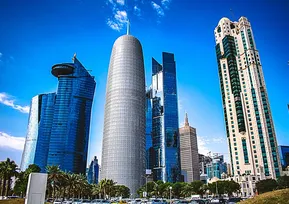
Photo by Mitul Grover on Unsplash


eToro global expansion

In eToro’s case, the Financial Services Permission (FSP) license empowers it to operate as a broker in securities, derivatives and crypto assets within the UAE. The firm announced its regulatory success on Monday, the first day of Abu Dhabi Finance Week.

eToro’s foray into the UAE market is part of its broader global expansion plan. With an eye on the potential of the UAE’s investor base, eToro seeks to extend its business beyond just providing trading opportunities. The company is committed to fostering financial education and encouraging community engagement among its users in the region.

The latest issuance of a full license by the ADGM is the culmination of an initial in-principle authorization obtained over a year ago, showcasing a deliberate approach to regulatory compliance. eToro Founder and CEO Yoni Assia commented on the development in a press release, stating:

“The approval of our operating license by ADGM is a key milestone in our continued global expansion. Abu Dhabi is increasingly recognized as a growing fintech hub, and we are excited to become part of this flourishing ecosystem.”


M2 primed to onboard retail and institutional clients

Simultaneously, cryptocurrency exchange M2 has also been recognized by the ADGM, earning the status of a fully regulated Multilateral Trading Facility and custodian. M2 is now permitted by this license to serve both retail and institutional clients in the UAE, offering services such as crypto custody, UAE dirham-based Bitcoin and Ethereum trading and on/off-ramp services for the dirham (AED).

Stefan Kimmel, CEO of M2, considers the timing of this license as particularly advantageous, coinciding with a renewed positive sentiment among investors. M2’s range of services in the UAE market is designed for diverse client groups, addressing the needs of both retail and institutional investors.


Official platform launch

In rolling out its service offering in Abu Dhabi, the trading and custodial services platform has partnered with Abu Dhabi Commercial Bank (ADCB). Commencing this week, both retail and institutional clients within the UAE can now register on the M2 platform.

The firm will offer custody and trading of digital assets while also extending yield-bearing products of up to 10.5% on BTC and ETH.

The strategic geographical location, business-friendly environment and forward-thinking regulatory approach make the UAE an attractive destination for international crypto players seeking operational licenses. Earlier this month, the ADGM’s registration authority introduced comprehensive regulations, particularly focusing on Web3 organizations. The regulatory framework has focused in particular on distributed ledger technology (DLT)-oriented foundations and decentralized autonomous organizations (DAOs).

The successful acquisition of ADGM licenses by eToro and M2 marks a significant milestone for both entities. As these platforms introduce their innovative services to the region, the UAE is poised to play a central role in shaping the future of cryptocurrency.

More to Read
View All
Policy & Regulation·

Jun 19, 2023

Korea’s Busan City to Develop Blockchain-Based Carbon Neutrality Platform

Korea’s Busan City to Develop Blockchain-Based Carbon Neutrality PlatformBusan Metropolitan City, known for being home to South Korea’s largest port, announced today that its consortium won the bid for the 2023 new local energy facilitation project offered by the Korea Energy Agency, an organization under the Ministry of Trade, Industry, and Energy (MOTIE). The consortium consists of five entities, including Busan City, tech solution provider Nuri Flex, and gas distributor Busan City Gas. As the winning bidder, Busan City and its collaborators will proceed with the development of a blockchain-based platform that promotes carbon neutrality.Photo by BERK OZDEMIR on PexelsCarbon neutralityThe primary aim of this project is to create a system that leverages surplus renewable energy to achieve carbon neutrality in the city’s port and industrial infrastructure. The initiative includes providing eco-friendly renewable energy to port and industrial facilities, establishing a blockchain-based carbon credit system to support businesses in joining the global corporate renewable energy initiative RE100, and facilitating the trading of surplus electricity. These measures are intended to save energy, enhance power system stability, and create greater value.Boosting green energy proportionThe project is set to take place from June 2023 to December 2024, with an estimated cost of 3 billion KRW ($2.3 million). The national and local governments will each finance 25% of the project, while the private sector will cover the remaining 50%. Upon completion of the project, Busan aims to increase the proportion of renewable energy within the city. Leveraging surplus energy and engaging in carbon credit trading, Busan expects to gain a competitive edge in the carbon-neutral sector.

news
Policy & Regulation·

Apr 07, 2023

Korean Financial Regulator to Inspect Non-Fiat Crypto Trading Platform

Korean Financial Regulator to Inspect Non-Fiat Crypto Trading PlatformThe Financial Intelligence Unit (FIU) under the Korean Financial Services Commission (FSC) plans to launch a comprehensive inspection on crypto trading platform Fobl (previously known as Foblgate) from March 11.©Pexels/김 대정Unlike other major Korean crypto exchanges, such as Upbit or Bithumb, which allow trading between fiat currencies and cryptocurrencies, Fobl only offers trading between cryptocurrencies.Inspection on non-fiat exchangesThe FIU’s inspection of Fobl is a follow-up to the regulator’s inspection of GDAC, another Korean non-fiat crypto exchange. This suggests that the FIU will focus on inspecting non-fiat exchanges in the first half of this year.Many in the cryptocurrency industry have been paying attention to the FIU’s move after its first inspection of GDAC, as it could signal the direction in which the regulator would take. Earlier this year, the FIU announced that it would conduct inspections not only on non-fiat crypto exchanges but also on wallet solutions, custodians, and staking service providers. It is known that the FIU has been reviewing anti-money laundering (AML) systems and asset management statuses of these crypto enterprises.Fobl’s possible addition of fiat tradingThe Korean crypto industry suspects Fobl might transform itself into a fiat crypto exchange, considering the FIU’s notice that it will prioritize examining non-fiat exchanges that are preparing to support fiat trading.Fobl CEO’s take on the marketPrior to this news, Fobl CEO Ahn Hyun-joon said in a recent interview with Etnews that the platform is in talks with multiple banks to acquire real-name bank accounts and is complying with all the regulations required by the authorities. During the interview, he also raised concerns about the uncertainty that faces non-fiat crypto trading platforms, pointing out that 97% of the crypto trading in Korea is being carried out in crypto exchanges that support trading of Korean won.In Korea, the financial regulator requires virtual asset service providers (VASPs) offering trading in Korean won to hold real-name registered accounts at domestic banks as a measure to prevent money laundering.

news
Web3 & Enterprise·

Oct 05, 2023

Former SoftBank Executive Launches Stablecoin in Abu Dhabi

Former SoftBank Executive Launches Stablecoin in Abu DhabiAkshay Naheta, a former executive from SoftBank, known for his involvement in some of the firm’s most significant deals, is embarking on a new venture in Abu Dhabi, focusing on stablecoins.Photo by Mathilde Cureau on UnsplashDRAM Trust partnershipThe 42-year-old financier has established Distributed Technologies Research (DTR) within Abu Dhabi’s international financial free zone. The firm has partnered with Hong Kong-based DRAM Trust, an entity with connections to a pool of high-net-worth individuals.Together, the firms aim to tap into the stablecoin market, which analysts at Bernstein predict will surge more than twenty-fold, reaching $2.8 trillion within the next five years. While the vast majority of stablecoins are pegged to the US dollar, DRAM coins will have backing from the United Arab Emirates dirham.Targeting high-inflation countriesThis peg to a relatively stable currency like the dirham offers greater security for individuals residing in high-inflation countries like Turkey, Egypt, and Pakistan. Additionally, it presents an alternative to the SWIFT system. While the dirham currently plays a minor role in the global economy, it has recently gained prominence as a petro-currency.“Our main focus is the unbanked and under-banked in these nations,” Naheta explained in an interview from Dubai. “If you want to diversify your risk and be in a currency that’s complimentary to the dollar, there’s a big percentage of money that can move into this,” he added.Naheta previously worked as a trader at Deutsche Bank. He had played a central role in some of SoftBank’s most notable deals during his tenure. Notably, he pitched the sale of chip designer Arm to semiconductor giant Nvidia. He also led a $4 billion investment in Nvidia in 2017, generating a $3 billion profit.Since his departure from SoftBank last year, Naheta has been actively involved in various fintech projects, with the UAE serving as his base of operations.Growing stablecoin circulationStablecoins have been in existence for nearly a decade. However, their primary use has been for trading purposes to facilitate the movement of digital assets between exchanges, and their adoption in consumer payments has been limited. Currently, there are approximately $124 billion worth of stablecoins in circulation, with Tether’s USDT being the largest, followed by the Circle-issued USDC.Supporters of stablecoins view them as a superior means of achieving cost-effective and instant money transfers and payments. Nevertheless, they have encountered resistance from central banks worldwide, which are actively developing their own central bank digital currencies (CBDCs).DRAM coins will be accessible on decentralized automated market makers, including Uniswap, Sushiswap, and Pancakeswap. Additionally, the team plans to collaborate with centralized exchanges in the near future, as revealed by Naheta.UAE ‘the new Switzerland’The former SoftBank executive anticipates significant demand for DRAM coins in the UAE, where a sizable expatriate population resides. Furthermore, the country is situated close to several high-inflation nations in Africa, the Middle East, and Asia.“I’m extremely bullish on the UAE,” Naheta stated. “It’s the new Switzerland — geopolitically neutral, a great transportation hub and a top tourism destination.”

news
Loading