Top

Bithumb surpasses Upbit in 24h trading volume for first time in four years

Web3 & Enterprise·December 28, 2023, 5:46 AM

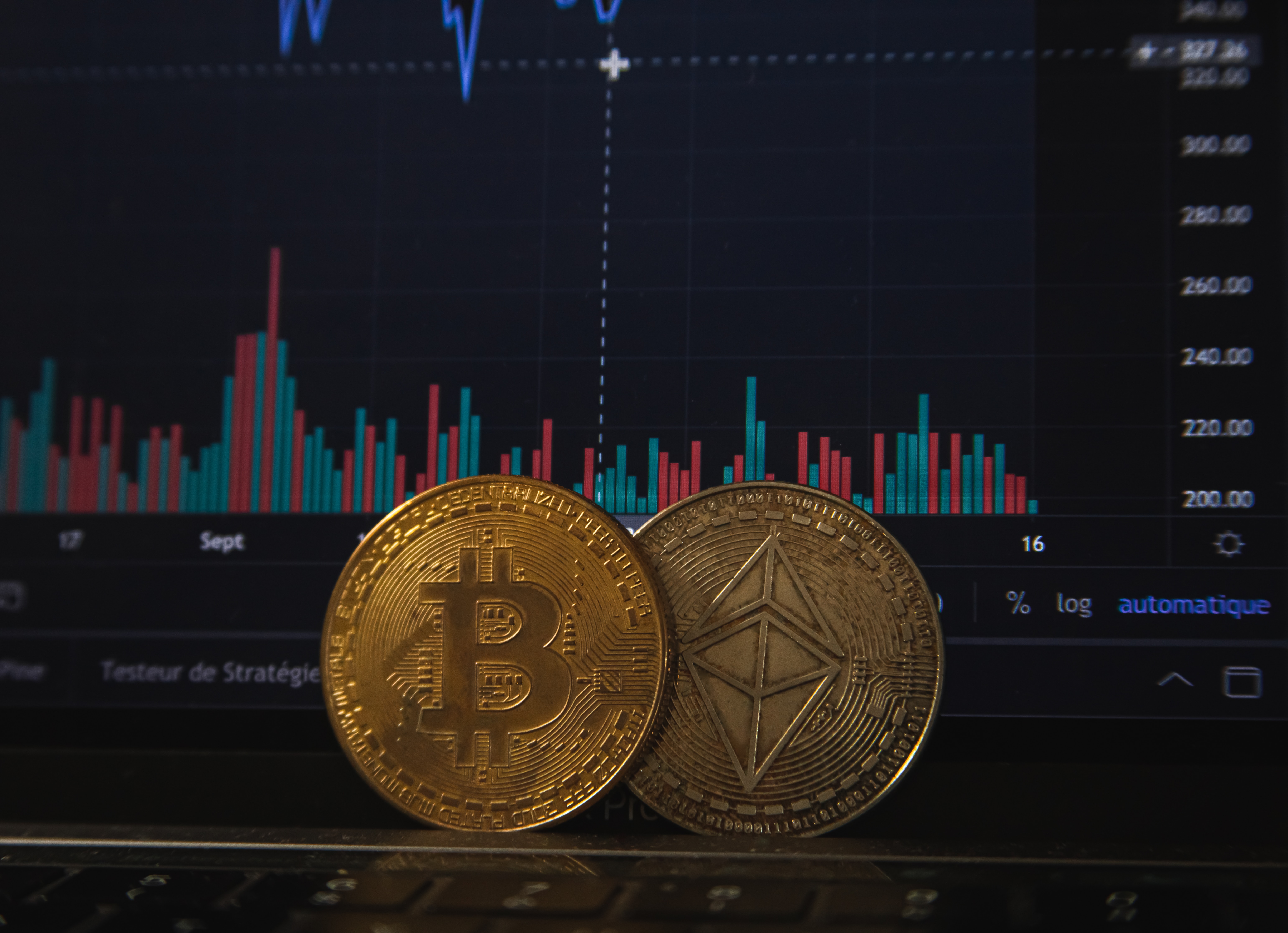
The trading volume of South Korean cryptocurrency exchange Bithumb exceeded that of its competitor Upbit as of 10:30 a.m. UTC on Wednesday, as reported by the local news outlet Etnews, which cited data from CoinMarketCap. This shift occurred for the first time in four years.


According to CoinMarketCap, as of the specified time, Bithumb's 24-hour trading volume reached KRW 4.93 trillion (approximately $3.8 billion), surpassing Upbit, which recorded a volume of KRW 4.37 trillion. Until 2019, Bithumb was the leading exchange in Korea. However, it ceded its top position to Upbit, which gained a competitive edge through its collaboration with the internet-only bank, Kbank.
https://asset.coinness.com/en/news/16902f23d0ccba899e5016370ba8434a.jpg
Photo by Pierre Borthiry - Peiobty on Unsplash

Zero trading fees and new crypto listings

Earlier in the year, Bithumb initiated a strategic plan with the objective of boosting its trading volume in order to increase its market share in the domestic market to 25%. To achieve this goal, the exchange implemented several key initiatives. One of the significant steps taken was the elimination of trading fees, aimed at attracting more users and increasing transaction volumes. Additionally, Bithumb broadened its cryptocurrency offerings by listing prominent cryptocurrencies such as Tether (USDT) and WEMIX.


Questioned sustainability of strategies

In anticipation of crypto winter giving way to crypto spring, trading platforms are gearing up for more intense competition to increase their market shares. However, there are concerns about the sustainability of strategies like implementing zero trading fees. Critics argue that such policies, while they may temporarily shift market shares, are unlikely to be successful in the long term. This skepticism is largely due to the fact that cryptocurrency exchanges heavily rely on trading fees as a primary source of revenue. 


An industry expert has pointed out that unless the cryptocurrency exchanges currently lagging behind develop innovative, paradigm-shifting strategies capable of significantly impacting the market landscape, there's a high likelihood that the ranking order will revert to the previously established, entrenched market order. 


In fact, at the time of this publication, Upbit upended Bithumb in 24-hour trading volume, recording KRW 4.4 trillion compared to Bithumb's KRW 3.2 trillion. This data underscores Upbit's strong position in the market, illustrating its continued dominance.

More to Read
View All
Web3 & Enterprise·

Jan 18, 2024

Night Crows pre-registration NFT collection sells out

South Korean gaming publisher Wemade opened sales for its “The Night is Coming” NFT collection on Jan. 11 to 12 to celebrate pre-registration for the global version of the massively multiplayer online role-playing game (MMORPG) Night Crows. All 341 NFTs were sold out, according to an official press release on Thursday (KST).Photo by Choong Deng Xiang on UnsplashUnveiling exclusive NFTsThe NFT Collection featured NFTs of different tiers, including Uncommon and Rare NFTs that went on sale on Jan. 11, as well as Epic, Legendary and Mythical NFTs that were available on NILE – short for “NFT Is Life Evolution,” a decentralized autonomous organization (DAO) and NFT marketplace on WEMIX3.0 – the next day. All NFTs were sold out within a day. Blockchain-backed fantasy gameBuilt on Unreal Engine 5, a three-dimensional computer graphics engine used for game and content development, Night Crows features high-quality graphics, an immersive world, realistic action and major in-game battles. It has topped the popularity and revenue charts on major app markets in South Korea since its launch in April last year. The global version of the game, which is scheduled for release in March, will harness blockchain technology and a multifaceted tokenomics system that tokenizes in-game items. It will also introduce character NFTs that keep character and player data in one place, connecting the game’s internal and external economies. Wemade also stated that owners of the NFTs can exchange them with CROW, the game’s native token, starting on April 1. The token’s value is stabilized by a minting process controlled by the Peg Stability Module (PSM), which allows users to swap a native stablecoin for other protocol-accepted stablecoins at a 1:1 rate.

news
Web3 & Enterprise·

Sep 19, 2023

KOTEC and Busan Techno Park Join Hands to Boost Technological Growth of Busan Enterprises

KOTEC and Busan Techno Park Join Hands to Boost Technological Growth of Busan EnterprisesThe Korea Technology Finance Corporation (KOTEC) announced that it signed a cooperative agreement with Busan Techno Park on Monday at Busan Techno Park’s headquarters to support the growth of enterprises and offer financing for technological development. Under the agreement, KOTEC and Busan Techno Park have established a mutually beneficial system to jointly nurture and support tech companies based in Busan that are striving to commercialize data and blockchain technologies.Photo by Christopher Lee on UnsplashFostering tech innovation in BusanKOTEC is a non-profit government-affiliated institution aimed at financing innovative small and medium-sized enterprises (SMEs) for technology development. It offers services like credit guarantees, technology appraisal, equity investments, and technology transfers. Busan Techno Park is a regional industrial innovation institution for the southern port city of Busan, which operates a cooperative system among industrial, academic, and governmental agencies for the technological advancement of local companies.The two entities have committed to sharing information about companies that require financing for technological advancement — such as technological challenges that they may face — and promote joint projects related to technology investment and financing. They also aim to gather data resources for technology transfer, evaluation, and commercialization.KOTEC has marked Busan as a regulation-free special zone for companies that reside there. The demarcation of regulation-free special zones aims to foster the innovative and strategic development of a certain region. It is also operating a system under a regulatory sandbox preferential guarantee, which aims to facilitate accelerated market entry for businesses specializing in blockchain technology, maritime mobility, ammonia energy, and more.Empowering financing for technological advancementThe regulatory sandbox is a system run by the Korean government that exempts or suspends existing regulations for a designated amount of time for companies releasing new products and services and regulates them post-mortem if there is a problem. Under the sandbox policy, preferential guarantees refer to a technology guarantee fund that provides guarantees up to KRW 2 billion (approximately $1.5 million) for loans of facility funds to companies subjected to temporary approval and decreases the guarantee rate by up to 0.5%.In March, KOTEC was designated as a data appraisal agency by the Ministry of Science and ICT. Since then, the corporation has been implementing the data value plus guarantee — a product that determines the economic value of data and provides guarantees accordingly.“We will actively contribute to the government’s national tasks, including providing prioritized support for the cutting-edge future strategy industry. We will make even greater efforts to contribute to job creation and regional economic development,” said Kim Se-hyun, Head of KOTEC’s Busan-Gyeongnam Regional Office.

news
Markets·

Sep 08, 2025

Asia-Pacific leads a wider crypto uptake as legal and security risks persist

A new report indicates that the global use of cryptocurrency is not only growing but also quickening, with the Asia-Pacific (APAC) region setting the pace. According to the sixth Chainalysis Global Crypto Adoption Index, released on Sept. 2, India has emerged as the new leader in overall adoption across 151 countries. The index analyzes where value is being transferred, how new users are entering the ecosystem, and which areas are experiencing the most rapid expansion.Photo by Naveed Ahmed on UnsplashIndia leads global crypto adoptionIndia now holds the top spot in the overall index, with the U.S. following in second place. The APAC region demonstrates significant momentum, with Pakistan (3rd), Vietnam (4th), Indonesia (7th), and the Philippines (9th) all securing positions in the top ten. Further down, South Korea and Japan are ranked 15th and 19th, respectively.2025 Global Crypto Adoption Index Top 20 Source: ChainalysisThe picture changes when the data is adjusted for per capita GDP, which highlights grassroots movements. By this measure, Ukraine ranks first, followed by Moldova, Georgia, and Jordan. Hong Kong comes in fifth, Vietnam sixth, while Singapore and South Korea rank 16th and 18th, respectively.2025 Global Crypto Adoption Index Top 20 (Pop. adjusted) Source: ChainalysisRegional transactions surge as APAC gains groundOn-chain transaction data confirms a shift in economic gravity. In the year ending June 2025, APAC's transaction value soared by 69% year-over-year, climbing from $1.4 trillion to $2.36 trillion. While Europe ($2.6 trillion) and North America ($2.2 trillion) still handle larger absolute volumes, growth is accelerating nearly everywhere. APAC's growth rate more than doubled from 27% to 69%, while Latin America's rose from 53% to 63%. In terms of capital entering the crypto market via centralized exchanges, the U.S. leads as the largest fiat on-ramp, processing over $4.2 trillion. This is approximately four times the volume of South Korea (over $1 trillion), while the EU recorded just under $500 billion. Asset preferences also show regional variations; Bitcoin accounted for 47% of purchases in the U.K. and 45% in the EU, but just over 20% in South Korea.  India's top ranking aligns with the latest domestic developments, such as the Independence Day launch of the Bitcoin Policy Institute India, which aims to focus on sovereign mining, policy, and education. Legal and security challenges in IndiaHowever, this rapid growth is accompanied by notable legal and security hurdles. In a high-profile case, an Indian anti-corruption court sentenced 14 individuals, including 11 police officers, to life in prison for a 2018 kidnapping and crypto extortion scheme. In another development, creditors of India's crypto exchange WazirX approved a new restructuring plan over a year after a $234 million hack allegedly linked to North Korea’s Lazarus Group. An earlier proposal was rejected by the Singapore High Court in April. The revised plan shifts oversight of recovery tokens—representing outstanding balances—from WazirX’s Singapore entity to Zanmai India, regulated by India’s financial authority, with repayments funded by profits and recovered assets. Some 150,000 creditors, representing $206 million in claims, voted between July 30 and Aug. 6 as WazirX also moved operations to a Panama-based unit called Zensui. Separately, on April 16, India’s Supreme Court dismissed a petition from 54 hack victims, ruling it lacked authority to legislate on crypto policy. While India’s headlines highlight the frictions of rapid growth, the broader picture is clearer. The Chainalysis index illustrates a global crypto market expanding across all income levels for varied reasons. In developed nations, clearer regulations and institutional involvement are key drivers. In many emerging economies, factors like remittances and access to U.S. dollars via stablecoins are more prominent. 

news
Loading