Top

Partnerships enable AsiaNext to launch crypto derivative trading

Web3 & Enterprise·January 10, 2024, 3:02 AM

AsiaNext, a Singapore-based institutional digital asset trading venue, has officially rolled out its cryptocurrency derivatives trading platform.
https://asset.coinness.com/en/news/f094a0fc78d5bda338d4dcd8778946da.jpg
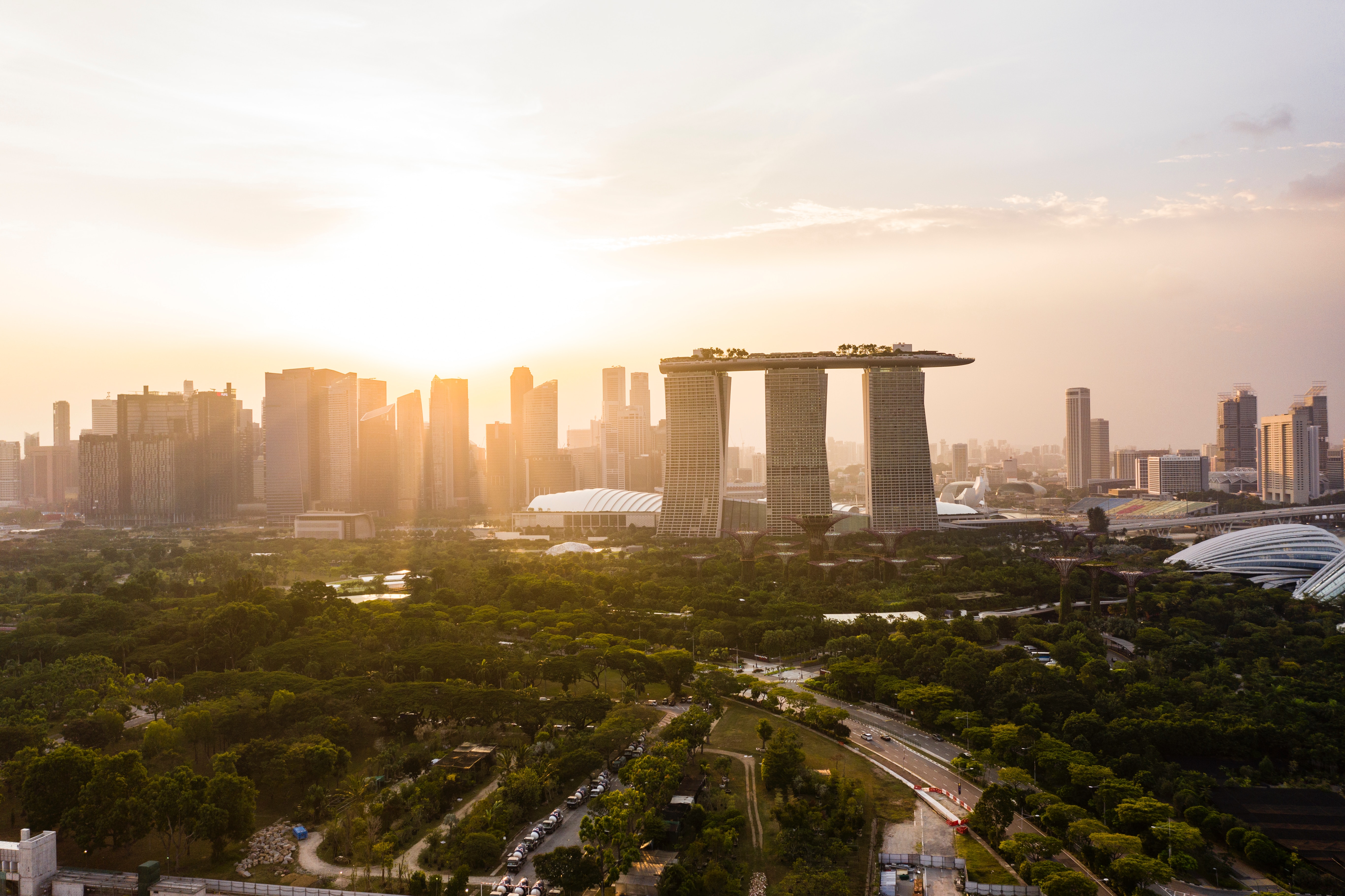
Photo by Kirill Petropavlov on Unsplash

Wintermute and B2C2 collaborations

The launch involves notable trading members such as Wintermute and London-headquartered liquidity provider B2C2.


B2C2 is a subsidiary company of Japanese financial services conglomerate SBI Holdings. SBI acquired the company in August of last year with B2C2 expressing the view that the acquisition would represent an opportunity for the company to broaden its client base.


SBI partnered with Swiss financial infrastructure firm Six Group in a joint venture to establish AsiaNext back in 2020 with a view towards driving institutional digital asset liquidity. Meanwhile, Wintermute’s involvement with AsiaNext in this instance follows its move in 2023 to expand its Singapore base, where it conducts its derivatives business. In November, Wintermute Asia conducted its first-ever options block trade through the CME Group, one of the world’s leading derivatives marketplaces.


Wintermute's Founder & CEO, Evgeny Gaevoy, highlighted the significance of the partnership with AsiaNext in the context of traditional financial institutions seeking alternative exposure to digital assets. Gaevoy stated:


"Partnering with AsiaNext enables us to elevate our derivatives offering, positioning Wintermute in the foreground of the expanding digital asset ecosystem."


The AsiaNext platform asserts that it provides enhanced risk management with reduced counterparty and settlement risk. Additionally, AsiaNext offers capital efficiencies through intraday margining and settlement processes, supporting high-frequency trading and ensuring availability 24/7 for crypto derivatives trading.


Chong Kok Kee, CEO of AsiaNext, emphasized the platform's commitment to providing a secure environment for institutional investors to explore digital assets in the region. By prioritizing regulation and rigorous governance, AsiaNext aims to establish itself as a trusted venue for exposure to digital assets.


B2C2 CEO Thomas Restout commented on the positive nature of the collaboration. He stated:

”We’ve witnessed [AsiaNext’s] unwavering commitment to governance and risk management, alongside their focus on aligning closely with our needs. This instills a high level of confidence in our partnership. Being at the forefront of digital asset adoption, we are pleased to provide liquidity on the venue through our collaboration.”


Licensing approvals

It's worth noting that AsiaNext obtained a Recognized Market Operator (RMO) license from the Monetary Authority of Singapore (MAS) in September. However, this license specifically pertains to tokenized securities, and as such, the crypto derivatives trading operates through a separate subsidiary.


In June the company had acquired in-principle approval for a Capital Markets Services (CMS) license.


On the digital securities front, SIX Digital Exchange (SDX) and Osaka Digital Exchange (ODX), operated by SIX and SBI respectively, play key roles in secondary markets, showcasing the partners' commitment to advancing regulated digital securities markets. Launched in late 2021, SDX was the world's first regulated digital securities market. SBI followed suit with the recent launch of ODX on Christmas Day.


The anticipated approval of the first U.S. spot bitcoin ETFs adds a timely dimension to the launch, potentially driving increased demand for hedging strategies in the market.

 

More to Read
View All
Web3 & Enterprise·

Aug 18, 2023

Wemade Signs Contracts with Game Developers to Expand WEMIX PLAY’s Lineup

Wemade Signs Contracts with Game Developers to Expand WEMIX PLAY’s LineupSouth Korean gaming company Wemade has signed contracts with global game developers to bring three new games to its blockchain gaming platform, WEMIX PLAY.Photo by Riho Kroll on UnsplashThree gamesOne of these developers is Cfire Network, based in Singapore, which is working on a strategic card game called Magic Card Duel. In this game, players collect heroes and build decks of cards to challenge each other in battle.Dubai’s Project SEED is also part of the initiative, preparing to release a fantasy action role-playing game (RPG) called Outland Odyssey in the third quarter of this year.Korean company SpaceProbe is contributing to the lineup with Raid of Legends, a mobile action RPG where players can develop characters to explore dungeons, join raids, and engage in combat against each other.WEMIX PLAY’s expansive reachWEMIX PLAY boasts a user base of 9 million and has already added more than 100 blockchain games to its platform, spanning various genres like massively multiplayer online role-playing games (MMORPGs), shooters, and social network games. The platform’s standout feature is its inter-game economy, allowing players to transfer currencies between different games seamlessly.Wemade’s upcoming showcase of its blockchain gaming vision and WEMIX PLAY’s ecosystem will take place at G-STAR 2023, a global game exhibition happening from November 16 to 19 in Busan, Korea.

news
Web3 & Enterprise·

Sep 20, 2023

Busan to Merge Blockchain and Coffee through Smart Logistics Platform

Busan to Merge Blockchain and Coffee through Smart Logistics PlatformThe Korean southern port city of Busan and its regional institution for industrial innovation, Busan Techno Park, announced that they will begin developing a collaborative platform that facilitates smart logistics in the local coffee industry through the use of blockchain technology. The project is aimed at enhancing transparency and trust in the industry by tracking the entire logistics process — from the importation of raw coffee beans through Busan Port to distribution to businesses, then purchase by consumers.Photo by Theo Crazzolara on UnsplashTracking production and flavor profilingThe platform will use artificial intelligence (AI) technology to track the distribution of coffee beans as well as objectively analyze various types of coffee to arrange flavor profiles based on factors such as weather, storage conditions, and the environment. This would eliminate any room for subjective opinions that are usually associated with taste evaluation.“This project aims to develop blockchain technology that can be used to trace the background of coffee beans starting from their country of origin,” said Kim Hyung-kyun, Director of Busan Techno Park. Blockchain technology’s strength lies in its ability to solve the problem of a lack of transparency between coffee producers and consumers.The platform was selected in April as a technology commercialization initiative under the Korean Ministry of Science and ICT’s 2023 Special R&D Zone Development Project. It is set to receive a total of KRW 11.8 billion (approximately $8.9 million) in governmental, private, and municipal funding until December 2025.Fostering transparency and securing a competitive edgeA ceremony was held at the Asti Hotel in Busan on Tuesday to kickstart the project and form the Busan R&D Innovation Valley Committee — consisting of two subcommittees dedicated to distribution and technology, respectively — to carry out the initiative.“It will be possible to manage data on changes in ingredients and quality due to storage conditions and duration. This will give sellers a competitive advantage and allow consumers to enjoy better-quality coffee at reasonable prices,” explained Oh Dong-joon, who is in charge of the distribution subcommittee.After the platform has been developed over the next three years, it will be available for coffee businesses and startup entrepreneurs in Busan. “In the case of specialty coffee, traceability and transparency are important. When the platform is established, it will be a significant help in verifying objective data related to problems that may occur during the import and storage of coffee beans,” remarked Jeon Joo-yeon, CEO of Busan-based specialty coffee brand Momos Coffee.Jung Yo-han, leader of the business mining division under the project’s technology subcommittee, added that consumers will be able to buy coffee that they can trust after it has been traced through the distribution process. The city will also be able to stimulate startups by leveraging blockchain technology and take advantage of the project’s scalability by applying it to all agricultural and marine products that are imported through Busan Port.

news
Web3 & Enterprise·

Nov 21, 2025

Grab joins hands with StraitsX to enable stablecoin retail payments across Asia

Grab, the Nasdaq-listed Southeast Asian superapp, has signed a strategic memorandum of understanding (MOU) with StraitsX, a Singapore-based stablecoin payment infrastructure provider, to develop Web3 wallets and a payment network powered by stablecoins. A Nov. 18 press release said Web3 wallets will be added to the Grab app, allowing merchants in Asia to accept stablecoin payments from local and overseas customers.Photo by Grab on UnsplashXSGD and XUSDUnder the partnership, Grab users may be able to hold and use stablecoins like XSGD and XUSD, which are pegged to the Singapore dollar and U.S. dollar respectively, and convert between fiat and other stablecoins in-app, provided they meet regulatory compliance requirements. Grab expects the integration to facilitate real-time cross-border settlement with transparent foreign-exchange rates, improving efficiency through faster, cheaper, and compliant transactions. The superapp operator seeks to create a single, interoperable Web3 payment framework that eliminates the need to switch between country- or method-specific systems. Merchants are expected to benefit from enhanced liquidity and capital management via programmable settlement features enabled by smart contracts and on-chain treasury tools. ASEAN’s regulatory gapsThis industry development comes amid growing interest in digital finance among intergovernmental organizations. In a blog post, Yasuto Watanabe, Director of the ASEAN+3 Macroeconomic Research Office (AMRO), noted the private sector’s growing involvement in stablecoins, outlining their advantages and risks. He said stablecoins offer greater accessibility and enable faster, cheaper transactions compared with traditional banking.  Stablecoins are widely used for remittances in Southeast Asia, particularly in the Philippines and Vietnam, and are also a common tool for small businesses engaged in cross-border trade. Watanabe also warned of risks such as anonymity-driven money laundering and capital control evasion. He also pointed to concerns that the rise of U.S. dollar–denominated stablecoins could undermine monetary sovereignty. In this context, the AMRO Director underscored the importance of the ASEAN+3 region addressing existing gaps through concerted action. 12M USDT seized in Thailand crackdownGovernment concerns are reflected in recent crypto-related crimes making headlines. In a recent case, Thai authorities, in coordination with the U.S. Secret Service, detained 73 individuals and confiscated assets valued at more than 522 million baht. About 400 million baht of that total was in USDT (12 million USDT). Tether said in an announcement that it supported law enforcement in the operation. The emergence of stablecoins is clearly transforming the traditional financial landscape. Companies are racing to harness new technologies, while regulators focus on combating illicit activity and strengthening consumer protections. As the sector evolves, new opportunities and risks will surface, and the balance between innovation and safety will be a key question moving forward. 

news
Loading