Top

Mt. Gox moves $9B in Bitcoin for first time in years

Markets·May 29, 2024, 8:24 AM

Wallets belonging to the defunct Japanese Bitcoin exchange Mt. Gox have transferred over 140,000 Bitcoin (BTC), valued at approximately $9 billion, to an unknown address. 


Sell-off fears

This significant movement began in the early hours of Tuesday morning in Asia, marking the first such transfer from Mt. Gox’s cold wallets in over five years. Julio Moreno, head of research at CryptoQuant, initially confirmed that 12,239 Bitcoin had been transferred from Mt. Gox over the course of an hour. A short time later, he provided an update on X, stating:

"All coins have been transferred to a new address."


Despite market disquiet, the prevailing view which subsequently emerged is that the transfer is believed to be part of a plan to distribute assets back to creditors before the October 31, 2024 deadline. Alex Thorn, head of research at Galaxy Digital, shared his perspective on X, suggesting that most of the transferred Bitcoin would likely be held by creditors rather than being sold on the open market.


Despite these reassurances, the market reacted negatively for a time. Bitcoin's price dropped by 1.4% since the start of Asian trading hours, falling to a low of $67,680 from a Monday high of over $70,000.
https://asset.coinness.com/en/news/1035212b80c4b1ac157dcf12797a0a1e.webp
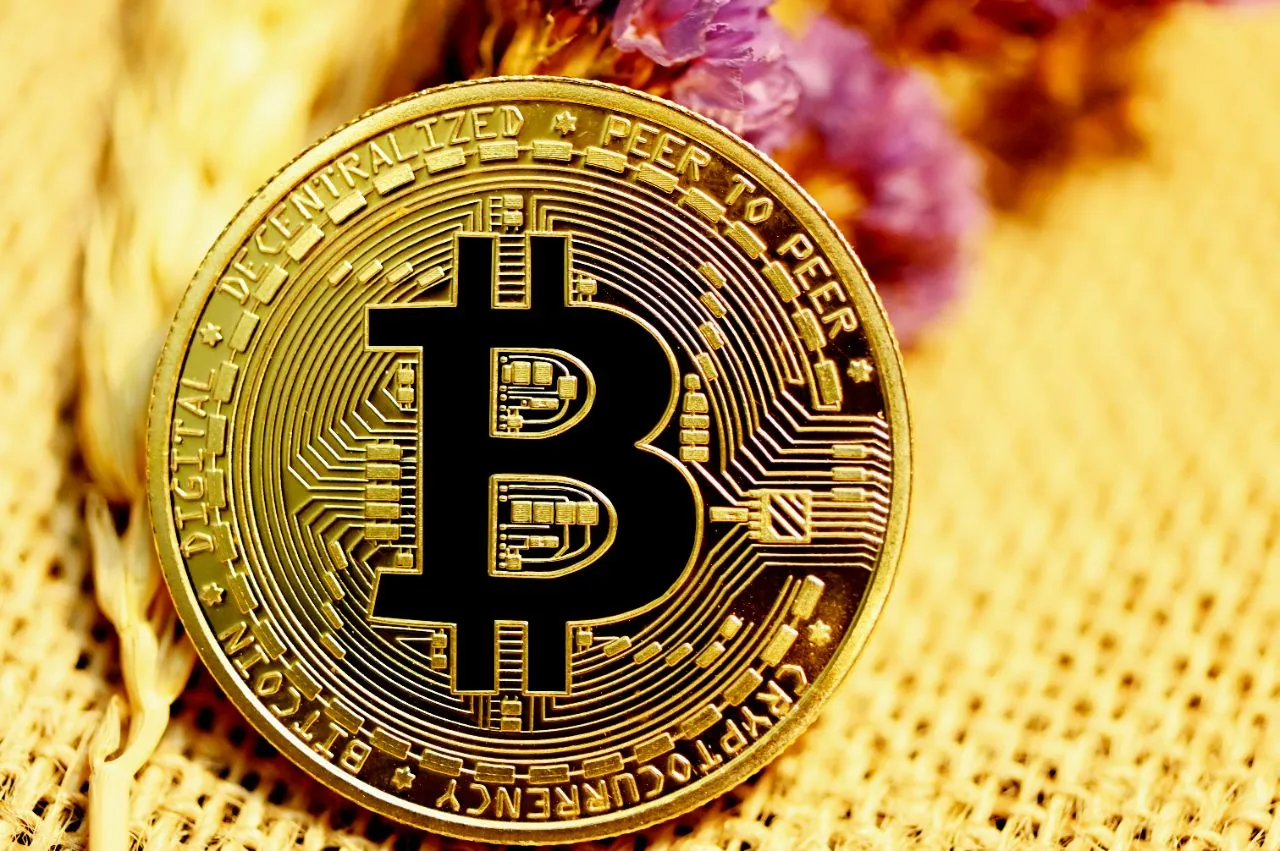
Photo by Kanchanara on Unsplash

No Bitcoin Firesale

To quell fears of a massive Bitcoin sell-off, Mark Karpeles, the former CEO of Mt. Gox, addressed the situation on X. He stated:


“As far as I know, everything is fine with MtGox. The trustee is moving coins to a different wallet in preparation for the distribution that will likely happen this year. There is no imminent sale of bitcoins happening."


Rehabilitation trustee Nobuaki Kobayashi also issued a press release, clarifying that no sale of Bitcoin or Bitcoin Cash (BCH) had taken place. He assured that the group was "managing bitcoin and bitcoin cash in a secure manner."


Wallet activity reveals that these movements were executed through thirteen transactions. A test transaction worth $3 was made on May 20, followed by another smaller transaction of $160 early Tuesday. The remaining transactions varied from $1.2 million to $2.2 billion worth of Bitcoin. Bitinfocharts data shows that all of Mt. Gox's Bitcoin has now been consolidated into a single wallet.


A long road to repayment

In September 2023, Mt. Gox’s trustee announced that the repayment deadline had been extended by 12 months to October 31, 2024. It looked like repayments were imminent in November. However, those communications referenced cash repayments rather than the distribution of Bitcoin and Bitcoin Cash. Some cash repayments had started in December 2023. Speculation in January that the bankruptcy estate would begin the distribution of Bitcoin led to market fears of the impact that would have on the Bitcoin unit price. The extension provided a longer timeframe for preparing the distribution of assets to creditors.


Mt. Gox, launched in 2010, quickly rose to prominence, becoming the largest Bitcoin exchange by 2013, handling 70% of all Bitcoin trades worldwide. However, the exchange faced a dramatic downfall in early 2014. 


It suspended trading and stopped all withdrawals after losing hundreds of thousands of Bitcoin in a hack. Subsequently, the site went offline, and the company filed for bankruptcy protection after losing over 800,000 Bitcoins. Creditors have been waiting for repayment ever since.


More to Read
View All
Web3 & Enterprise·

Sep 26, 2023

Upbit Reassures Investors Following False APT Token Deposits

Upbit Reassures Investors Following False APT Token DepositsFollowing a recent situation where false Aptos (APT) tokens were mistakenly accepted as authentic deposits, Upbit, South Korea’s leading cryptocurrency exchange, has reassured investors that such problems will not recur.Photo by Markus Spiske on UnsplashIrregular Aptos token depositsAn Upbit representative informed local news outlet Digital Asset that the platform had detected irregular deposit activities related to Aptos-based tokens of the same type on September 24. In response, the platform addressed the coding anomalies during the suspension of APT deposits and withdrawals.Software correctionThe representative said that, as the resumption of APT deposits and withdrawals took place at 23:00 KST on September 24 after the software correction, no virtual assets on the exchange, including APT, should face similar issues in the future.Asset monitoringThe official highlighted that the trading platform employs a real-time process that monitors and compares customer assets with on-chain assets, a step that contributed to the mitigation of the fallout from the incident.

news
Policy & Regulation·

Feb 27, 2024

Korean and U.S. regulators to discuss recognizing NFTs as virtual assets in May

Lee Bok-hyun, the governor of South Korea’s Financial Supervisory Service (FSS), is set to have a meeting with Gary Gensler, the chair of the U.S. Securities and Exchange Commission (SEC), in May. The purpose of their meeting is to discuss whether to classify non-fungible tokens (NFTs) as virtual assets. Currently, NFTs are not seen as virtual assets in Korea, but there is a high likelihood of them being acknowledged as such following the meeting in May, local financial media outlet Edaily reported.Photo by Andrey Metelev on UnsplashLack of definition for NFTsAn NFT is a digital certificate of authenticity that is not fungible or replicable. NFTs tokenize content or assets of various types – from images, music, videos, games and artworks to real-estates – by assigning a unique token ID to them. Many see 2018 as the year NFT technology was first introduced.  Despite its wide range of applications, no legal definition has been made for NFTs. Some view NFTs as technology, and others as virtual assets or securities. The Korean government decided not to recognize NFTs as virtual assets under the Virtual Asset Protection Act (Virtual Asset Act), effective in July. Behind this decision is a perception that NFTs are less likely to pose significant risks to the market, as a large portion of NFTs are now traded by collectors seeking to expand their private collections.  However, NFTs are increasingly seen as speculative destinations by many investors over time, as prices of virtual assets including BTC surge. This shift backs the local movement to recognize NFTs as well as spot bitcoin ETFs as virtual assets. Opposition from NFT businessesBlockchain industry insiders say defining NFTs is of utmost importance, noting that classifying NFTs as virtual assets headfirst could deal a heavy blow to businesses in this sector. One finance insider mentioned that defining NFTs comes down to understanding their purposes and how they are utilized. If NFTs are primarily used for speculative purposes or as currency, they could be recognized as virtual assets, the person said.  The biggest resistance is coming from NFT-related businesses. That is because recognizing NFTs as virtual assets would require these businesses to obtain a virtual asset service provider (VASP) license from the financial authority, which takes significant costs and workforce in the process. A CEO of a blockchain startup, who preferred to remain anonymous, expressed concerns about the possibility of NFTs becoming virtual assets, saying that such recognition would enable NFT transaction tracing, potentially leading to severe violations of human rights. While many industry insiders expect that the financial authorities will bring NFTs under the forthcoming Virtual Asset Act, the FSS stated that no decisions have been made regarding details of the upcoming meeting with the U.S. SEC. 

news
Policy & Regulation·

Dec 19, 2023

Kazakhstan sets sights on 2024 expansion amid CBDC pilot success

Kazakhstan sets sights on 2024 expansion amid CBDC pilot successKazakhstan’s central bank digital currency (CBDC), the digital tenge, has completed a one-month pilot project, paving the way for significant advancements in business, regulation and technology in 2024.Photo by Nessi Gileva on UnsplashReal-world use through Onay cardThe National Bank of Kazakhstan (NBK) established the National Payment Corporation (NPK) in September. NPK is a dedicated entity that’s responsible for spearheading the launch and development of the digital tenge.At that time, the CBDC pilot phase had advanced to controlled environment use. Global exchange Binance has been actively involved with the project. It supported the pilot by way of its BNB Chain.During the pilot phase, the digital tenge played a pivotal role in providing free school lunches to children in Almaty, Kazakhstan’s largest city. The initiative utilized the local Onay card, initially designed for the transit system and transactions were facilitated by Kazpost, the Kazakh postal system operator.Local banking partnersNPC Chairman Binur Zhalenov became the first person to transact using the digital tenge in November. At the time, it was revealed that Eurasian Bank was one of the local banking participants on the project.Eurasian collaborated with Visa and Mastercard, alongside three other local banks, distributing plastic cards to focus group members. These cards empowered users to make both in-person and online purchases, with the added functionality of cash withdrawals from ATMs.Participating merchants were given the flexibility to accept digital tenge directly or convert them into “non-cash” tenge. The converted funds seamlessly integrated into existing point-of-sale (POS) and QR systems, demonstrating interoperability within and outside Kazakhstan.The success extended beyond local transactions, with further experiments involving cross-border payments via SWIFT, issuance of CBDC-backed stablecoins on platforms like Binance and the Kazakhstan Stock Exchange, tokenization of gold, value-added tax collection through smart contracts and the trial of a “move-to-earn” app.New objectivesWith an eye on the upcoming year, the National Bank of Kazakhstan and the National Payment Corporation (NPC) have set ambitious objectives. Plans include expanding the network of intermediary banks and advancing decentralized finance applications. A primary focus is on enabling offline transactions on a large scale to enhance financial inclusion in regions with limited internet connectivity.Anticipated developments also include increased participation in cross-border payment projects, such as Project mBridge, an experimental multi-CBDC platform being coordinated and developed by the central bank of central banks, the Bank for International Settlements. Regulatory and legislative goals are on the agenda, alongside efforts to enhance the security and processing speed of the digital tenge.While addressing privacy concerns, Zhalenov emphasized in interviews that the digital tenge will not be utilized for user surveillance. Previously, Zhalenov has also alluded to the versatility of the digital tenge due to its programmable nature, citing smart contracts in particular as having great potential.The successful pilot project and the ambitious plans for 2024 position Kazakhstan’s digital tenge as a promising development in the realm of CBDCs, showcasing the central Asian nation’s positive approach to innovation and financial inclusivity.

news
Loading