Top

Foblgate teams up with GLEN Studio to introduce NFT game to investors

Web3 & Enterprise·December 07, 2023, 6:23 AM

South Korean cryptocurrency exchange Foblgate has partnered with GLEN Studio, the operator of the NFT game Random Crypture Defense, to bring the game to users of Foblgate, according to an article published by local news outlet ET News on Thursday (local time). The two firms aim to jointly create and share content for the blockchain and NFT community to engage in.
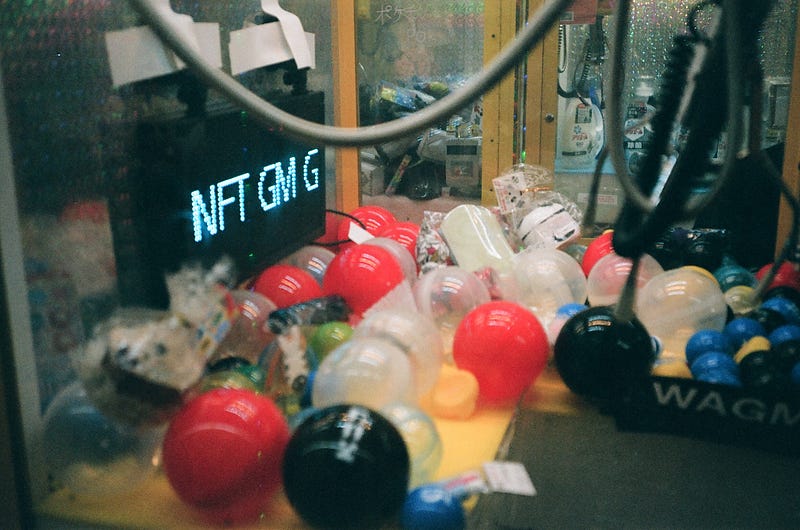
Photo by Arstin Chen on Unsplash

“This collaboration will play a crucial role in enhancing Foblgate’s capabilities in discovering and developing diverse content. In the rapidly evolving blockchain market, we aim to provide users with content that aligns with the latest trends,” Foblgate CEO Ahn Hyun-jun said.


User-centric, rewards-based gameplay

Random Crypture Defense is a Play-to-Earn (P2E) tower defense game built on the Solana blockchain that is centered around unique and colorful NFT characters. These characters are available for purchase on NFT marketplaces like Magic Eden and SolSea.

Players can also play and earn $GLEN, an in-game governance token that gives players voting rights in decisions regarding community wallet usage, sequel game genre planning and project direction, putting players at the forefront of game development and improvement. According to the developer, $GLEN will be listed on decentralized exchanges and will be able to be exchanged with Solana or fiat currencies.

Those who wish to participate in a demo play of Random Crypture Defense can do so through Foblgate’s official website. The demo play period is set to last about a month, after which the two companies plan to hold special events for Foblgate users.


Foblgate’s expansion

Foblgate has recently undertaken various projects in an attempt to grow not only as an exchange but also as a hub for public-oriented, blockchain-related content. Last month, the platform began working with crypto newsletter Conut to display crypto-related news and information on its website that appeals to younger users through trendy vernacular and internet meme references.

More to Read
View All
Web3 & Enterprise·

May 17, 2024

Velo token gains momentum across Southeast Asia's crypto landscape

Velo Token (VELO) has experienced a significant surge in popularity within Southeast Asia's crypto market, drawing comparisons to established players like XRP. Market intelligence platform Santiment highlighted VELO's meteoric rise, noting a substantial 358% increase in price over the last six weeks. This remarkable performance has captured the attention of investors and analysts alike, leading to discussions regarding its potential to become the "XRP of Southeast Asia."Photo by Lucas George Wendt on UnsplashFactors driving VELO's growthThe primary factor fueling VELO's rapid ascent is its substantial trading volume, particularly in the Asian market. According to Santiment data, VELO's trading volume has surged to $95.95 million, a noteworthy figure for a token outside the top 100. This surge in volume reflects growing interest and confidence in VELO, attributed to its integration with leading blockchain platforms such as Solana (SOL) and Binance Smart Chain. VELO has demonstrated significant progress, with a 57% increase over the past seven days and an impressive 225.51% surge over the last 30 days. Despite recent market fluctuations, VELO has maintained a bullish trend, recording a 16.88% rise from a 24-hour low. Santiment's Weighted Sentiment metric indicates a bullish outlook for VELO compared to XRP, further bolstering investor confidence in VELO's potential. Contributing factors to VELO's successSeveral factors have contributed to the unprecedented surge in VELO's value. Notably, VELO tokens are stored in reputable self-custody wallets such as Ledger, Lobstr, and Freighter, enhancing their popularity among investors. Endorsements from crypto influencers, who have labeled VELO as the "XRP killer," have also amplified investor interest. Additionally, VELO's strategic partnerships with industry leaders like iRemit, Visa and Lightnet have expanded its regional market and validated its capacity to revolutionize cross-border payments and digital financing solutions. As a result, VELO has witnessed substantial growth in trading volume, with its price reaching $0.029 per token. VELO's rise signifies its potential as a catalyst for innovation in the cryptocurrency sphere, akin to XRP. Its unique combination of smart contracts, absent in the XRP blockchain, adds to its appeal for investors seeking efficiency and versatility in financial transactions. Velo Labs' focus on revolutionizing international remittance markets further solidifies VELO's position as a game-changer in the crypto landscape. With the possibility of expanding its popularity beyond Asia, VELO's market cap could experience significant growth, further cementing its presence in the cryptocurrency market. 

news
Web3 & Enterprise·

Jul 19, 2023

Ubisoft Joins Cronos as a Network Validator

Ubisoft Joins Cronos as a Network ValidatorUbisoft, a world-renowned video game publisher, distributor, and creator, has entered into an exclusive partnership with Cronos, a prominent blockchain inter-operating with the Cosmos and Ethereum blockchain ecosystems. Cronos and its native CRO token were established by Singapore’s Crypto.com.According to a blog post published by Cronos Labs on Tuesday, the collaboration aims to explore the potential of blockchain technology, with Ubisoft becoming a new node validator on the Cronos network through its Strategic Innovation Lab.Photo by Ketut Subiyanto on Pexels27 node operatorsAs part of this initiative, Ubisoft joins a pool of 27 other node operators on the open-source Cronos blockchain. By doing so, the company aims to contribute to the network’s security and stability. Each node actively participates in the decentralized validation of transactions, ensuring the timely development of new blocks at intervals of 5 to 6 seconds.Cronos’ strategic approach focuses on collaborating with open-source validators and contributors who have a strong technical track record. Ubisoft’s expertise in developing immersive and engaging gaming experiences through the adoption of cutting-edge technologies aligns perfectly with Cronos’ vision. Notable existing contributors to the Cronos blockchain include Allnodes, Dora Factory, Blockdaemon, and Crypto.com, among others.Contributing towards governanceAs a validator, Ubisoft will play a vital role in the blockchain’s governance and the authorization of network updates. This partnership is a natural progression of the long-standing relationship between the two companies. Ubisoft has been actively involved in the Cronos Accelerator project as a venture mentor, fostering a strong foundation for their collaboration.Commenting on the partnership, Ken Timsit, Managing Director of Cronos Labs, revealed that Cronos Labs has had ongoing communications with the Ubisoft team for years. He emphasized Ubisoft’s unparalleled understanding of the blockchain sector’s potential and limitations, particularly in connecting gamers and creators.With Ubisoft’s involvement as a validator, Cronos blockchain is set to strengthen its security, enhance network governance, and open up new possibilities for the integration of gaming and blockchain technology. This strategic collaboration is expected to propel both companies towards innovative advancements in the ever-evolving world of blockchain and gaming.Positive developmentThe partnership between Ubisoft and Cronos holds promise for the future of blockchain technology in the gaming industry. It’s a shot in the arm for blockchain and Web3, given Ubisoft’s standing in the gaming industry, and considering that Ubisoft itself and many other headline firms in gaming seemed to have cooled their interest in the emerging space.In a recent interview, the Co-Chief Operating Officer of video gaming behemoth Sega, had described blockchain gaming projects as “boring” while outlining that the company was scaling back its interest in Web3 and blockchain.In this instance, however, as both Cronos Labs and Ubisoft leverage their expertise and resources, the potential for groundbreaking innovations and seamless integration between gaming and blockchain is within reach.This collaboration underscores the growing recognition of blockchain’s transformative power in revolutionizing various industries, including gaming. Together, Ubisoft and Cronos are poised to make significant contributions to shaping the future of blockchain technology and its applications in gaming.

news
Markets·

Nov 05, 2025

StanChart CEO predicts blockchain will replace cash in everyday finance

Bill Winters, the American banker who heads the British financial group Standard Chartered, appeared at the Hong Kong FinTech Week conference earlier this week, where he predicted a future in which cash will give way to blockchain-based systems for everyday transactions. According to Cointelegraph, Winters’ view aligns with that of Hong Kong regulators. At the same time, he stressed the importance of continued experimentation, noting that it remains uncertain how this transformation will ultimately take shape. Winters also commended Hong Kong’s leadership in exploring the potential of digital finance. Tech-driven finance has certainly been one of the key initiatives Hong Kong has been exploring. Recently, the Hong Kong Monetary Authority (HKMA) released its e-HKD Pilot Programme Phase 2 Report, which showed public support for tokenized deposits.Photo by Shubham Dhage on UnsplashReal-world assets gain ground on the blockchainOn-chain data also underscores the rapid growth of the tokenization sector. According to RWA.xyz, the total value of real-world assets (RWAs) deployed on-chain has climbed to $35.63 billion, up 7.8% from a month ago. A study by Ripple and Boston Consulting Group (BCG) estimates that tokenized assets could be worth $19 trillion by 2033, about 530 times their current value. Among RWA assets, the BlackRock USD Institutional Digital Liquidity (BUIDL) Fund, Tether Gold (XAUT), and Paxos Gold (PAXG) currently lead the market in terms of value. Over the past 30 days, BlackRock’s BUIDL Fund slipped 0.06%, while the two tokenized gold products, XAUT and PAXG, jumped 46.65% and 14.19%, respectively. These gains mirror gold’s bullish run in October, when its price surpassed $4,000 per ounce for the first time on Oct. 7. The momentum has since eased slightly, with gold now trading at around $3,969.55 per ounce. Tokenization brings 24/7 markets and P2P flexibilityIndustry experts point to the convenience of tokenization as a key advantage. Speaking to Yahoo Finance, Will Peck, head of digital assets at WisdomTree, explained that tokenized gold allows for around-the-clock trading and direct peer-to-peer (P2P) transactions. He added that gold and Bitcoin act as complementary stores of value, both serving as deflationary assets. Ian Kane, CEO of fintech company Firepan, said tokenized gold appeals to investors as it enables them to retain ownership, leverage their holdings for loans, and generate extra yield, while preserving their principal against debasement or devaluation. These views are not new. Earlier this month, Robinhood Markets CEO Vlad Tenev described tokenization as “a freight train” that “can’t be stopped,” predicting it will eventually transform the global financial system. Similarly, in his annual letter to investors in April, BlackRock CEO Larry Fink said the tokenization of assets could fundamentally reshape the way people invest. By digitizing ownership, tokenized venture capital funds could move beyond their closed circles, giving ordinary investors a stake in early-stage innovation and greater control over their capital. Venture capital faces hurdles in tokenization pushWhile tokenization promises greater accessibility and liquidity, not all market segments are ready for it. According to TheStreet, tokenized venture capital (VC) funds could open a traditionally closed market to more investors, but the process is more complex than it appears. In an interview with TheStreet, Elena Obukhova, founder of Supermoon Ventures, said that liquidity, not technology, is the main obstacle. Unlike tokenized company shares that can be traded freely on public markets, VC funds invest in private startups whose value may take years to materialize through an exit or acquisition. Allowing such funds to trade freely could increase volatility and pressure founders, as interim valuations might distort perceptions and weaken confidence in early-stage ventures. Still, the promise of tokenized venture finance remains within reach. Firms are testing models that limit trading periods, protect investor data, and refine valuation methods to better reflect the illiquid nature of startup investments. Since liquidity events such as initial public offering (IPOs) or acquisitions typically occur only every one to two years for early-stage startups, the path forward will depend on creating systems that can maintain stable and accurate valuations in the interim. Tokenization is rapidly emerging as a transformative force in the financial world, offering greater accessibility, liquidity, and efficiency. As more assets, from gold to venture capital, make their way onto the blockchain, the potential to reshape investment and trading markets grows. While challenges remain, particularly around liquidity and valuation in sectors like venture capital, the continued advancements in tokenization demonstrate its key role in the future of finance.

news
Loading