Top

Crypto.com partners with Triple-A to enable direct crypto payments

Web3 & Enterprise·November 27, 2024, 3:45 AM

Crypto exchange platform Crypto.com and Triple-A, a company that enables businesses to pay and get paid in digital currencies, both Singapore-headquartered entities, have entered into a partnership to enable direct crypto payments.


Simplifying crypto payments

Crypto.com set out details of the partnership in a press release published to its website on Nov. 21. The firm stated that its partnership with Triple-A will give its global customer base “access to a diverse range of new global merchants.”


The duo have set out to simplify crypto payments for both merchants and users alike. Crypto.com users will shortly be enabled in making purchases from a range of e-commerce brands directly, using crypto held in their Crypto.com wallets.


Through Triple-A’s input, Crypto.com users will be spared the need to manually convert digital assets to fiat currency before making purchases. Furthermore, users won’t incur a fee for any conversion that takes place behind the scenes.

https://asset.coinness.com/en/news/cb86a36fdcfe9cb26dd49ccc28bbc699.webp
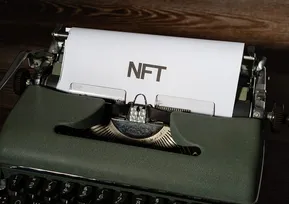
Photo by David McBee on Pexels

Cashback rewards

Once launched, with the service initially planned to launch in Singapore before further rollout elsewhere, Crypto.com users will also be in a position to benefit from rewards. Eric Anziani, the company’s president and chief operating officer (COO), spoke to this element of the offering, stating:


“Partnering with Triple-A enables us to do this by expanding crypto payments to a range of popular brands, creating a seamless shopping experience and providing an opportunity to earn cashback rewards to make spending crypto even more rewarding.”


Volatility protection

As part of the solution that has been put in place, Triple-A will ensure that merchants aren’t exposed to cryptocurrency volatility in accepting crypto as a payment method. The payments they receive from customers are instantly converted to their local fiat currency, with settlement occurring one day following the transaction.


This approach also means that merchants don’t have added difficulties in terms of the tax treatment of cryptocurrencies, their management or related reporting requirements.


With that in mind, Eric Barbier, CEO at Triple-A, said that the approach “allows merchants to provide Crypto.com users with an optimized digital currency payment user journey.”


Anziani said that Crypto.com is trying to “push boundaries when it comes to integrating crypto payments into real-world scenarios and enhance shopping experiences for [its] users.” 


In recent weeks, Crypto.com has been active in pursuing a number of initiatives in order to expand its reach. Earlier this week, the company launched a visa card in Latin America, enabling users within the region to earn rewards on purchases made via the card. On Nov. 14, it emerged that the company had acquired Australia-regulated brokerage firm Fintek Securities. It’s understood the acquisition was made in order to expand the range of financial products that Crypto.com can offer to its customer base.


At the end of October, Watchdog Capital, a U.S. Securities and Exchange Commission (SEC)-registered broker-dealer, was acquired by the company. 


Like many high profile crypto firms, Crypto.com has had its difficulties with regulators. Following the receipt of a Wells notice from the SEC earlier this year, the company responded by filing a lawsuit against the commission, alleging that the SEC had engaged in regulatory overreach in classifying crypto assets as securities. 

More to Read
View All
Policy & Regulation·

Aug 18, 2025

Japan’s FSA set to approve JPYC stablecoin

The Japanese Financial Services Agency (FSA), a government body that oversees banking, securities and the digital assets market in Japan, is gearing up to approve the country’s first stablecoin pegged to the yen. Local media platform Nikkei reported on Aug. 18 that it is anticipated that the FSA will approve the issuance of the JPYC stablecoin in the coming months.Photo by Dayo Adepoju on UnsplashEfficient payment infrastructureJPYC, Inc. was founded by Noritaka Okabe in 2019, establishing the JPYC yen-pegged stablecoin in 2021. Okabe believes that the company can better enable innovation in Japan through a more efficient payment infrastructure that JPYC claims to provide via its stablecoin. Prior to launching the stablecoin, JPYC had entered into proof-of-concept and regulatory discussions with the FSA. The JPYC stablecoin has almost complete market dominance within its domestic market, with stablecoins to the value of 30 billion yen ($202.7 million) having been issued. In 2022, JPYC registered with the FSA as a third-party prepaid payment instrument service provider. It’s understood that the company will seek registration once again within the month, this time as a money transfer business. Japan’s Payment Services Act recognizes the issuance of stablecoins by banks, trust companies and money transfer businesses. JPYC backs its stablecoin with liquid assets such as Japanese government bonds and bank deposits. Growing stablecoin importanceOn a global basis, the leaders in terms of stablecoin market capitalization are Circle (USDC) and Tether (USDT), both U.S. dollar-pegged stablecoins. The U.S. recently enacted its GENIUS Act stablecoin legislation with many politicians and market commentators taking the view that USD-pegged stablecoins will promote ongoing use of the U.S. dollar internationally.U.S. Treasury Secretary Scott Bessent took to X on Aug. 18 on that topic, stating:”Stablecoins will expand dollar access for billions across the globe and lead to a surge in demand for U.S. Treasuries, which back stablecoins.”Foreign governments are starting to see the significance of supporting stablecoins pegged to their country’s sovereign currency. The ongoing development of U.S. dollar-pegged stablecoins has not escaped the attention of Chinese officials. In July, government officials in Shanghai held a meeting to explore policy strategies for stablecoins. The same month, Darryl Chan, Deputy Chief Executive of the Hong Kong Monetary Authority (HKMA), said the authority was likely to issue its first stablecoin license in early 2026. His comments preceded the rollout of Hong Kong’s stablecoin regulatory framework on Aug. 1. Last week, JPYC’s Okabe said that JPYC would soon start "buying up Japanese government bonds.” He added, “The interest rates on government bonds in countries where stablecoin issuance does not grow will likely continue to rise. It’s no exaggeration to say that the interest rates on Japanese government bonds rest on JPYC’s shoulders.” Okabe is also going out of his way to draw a clear distinction between his company’s stablecoin and cryptocurrency. On X, he stated that “JPYC is an electronic payment method, not a cryptocurrency.” He went on to assert that given that the JPYC stablecoin is a currency-denominated asset whose value is linked to fiat currency, it incorporates the best qualities of both digital cash and deposits.

news
Web3 & Enterprise·

Dec 06, 2023

Wemade joins hands with DIFC to establish WEMIX Play Center in Dubai

Wemade joins hands with DIFC to establish WEMIX Play Center in DubaiSouth Korean blockchain gaming publisher Wemade has become the first gaming company in the country to form a partnership with the Dubai International Financial Centre’s (DIFC) Innovation Hub, according to an official press release on Wednesday (local time). Through this new partnership, Wemade plans to establish a WEMIX Play Center at the DIFC Innovation Hub as a space for gaming companies that are part of the WEMIX ecosystem.Photo by Wael Hneini on UnsplashUnlocking opportunitiesThe DIFC is a financial free zone in Dubai equipped with its own administrative, judicial and regulatory bodies. The Innovation Hub — a financial innovation ecosystem — was established by the Dubai government to attract global companies in fintech, Web3, gaming and artificial intelligence (AI). Members and partners are eligible to receive various benefits, like a DIFC Innovation Licence — which helps technology firms set up their businesses — global networking opportunities and office spaces.Along with the establishment of the WEMIX Play Center, Wemade aims to make appropriate investments for the success of its onboarded companies and work with the DIFC to create a $100 million global Web3 gaming fund. The company said that it would hold joint Web3 events with the Innovation Hub in the future to promote these initiatives.Fostering financial evolutionDubai has been actively promoting financial services to stimulate economic growth and attract investments, encouraging the creation and growth of blockchain businesses and the widespread use of cryptocurrencies. By settling down at the DIFC Innovation Hub, Wemade intends to closely communicate with UAE’s crypto regulatory authorities and formulate an optimal business strategy in line with the latest industry trends in the Middle Eastern region.Meanwhile, the company is in the process of applying for the registration of its governance token WEMIX as a recognized crypto token with the Dubai Financial Services Authority (DFSA). Cryptocurrencies on this DFSA list are authorized for use in transactions among the 4,900 institutions and individual investors residing in DIFC. Currently, there are five recognized crypto tokens including Bitcoin, Ethereum, Litecoin, Ripple and Toncoin. The latter two were recently added to the list last month.

news
Web3 & Enterprise·

Nov 21, 2023

Sleek Secures $5M seed funding to propel Web3 social networking offering

Sleek Secures $5M seed funding to propel Web3 social networking offeringHong Kong-based startup Sleek has successfully raised $5 million in seed funding to advance its Web3 social networking platform, aiming to further the ownership economy and introduce blockchain-powered social media accessible to a broad audience.Photo by micheile henderson on UnsplashIncentivized networking through ‘SocialFi’Officially launched in April of this year, Sleek aspires to reshape human connections by simplifying networking, infusing a sense of fun and fostering productivity. The platform provides users with an expansive environment where they can exchange information, connect with new contacts and participate in incentivized networking through innovative Web3 social finance (SocialFi) business models.In essence, SocialFi employs blockchain technology with the objective of monetizing social interactions. The concept has come to broader attention in recent months as a consequence of the emergence of Friend.tech, a novel way for creators to monetize content, by way of tokenizing attention. Sleek enables users to directly monetize their content and social capital, emerging as a new generation of creators within the Web3 landscape. Sleek Co-Founder Chase Guo explained to The Block how it differs from other Web3 social networks:“Most of the time, this strategy [bootstrapping a platform using tokens or incentives] does not result in unique content generation and sustainable growth. People are here for the airdrop and leave once they cash out. Sleek took a very different approach — build a real use case first with die-hard fans.”Sleek CardAt the forefront of Sleek’s offerings is its flagship product, Sleek Card, specifically designed to empower Web3 professionals in face-to-face networking. Each Sleek Card generates a blockchain wallet and a decentralized identity for users, streamlining the onboarding process into the Web3 space.Utilizing NFC technology and a proprietary messaging bot, Sleek Card allows users to capture data and manage contacts, resulting in robust on-chain social graphs. Notably, Sleek Card has facilitated over 300,000 connections, establishing itself as a key player in the Web3 landscape. The platform has also formed strategic partnerships with prominent entities such as Solana Hacker Houses, Coinfest, Digital Art Fair and NFTNow, bringing innovative event experiences to life.Both of the startup’s founders spoke about the body of work Sleek is involved in. Co-Founder Tania Tse stated:“We are launching monetization models in our platform that are only possible through the blockchain, so talented creators from various verticals who don’t have a full team supporting them can earn sustainably.”Chase Guo added: “Leveraging our own experiences and lessons learned, we are building applications alongside our users to power the future of Web3 social.”Looking ahead, Sleek plans to unveil an open marketplace in the first half of 2024, empowering domain experts to become creators by tokenizing their knowledge into liquid and accessible assets. This strategic move aligns with Sleek’s vision for a more equitable, user-centric and transparent digital social landscape.Broad industry backingSleek’s investor roster includes well-known names such as Shima Capital, Spartan Group, Symbolic Capital, Genblock Capital, Big Brain Holdings, Market Across, Emirates Consortium, Arkstream, Perridon, GBV and various angel investors. Notably, Binance Labs, the venture capital arm of Binance, invested in Sleek through the Binance Labs Incubation Program in 2022.

news
Loading