Top

Backpack acquires FTX EU

Web3 & Enterprise·January 10, 2025, 6:44 AM

Backpack Exchange, a crypto exchange that joined the Japan Virtual Currency Exchange Association (JVCEA) last December, has recently acquired FTX EU, the European arm of the failed crypto exchange business FTX.


According to a press release, the business comes with a European MiFID II license, with the acquisition having been approved by the Cypriot regulator, the Cyprus Securities and Exchange Commission (CySEC). Furthermore, a Delaware bankruptcy court in the United States, which is dealing with the FTX bankruptcy, has also rubber-stamped the acquisition.


Backpack Exchange was co-founded by CEO Armani Ferrante, alongside other former FTX executives. According to the firm’s LinkedIn page, it has established its headquarters in Japan. The company also has links to Dubai, having acquired a Virtual Asset Service Provider (VASP) license for its Backpack Wallet product from  Dubai’s Virtual Assets Regulatory Authority (VARA) in 2023.
https://asset.coinness.com/en/news/e52208b2b388ac5787c108956621928f.webp
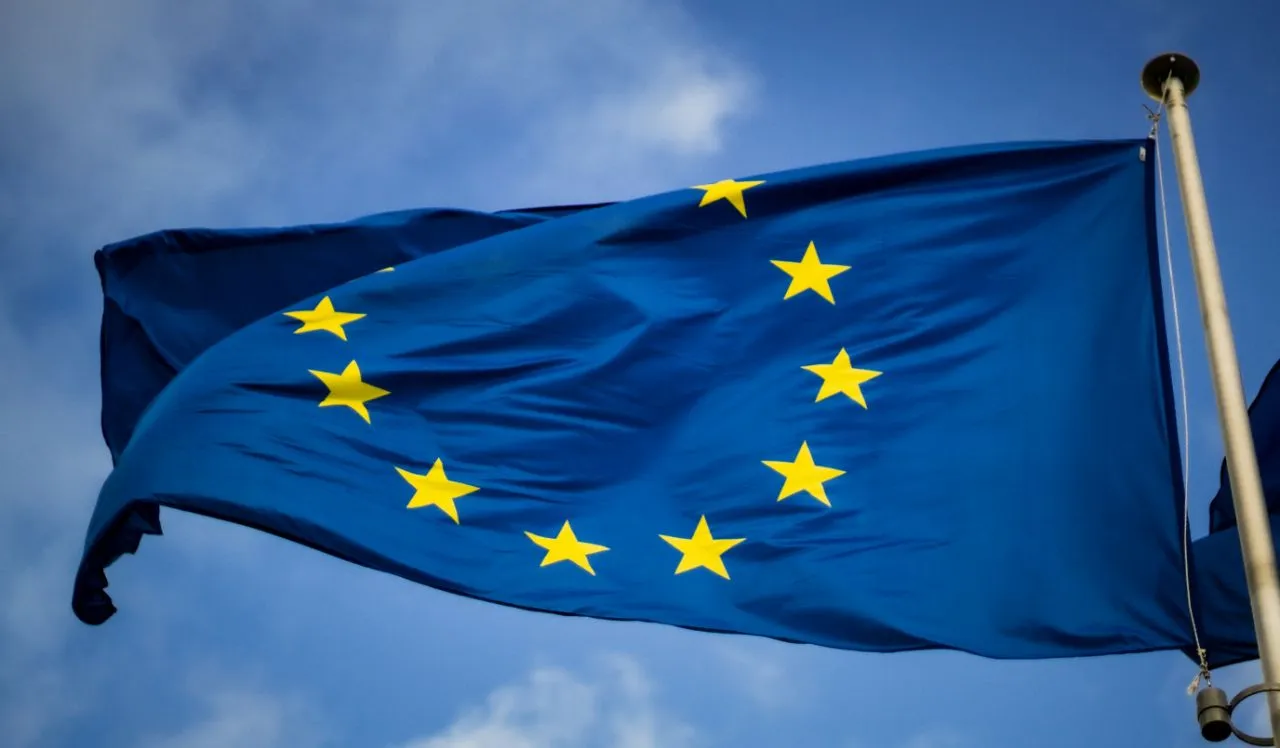
Photo by Christian Lue on Unsplash

Rebuilding trust 

As a consequence of having acquired FTX’s European arm, Backpack Exchange will now assume responsibility for the distribution of court-approved FTX bankruptcy claims to FTX EU users. In the company’s press release, Ferrante spoke of the importance of the distribution process in rebuilding trust. He stated:


"Customer restitution is a crucial step to rebuild trust and confidence in the industry, and Backpack is committed to returning FTX EU customers’ funds as fast and as safely as possible."


In response to a query from FTX creditor activist Sunil Kavuri on X, Ferrante outlined that FTX EU users “will only be able to claim their euro claims funds directly from Backpack EU.”


Ferrante clarified that FTX EU customers who had pending crypto withdrawals at the time of the bankruptcy will have their crypto claims dealt with via the FTX bankruptcy estate.


In a Series A financing round early last year, Backpack was valued at $120 million. Through FTX EU, it now acquires a MiFID II license, further facilitating the global expansion of the company.


With FTX EU now forming Backpack’s EU arm, the company will offer crypto-derivative products, including perpetual futures. This product offering is scheduled to go live in Q1 2025.


Bankruptcy process controversy 

The bankruptcy of FTX EU has been controversial, starting off with the European entity being illegally filed into a U.S. bankruptcy process. In early 2024, the FTX Debtors suggested that the entity was worthless. It later wanted to buy out the entity itself, outbidding a third-party bidder. A short time afterwards, the FTX Debtors reached a settlement with the former FTX EU team. It’s understood that Backpack has acquired FTX EU for $32 million. 


The FTX Debtors’ attempt to buy the business itself has cast a cloud over the bankruptcy process. When it first emerged that the business had been sold, there was some speculation as to if this would mean a rebooted FTX within the European market, but Backpack’s acquisition confirms that this was not to be the outcome. 


Japan could have offered another opportunity to reboot the business, but instead, FTX Japan was acquired by bitFlyer and absorbed into its existing business. With regard to the main FTX business entity, the FTX Debtors told the bankruptcy court that there was no interest in the business from buyers. 
More to Read
View All
Web3 & Enterprise·

Aug 23, 2023

NEOPIN Partners with Lena Network for NFT-Fi Service Development

NEOPIN Partners with Lena Network for NFT-Fi Service DevelopmentNEOPIN, the global CeDeFi platform of South Korean investment holding company Neowiz Holdings, announced on Tuesday that it is teaming up with Lena Network, a Japanese developer of non-fungible token finance (NFT-Fi) services.Photo by Choong Deng Xiang on UnsplashFostering NFT-Fi and DeFi synergyIn this collaboration, the companies plan to promote NFT-Fi usage by onboarding NEOPIN onto Lena’s service framework and by launching NEOPIN as a decentralized finance (DeFi) product based on Lena’s governance token $LENA. They will also strengthen cooperative ventures by channeling NEOPIN and Lena Network’s NFT-Fi products. Both companies’ worldwide partners will also receive collective support as part of this agreement.“This partnership is meaningful in many ways. We have been able to secure an important Web3 partner in Japan, expand our global DeFi products, and grow our NFT-Fi business,” explained Ethan Kim, CEO of NEOPIN.This comes as part of NEOPIN’s bigger efforts to broaden its global user demographic by launching DeFi products associated with global projects, the first of which is the latest collaboration with Lena. This move will create a strong base for the entry of NEOPIN’s Web3 projects into the Japanese market.“We will continue to strengthen our partnerships with outstanding Japanese Web3 projects such as Lena Network, and establish a foundation for our success in the Japanese market,” CEO Kim added.Innovation at Lena NetworkLena Network is operated by professionals who formerly worked at institutions like SBI Holdings and JP Morgan. It plans to officially launch its new service, LENA, in the third quarter of this year, which offers loans in Ethereum or stablecoins against collaterals such as NFTs, tokens, and real-world assets (RWA).Key partners for this service include NFT collections such as Monkey Kingdom — the first Asian NFT collection and one of Solana’s chart-toppers — and Trekki, a collaborative travel-themed collection made by Polygon and Trip.com.“By onboarding NEOPIN, we aim to provide a seamless NFT-Fi adoption and launch DeFi products based on LENA tokens,” said Casper Cheng, CSO of Lena Network. “Following NFT-Fi, Lena Network’s next product will be RWA-Fi. Together with NEOPIN, we will continue to drive innovation in the Web3 space and explore new possibilities for NFT utilization.”The current NFT market capitalization is approximately $4.9 billion as of today, according to insights from the NFT analysis site NFTGo. While these assets have historically been liquidated through trading, NFT-Fi opens up various methods of liquidation, thereby expanding access to ownership of these assets.

news
Policy & Regulation·

Jul 24, 2025

Thailand’s SEC working towards updating ICO portal regulations

Thailand’s Securities and Exchange Commission (SEC), the independent state agency responsible for oversight and development of the Southeast Asian nation’s capital markets, is seeking public commentary on the updated set of rules it has proposed to regulate initial coin offering (ICO) portals.  In a notice published on its website on July 18, the SEC outlined that it is seeking public comments in relation to the criteria it has established for investor communication and service provision by ICO portals as part of its proposed regulations.Photo by Alin Meceanu on UnsplashEasing knowledge test requirementsThe regulations had been approved in principle last month and put an onus on ICO portals to ensure that retail investors take a knowledge test and pass that test before they are permitted to participate in trading ICO tokens. The current regulations stipulate that retail investors must undertake knowledge tests on an ongoing three-monthly basis. The updated regulations propose that ICO portals conduct suitability tests that are sufficiently comprehensive such that the investor understands the risks associated with any potential ICO-related investment. The SEC stated that the objective is that the investor has “a risk tolerance level appropriate and in alignment with the product risk.” Instead of quarterly knowledge tests, the proposed regulations require suitability assessments to be carried out once every two years. In this way, the commission believes that it will reduce the administrative burden for ICO portals while reducing friction for the investor. It stated: “These proposed requirements are in line with regulatory practices applicable to both securities and digital asset business operators.” Jagdish Pandya, founder of blockchain venture builder BlockOn Ventures, told Decrypt that “Thailand has been a first mover for crypto regulations and the SEC has played a pivotal role in providing all regulated activities and licenses, much ahead of Singapore, Malaysia, Philippines, and Vietnam in South East Asia.”  Moving past previous ICO market failuresPandya added that the proposed suitability tests would protect “amateur investors” from piling into ICOs and losing their funds like in the “old ICO scam era.” ICOs first gained significant popularity in 2017 as the crypto market started to expand. Around $6.2 billion in funding was raised by a broad range of crypto projects in that year. However, a complete lack of regulation at the time meant that the ICO marketplace was laden with outright scams. ICOs were being hyped up in pump-and-dump schemes, with investors losing most, if not all, of their funds as the fraudulent ICO promoters rug-pulled them, abandoning the projects and taking off with the ICO funding. Thailand’s existing ICO portal regulations were introduced in November 2023. The regulations require project promoters to make disclosures with regard to project creditworthiness and risk for debt-like tokens with a predetermined fixed rate of return.  Those promoting infrastructure-backed tokens, which allow the token holder to earn a revenue share from infrastructure projects, are subject to rules regarding items such as due diligence, asset valuation and issuer asset management.

news
Web3 & Enterprise·

Aug 25, 2023

DBS Introduces Metaverse Game to Tackle Global Food Waste

DBS Introduces Metaverse Game to Tackle Global Food WasteDBS, Singapore’s largest bank, has unveiled an innovative concept within the metaverse for its DBS BetterWorld initiative, focusing on the critical issue of global food waste.In a press release which it published on Thursday, the bank revealed that this “gamified adventure” is designed to showcase the strategies that Businesses for Impact are employing to tackle the ever-pressing global food waste challenge. Businesses for Impact are an initiative driven by the DBS Foundation that champions for-profit enterprises that promote innovative solutions to effect positive environmental or social change.Photo by Joshua Hoehne on UnsplashTackling a global issueData from the United Nations suggests that a staggering 1.3 billion tons of food, equivalent to one-third of the world’s total food production, goes to waste each year. Within this conceptual metaverse, players are tasked with a series of engaging activities inspired by five businesses supported by the DBS Foundation. These entities offer unique approaches to curbing food waste.Project collaborationSingapore-headquartered brewery business Brewerkz is focused on up-cycling brewers’ spent grains as part of the project. Breer, a Hong Kong startup transforming surplus bread into craft beer is also participating. The project also sees participation from another Hong Kong-based business, GreenPrice, which specializes in selling food close to or just past their best-before dates.Edible Garden City, a start-up that aims to make urban farming and edible gardening more accessible in cities, and Rooftop Republic, which converts underutilized spaces into urban farms, complete the list of five “Businesses for Impact” relative to this particular project.Metaverse ESG potentialKaren Ngui, Head of Group Strategic Marketing and Communications at DBS and a board member of DBS Foundation, emphasized the metaverse’s potential to enhance awareness and address crucial Environmental, Social, and Governance (ESG) concerns.Ngui remarked: “With DBS BetterWorld, we have chosen to delve into the challenges of food waste and food resilience, issues that DBS and the DBS Foundation have been championing, in a unique and engaging way.” She added that as metaverse technologies mature, they aspire to bridge virtual initiatives with tangible real-world impacts.Players based in Singapore will be rewarded with exclusive incentives that can be redeemed through special QR codes accessible via DBS PayLah!. This integration of real-world rewards into the metaverse experience adds a new layer of interaction and excitement for participants.Embracing the metaverseThis is not DBS’ first foray into the metaverse. It has collaborated with The Sandbox metaverse platform previously, participating in its Lion City initiative, a virtual metaverse neighborhood modeled on Singapore. Work on BetterWorld has been ongoing in conjunction with The Sandbox development team since last year.DBS’ creative endeavor within the metaverse not only sheds light on the urgent issue of global food waste but also demonstrates how technology and gaming can be harnessed to educate, raise awareness, and drive positive real-world change.As the metaverse continues to evolve, DBS’ initiative will likely serve to inspire other institutions to leverage the metaverse for various initiatives with the objective of achieving real-world impact.

news
Loading